

April is National Poetry Month, a time when people all across the United States celebrate the beauty and power of poetry. For those in the Deaf community, this month offers an extraordinary opportunity to explore and express poetic creativity through American Sign Language (ASL). The rich, visual, and expressive nuances of ASL make it a compelling medium for poetry, allowing individuals to convey profound emotions and ideas without uttering a single sound. As we dive into National Poetry Month, it’s essential to shine a light on Deaf education and awareness, specifically focusing on how ASL serves as a powerful tool for poetic expression.
Understanding Deaf culture and traditions enriches our appreciation of the unique ways in which the Deaf community engages with poetry. Historically, the Deaf community has carved out its own niche within the broader literary world, contributing significantly to the art of storytelling and expression. Through ASL poetry, Deaf poets can challenge conventional notions of language, communication, and artistic performance, expanding the horizons of poetry beyond spoken or written words. The continuation of these traditions plays a crucial role in promoting cultural pride and identity within the Deaf community while also fostering a greater understanding and appreciation among hearing individuals.
What is ASL Poetry?
ASL poetry is a form of poetry that utilizes the unique elements of American Sign Language to create vivid and expressive works of art. Unlike traditional spoken or written poetry, ASL poetry relies heavily on visual and kinetic elements such as hand shapes, facial expressions, spatial placement, and body movement. These components work in harmony to convey emotions, themes, and narratives that might be difficult to capture through vocalized or textual forms.
In ASL poetry, each sign is carefully chosen not only for its meaning but also for its visual impact and aesthetic appeal. The physicality of signing allows poets to explore rhythm, movement, and visual metaphor in ways that spoken languages cannot. This distinctive blend of visual and kinetic artistry makes ASL poetry a powerful and evocative mode of expression, capable of eliciting profound emotional responses from both Deaf and hearing audiences.
ASL poetry also offers a platform for addressing issues related to Deaf identity, culture, and experiences. Through their poetic works, Deaf poets can highlight themes such as communication barriers, societal marginalization, and the beauty of sign language itself. In doing so, they not only affirm their own sense of identity and pride but also educate and inspire others to appreciate the richness and diversity of Deaf culture.
The Importance of Deaf Education
Quality education is crucial for everyone, but for Deaf individuals, access to effective educational opportunities can be a game-changer. Deaf education is designed to cater to the unique needs of Deaf and hard of hearing students, ensuring they receive the support and resources necessary to succeed academically and socially. Central to Deaf education is the use of ASL as the medium of instruction, which enables students to fully engage with the curriculum and develop mastery of linguistic and cognitive skills.
Research has shown that Deaf children who receive early and consistent exposure to ASL develop strong language skills and cognitive abilities, leading to better academic and social outcomes. This foundation is essential for their overall development, as it empowers them to navigate the world with confidence and independence. Moreover, Deaf education programs often emphasize the importance of Deaf culture and identity, helping students develop a positive self-concept and a sense of belonging within the Deaf community.
However, the availability and quality of Deaf education can vary significantly, which is why advocacy for better access to resources and support services is vital. By raising awareness about the importance of Deaf education and pushing for policy changes that promote inclusive and equitable educational opportunities, we can create a more just and supportive environment for Deaf individuals. Ultimately, fostering a robust educational system for Deaf students benefits not only the individuals themselves but also society as a whole by enabling them to contribute their unique talents and perspectives.
How ASL Enhances Poetic Expression
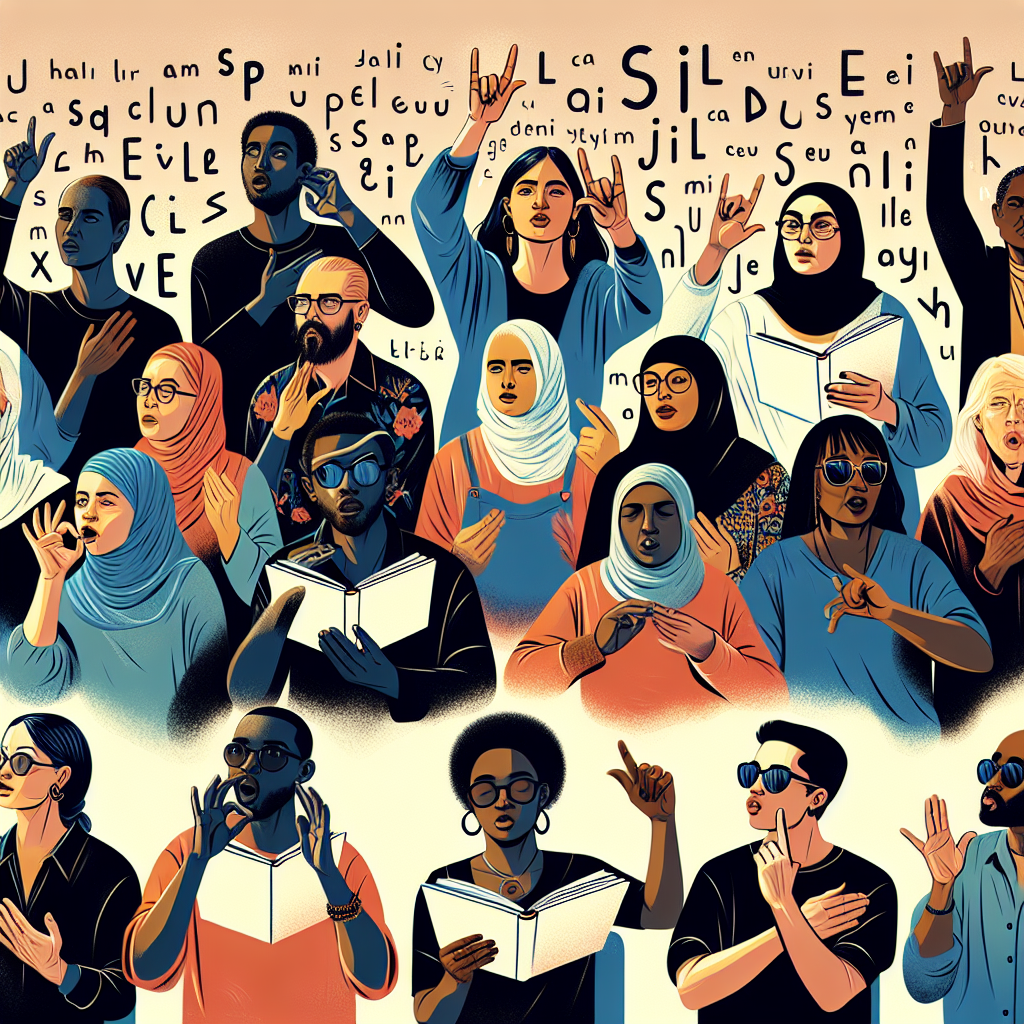
American Sign Language enriches poetic expression in ways that spoken and written languages cannot. One of the most striking features of ASL poetry is its ability to fuse linguistic elements with visual artistry, creating a multidimensional experience for both the performer and the audience. This synergy allows poets to convey complex themes, emotions, and narratives through a combination of hand gestures, facial expressions, and body movements, offering a uniquely immersive and impactful form of expression.
The spatial nature of ASL provides poets with limitless creative possibilities. By utilizing the three-dimensional space around them, ASL poets can create a dynamic and engaging performance that captures the audience’s attention and draws them into the narrative. This versatility enables poets to explore a wide range of poetic forms and styles, from traditional narrative poetry to experimental and abstract works.
Moreover, ASL’s emphasis on non-verbal communication allows poets to tap into the universal power of gesture and movement. This aspect of ASL poetry transcends linguistic barriers, making it accessible and relatable to audiences regardless of their language background. Through the use of iconic signs, visual metaphors, and rhythmic patterns, ASL poets can evoke powerful imagery and emotions that resonate with viewers on a deeply personal level.
Celebrating National Poetry Month in the Deaf Community
National Poetry Month provides an excellent opportunity to celebrate the achievements and contributions of Deaf poets while highlighting the unique beauty of ASL poetry. Throughout April, various events and activities take place to honor poets and their works, encouraging both Deaf and hearing individuals to engage with and appreciate ASL poetry.
One way to celebrate is by attending poetry readings and performances by Deaf poets. These events offer a chance to witness the power and artistry of ASL poetry firsthand, experiencing the vibrant and expressive nature of the language. Additionally, many Deaf poets share their works online through platforms like YouTube, making their poetry accessible to a global audience. Engaging with these digital performances allows people to explore a diverse range of poetic styles and themes, broadening their understanding and appreciation of ASL poetry.
Another way to get involved is by participating in poetry workshops and classes. These sessions, often led by experienced Deaf poets and educators, provide valuable insights into the techniques and elements of ASL poetry. Participants can learn how to craft their own poems, experiment with different forms and styles, and develop a deeper connection to the expressive potential of ASL. Such workshops foster a sense of community and collaboration, helping to preserve and promote the rich tradition of ASL poetry.
Prominent Deaf Poets and Their Contributions
Throughout history, numerous Deaf poets have made significant contributions to the world of literature and poetry. These individuals have not only enriched the art form but also paved the way for future generations of Deaf poets. Here are a few notable figures and their contributions:
- Clayton Valli: Often referred to as the father of ASL poetry, Clayton Valli was a pioneering figure in the field. His works are celebrated for their innovative use of ASL’s linguistic and visual elements, setting a high standard for future ASL poets.
- Ella Mae Lentz: A leading figure in the Deaf community, Ella Mae Lentz is known for her powerful and evocative ASL poetry. Her works explore themes of Deaf identity, culture, and resilience, inspiring both Deaf and hearing audiences alike.
- Patrick Graybill: An influential poet and educator, Patrick Graybill has played a crucial role in promoting ASL poetry. His performances and teachings have helped shape the way ASL poetry is understood and appreciated, contributing to its growth and recognition as a legitimate art form.
These poets, along with many others, have made invaluable contributions to the world of ASL poetry, helping to elevate and celebrate the unique power of poetic expression in ASL.
Conclusion
National Poetry Month is a time to celebrate the beauty and power of poetry in all its forms. For the Deaf community, it offers a particularly meaningful opportunity to highlight the expressive potential of ASL poetry. Through the unique blend of linguistic, visual, and kinetic elements, ASL poetry provides a captivating and immersive experience that resonates deeply with audiences.
By promoting Deaf education and awareness, we can ensure that Deaf individuals have the resources and support they need to succeed academically, socially, and artistically. This, in turn, enriches the broader literary and artistic landscape, fostering greater appreciation and understanding of the diverse ways in which humans can express themselves.
As we celebrate National Poetry Month, let us recognize and honor the contributions of Deaf poets, whose works continue to inspire and challenge us. By embracing and supporting ASL poetry, we can help preserve and promote this vibrant art form for future generations, ensuring that its unique power and beauty are appreciated by all.