
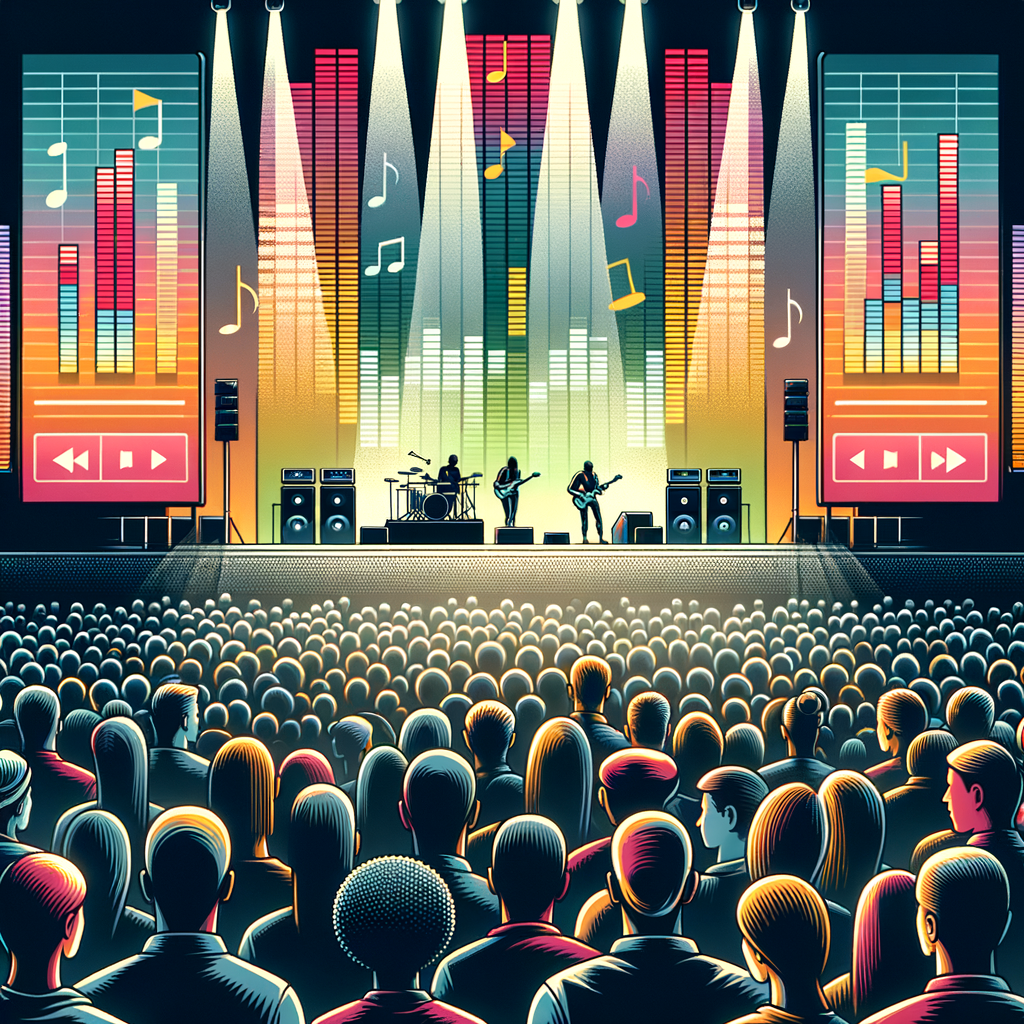
In recent years, music festivals have graced the global cultural landscape with vivid displays of melodious escapades, catering to diverse tastes and communities. Stunning performances, electrifying atmospheres, and endless entertainment draw immense crowds. However, in the past, accessibility to these musical celebrations has been somewhat challenging for certain groups, notably the deaf audience. In this context, the situation demanded an evolution towards inclusivity, and the music festival industry has heeded the call. By embracing technological advancements, collaborative efforts, and creative solutions, music festivals are slowly transforming into spaces where sound is enjoyed visually and felt viscerally. This transformation fills not only a gap in inclusivity but also sets up a new frontier for audience engagement. Within the needles of societal expectations and innovation, music festivals are redefining experiences for deaf audiences. As we delve into how these festivals are becoming more inclusive, we break down the steps being undertaken to create a truly universal auditory celebration.
Technological Innovations
At the forefront of making music festivals more inclusive for deaf audiences is technology’s growing role. Various tools and innovations have surfaced to enhance the sensory experience of music through visual and tactile means. One such innovation involves the introduction of SubPacs, backpacks equipped with tactile transducers that translate sound waves into vibrations. Distributed throughout certain areas of festivals, they allow deaf patrons to feel the vibrations of music, essentially ‘hearing’ the rhythms and beats through touch. This addition not only makes them a participant in the auditory sphere but also deepens the emotional connection and enriches the festival experience.
Moreover, visual technology plays a pivotal role in enhancing accessibility. Large screens displaying live captioning allow deaf attendees to follow lyrics and artist commentary. Captions provide context and understanding, bridging the communicative gap for deaf audiences. Additionally, LED displays synchronized with music beats offer visual interpretations that are both aesthetically pleasing and informative. These visualizations convert sound waves into light patterns, adding a spectacle that synchronizes the entire festival environment, thus keeping the deaf audience engaged without exclusion.
Interpreting Services and Integration
Another significant stride towards inclusivity involves the provision of professional sign language interpreters. Festival organizers now frequently collaborate with interpreting companies or employ skilled sign language interpreters familiar with the rhythm and style of music. Positioned beside or on the main stage, interpreters ensure seamless translation of lyrics and dialogues into sign language. This service creates an immersive experience and allows deaf attendees to follow performances in real-time with emotional fidelity. By making music accessible linguistically through American Sign Language (ASL) or British Sign Language (BSL), festivals respect varying linguistic needs while making an effort to cater inclusively.
Innovative organizations arrange pre-festival workshops where interpreters and artists collaborate to tailor-make signs and gestures that suit specific performances. These rehearsals assure interpreters maintain the energy, pacing, and feeling musicians wish to convey. Notably, this collaborative work yet again fosters an environment where both deaf and hearing communities are equally captivated and engaged in the music festival’s ambience.
Community Engagement and Feedback
Valuing community engagement and feedback is crucial in adapting any event to be more inclusive. An apparent shift towards inclusivity at music festivals is reflected through the growing consultations with deaf communities. Organizers actively engage with deaf attendees before, during, and after events, obtaining invaluable insights into already implemented accessibility measures, and understanding any additional needs.
Festivals increasingly establish dedicated channels (both online and onsite) for feedback, enabling real-time suggestions and ensuring swift adjustments enhance the inclusivity experience. Consultation also extends to partnerships with deaf advocacy organizations, which provide expertise and advice on tailoring festival offerings to increase accessibility and inclusivity. Through engaging in open dialogue with these communities, organizers support a co-created experience where inclusion becomes intrinsic, reflective of continuous improvement in understanding deaf patrons’ desires and requirements.
Festival Layout and Accessibility
Physically designing a festival to cater to the needs of the deaf community also signifies a commitment to inclusivity. Festivals are incorporating viewing areas that prioritize proximity to stages or visual displays, reducing any potential for obstructed views. By providing this dedicated space, deaf patrons are assured of a clear line of sight to interpreters, screens, and artists.
Furthermore, mobile applications dedicated to festival accessibility offer interactive maps, real-time notifications for the schedule, and location-based services. These apps allow deaf attendees to navigate festival grounds efficiently and also signal live content or visual notifications for musical cues. Combined with inclusive camping options and guidance from informed onsite staff, these changes culminate in an environment where every logistical aspect considers the deaf audience’s needs.
A Shift in Cultural Sensitivity and Awareness
Besides tangible measures, fostering sensitivity and broadening awareness about deaf culture within the festival experience is vital. Music festivals often leverage their platforms to educate larger audiences about the deaf experience. By executing targeted campaigns, hosting workshops, and featuring segments advocating for deaf culture, festivals help foster understanding and acceptance. These efforts actively contribute towards dispelling stereotypes and opening paths toward appreciation and empathy across participants.
The cultural dialogue that arises from these interactions nurtures a sense of community among all attendees, breaking cultural barriers and encouraging fraternity. Deaf and hearing patrons alike gain perspective on diverse methods of experiencing music, collectively ushering a culture of inclusion into mainstream consciousness.
Conclusion
The vibrant tapestry that is a music festival is traditionally woven through auditory and visual elements harmonizing seamlessly to deliver a universal experience. In moving towards inclusivity for deaf audiences, music festivals are redefining this experience by inviting deaf participants to partake equally, blending creativity, technology, and cultural understanding.
Through deploying tactile technologies like SubPacs, sign language interpretation, community collaboration, thoughtful layout and design, and an increased sensitivity towards deaf culture, music festivals engage the deaf community substantively. These adaptations mark a significant transformation in inclusivity, where the deaf audience isn’t merely acknowledged but woven into the sonic fabric. They signal the dawn of an era where festivals act as catalysts for representing varied voices and providing enriched experiences for everyone.
As this evolution continues, the festival industry reshapes norms, setting new standards for inclusivity. By engaging and innovating continuously, music festivals hold the power to foster communal harmony, integrating deaf audiences into the lively rhythm of sound, light, and collective celebration.