
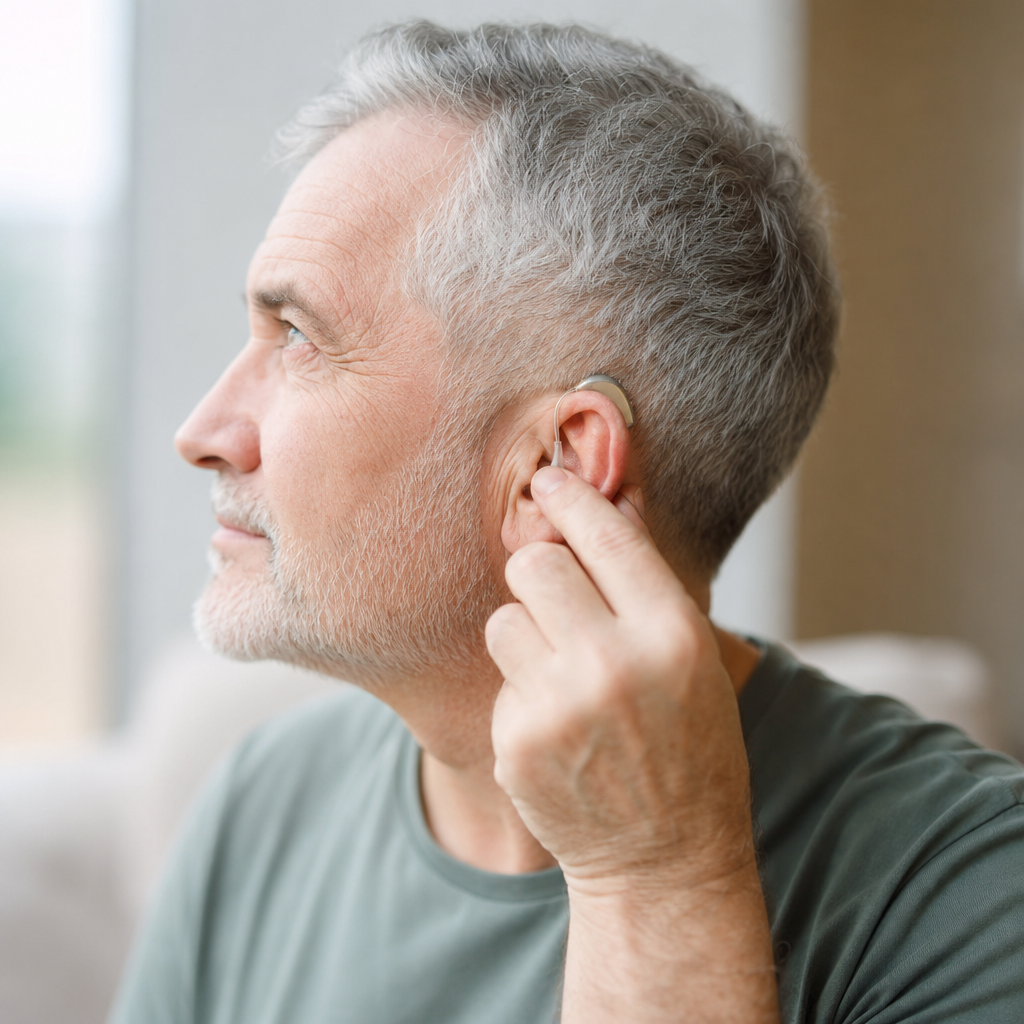
Hear n aid is a broad, plain-language way people search for hearing aid information, usually when they want a clear starting point rather than a technical lecture. In practice, the phrase covers the full landscape of hearing aids: what they are, who needs them, how they work, how much they cost, what styles exist, and how to choose one that improves daily life. I have helped patients and families navigate these questions in clinic settings and after fittings, and the same pattern appears every time: most people are not confused by one detail, but by the entire process.
A hearing aid is a small electronic medical device that makes sound more usable for a person with hearing loss. It does not simply make everything louder. Modern devices use microphones, digital signal processing, amplification, feedback management, and customized programming to emphasize speech, reduce unwanted noise, and match a person’s hearing thresholds measured on an audiogram. Some models also connect to phones, televisions, remote microphones, and telehealth software. The result is not “perfect hearing,” but better access to conversations, warnings, work meetings, and everyday environmental sounds.
This topic matters because hearing loss is common, progressive, and often under-treated. The World Health Organization has estimated that more than 1.5 billion people live with some degree of hearing loss worldwide, and hundreds of millions could benefit from rehabilitation. Untreated hearing loss is associated with communication breakdown, social withdrawal, listening fatigue, poorer work performance, and greater cognitive load. The benefit of a hearing aid is practical: it helps people follow speech with less strain. The benefit is also personal: many users regain confidence in restaurants, family gatherings, worship services, and phone calls.
As a general hub, this article explains the essentials in plain terms so you can understand the category before drilling into specific device types, brands, costs, fitting methods, care routines, and accessories.
What a Hearing Aid Does and Who It Helps
A hearing aid is designed for people with hearing loss, not for people who simply want a sound booster. That distinction matters. Personal sound amplification products can make sounds louder, but hearing aids are built to medical and electroacoustic standards, adjusted to a measured hearing profile, and intended to support communication. Most users have sensorineural hearing loss, commonly caused by aging, noise exposure, genetics, ototoxic medications, illness, or a combination of factors. Others may have mixed hearing loss or conductive components that require medical evaluation before amplification decisions are made.
The clearest sign that someone may need a hearing aid is not always “I cannot hear.” More often it is “I can hear, but I cannot understand.” People report that others seem to mumble, group conversations feel impossible, television volume keeps creeping upward, or speech is especially unclear in background noise. Family members often notice the problem first. In clinic, I have seen many adults score better than expected in quiet but struggle sharply once restaurant noise or distance is added. That pattern is typical because hearing loss reduces audibility and clarity at the same time.
Hearing aids help by improving access to the speech frequencies most important for consonants such as s, f, th, k, and t. Those softer sounds carry meaning and word distinction. When they are not audible, speech sounds incomplete even if vowels remain loud enough. Properly fitted hearing aids can also improve localization cues, environmental awareness, and listening stamina. They do not restore natural hearing or eliminate all noise, but they can make communication substantially easier when they are programmed well and worn consistently.
How Hearing Aids Work in Real Life
Modern hearing aids are miniature computers. Sound enters through one or more microphones, is converted into a digital signal, processed according to the user’s prescription, and then delivered through a receiver into the ear canal. Inside that chain, several systems operate at once. Wide dynamic range compression shapes soft, average, and loud sounds differently so speech becomes audible without becoming uncomfortable. Noise reduction analyzes steady-state sound and reduces the gain applied to it. Directional microphones emphasize sounds from the front when a user faces a speaker. Feedback cancellation suppresses whistling caused by amplified sound leaking back to the microphone.
Those functions matter because hearing loss is not just about volume. A person may need more gain for soft high-frequency sounds, less gain for low-frequency noise, and strict limits for loud inputs. Audiologists often verify fittings with real-ear measurement, which places a thin probe microphone in the ear canal to measure the actual sound delivered near the eardrum. This step is considered best practice by professional bodies such as the American Academy of Audiology because software estimates alone are not enough. Real-ear verification is one of the strongest predictors that the device is matching the prescription accurately.
In daily use, hearing aids also rely on adaptation. A first-time user may notice paper rustling, footsteps, refrigerator hum, or their own voice more than expected. That does not mean the fitting is wrong. It usually means the brain is relearning environmental sounds that were previously missed. Good clinicians prepare users for this transition and often set follow-up appointments to fine-tune gain, noise settings, dome size, retention, and streaming preferences. The goal is comfortable use across real situations, not a perfect first impression in a quiet office.
Common Styles, Features, and Tradeoffs
Hearing aids come in several physical styles. Behind-the-ear and receiver-in-canal devices sit behind the ear and connect to an earpiece in the canal. They are widely used because they fit many hearing losses, offer strong battery options, and support advanced features. In-the-ear, in-the-canal, and completely-in-canal models are custom shells that fit partly or entirely in the ear. These may appeal to users who prioritize cosmetics, but they can be more limited in battery size, controls, and power. People with dexterity challenges, narrow canals, chronic drainage, or severe hearing loss may do better with larger styles.
Feature selection should match listening needs, not marketing claims. Rechargeable batteries are now mainstream and especially useful for users with arthritis or vision limitations. Bluetooth streaming can send calls, music, and television audio directly from phones or accessories. Telecoil remains valuable in loop-equipped venues such as some theaters, churches, and public meeting spaces. Moisture resistance, often rated by an IP code, helps users in humid climates or active jobs. AI-labeled features can be helpful, but they are still subsets of signal processing, classification, and automation rather than magic problem solvers.
| Style | Best For | Key Advantages | Main Tradeoffs |
|---|---|---|---|
| Receiver-in-canal | Mild to severe hearing loss | Natural sound, flexible fitting range, common Bluetooth options | Receiver and dome need routine maintenance |
| Behind-the-ear | Children, power users, severe to profound loss | Durable, powerful, easy handling, larger battery | More visible behind the ear |
| In-the-ear | Users wanting one-piece custom fit | Easier insertion than smaller custom aids, room for controls | Can pick up wind noise, visible in outer ear |
| Completely-in-canal | Cosmetic priority, mild to moderate loss | Very discreet, natural phone placement | Shorter battery life, fewer features, harder to handle |
When I counsel patients, I start with three questions: Where do you struggle most, how comfortable are you with small devices, and what level of follow-up support do you want? Those answers usually narrow the field faster than brand comparisons alone.
Testing, Fitting, and Adjustment
The best hearing aid outcomes start with the right assessment. A complete hearing evaluation usually includes case history, otoscopy, pure-tone air and bone conduction testing, speech reception thresholds, word recognition, and sometimes tympanometry or speech-in-noise testing. These results show degree, type, and configuration of hearing loss and help identify whether medical referral is needed. Sudden hearing loss, one-sided asymmetry, ear pain, drainage, dizziness, or rapidly changing thresholds should be evaluated medically before routine amplification proceeds.
After testing, fitting involves more than picking a device. The clinician selects acoustics such as receiver strength, venting, dome type, earmold style, and prescription formula, often NAL-NL2 or DSL depending on age and goals. Then comes programming, verification, and counseling. Real-ear measurement confirms whether speech-shaped signals are reaching target. Orientation covers insertion, charging, cleaning, app setup, button functions, realistic expectations, and wearing schedule. This educational step matters because even excellent devices fail when users are sent home without instruction.
Adjustment usually takes time. Fine-tuning may address own-voice discomfort, occlusion, excessive sharpness, weak TV clarity, or poor speech understanding in noise. Speech-in-noise benefit often improves further when users add accessories such as remote microphones. Follow-up also lets the clinician review datalogging, which shows wear time and listening environments. If a user wears aids only two hours a day, the first fix may be comfort coaching rather than more gain. Good care is iterative: measure, listen, adjust, verify, and retest in the contexts that matter most.
Costs, Buying Paths, and Ongoing Maintenance
Hearing aid cost varies widely because the price can include hardware, professional services, verification, follow-up visits, warranty, loss coverage, and accessories. In the United States, a pair from a clinic may range from roughly $2,000 to $7,000 or more depending on technology level and bundled care. Lower-cost options exist through unbundled service models, big-box retailers, direct-to-consumer channels, and over-the-counter products for perceived mild to moderate hearing loss. Lower upfront price can be attractive, but support quality, return terms, and fitting accuracy should be examined closely.
Buying paths now fall into three broad categories. Prescription hearing aids are sold through hearing care professionals and are best for people who want testing, custom programming, and follow-up. Over-the-counter hearing aids are intended for adults with perceived mild to moderate hearing loss and can be purchased without a medical exam or fitting, though many companies offer remote support and in-app hearing checks. Personal sound amplifiers remain separate from hearing aids and should not be treated as equal substitutes for most long-term hearing problems. The right path depends on hearing severity, confidence with self-fitting, and access to support.
Maintenance is simple but non-negotiable. Devices need daily wiping, periodic wax guard changes, microphone port checks, and charging or battery replacement. Moisture jars or drying systems can prolong life in humid environments. Receivers, tubing, and domes wear out and need replacement. Most warranties last one to three years, but users should ask what is covered: repairs, one-time loss and damage, charger replacement, and office visits vary by provider. A hearing aid is durable technology, yet it performs best when treated like eyewear or dental appliances: cleaned regularly, checked periodically, and serviced before small problems become major ones.
What Good Results Look Like
A successful hearing aid fitting is not defined by silence disappearing or every conversation becoming effortless. Good results mean speech is easier to follow, listening fatigue decreases, important sounds are audible again, and the user wears the devices consistently because benefit outweighs annoyance. Outcome measures such as the Hearing Handicap Inventory, APHAB, COSI, or speech-in-noise testing can document progress better than vague impressions alone. In my experience, the happiest users are not those who bought the most expensive model, but those whose expectations, fitting process, and support matched their actual communication needs.
Accessories and communication strategies also matter. Remote microphones can dramatically improve speech understanding across distance and noise by placing the microphone near the talker. Captioned phones, TV streamers, loop systems, and smartphone apps extend hearing aid usefulness beyond amplification alone. Family education helps as well. Facing the listener, reducing competing noise, and speaking clearly at a natural pace often helps more than repeating louder. Hearing care works best when the environment, the technology, and the communication habits all improve together.
Hear n aid is ultimately about informed choices. Start with a hearing test or a credible screening, learn what type of hearing loss is present, compare styles and service models honestly, and insist on a fitting process that includes verification and follow-up. The main benefit is straightforward: better access to speech and a more connected daily life. If you are researching hearing aids for yourself or someone close to you, use this hub as your foundation, then move to deeper guides on styles, costs, brands, care, and accessories so the next step is based on evidence rather than guesswork.
Frequently Asked Questions
What does “hear n aid” usually mean, and what is a hearing aid?
“Hear n aid” is a common plain-language search term people use when they want simple, practical information about hearing aids without getting lost in technical jargon. In most cases, they are really asking about the full picture: what hearing aids are, how they help, who should use them, what they cost, and how to choose the right option. A hearing aid is a small electronic device designed to make sound easier to hear and understand. Modern hearing aids do not just make everything louder. They are programmed to amplify the sounds a person needs more clearly, especially speech, while also helping manage background noise in many listening situations.
A typical hearing aid has a microphone that picks up sound, a processor that adjusts the sound based on the wearer’s hearing needs, and a speaker that delivers the sound into the ear. Many current models also include features such as directional microphones, feedback control, Bluetooth connectivity, rechargeable batteries, and smartphone app adjustments. The goal is not simply volume. The goal is better day-to-day communication, reduced listening strain, and improved participation in conversations, work, family life, and social settings.
It is also important to understand that hearing aids are tools, not cures. They can significantly improve hearing function for many people with hearing loss, but they do not restore hearing to perfect “normal.” The best results usually happen when the device is properly selected, professionally adjusted when needed, and worn consistently long enough for the brain to adapt. For many patients, hearing aids become less about the device itself and more about getting back ease, confidence, and connection in everyday life.
How do I know if I might need a hearing aid?
Many people assume they would know immediately if they had hearing loss, but in reality it often develops gradually. One of the most common signs is not that everything sounds quiet, but that speech sounds less clear. You may hear that someone is talking yet still miss words, especially in restaurants, group conversations, meetings, places with background noise, or when people speak from another room. Turning up the TV volume, asking others to repeat themselves, feeling tired after conversations, or thinking that others are mumbling are also very common clues.
Family members often notice hearing changes before the person experiencing them. Loved ones may point out that the television is too loud, that you are not responding when spoken to, or that you seem withdrawn in social situations. Some people also notice tinnitus, or ringing in the ears, alongside hearing difficulty. Others begin avoiding calls, crowded events, or situations where listening feels frustrating or embarrassing. These patterns matter because untreated hearing loss can affect communication, relationships, work performance, and overall quality of life.
The best way to know whether you need a hearing aid is to have a hearing evaluation. A hearing professional can measure the type and degree of hearing loss and explain whether hearing aids are likely to help. Not every hearing problem is treated the same way, so an evaluation is important before choosing any device. In some cases, earwax, middle ear issues, or medical conditions can contribute to hearing changes. If you notice persistent trouble hearing, do not wait for it to become severe. Early action often makes the adjustment to hearing aids easier and helps preserve better communication habits over time.
How do hearing aids work, and what features actually matter?
Hearing aids work by capturing sound, processing it, and delivering a tailored version of that sound into the ear. What makes modern devices so effective is that they can be programmed to match a person’s unique hearing profile. For example, many people hear low-pitched sounds better than high-pitched sounds, so the hearing aid may provide more support in the frequencies where speech details are being missed. This targeted amplification is why a properly fit hearing aid is much more helpful than a simple sound amplifier.
Some of the most useful features depend on your lifestyle. Directional microphones help focus on speech in front of you, which can improve hearing in noisy places. Noise reduction features can make background sounds less distracting, although no technology completely eliminates difficult listening environments. Feedback management helps prevent the whistling sound some people associate with older devices. Rechargeable batteries are popular because they are convenient and remove the need to handle tiny disposable batteries. Bluetooth streaming can be especially valuable for phone calls, television audio, music, and video meetings.
Other features may include telecoils for compatible public venues, tinnitus masking options, automatic environment detection, and app-based controls for volume or listening modes. The most important point is that more features do not automatically mean a better experience. The right hearing aid is the one that fits your hearing loss, ear anatomy, dexterity, budget, and daily routine. In clinic settings, one of the most common mistakes is focusing only on the gadget itself instead of how the person actually lives. A well-fit mid-range device that is worn consistently and adjusted appropriately often performs better for a real person than a premium device with features they never use.
How much do hearing aids cost, and are they worth it?
Hearing aid costs vary widely depending on the style, technology level, service model, and whether professional testing, fitting, follow-up care, and warranties are included. Some devices are sold through hearing clinics as part of a bundled care package, while others are sold more directly with fewer services built into the price. That is why comparing cost alone can be misleading. Two options may look similar on paper but offer very different levels of support, customization, maintenance, and long-term value.
In general, price may reflect factors such as sound processing sophistication, background noise performance, connectivity features, rechargeability, water resistance, and aftercare. People with more demanding listening environments, such as busy workplaces, frequent social gatherings, or heavy phone use, may benefit from more advanced features. Others may do very well with simpler solutions. It is also worth asking about trial periods, return policies, repair coverage, clean-and-check visits, and whether future programming adjustments are included. Those details often matter just as much as the initial purchase price.
As for whether hearing aids are worth it, for many people the answer is yes. The value is not only in hearing more sound, but in reducing communication breakdowns, lessening listening fatigue, improving confidence, and staying engaged with family, friends, and everyday activities. Patients often say the biggest benefit is not hearing something dramatic for the first time, but no longer struggling so hard during ordinary moments. If cost is a concern, ask about insurance benefits, financing, health savings accounts, over-the-counter options for appropriate mild to moderate hearing loss, and lower-cost models that still provide solid performance. A thoughtful, guided choice is usually far more important than chasing the most expensive device.
What types of hearing aids are available, and how do I choose the right one?
Hearing aids come in several main styles, and the best choice depends on hearing needs, comfort, visibility preferences, and practical considerations such as dexterity and ear shape. Behind-the-ear and receiver-in-canal styles are among the most common because they fit a wide range of hearing losses and can offer strong sound quality, rechargeability, and useful features. In-the-ear and custom in-the-canal options may appeal to people who want something more discreet or self-contained, though the smaller the device, the less room there may be for battery size, controls, and some advanced components.
Choosing the right hearing aid starts with your hearing test results, but it should not end there. Think about where you struggle most: restaurants, one-on-one conversations, television, work meetings, phone calls, worship services, or outdoor activities. Consider whether you want rechargeable batteries, app control, Bluetooth streaming, or simple manual operation. If your hands are not steady or your vision is limited, tiny devices may be harder to manage. If earwax or moisture is a frequent issue, some styles may be more practical than others. Comfort also matters. A hearing aid you dislike wearing will not help much, no matter how advanced it is.
The best process is to combine hearing data with real-life priorities. A good provider or knowledgeable seller should ask about your communication goals, daily routine, physical comfort, and budget before making a recommendation. You should also expect an adjustment period. New wearers often need time to get used to everyday environmental sounds and to learn how the devices behave in different settings. Follow-up fine-tuning is normal and often necessary. The right hearing aid is not just the one that fits your ear. It is the one that fits your life well enough that you actually use it, benefit from it, and feel more connected because of it.