
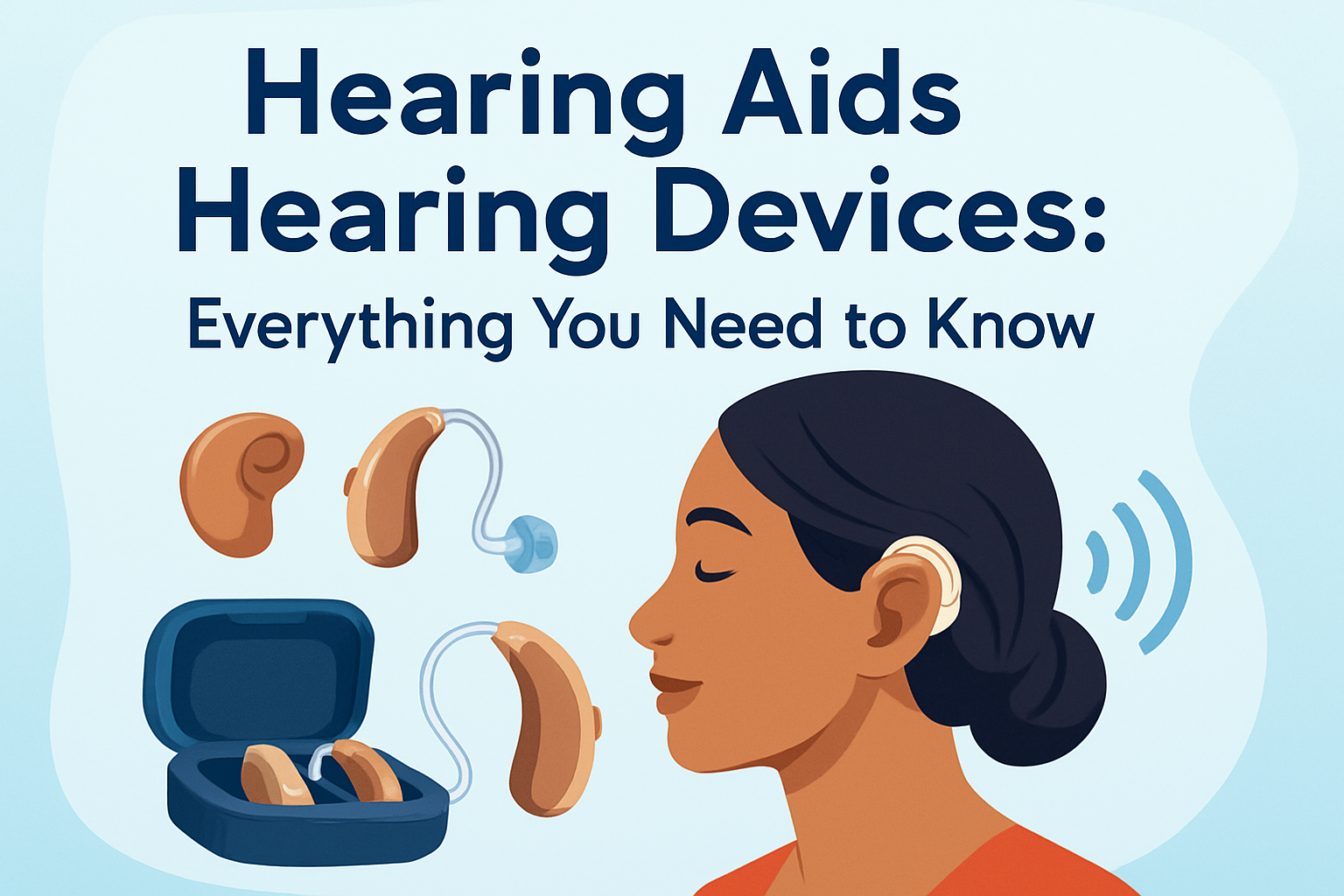
Hearing Aids and Hearing Devices: Everything You Need to Know
Hearing aids and hearing devices are essential tools for individuals experiencing hearing loss. These advanced technological marvels aren’t just about amplifying sound; they represent a lifeline to a world of clarity and connection. With the increasing prevalence of hearing loss globally, understanding these devices becomes imperative. Hearing aids are small electronic devices that one wears in or behind the ear. They amplify certain sounds, allowing a person with hearing impairments to listen, communicate, and participate more fully in daily activities. But why do they matter? Hearing loss can profoundly impact a person’s quality of life, from diminished social interactions to negatively affecting their professional lives. Therefore, gaining insight into hearing aids and devices isn’t merely academic; it’s a path to empowerment and improved quality of life.
The Basics of Hearing Aids
At their core, hearing aids are composed of three fundamental components: a microphone, an amplifier, and a speaker. The microphone picks up surrounding sounds. These sounds are then converted into electrical signals, which the amplifier boosts. Finally, the speaker delivers these amplified sounds to the ear. There are myriad types of hearing aids available, ranging from behind-the-ear (BTE) and in-the-ear (ITE) models to completely-in-canal (CIC) devices.
Consider the case of Margaret, a 65-year-old retiree who found herself increasingly isolated due to hearing loss. When she received her BTE hearing aids, it was a revelation. The once muffled world of TV shows, family gatherings, and even the chirping of birds became lucid and vibrant again. This real-world example underscores the profound impact of appropriately chosen hearing aids.
Behind-the-Ear (BTE) Hearing Aids
BTE hearing aids are one of the most popular choices among users. They feature a hard plastic case worn behind the ear and connected to an earmold inside the ear canal. The advantages of BTE devices include durability, ease of handling, and suitability for users of all ages. Moreover, their larger size accommodates more powerful batteries, thus enabling longer use between charges.
Let’s delve into John’s experience, a young professional who opted for BTE solutions. Initially hesitant due to cosmetic concerns, John soon realized the benefits far outweighed any perceived drawbacks. The enhanced speech clarity in bustling business meetings was transformative, emphasizing that BTE devices cater to more than just elderly users—they can provide wide-ranging benefits across the age spectrum.
In-the-Ear (ITE) Hearing Aids
ITE hearing aids cater to varying degrees of hearing loss. These devices fit entirely inside the outer ear. Their larger size, compared to in-canal styles, means they can house effective features like volume control and directional microphones, which smaller devices cannot.
For instance, consider Lisa, who struggled with moderate hearing impairment her entire life. Her transition to ITE devices brought newfound acoustic clarity without compromising on aesthetic appeal. Lisa’s story highlights ITE devices as a harmonious blend of function and design.
Completely-in-Canal (CIC) Devices
CIC devices are compact, discreet solutions for individuals with mild to moderate hearing loss. Fitting almost entirely inside the ear canal, they are nearly invisible. Their tiny size can limit features like volume control, but their discreetness offers a persuasive argument for aesthetic-conscious users.
Mark, a university student, chose CIC devices primarily for their elusive appearance. Despite their compact nature, CICs significantly improved his ability to engage during lectures and social gatherings, proving that small can indeed be mighty.
The selection of hearing devices should factor in individual lifestyle needs, hearing levels, and aesthetic preferences. To better understand their distinctions, here is a comparison:
| Type | Visibility | Features | Ideal For |
|---|---|---|---|
| BTE | Visible | Powerful batteries, versatile features | All ages, severe hearing loss |
| ITE | Moderately visible | Volume control, directional microphones | Moderate to severe hearing loss |
| CIC | Almost invisible | Minimal features due to size | Mild to moderate hearing loss |
Technological Advances in Hearing Aids
Today’s hearing devices are not static; they’re at the forefront of technological innovations. Modern hearing aids come with Bluetooth connectivity, enabling seamless integration with smartphones, computers, and other devices. This leap in technology has drastically reduced the stigma attached to wearing hearing aids, as more people use them effortlessly in tandem with everyday gadgets.
Consider Emily, an avid music lover, who was concerned about whether her hearing aids could truly capture the nuances of her favorite tracks. Thanks to Bluetooth capability, she experienced music in high-definition quality directly through her devices. This example of technological advancement has paved the way for users to integrate hearing aids seamlessly with modern lifestyles.
Importance of Regular Maintenance
Like any electronic device, hearing aids require regular maintenance to perform optimally. Users need to clean them frequently, check batteries, and visit audiologists for adjustments as needed. Routine maintenance not only extends device life but also ensures consistent sound quality.
Reflecting on Sam’s experience, who consistently skipped his regular check-ups, it was evident how lapses in maintenance could drastically affect sound clarity and overall device functionality. Sam learned, albeit the hard way, that a little care goes a long way in preserving the efficacy of these vital devices.
The Role of Audiologists
Audiologists play a crucial role in the journey from hearing impairment to clarity. They guide individuals in selecting the most suitable devices, fine-tuning them for maximum efficacy, and offering ongoing support and adjustments. Their expertise ensures that users are afforded the best possible outcomes from their hearing aids.
For Charles, who experienced a steep learning curve with his new devices, his audiologist became an invaluable resource. Through customized adjustments and patient guidance, Charles gradually adapted to the new auditory landscape presented by his devices. This underscores the indispensable role audiologists play in empowering users.
Cost Considerations and Insurance
One significant barrier to acquiring hearing aids is often the cost. Hearing devices can range from modestly priced to quite expensive, only further complicated by potential insurance coverage challenges.
Lucy, a retiree living on a fixed income, feared she wouldn’t be able to afford quality hearing aids. After conducting her research, she discovered insurance options and payment plans that made her devices affordable. This real-life application highlights that, while financial considerations are valid, solutions exist for virtually every budget.
Summing Up the Journey with Hearing Aids
The journey to understanding and effectively using hearing aids and devices is an enlightening one. From grasping the basics of the various types—be it BTE, ITE, or CIC—to appreciating the technological advances and importance of regular maintenance, knowledge is indeed power in the quest for clear sound. These devices not only provide users a bridge back to vibrant worlds of sound but also restore confidence and comprehensive engagement in everyday life activities.
The benefits of hearing devices are undeniable, transforming lives by reconnecting individuals with the sounds that define human experience. For those noticing changes in their hearing, the solution starts with a simple, proactive step: consulting with a qualified audiologist. This partnership will help tailor their specific auditory needs, ensuring the best possible outcomes tailored to their lifestyle preferences.
Now is the moment to embrace the revolutionary advancements in hearing technology. Whether you are considering hearing aids for yourself or a loved one, this guide serves as both an educational resource and a call to action. Reclaiming the joy of sound isn’t a distant dream—it’s an attainable reality.
Frequently Asked Questions
1. What are hearing aids and how do they work?
Hearing aids are small electronic devices designed to amplify sound for individuals who experience hearing loss. These devices can be worn either inside the ear canal or positioned behind the ear. They consist of a microphone, amplifier, and speaker. The microphone picks up sound from the environment, the amplifier increases the volume of the sound, and the speaker plays the amplified sound into the ear. Modern hearing aids also include digital signal processing which allows for more sophisticated sound filtering and customization to meet individual hearing needs. In addition, many modern hearing aids come equipped with advanced features such as Bluetooth connectivity, allowing users to directly connect their hearing aids to smartphones, TVs, and other devices.
2. How do I know if I need a hearing aid?
Determining whether you need a hearing aid typically starts with an awareness of your own hearing challenges. Common signs you might need a hearing aid include frequently asking others to repeat themselves, turning up the volume on the TV or radio higher than before, or struggling to follow conversations in noisy environments. If you experience any of these symptoms, it is advisable to consult an audiologist or hearing care professional. They can conduct a thorough hearing assessment, often including an audiogram, to determine your level of hearing loss. This will help in deciding if hearing aids could benefit you and, if so, what type or model might be most effective.
3. What types of hearing aids are available?
Hearing aids come in several different styles to suit diverse preferences and degrees of hearing loss. The main types include:
– Behind-The-Ear (BTE): These hearing aids consist of a hard plastic case worn behind the ear, connected to a plastic earpiece that fits inside the outer ear. BTE aids are suitable for users of all ages and for those with mild to profound hearing loss.
– In-The-Ear (ITE): These are custom-fitted hearing aids made within a hard plastic shell that fills the outer portion of the ear. They are usually used for mild to severe hearing loss.
– In-The-Canal (ITC) and Completely-In-Canal (CIC): These are among the smallest hearing aids available, fitting partially or completely within the ear canal, and are appropriate for mild to moderate hearing loss. Because of their small size, these aids can be less visible and more cosmetic, but they may also have fewer features.
– Receiver-In-Canal (RIC) or Receiver-In-Ear (RIE): Similar to BTEs but smaller and with the speaker or receiver inside the ear canal, allowing for fewer feedback issues and enhanced sound quality.
Each type of hearing aid has its own advantages and disadvantages and should be selected in consultation with a hearing professional based on individual needs and lifestyle.
4. How do I care for my hearing aids to ensure they last?
Proper care and maintenance of your hearing aids will help extend their life and ensure they function effectively. Here are some tips:
– Keep them dry: Moisture is one of the most common reasons for hearing aid failure. When not in use, store them in a dehumidifier or dry storage box specifically designed for hearing aids.
– Avoid extreme temperatures: Do not leave hearing aids in hot places, such as inside a car on a sunny day, as the heat can damage the electronics.
– Regular cleaning: Use a soft, dry cloth to clean your hearing aids daily, and use tools like a brush or pick to remove earwax and debris. Avoid using alcohol or cleaning solutions not specifically designed for hearing aids.
– Battery care: Change batteries regularly and ensure you have a supply of fresh batteries on hand. Turn off your hearing aids when they are not in use to preserve battery life.
– Regular check-ups: Schedule regular appointments with your hearing care professional to ensure your hearing aids are working correctly and to adjust them as needed. Professionals can also perform more thorough cleanings and maintenance.
5. What should I expect during my first few weeks with hearing aids?
Adjusting to hearing aids can take time, as your ears and brain need to adapt to hearing sounds at a newfound clarity and volume. Initially, you might find some sounds unusually loud or notice background noise more than you’re used to. Here’s a general overview of what to expect:
– Gradual adjustment: Start by wearing your hearing aids in quieter environments and for a few hours a day, gradually increasing wear time as you become more accustomed to them.
– Getting used to your own voice: Your voice may sound different to you at first, which is perfectly normal. Practice speaking aloud alone to get comfortable with this change.
– Learning to focus on speech: With hearing aids, echoed sounds of background noise will also be amplified. Over time, your brain learns to filter out these sounds similarly to how it did naturally before the hearing loss occurred.
– Patience and perseverance: The transition can seem overwhelming, but persistence is key. Utilize follow-up visits with your hearing care professional to adjust fit, sound levels, or address any concerns.
Many users notice significant improvements in their audible experiences and quality of life after an initial adjustment period, so it’s important to give yourself adequate time to adapt to the changes.