
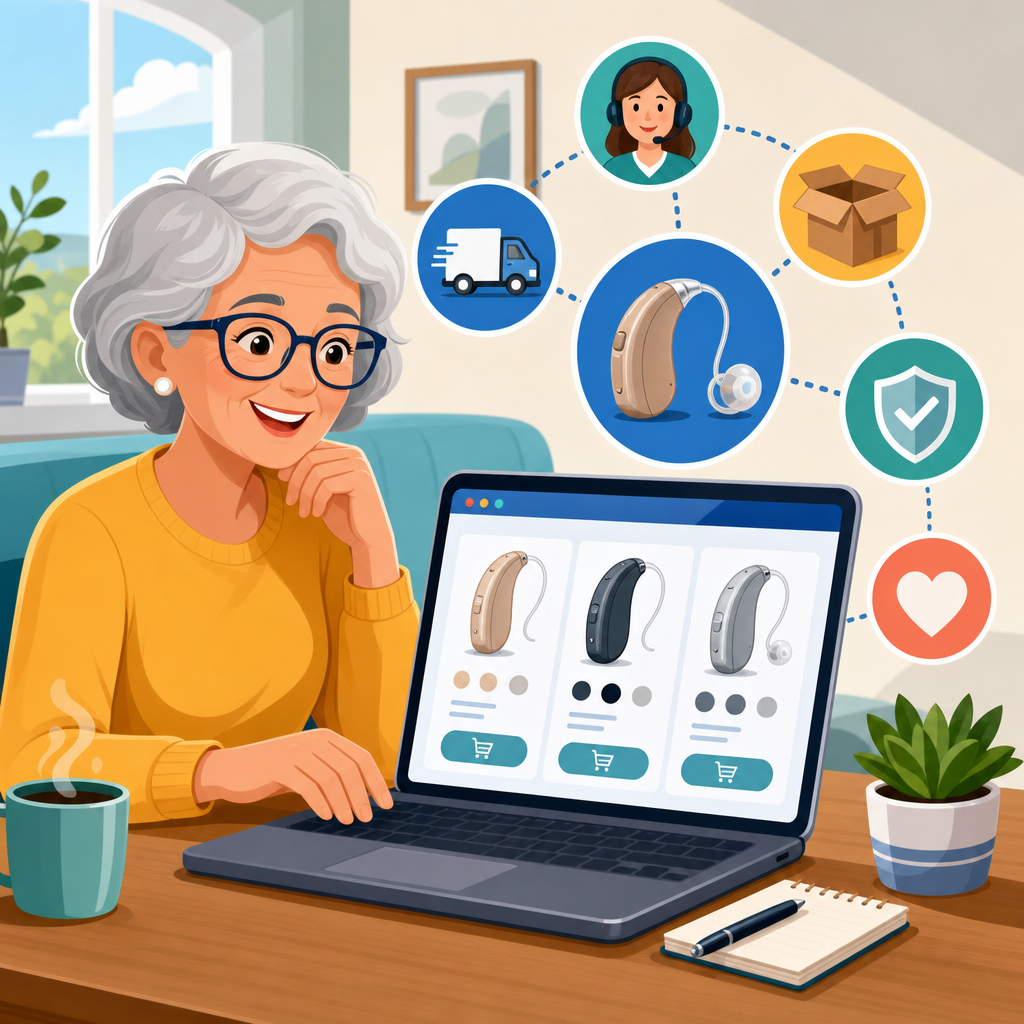
Buying hearing aids online has moved from a niche option to a mainstream path for adults who want better hearing, lower prices, and more control over the process. In practical terms, “hearing aids online” refers to researching, comparing, ordering, fitting, and receiving support for hearing devices through websites, telehealth platforms, or direct-to-consumer brands rather than relying only on a local clinic. That can include prescription hearing aids fitted remotely, over-the-counter devices for mild to moderate hearing loss, accessories such as chargers and domes, and online hearing tests used as a screening step. The topic matters because untreated hearing loss affects communication, work performance, social participation, cognitive load, and quality of life, yet many people delay treatment for years due to cost, stigma, confusion, or lack of convenient access. Online channels have lowered several of those barriers, but they have also introduced new questions about safety, product quality, return policies, and whether self-fitting devices can truly work.
After helping people compare hearing devices and remote care models, I have seen the online route work very well when the buyer understands the basics before clicking “purchase.” The first key term is hearing loss type. Sensorineural hearing loss, usually caused by aging, noise exposure, or medication effects, is the most common type in adults and is often managed with hearing aids. Conductive hearing loss, caused by blockage or middle-ear problems, may require medical treatment instead. The second key term is severity: mild, moderate, severe, and profound. Most over-the-counter hearing aids are intended only for adults with perceived mild to moderate hearing loss. The third key term is fitting model. Some devices are professionally fit using an audiogram and remote programming, while others use in-app hearing checks and self-fitting software. Knowing these distinctions helps buyers avoid the biggest online mistake: choosing a product category that does not match their hearing profile or medical needs.
The online marketplace is worth understanding because it now spans established hearing care companies, retail marketplaces, and new direct brands. U.S. regulations also changed the landscape. In 2022, the Food and Drug Administration finalized rules creating an over-the-counter hearing aid category for adults aged eighteen and older with perceived mild to moderate hearing loss. That opened the door for more competition and easier access, but it did not erase the need for careful evaluation. Some products sold online are true hearing aids; others are personal sound amplification products, or PSAPs, which are not regulated as hearing aids and are not intended to treat hearing loss. A hub page on hearing aids online should therefore answer the central questions clearly: who can safely buy online, what types of devices exist, how prices and features compare, what support should be included, and when an in-person medical exam is the better choice.
Who should buy hearing aids online and who should not
Hearing aids online are a strong option for adults with gradual, symmetrical, mild to moderate hearing loss who are comfortable using a smartphone, following setup steps, and communicating through chat, phone, or video support. Typical examples include someone turning up the television, missing speech in restaurants, or struggling with soft voices in meetings, especially if both ears seem affected similarly. This buyer usually benefits from online screening, transparent pricing, and home trial periods. Online purchasing is also useful for experienced users replacing an older pair, because they already understand receiver strength, dome comfort, battery habits, and realistic expectations for amplification. Many can upload a recent audiogram and receive remote fine-tuning that closely mirrors clinic follow-up for straightforward cases.
Not everyone is a good online candidate. Sudden hearing loss, hearing loss in only one ear, ear pain, active drainage, dizziness, asymmetrical tinnitus, a history of ear surgery, or rapid decline all warrant medical evaluation before buying anything. These red flags matter because hearing aids do not treat infections, earwax impaction, acoustic neuroma, otosclerosis, or sudden sensorineural hearing loss, and delaying care can cause harm. Children should not use adult over-the-counter hearing aids. Adults with severe or profound hearing loss often need custom programming, more power, real-ear verification, and specialized counseling that is usually best handled in person. In my experience, the safest rule is simple: if the hearing change is new, unusual, one-sided, painful, or medically complicated, start with an ear, nose, and throat physician or licensed audiologist before exploring online options.
Types of hearing aids sold online
Online hearing aid listings can look similar, but the devices fall into distinct categories with different support models. Prescription hearing aids are medical devices selected and programmed based on an audiogram by a hearing care professional. They may be ordered online through teleaudiology services and adjusted remotely using manufacturer software. Over-the-counter hearing aids are self-selected devices for adults with perceived mild to moderate hearing loss. They must meet FDA requirements for labeling, output limits, and safety. PSAPs amplify environmental sound but are marketed for non-hearing-loss uses such as birding or lectures; they should not be treated as substitutes for hearing aids. The practical takeaway is that product labeling is not a small detail. A buyer should verify whether the device is a prescription hearing aid, an OTC hearing aid, or a PSAP before comparing price.
Form factor also affects online buying success. Receiver-in-canal, often abbreviated RIC, is the most common style because it is discreet, versatile, and easier to fit across a wide range of mild to severe losses. Behind-the-ear models are durable and may suit users who want larger controls or more power. In-the-ear and completely-in-canal products can be more cosmetic, but fit and occlusion are more variable, so returns matter more. Feature sets vary widely. Common capabilities include directional microphones, digital noise reduction, feedback suppression, Bluetooth streaming, rechargeable lithium-ion batteries, tinnitus masking, telecoil compatibility, and app-based personalization. Named platforms from established manufacturers such as Phonak, Oticon, ReSound, Signia, Starkey, and Widex generally offer mature ecosystems and stronger long-term support, while newer OTC brands may emphasize lower upfront cost and simplified setup.
How the online buying process works
The best online hearing aid purchase follows a structured process rather than impulse shopping. First, the buyer identifies symptoms and screens for red flags. Second, they review whether they have a recent hearing test. Third, they choose a category: OTC for likely mild to moderate loss without medical concerns, or professionally fit devices if they already have an audiogram or want clinician involvement. Fourth, they compare trial periods, warranty length, included follow-up care, and total price. Fifth, they complete setup, usually through an app that guides insertion, hearing check, and volume or program adjustment. Finally, they wear the devices consistently during an adaptation period and request fine-tuning based on real listening situations, not only first impressions in a quiet room.
| Step | What to do | What to verify |
|---|---|---|
| Screen | Review symptoms and red flags | No sudden, painful, or one-sided changes |
| Test | Use a recent audiogram or screening | Loss appears mild to moderate if buying OTC |
| Compare | Check devices, support, and policies | Trial period, warranty, rechargeability, app quality |
| Fit | Follow app or clinician setup | Comfort, secure insertion, audible but not harsh sound |
| Adjust | Wear daily and request changes | Speech clarity improves across real environments |
Remote fitting can be highly effective when the provider uses a disciplined protocol. Good services start with an intake questionnaire, review hearing results, and document listening goals such as restaurant speech, family conversations, television clarity, or phone calls. They then map device settings to the hearing profile and provide coaching on insertion depth, venting, wax guards, and realistic adaptation. The limitation is that most online OTC pathways do not include real-ear measurement, the gold standard for verifying that amplification at the eardrum matches prescription targets such as NAL-NL2. That does not mean online fitting fails; it means outcomes depend more heavily on software quality, user feedback, and support access. Buyers who want maximum precision should prioritize services that include licensed professional care and remote reprogramming.
Price, value, and what you are really paying for
One reason consumers search for hearing aids online is price transparency. Traditional bundled clinic pricing may include the devices, professional fitting, follow-up visits, cleanings, loaners, and warranty support in a single figure. Online models often separate hardware from service, which can make prices look dramatically lower. OTC hearing aids commonly range from a few hundred dollars to around three thousand dollars per pair, while professionally fit premium prescription devices can exceed that, depending on technology level and care package. Veterans, some Medicare Advantage plans, Medicaid programs in certain states, the Department of Veterans Affairs, and private insurance may offer partial coverage, but Original Medicare generally does not cover hearing aids. Health savings accounts and flexible spending accounts can often be used for eligible purchases.
The smartest way to judge value is to calculate total ownership cost over three to five years. Include the device price, charger or batteries, replacement domes and wax filters, loss and damage coverage, remote appointments, and the cost of upgrading if the first choice fails. A low sticker price can be expensive if the app is unstable, support is slow, or the return process is restrictive. By contrast, a higher-priced package may be economical if it includes unlimited remote fine-tuning, a three-year warranty, and strong speech-in-noise performance that keeps the user engaged. I advise buyers to treat hearing aids as a communication system, not just a gadget. The value comes from better daily participation: hearing a partner clearly, following meetings without fatigue, and staying involved in social settings that many people quietly withdraw from when hearing becomes work.
Features that matter most in daily use
Shoppers often focus on tiny size or the number of listening programs, but the features that matter most are usually simpler. Speech understanding in noise depends on microphone directionality, processing speed, and how well the fitting matches the hearing loss. Rechargeability matters because it reduces battery handling, especially for users with dexterity or vision challenges. Bluetooth streaming is valuable for phone calls and media, yet compatibility varies between iPhone, Android, and specific hearing aid chipsets. Moisture resistance matters for people in humid climates, active users, and anyone who wears devices all day. App quality matters because many online buyers rely on self-service controls such as volume, program changes, geotagged settings, and remote support access. If the app is confusing, the hearing aid often gets blamed unfairly.
Some advanced features are helpful but should not drive the entire purchase decision. Artificial intelligence scene classification can switch settings automatically between quiet rooms, cars, and restaurants, but it does not replace a good baseline fitting. Tinnitus masking can provide relief for some users, especially when hearing loss and ringing occur together, yet results vary. Telecoil remains useful in venues with hearing loops, including many churches, theaters, and public counters, although not every online model includes it. Auracast and Bluetooth LE Audio are emerging standards worth watching because they promise broader public audio streaming support, but current adoption remains uneven. The best advice is to prioritize fit, audibility, comfort, and service first. Premium extras only matter if the device is worn consistently and makes speech clearer in the situations the user cares about most.
Risks, return policies, and how to buy safely
Buying hearing aids online is safe when the seller is transparent and the buyer checks a few nonnegotiable points. Start with the return window. Many reputable brands offer forty-five to one hundred days, giving enough time for adaptation and at least one or two adjustment cycles. Read whether return shipping, restocking fees, or accessory charges apply. Next, verify the warranty length and whether it covers repairs, loss, and accidental damage. Confirm that consumables are readily available and reasonably priced. Check whether support is provided by licensed audiologists, hearing instrument specialists, or general customer service staff. Read independent reviews carefully, looking for comments about comfort, app reliability, battery life, and responsiveness after the sale, not just delivery speed or packaging.
There are also practical hearing-health safeguards. A hearing test bought online is a screening tool unless it is a full diagnostic evaluation administered by a qualified professional. Earwax can mimic hearing loss and distort self-test results, so persistent muffled hearing should prompt an ear exam. People with cognitive impairment, poor vision, or hand dexterity issues may need a simpler device or in-person support. Counterfeit or gray-market devices are another reason to buy directly from the manufacturer or an authorized seller. Finally, do not expect immediate perfection. New users often notice paper rustling, dish clatter, or their own footsteps more than expected for the first days or weeks. That adaptation phase is normal. The question is whether speech becomes easier over time. If not, a return policy is not a formality; it is essential protection.
Conclusion
Hearing aids online can be an excellent route to better hearing when the buyer matches the product to the hearing problem, understands the care model, and uses the trial period seriously. The essentials are straightforward: rule out medical red flags, distinguish OTC hearing aids from prescription devices and PSAPs, compare total ownership cost rather than sticker price, and prioritize support quality alongside features. For many adults with gradual mild to moderate hearing loss, online access removes delays that have kept them struggling through conversations, work, and family life. For medically complex, one-sided, sudden, or severe loss, in-person evaluation remains the right starting point. The benefit of getting this decision right is not just louder sound. It is clearer speech, less listening fatigue, and more confidence in everyday interactions.
If you are considering hearing aids online, start with a simple checklist today: identify your symptoms, note any red flags, gather a recent hearing test if you have one, and compare sellers based on trial period, warranty, and professional support. That process will help you choose a device you will actually wear and benefit from. From there, use this hub as your starting point for deeper guidance on hearing tests, hearing aid styles, costs, fitting, maintenance, and troubleshooting. Better hearing is easier to access than it used to be, but the best outcomes still come from informed decisions. Take the first step now and evaluate your options with the same care you would give any other long-term health purchase.
Frequently Asked Questions
1. Is it safe and effective to buy hearing aids online?
Yes, for many adults, buying hearing aids online can be both safe and effective, provided you choose a reputable seller and understand what type of device fits your needs. Online hearing care has become much more sophisticated, with many brands offering hearing tests, virtual consultations, remote programming, trial periods, and ongoing support. This means you can often get a high-quality hearing solution without making repeated trips to a clinic.
That said, success depends on matching the device to the degree and type of hearing loss. Adults with mild to moderate hearing loss often do very well with online options, including over-the-counter hearing aids or professionally fit prescription devices sold through telehealth models. If your hearing loss is more severe, uneven between ears, sudden, or accompanied by symptoms such as ringing in one ear, ear pain, dizziness, or drainage, it is important to see a hearing professional or physician in person before purchasing anything online.
Safety also comes down to avoiding low-quality amplifiers marketed as hearing aids. A legitimate online provider should clearly explain whether the product is an FDA-regulated over-the-counter hearing aid or a prescription hearing aid, what level of hearing loss it is intended for, how fitting and support work, and what happens if the device does not perform well for you. Transparent return policies, warranties, remote fine-tuning, and access to licensed hearing professionals are all strong signs that the company is credible.
In short, online hearing aids are no longer a fringe option. They can be a practical, affordable, and effective path to better hearing, especially for adults who want convenience and more control over the buying process. The key is to choose carefully and know when an in-person exam is the smarter next step.
2. What is the difference between over-the-counter and prescription hearing aids online?
The biggest difference is who the devices are designed for and how they are fit. Over-the-counter, or OTC, hearing aids are intended for adults with perceived mild to moderate hearing loss. They can be purchased directly online without a medical exam, prescription, or in-person fitting. These products are designed to be self-fit or app-based, which appeals to buyers who want a faster and often lower-cost solution.
Prescription hearing aids, on the other hand, are fit more precisely and are appropriate for a wider range of hearing needs, including more complex hearing loss. When bought online, prescription devices are typically sold through a remote care model. You may complete an online hearing screening, upload an audiogram, or meet with an audiologist through video consultation. The provider then programs the devices to your hearing profile and can make adjustments remotely over time.
In practical terms, OTC hearing aids tend to emphasize simplicity, ease of purchase, and affordability. Prescription hearing aids usually offer more advanced personalization, stronger amplification options, and broader support for difficult listening environments. They may also include premium features such as more sophisticated noise reduction, better speech enhancement, tinnitus support, and highly customized settings for each ear.
Choosing between the two depends on your hearing needs, comfort with technology, and expectations. If you have never worn hearing aids before and believe your hearing loss is mild to moderate, a well-reviewed OTC option may be a reasonable place to start. If you have a known diagnosis, more than moderate hearing loss, significant trouble understanding speech, or previous hearing aid experience that required professional tuning, a prescription device is often the better investment.
3. How do online hearing aid fittings, adjustments, and support work?
Online hearing aid services usually combine digital tools with professional support. The process often begins with a hearing questionnaire, hearing test, or review of a recent audiogram. Based on that information, the company recommends devices and initial settings. Some brands ship hearing aids pre-programmed to your hearing profile, while others guide you through self-fitting with a smartphone app after the devices arrive.
Once you begin wearing them, fine-tuning is a major part of the experience. Reputable online providers typically offer remote adjustments, meaning your device settings can be changed without an office visit. In many cases, a hearing specialist connects with you by phone, chat, video call, or app, asks about your real-world listening challenges, and then modifies the programming remotely. This can be especially useful because hearing aid comfort and performance often improve through several rounds of adjustment rather than one perfect setup on day one.
Support may also include educational onboarding, cleaning and maintenance guidance, troubleshooting, accessory setup, and coaching on how to adapt to amplified sound. This adaptation period matters because hearing aids do not simply make things louder; they help your brain re-engage with sounds you may have been missing. It is normal for voices, environmental sounds, and your own footsteps or dishes to seem different at first.
Before buying, look closely at what kind of support is actually included. Some online sellers offer robust follow-up care with licensed professionals, while others provide minimal help beyond customer service. The best programs include a clear trial period, easy access to adjustments, realistic expectations about adaptation, and a warranty that protects your purchase. A strong support system can make as much difference as the hardware itself.
4. Are hearing aids online cheaper, and what should I compare before buying?
Online hearing aids are often less expensive than traditional clinic-based options, but price should never be the only comparison point. Lower costs can happen because online brands may use direct-to-consumer pricing, reduced overhead, and telehealth instead of multiple in-person visits. For many buyers, this opens the door to hearing care that feels far more affordable than the older model of bundled pricing through a local office.
However, the most important question is not simply “What is the cheapest option?” but “What am I getting for the money?” Two products with similar price tags can differ dramatically in sound quality, fit, comfort, battery life, durability, app usability, remote care, and return flexibility. You should compare whether the device is OTC or prescription, what hearing loss range it is designed for, whether it supports Bluetooth streaming, how long the battery lasts, whether it uses rechargeable or disposable batteries, and what kind of noise management technology is included.
Also compare practical policies. A strong online provider should offer a meaningful trial period, a straightforward return process, a repair or replacement warranty, and clear information about follow-up support. Some lower-priced products look attractive upfront but provide little help if the fit is uncomfortable or the sound needs adjustment. In contrast, a slightly more expensive option may be a much better value if it includes professional remote programming and ongoing care.
Finally, pay attention to the total ownership experience. Consider future service needs, software updates, replacement parts such as domes or wax guards, and whether the company has a solid reputation for honoring warranties. The best online hearing aid purchase is usually the one that balances price, device quality, personalization, and long-term support rather than the one with the lowest number on the page.
5. Who should not buy hearing aids online without seeing a professional first?
Online hearing aids are a good fit for many adults, but they are not the right first step for everyone. Certain symptoms and hearing patterns should prompt an in-person medical or hearing evaluation before you buy. For example, sudden hearing loss, hearing loss in only one ear, a clear difference between ears, ear pain, active drainage, dizziness, recurring ear infections, or persistent ringing in one ear are all signs that you should seek professional care first. These symptoms can point to medical issues that should not be managed through self-treatment or a simple online purchase.
You should also be cautious if you suspect severe hearing loss, have trouble hearing even in quiet environments, or have already tried hearing devices that did not help enough. In these cases, a comprehensive hearing exam can identify what kind of amplification is truly needed and whether other technologies or treatment options may be more appropriate. Children should not be fit through consumer online pathways meant for adults, and anyone with cognitive, dexterity, or vision challenges may need more hands-on guidance than a basic direct-to-consumer model can provide.
Even if you are a good candidate for buying online, there is still value in knowing your baseline hearing status. A recent hearing test can make device selection more accurate and improve results. It can also reveal whether wax buildup, middle ear problems, or another treatable issue is affecting your hearing. In many cases, the best path is a hybrid one: get evaluated when necessary, then use online tools and remote support to purchase and manage your hearing aids more conveniently.
The bottom line is simple: online hearing aids can be an excellent option for adults with straightforward mild to moderate hearing loss, but they should not replace medical judgment when warning signs are present. Knowing when to use online convenience and when to involve a professional is the smartest way to protect both your hearing and your overall health.