
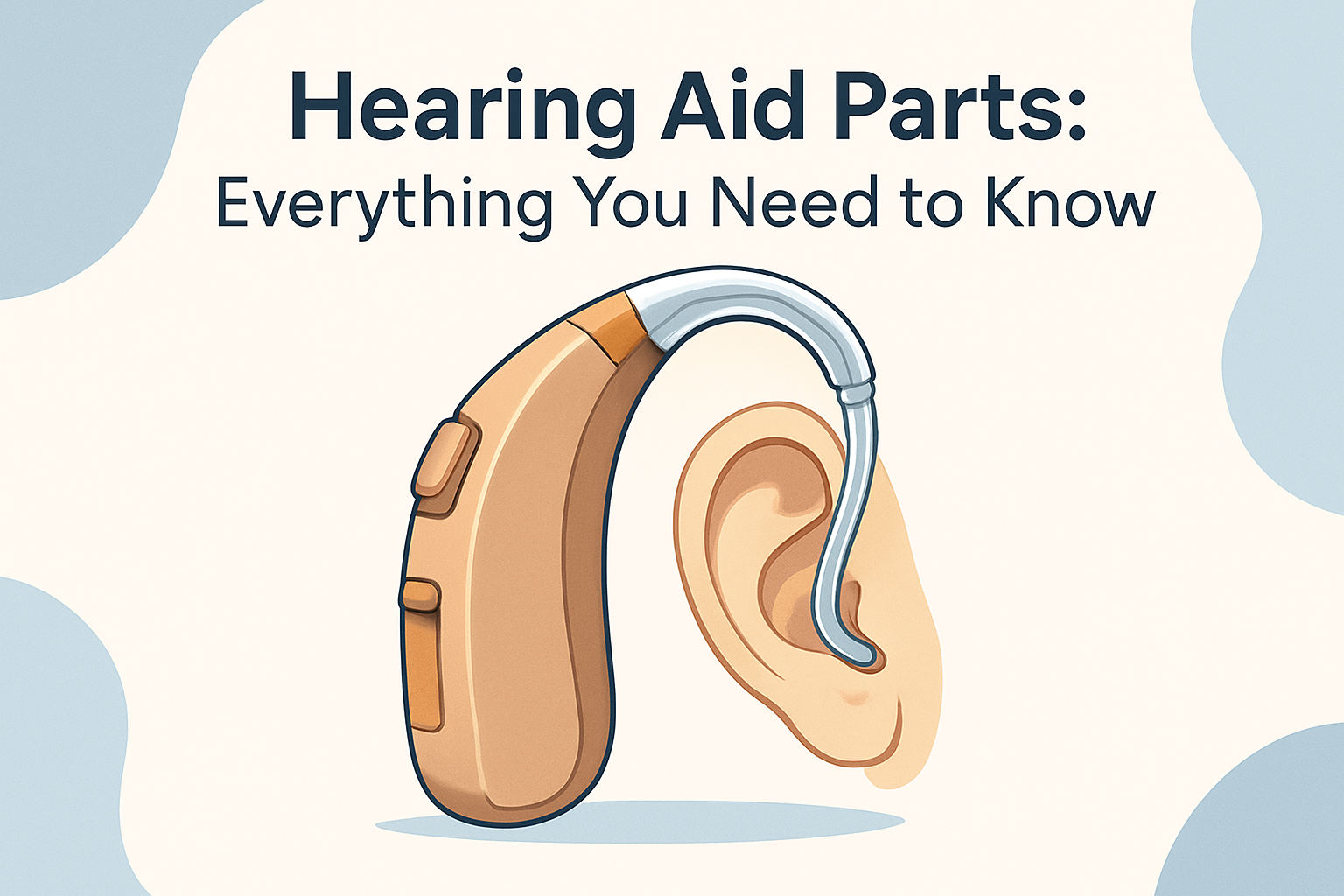
Hearing aid parts determine how well a device amplifies sound, reduces noise, fits the ear, and survives daily wear, so understanding them is essential for anyone choosing, using, or maintaining hearing technology. A hearing aid is a compact medical device designed to make speech and environmental sounds more audible for people with hearing loss, but it is not a single simple object. It is a system of interconnected components, each with a defined role in capturing sound, processing it, powering the device, and delivering amplified audio safely into the ear. When patients ask me why one hearing aid sounds clearer, lasts longer, or feels more comfortable than another, the answer usually comes back to the parts inside and outside the shell.
At the most basic level, hearing aid parts include microphones, digital processors, receivers, batteries or rechargeable cells, casing, tubing or wires, domes or earmolds, and user controls. Modern models may also include telecoils, Bluetooth antennas, moisture protection membranes, onboard sensors, and charging contacts. These parts work together as a chain: sound enters through the microphone, the processor analyzes and modifies the signal, the amplifier increases usable sound, and the receiver sends it into the ear canal. If any link in that chain is blocked, damaged, or poorly fitted, performance drops quickly.
This matters because hearing aids are not one-size-fits-all consumer gadgets. They are medical-grade devices programmed to a person’s hearing thresholds, ear shape, speech needs, and lifestyle. Someone with mild high-frequency loss may need a small receiver-in-canal device with open domes, while a person with severe hearing loss may need a behind-the-ear aid with a custom earmold, powerful receiver, and larger battery. Understanding hearing aid parts helps users compare styles intelligently, recognize maintenance issues early, and ask better questions during fittings. It also prevents common mistakes, such as replacing a dome with the wrong size, ignoring wax guard changes, or assuming poor sound quality means the entire device has failed.
Another reason this topic deserves careful attention is durability. Hearing aids live in a harsh environment: heat, skin oils, sweat, humidity, cerumen, and accidental drops all affect performance. In practice, many service visits are not caused by complex electronics failure but by clogged wax filters, cracked tubing, dirty microphone ports, depleted batteries, or damaged receiver wires. When users know the names and functions of hearing aid parts, troubleshooting becomes faster and less stressful. Instead of saying, “It stopped working,” they can describe whether the issue involves feedback, weak volume, intermittent sound, charging problems, or discomfort from a dome or mold.
Core hearing aid parts and what each one does
The microphone is the entry point for sound. Most current hearing aids use one or more microphones to capture speech and environmental noise. Directional microphone systems, common in midrange and premium devices, emphasize sounds coming from the front while reducing sounds from other directions. That is especially useful in restaurants, meetings, or cars. Microphone placement varies by style, but the openings must remain clear. Even a thin film of debris can reduce sensitivity and make speech seem muffled.
The digital signal processor is the device’s control center. After the microphone converts acoustic sound into an electrical signal, the processor applies programmed gain, compression, noise reduction, feedback management, and frequency shaping. In modern digital hearing aids, this chip analyzes incoming sound many times per second and makes rapid adjustments based on fitting settings created by the audiologist or hearing instrument specialist. Brands differ in software strategy, but the basic function is the same: transform raw sound into output tailored to the user’s hearing loss and listening environments.
The receiver, sometimes called the speaker, converts the processed electrical signal back into audible sound. In a receiver-in-canal device, the receiver sits in the ear canal on a thin wire, while in a traditional behind-the-ear device the receiver is housed in the main case and sound travels through tubing into the earmold. Receiver power matters. Standard, medium, power, and ultra-power receivers are selected based on audiometric need. If receiver strength is mismatched, speech clarity and output headroom can suffer.
The amplifier is often discussed as a separate part, although in many digital devices it is integrated within the processing architecture. Its role is straightforward: increase signal strength to an audible level without making sound uncomfortably loud. Compression systems then limit overly intense sounds. This balance is central to hearing aid success, especially for users with reduced dynamic range.
The battery or rechargeable cell powers everything. Disposable zinc-air batteries come in standard sizes such as 10, 312, 13, and 675, each color-coded by industry convention. Rechargeable lithium-ion systems have become common because they simplify daily use and often provide all-day runtime. However, battery choice affects case size, travel habits, maintenance routines, and replacement costs, so it is not a trivial detail.
External parts users handle every day
The shell or casing protects internal components and determines the device form factor. It may be custom-molded for in-the-ear styles or standardized for behind-the-ear and receiver-in-canal models. Manufacturers use lightweight, durable polymers with seals and coatings to improve resistance to moisture and dust. An IP rating, such as IP68, indicates a tested level of ingress protection, but it does not make a hearing aid indestructible or safe for swimming.
Domes, earmolds, and retention pieces are the parts most responsible for physical comfort and acoustic seal. Open domes allow more natural low-frequency sound to enter the ear and are often used for mild-to-moderate high-frequency hearing loss. Closed domes and power domes create a tighter seal, which can support more amplification but may increase the feeling of occlusion. Custom earmolds, made from ear impressions or digital scans, are common for pediatric fittings, severe hearing loss, and users needing stable retention. A sport lock or retention tail helps keep a receiver wire and dome securely in place.
Tubing and receiver wires connect the body of the hearing aid to the ear canal output. Traditional BTE tubing carries sound acoustically from the device to the earmold. Over time, this tubing hardens, discolors, or cracks and must be replaced. Receiver wires in RIC devices carry an electrical signal to the speaker in the ear. They are slim and comfortable, but they can fail after repeated flexing or moisture exposure. Length and side selection matter; poor routing can cause discomfort and unstable placement.
User controls vary by model and include push buttons, rockers, multifunction switches, or tap controls through motion sensors. These parts let wearers adjust volume, change listening programs, answer streamed calls, or activate a voice assistant. Some devices minimize onboard controls and rely on smartphone apps instead. That can be convenient for tech-comfortable users, but a physical button remains valuable for people who want tactile control without opening an app in a noisy place.
| Part | Main function | Common issue | Typical fix |
|---|---|---|---|
| Microphone ports | Capture incoming sound | Blocked by debris or moisture | Professional cleaning or brushing |
| Receiver | Deliver processed sound into ear | Weak or distorted output | Replace receiver or wax guard |
| Dome or earmold | Fit and acoustic seal | Discomfort, feedback, slipping | Resize, refit, or remake mold |
| Tubing or wire | Connect device to ear output | Cracking, hardening, intermittent sound | Replace tubing or wire |
| Battery or charger contacts | Provide power | Short runtime or charging failure | Replace battery, clean contacts, test charger |
Internal technology parts that shape sound quality
Directional microphone arrays, feedback cancellation systems, and noise management algorithms are not always visible, but they are critical hearing aid parts in functional terms. Directional arrays compare sound arriving at two microphones and prioritize speech from a chosen direction. Feedback cancellation identifies the whistling loop that occurs when amplified sound escapes and re-enters the microphone, then applies phase-based countermeasures. Noise reduction distinguishes steady background noise from speech patterns and softens the unwanted signal. None of these systems is magic, and they work best when physical fit, receiver strength, and programming are correct.
Telecoils remain important, especially in public venues equipped with hearing loop systems. A telecoil is a small induction coil that picks up magnetic signals directly from compatible phones, looped auditoriums, ticket counters, and places of worship. When active, it can improve speech understanding by bypassing room noise and reverberation. Many users overlook telecoils because Bluetooth receives more marketing attention, but in large acoustic spaces a telecoil can still be the better tool.
Wireless radios and antennas support Bluetooth streaming, app control, binaural coordination, and remote fine-tuning. In current hearing aids, low-energy wireless links let both ears communicate so settings stay synchronized. They also allow direct streaming from iPhones and many Android phones, depending on protocol support. This means the hearing aid is no longer just an amplifier; it is also a communication endpoint. That added functionality depends on hardware parts many users never see, including antennas, memory chips, and firmware controllers.
Sensors are increasingly common. Some premium models include motion sensors that change microphone behavior when the wearer starts walking, falls detection systems that can alert contacts, or data logging tools that record usage patterns and acoustic environments. In clinic work, data logging is especially helpful because it shows whether a complaint is happening in quiet conversation, road noise, or streaming use, which makes programming adjustments more precise.
How hearing aid parts vary by style
Behind-the-ear, receiver-in-canal, in-the-ear, in-the-canal, completely-in-canal, and invisible-in-canal devices all use the same core signal path, but the hearing aid parts are arranged differently. BTE models place most electronics behind the ear and send sound through tubing to an earmold. They offer room for larger batteries, stronger receivers, and durable controls. This is why BTE instruments are widely used for children and for severe-to-profound hearing loss.
RIC devices move the receiver into the ear canal, which shortens the acoustic path and often improves cosmetic appeal and sound openness. They are extremely popular because they combine small size with flexible fitting ranges. However, the receiver sits closer to wax and moisture, so receiver failure and wax-guard maintenance are more common than in some BTE designs.
Custom in-the-ear styles place the shell inside the outer ear or canal. Their parts must fit into a smaller space, which can limit battery size and onboard features, but they may be easier to insert for people who dislike over-the-ear hardware. Very small custom devices are cosmetically appealing, yet their tiny batteries, reduced directional microphone spacing, and difficult handling can create tradeoffs. There is no universally best style; the right hearing aid parts depend on hearing loss, dexterity, anatomy, and listening goals.
Maintenance, replacement, and troubleshooting
Routine maintenance focuses on the parts most exposed to wax, moisture, and mechanical stress. Wax guards should be changed as recommended by the manufacturer, often every few weeks or sooner for heavy cerumen producers. Domes need periodic replacement because they stiffen and discolor. Tubing on BTE aids may need replacement every few months depending on climate and wear. Rechargeable devices benefit from nightly charging and clean charger contacts. A drying kit or electronic dehumidifier can extend life, especially in humid regions or for active users.
When sound is weak, I usually check in this order: battery status, wax filter, microphone openings, receiver function, and programming. That sequence solves a large share of everyday complaints. If a hearing aid whistles, the likely causes include a poor seal from a loose dome, wax blockage causing sound to bounce back, excessive gain, or a cracked tube. If sound cuts in and out, suspect a failing receiver wire, dirty battery door contacts on disposable-battery models, or moisture contamination. These are not guesses; they are patterns seen repeatedly in real fittings and repair benches.
Replacement schedules vary. Disposable batteries last days to weeks depending on size and streaming use. Rechargeable cells usually maintain useful capacity for several years before decline becomes noticeable. Receivers, wires, and microphones can fail earlier in high-wear conditions. Most manufacturers offer repair warranties, but preventive care is still cheaper and less disruptive than reactive repair.
How to choose hearing aids by understanding the parts
If you are comparing devices, focus on hearing aid parts that affect your actual daily listening rather than marketing labels alone. Ask what microphone system the device uses, whether it has telecoil support, how the receiver power matches your audiogram, what battery platform fits your routine, and whether domes or custom molds are recommended. Ask how easy wax guard changes are, whether the charger has onboard battery backup for travel, and what ingress protection rating the casing carries. These questions reveal real usability.
Also consider serviceability. Some parts are easy for clinics to replace in office, such as domes, tubing, wax guards, and many RIC receivers. Other failures require manufacturer repair. If you travel often, rely heavily on streaming, or have limited dexterity, these practical details may matter more than small differences in app design. For deeper guidance, readers often benefit from resources on hearing aid maintenance and types of hearing aids, because part selection makes the most sense when viewed alongside care routines and style differences.
Hearing aid parts are the reason two devices that look similar can perform very differently in speech clarity, comfort, reliability, and ease of ownership. The microphone captures sound, the processor shapes it, the amplifier and receiver deliver it, and the external parts determine fit, retention, and protection. Features such as telecoils, wireless radios, sensors, and directional systems add capability, but only when the basic parts are well matched and well maintained. In everyday use, the smallest components, especially domes, wax guards, tubing, and batteries, often have the biggest effect on performance.
The key takeaway is simple: knowing the parts helps you buy better, troubleshoot faster, and get more value from professional care. Instead of judging a hearing aid by brand name or size alone, evaluate the specific components that serve your hearing loss, ear anatomy, and lifestyle. If something sounds off, weak, or uncomfortable, the problem may be a replaceable part rather than the whole device. Use that knowledge to ask sharper questions at your next appointment and to keep your hearing aids working at their best. If you wear hearing aids now or plan to soon, schedule a fitting review and have each part checked, cleaned, and explained clearly.
Frequently Asked Questions
What are the main parts of a hearing aid, and what does each one do?
A hearing aid is made up of several small but highly important parts that work together as a complete sound system. In most devices, the process starts with the microphone, which picks up sound from the surrounding environment. That sound is then sent to the amplifier or digital processor, where it is analyzed and adjusted based on the user’s hearing needs. Modern processors do much more than simply make sound louder. They can separate speech from background noise, manage feedback, shape different frequencies, and apply personalized settings programmed by a hearing care professional.
Once the sound has been processed, it moves to the receiver, sometimes called the speaker, which delivers the amplified sound into the ear. The way that sound enters the ear depends on the hearing aid style. Behind-the-ear and receiver-in-canal models typically use tubing, domes, or custom earmolds to direct sound comfortably and securely. In custom in-the-ear devices, many of these parts are built into a single shell designed to fit the wearer’s ear anatomy.
Power is provided by either a disposable battery or a rechargeable battery system. Additional external features may include volume controls, program buttons, wireless antennas, telecoils, wax guards, and moisture protection components. The outer casing or shell also matters more than many people realize, because it protects delicate electronics from impact, sweat, dust, and daily handling. Every component has a specific purpose, and if one part is clogged, damaged, poorly fitted, or underperforming, the entire device can be affected. That is why understanding the individual parts of a hearing aid is so valuable for both daily use and long-term maintenance.
Which hearing aid parts affect sound quality the most?
Several parts directly influence sound quality, but the microphone, processor, receiver, and ear-coupling components usually have the greatest impact. The microphone is critical because it is the first point of contact for sound. If the microphone is low quality, blocked by debris, or exposed to wind and moisture, the hearing aid may struggle to capture clear sound. In advanced hearing aids, directional microphones can improve speech understanding by focusing on sounds in front of the user while reducing competing noise from other directions.
The processor is often the most sophisticated part of the device and plays a major role in how natural and useful the sound feels. It determines how the hearing aid amplifies different pitches, handles sudden loud sounds, reduces feedback, and suppresses background noise. A well-programmed processor can make conversations more comfortable and less fatiguing, especially in restaurants, meetings, cars, and other challenging environments. If the programming is not well matched to the wearer’s hearing loss and listening needs, even a high-end device may not perform as expected.
The receiver also matters because it converts processed electrical signals back into sound. A weak, distorted, or failing receiver can make speech sound unclear, tinny, or inconsistent. Just as important are the dome, earmold, or shell fit. If the fit is too loose, sound can leak out, causing feedback and reduced clarity. If it is too closed or poorly shaped, the wearer may experience discomfort, an unnatural “plugged” sensation, or poor sound balance. In practical terms, excellent hearing aid performance depends not on a single part alone, but on how well these parts work together in the ear and in real-world listening situations.
What is the difference between a hearing aid receiver, microphone, and amplifier?
These three parts are often mentioned together, but they perform very different jobs. The microphone is responsible for picking up sound from the environment. It acts like the device’s ears, capturing voices, traffic noise, music, alarms, and other sounds around the wearer. Depending on the hearing aid design, there may be one microphone or multiple microphones working together to improve directional hearing and speech focus.
The amplifier, or more accurately in most modern devices the digital signal processor, takes the incoming sound information and modifies it. This is the part that applies the hearing aid’s programming. It can increase volume in frequencies where hearing loss is present, limit uncomfortable loudness, reduce certain types of background noise, manage whistling feedback, and support listening programs for different environments. In digital hearing aids, this processing happens extremely quickly and continuously, allowing the device to adapt to changing sound conditions throughout the day.
The receiver is the part that turns the processed electrical signal back into audible sound and sends it into the ear canal. In simple terms, the microphone collects sound, the processor shapes it, and the receiver delivers it. If any one of these parts is not functioning properly, the device may produce weak sound, distorted sound, intermittent output, or no sound at all. Understanding this distinction can help users describe problems more accurately when troubleshooting or speaking with an audiologist or hearing instrument specialist.
Why do hearing aid domes, earmolds, and wax guards matter so much?
These smaller parts are easy to overlook, but they play a major role in comfort, sound delivery, and device reliability. Domes and earmolds help position the hearing aid correctly and guide amplified sound into the ear. They also affect how open or sealed the ear canal feels. Open domes can allow more natural environmental sound and reduce the plugged-up sensation, while more closed domes or custom earmolds can provide stronger amplification and better control of sound leakage. The right choice depends on the wearer’s degree of hearing loss, ear anatomy, and comfort preferences.
A poorly fitting dome or earmold can create several problems at once. It may let amplified sound escape, leading to feedback or whistling. It can also reduce sound quality, make speech less clear, or cause soreness and irritation in the ear. In contrast, a properly fitted earmold or dome helps stabilize the hearing aid, improve retention, and support more consistent sound performance throughout the day. For people with active lifestyles or more significant hearing loss, this fit can be especially important.
Wax guards are equally essential because they protect the receiver opening from earwax and debris. Earwax is one of the most common reasons hearing aids sound weak or stop working temporarily. A clogged wax guard can block sound output and make it seem as though the entire hearing aid has failed, when the real issue is a very small replaceable filter. Regularly checking and changing wax guards, along with cleaning domes and earmolds, is one of the simplest and most effective ways to preserve hearing aid performance and reduce unnecessary repairs.
How can I maintain hearing aid parts so they last longer and work properly?
Good maintenance starts with daily habits. Hearing aids are exposed to earwax, moisture, skin oils, dust, and frequent handling, so routine care is essential. At the end of each day, users should wipe the device gently with a clean, dry cloth and inspect openings such as the microphone ports and receiver area for visible buildup. Domes, earmolds, and wax guards should be cleaned or replaced according to the manufacturer’s recommendations and the guidance of a hearing care professional. Using the proper cleaning tools is important because sharp objects or household cleaners can damage delicate components.
Battery care also matters. If the hearing aid uses disposable batteries, users should make sure the battery compartment stays clean and dry and remove depleted batteries promptly. For rechargeable devices, consistent charging habits and using the approved charger help preserve battery health. Moisture control is another major factor in extending device life. Even hearing aids with water-resistant features can be affected by sweat, humidity, or accidental exposure to water. Storing them overnight in a drying container or dehumidifier can help protect internal electronics, especially in humid climates or for people who perspire heavily.
Just as important is recognizing when home maintenance is not enough. If the hearing aid becomes weak, distorted, intermittent, uncomfortable, or unusually noisy, professional service may be needed. Tubing can harden, receivers can fail, microphones can clog, and earmold fit can change over time. Regular follow-up visits allow a clinician to inspect the parts, deep-clean the device, verify performance, and adjust programming if needed. In most cases, careful daily care combined with periodic professional maintenance is the best way to keep hearing aid parts functioning well and to protect the user’s investment in better hearing.