
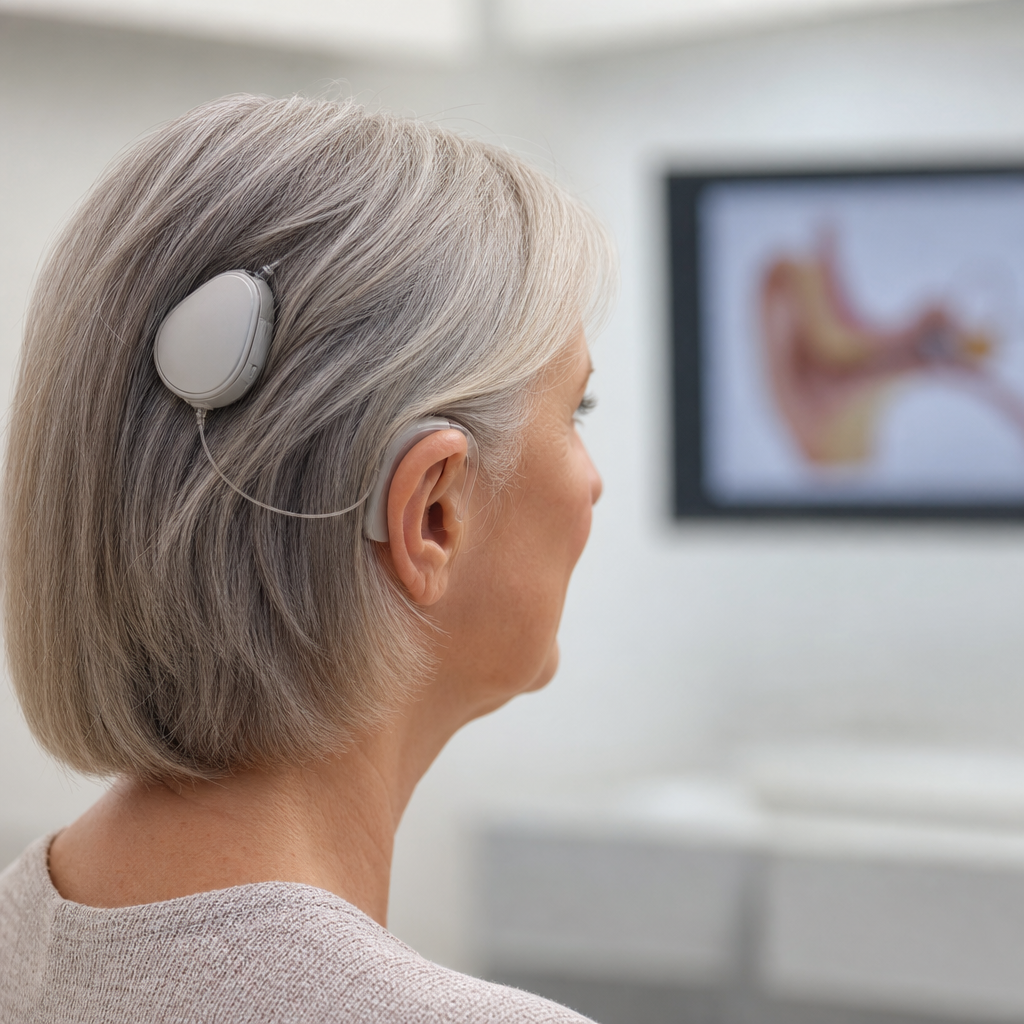
Hearing aid implants are surgically placed hearing devices that bypass damaged parts of the ear and deliver sound in a different way than conventional hearing aids, making them an important option for people who cannot achieve enough clarity, volume, or comfort from external devices alone. In audiology clinics, I have seen this topic create equal parts hope and confusion because the phrase “hearing aid implants” is often used loosely to describe several distinct technologies, including cochlear implants, bone conduction implants, middle ear implants, and auditory brainstem implants. Each system serves a different type of hearing loss, follows different candidacy rules, and produces different outcomes. Understanding the differences matters because the right recommendation depends on anatomy, hearing thresholds, speech recognition, medical history, and communication goals rather than on a single device category.
At a basic level, hearing loss is usually grouped as conductive, sensorineural, or mixed. Conductive loss involves problems in the outer or middle ear that block sound transmission. Sensorineural loss involves damage to the inner ear, especially the hair cells of the cochlea, or to the auditory nerve pathways. Mixed loss combines both. Traditional hearing aids amplify sound acoustically, which works well for many people, but amplification has limits. If the cochlea cannot process speech clearly, simply making sound louder may not restore understanding. Implantable hearing devices address that limitation by sending sound through bone, vibrating the middle ear directly, stimulating the cochlea with electrical signals, or, in rare cases, stimulating the brainstem when the auditory nerve cannot be used.
This topic matters because untreated or poorly treated hearing loss affects far more than volume. It can reduce speech understanding, strain family communication, increase listening fatigue, and interfere with work, education, and safety. Research from the World Health Organization has repeatedly shown that hearing loss is a major public health issue, affecting communication across the lifespan. For adults, better hearing treatment can improve social participation and quality of life. For children, timely access to sound and language is tied to speech, educational development, and long-term outcomes. Implantable options are not a shortcut or a miracle cure, but for the right candidate they can be life-changing. This hub explains the main device types, who qualifies, how surgery and activation work, benefits, limitations, costs, and the questions worth asking before making a decision.
What hearing aid implants are and how they differ from hearing aids
Hearing aid implants are medical devices that work partly inside the body. Unlike standard hearing aids, which sit behind or in the ear and deliver amplified sound through the ear canal, implants use a surgically placed component and an external processor. The external processor picks up sound through microphones, converts it into a coded signal, and sends it to the implanted portion. From there, the sound information reaches the inner ear or auditory pathway through a method designed for a specific hearing problem.
The key distinction is not cosmetic; it is functional. A person with severe sensorineural hearing loss may hear amplified sound through a hearing aid but still miss consonants and speech detail. A cochlear implant bypasses damaged hair cells and stimulates the auditory nerve directly with an electrode array inside the cochlea. A person with chronic ear canal problems, microtia, atresia, or conductive hearing loss may do better with a bone conduction implant that transmits vibration through the skull to the inner ear. Someone with selected mixed or sensorineural losses and normal middle ear anatomy may be considered for an active middle ear implant, although this category is less common in routine practice than cochlear and bone conduction systems.
Another important difference is the care pathway. Hearing aids can often be fit and adjusted in an office visit. Implants require a medical evaluation, imaging in many cases, surgery, healing time, device programming, and rehabilitation. The tradeoff is that implants can solve problems hearing aids cannot solve well, especially when conventional amplification is limited by anatomy, chronic drainage, feedback, discomfort, or poor speech recognition.
Main types of implantable hearing devices
Most discussions of hearing aid implants involve four categories. Cochlear implants are the most widely recognized. They are intended for people with severe to profound sensorineural hearing loss, or in some cases poorer speech understanding than expected with hearing aids. Major manufacturers include Cochlear, Advanced Bionics, and MED-EL. Bone conduction implants, including bone-anchored systems, route sound by bone vibration and are commonly used for conductive or mixed hearing loss and single-sided deafness. Recognized systems include Cochlear Baha, Oticon Medical Ponto, and active transcutaneous systems such as MED-EL BONEBRIDGE. Middle ear implants mechanically vibrate middle ear structures and are reserved for selected cases where conventional hearing aids are unsuitable or insufficient. Auditory brainstem implants are rare and used when the cochlear nerve is absent or unusable, such as in some patients with neurofibromatosis type 2.
| Device type | Best suited for | How it works | Typical benefit |
|---|---|---|---|
| Cochlear implant | Severe to profound sensorineural loss or poor speech understanding with hearing aids | Electrical stimulation of the auditory nerve through electrodes in the cochlea | Better speech access than amplification alone for qualified users |
| Bone conduction implant | Conductive or mixed loss, ear canal problems, single-sided deafness | Vibration travels through bone directly to the inner ear | Bypasses outer and middle ear issues |
| Middle ear implant | Selected sensorineural or mixed losses when hearing aids are not tolerated | Mechanical vibration of middle ear structures | Useful when earmolds or canal devices are problematic |
| Auditory brainstem implant | Absent or damaged cochlear nerve | Direct stimulation of the cochlear nucleus in the brainstem | Access to sound in highly specialized cases |
These categories overlap in public conversation, but candidacy does not. That is why a full audiologic and medical assessment is essential before anyone chooses a path.
Who qualifies for a hearing implant
Candidacy begins with a diagnostic hearing evaluation, but no responsible clinic stops there. In practice, I look at pure-tone thresholds, aided performance, word recognition, sentence understanding, hearing history, ear anatomy, prior hearing aid use, communication demands, and patient motivation. For cochlear implants, candidacy has expanded over the years. Many adults qualify not because they are completely deaf, but because they receive limited benefit from well-fit hearing aids. Clinics often use aided sentence recognition testing, such as AzBio sentences in quiet and noise, along with CNC word scores, to document functional limitation. Pediatric candidacy also considers age, developmental status, and language exposure.
For bone conduction implants, common candidates include people with chronic otitis externa or draining ears who cannot wear occluding earmolds, congenital atresia, ossicular problems, or unilateral profound hearing loss. These patients may hear surprisingly well through bone pathways even when the ear canal and middle ear do not conduct sound effectively. Middle ear implant candidacy is narrower and usually requires stable anatomy plus documented limitations with standard hearing aids. Auditory brainstem implant candidacy is determined at specialized centers with neurotology and neurosurgery expertise.
Not everyone with hearing loss is a good candidate. Unrealistic expectations, unmanaged medical issues, lack of auditory nerve integrity, or unwillingness to participate in follow-up care can affect outcomes. Candidacy is not simply “Can this device be implanted?” but “Will this device likely provide more benefit than the alternatives?” That is the right clinical question.
Evaluation, surgery, activation, and rehabilitation
The implant process follows a sequence. First comes audiologic testing, often including aided speech testing with current hearing aids. Medical consultation typically includes an ear examination and, for many implant types, imaging such as CT or MRI to assess the cochlea, mastoid, middle ear, or nerve anatomy. Cochlear implant programs may also include vaccination guidance because of a small increased risk of meningitis in certain circumstances. Insurance authorization is usually obtained before surgery, and many centers document a hearing aid trial if one has not already been completed.
Surgery differs by device. Cochlear implantation is commonly an outpatient or short-stay procedure performed under general anesthesia. The surgeon places the receiver under the skin and inserts the electrode array into the cochlea. Bone conduction implant surgery varies between percutaneous and transcutaneous systems, but the goal is stable sound transmission with healthy tissue management. Middle ear and brainstem procedures are more specialized. Surgery is only one part of success; I often tell patients that implantation opens the door, but programming and rehabilitation teach the brain how to walk through it.
Activation usually occurs several weeks after surgery to allow healing. At that visit, the audiologist programs the external processor, setting stimulation levels or fitting parameters based on objective measures and patient feedback. The initial sound can seem artificial, mechanical, or thin, especially with cochlear implants, because the brain is learning a new code. Follow-up mapping appointments are essential. Auditory training, speech therapy for children, and daily device use strongly influence outcomes. Improvement often continues over months, and for some users the biggest gains appear after sustained practice in real listening environments.
Benefits, limitations, risks, and everyday realities
The main benefit of hearing aid implants is improved access to sound when hearing aids are not enough. For cochlear implant users, that often means better speech understanding, greater awareness of environmental sounds, and improved communication confidence. Bone conduction implant users frequently report relief from chronic ear irritation and more consistent hearing because the device bypasses the blocked or diseased ear canal. In children, better auditory access can support speech and language development when intervention happens early and is paired with therapy and family engagement.
There are, however, limitations. An implant does not restore natural hearing. Sound quality can differ from acoustic hearing, especially at first. Music appreciation varies widely. Background noise remains challenging, though directional microphones, remote microphones, and assistive listening technology can help. Surgical risk is generally low in experienced hands but not zero. Depending on device type, risks can include infection, skin issues, dizziness, facial nerve weakness, taste disturbance, device failure, or the need for revision surgery. MRI compatibility also varies by manufacturer and model, so future imaging needs should be discussed before implantation.
Daily life includes maintenance. External processors need batteries or charging, microphones need protection from moisture and debris, and software settings may need periodic adjustment as hearing goals change. Contact sports, workplace helmets, swimming routines, and travel habits all matter when selecting a system. The best outcomes come when the device choice fits the person’s anatomy and lifestyle, not just the audiogram.
Cost, insurance, and choosing the right center
Cost is a practical concern, and the answer depends heavily on country, insurer, age, and device type. In the United States, medically necessary cochlear implants are commonly covered by Medicare, Medicaid, and many private insurers when candidacy criteria are met, though copays and deductibles still apply. Bone conduction implants may also be covered when medical necessity is documented. Hearing aids, by contrast, often face weaker insurance coverage, which surprises many families. That difference is one reason a formal evaluation can be worthwhile when hearing aids are failing.
Choosing the right center matters as much as choosing the right device. Look for a program that offers coordinated care across audiology, otology or neurotology, speech-language pathology, and pediatric or adult rehabilitation as needed. Ask how many implant evaluations and surgeries the center performs each year, which manufacturers they support, what outcome measures they track, and how often follow-up programming is scheduled. Strong centers explain tradeoffs clearly. They do not promise perfect hearing, and they do not rush candidates past the rehabilitation discussion.
As a hub topic, hearing aid implants connect to broader decisions about hearing aids, assistive listening devices, tinnitus management, remote microphones, pediatric hearing care, and communication strategies in noise. If you suspect hearing aids are no longer giving enough benefit, the next step is simple: book a comprehensive implant evaluation with an experienced audiology and ear surgery team, and compare your options using your real-world hearing goals.
Frequently Asked Questions
What are hearing aid implants, and how are they different from traditional hearing aids?
Hearing aid implants are surgically placed hearing devices designed to help people who do not get enough benefit from conventional hearing aids. Unlike standard hearing aids, which amplify sound and send it through the ear canal, implantable devices work by bypassing damaged or nonfunctioning parts of the hearing system and delivering sound in a different way. Depending on the type of implant, sound may be converted into vibrations that travel through bone, or into electrical signals that directly stimulate the hearing nerve inside the inner ear. This is why the phrase “hearing aid implants” can be confusing: it is often used broadly, but it may refer to several distinct technologies, including cochlear implants, bone conduction or bone-anchored hearing systems, and in some cases middle ear implants.
Traditional hearing aids are usually the first step because they are non-surgical, adjustable, and effective for many people with mild to moderate hearing loss. However, if hearing aids make sounds louder but not clearer, if they cause chronic discomfort, if the ear canal cannot tolerate an earmold, or if the underlying hearing loss pattern is not well suited to acoustic amplification alone, an implantable solution may be considered. The main difference is not simply where the device sits, but how it delivers sound information to the auditory system. That distinction matters because the right technology depends on the cause of hearing loss, the severity of hearing loss, speech understanding ability, ear anatomy, and overall health. A full evaluation by an audiologist and ear specialist is essential to determine which option, if any, is appropriate.
Who is a good candidate for a hearing implant?
Candidacy depends on the type of implant, the person’s hearing profile, and how well they perform with appropriately fitted hearing aids. In general, hearing implants are considered for people who have significant difficulty understanding speech despite using traditional hearing aids, people with single-sided deafness in certain cases, individuals with conductive or mixed hearing loss caused by chronic ear disease or malformations, and those who cannot comfortably wear or benefit from external hearing aids. For example, cochlear implants are often recommended for people with severe to profound sensorineural hearing loss who receive limited speech clarity from hearing aids. Bone conduction systems may be a better fit when sound cannot effectively travel through the outer or middle ear, but the inner ear still has usable function.
The evaluation process is more involved than many patients expect, and that is a good thing. It usually includes a detailed hearing test, speech understanding testing with and without hearing aids, review of medical history, imaging such as CT or MRI in some cases, and consultation with an otologist or ENT surgeon. For cochlear implant candidates, the team also looks at how much access the brain is currently getting to speech sounds, because delayed treatment can make communication more difficult over time. In children, age, language development, and family support also play major roles. In adults, expectations matter just as much as hearing thresholds. A strong candidate is not simply someone with “bad hearing,” but someone whose hearing needs match what the implant is designed to do and who is ready for the medical, audiologic, and rehabilitative steps that follow surgery.
What types of hearing implants are available?
There are several categories of hearing implants, and each one addresses hearing loss in a different way. Cochlear implants are the best known. These devices are intended for people with significant inner ear damage, especially when hearing aids no longer provide enough speech clarity. A cochlear implant uses an external sound processor and an internal implanted receiver with an electrode array placed in the cochlea. Instead of simply making sound louder, it converts sound into electrical signals that stimulate the auditory nerve directly. This can be life-changing for people with severe hearing loss, but it is important to understand that it does not restore normal hearing. It provides a new way for the brain to receive sound information, and outcomes improve with programming and listening practice.
Bone conduction or bone-anchored hearing systems work differently. They transmit sound as vibration through the skull bone to the inner ear, bypassing problems in the ear canal or middle ear. These are often used for conductive or mixed hearing loss, chronic ear drainage, canal atresia, or certain cases of single-sided deafness. Some systems involve a surgically implanted fixture, while others use a magnetic connection under the skin. There are also middle ear implants, which are less common but may be useful for select patients who cannot use traditional hearing aids and need a mechanical solution that drives middle ear structures directly. Because these technologies are designed for different hearing problems, one implant is not automatically “better” than another. The best option is the one that matches the patient’s anatomy, diagnosis, communication goals, and expected benefit.
What is the surgery and recovery process like for a hearing implant?
The surgical experience varies by device, but most hearing implant procedures are planned operations performed by an ear surgeon, often under general anesthesia. For cochlear implants, the surgeon places the internal receiver under the skin behind the ear and inserts the electrode array into the cochlea. Bone conduction systems may involve placing an implant in the skull bone behind the ear, either with a small abutment or a magnetic attachment depending on the design. Middle ear implants have their own surgical approach based on where the vibrating component needs to be positioned. In most cases, the procedure itself is only one part of the overall treatment journey. Surgery is followed by healing time, activation of the device, programming appointments, and ongoing hearing rehabilitation.
Recovery is often smoother than people fear, but it still requires realistic expectations. Many patients go home the same day or after a short stay, depending on the procedure and individual health factors. Temporary soreness, swelling, numbness around the incision, mild dizziness, or pressure sensations can occur. The implanted device is usually not turned on immediately; there is typically a waiting period to allow healing before activation. Once activated, the sound can seem unfamiliar at first, especially with cochlear implants, because the brain needs time to interpret the new signal. Follow-up appointments are crucial for adjusting the settings and monitoring progress. Most people want to know, “How soon will I hear normally?” The honest answer is that adaptation takes time. Improvement often happens in stages, and the best outcomes usually come from patience, consistent device use, and structured auditory rehabilitation.
What results can people expect from a hearing implant, and are there any risks?
Results depend on the type of implant, the cause and duration of hearing loss, the health of the auditory system, and how actively the person participates in follow-up care. Many recipients experience major gains in speech understanding, environmental awareness, communication confidence, and overall quality of life. For some, the biggest change is being able to follow conversation without relying entirely on lip reading. For others, it is hearing on one side again, reducing listening fatigue, or improving access to sound in work, school, and social settings. Children may gain better access to spoken language during critical developmental years, while adults may regain communication abilities they had been losing. That said, outcomes are not identical for everyone. Some users improve quickly, while others progress gradually over months. Sound quality may feel different from natural hearing, especially with cochlear implants, and hearing in noisy places can still be challenging.
As with any surgery, there are risks, and patients should discuss them carefully with their surgeon. Potential risks can include infection, bleeding, device failure, skin complications, dizziness, changes in taste, tinnitus changes, and in rare cases injury to nearby structures. Cochlear implantation may also affect any remaining natural hearing in the implanted ear, which is an important consideration when discussing candidacy. There are practical factors too, including cost, insurance coverage, maintenance, future upgrades of the external processor, and the need for lifelong follow-up. The most helpful mindset is to think of a hearing implant not as an instant fix, but as a medically and technologically advanced tool that can provide meaningful hearing access when chosen well and supported properly. When expectations are realistic and the device is matched carefully to the person’s needs, hearing implants can offer substantial and lasting benefit.