
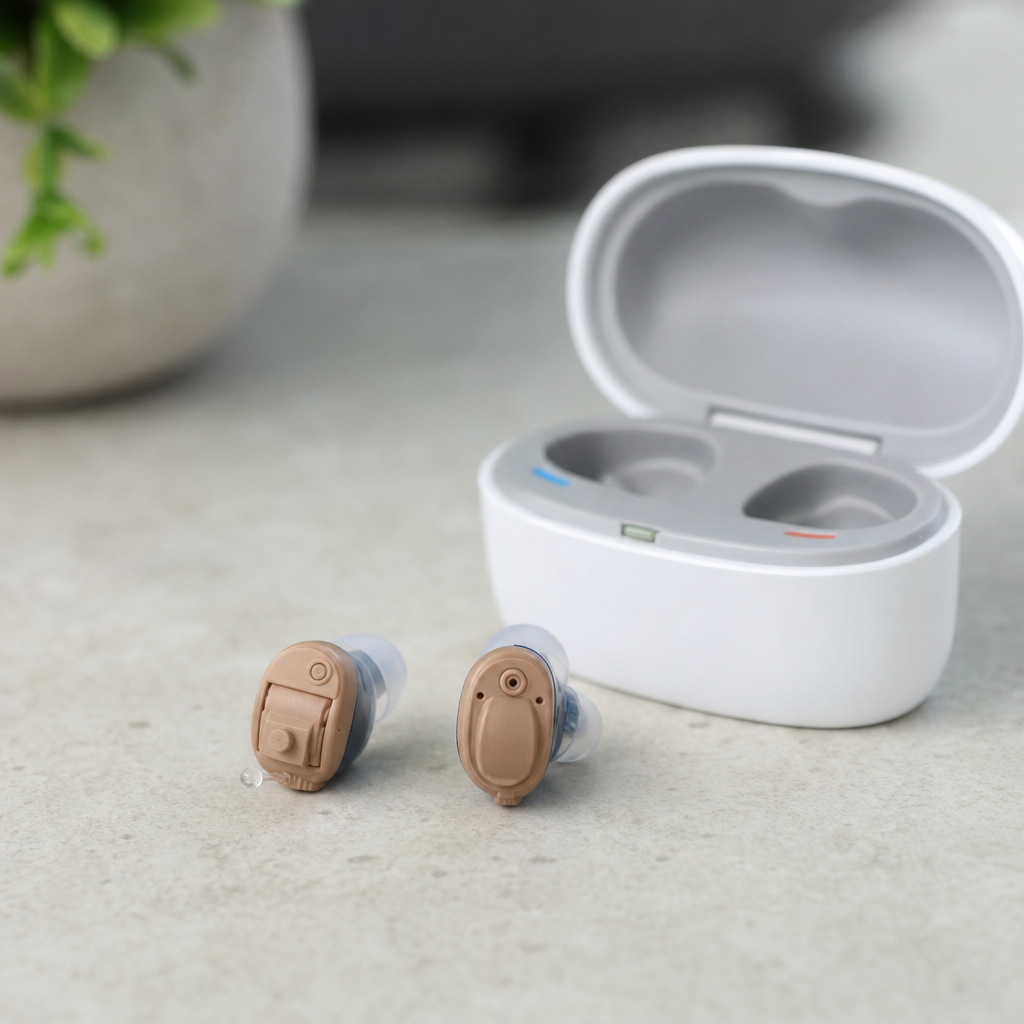
In-ear hearing aids remain the most requested style for adults who want meaningful hearing support without the visibility of behind-the-ear devices. In 2025, the category includes completely-in-canal, invisible-in-canal, in-the-canal, and custom in-the-ear models, each built to sit partly or fully inside the ear canal or concha. These devices matter because hearing loss affects communication, work performance, safety, and cognitive load, yet many people delay treatment out of stigma, comfort concerns, or uncertainty about which technology is worth the cost. After fitting and comparing many custom instruments over the years, I have seen the same pattern repeatedly: the best in ear hearing aids are not simply the smallest or most expensive models, but the ones that match a person’s hearing profile, ear anatomy, dexterity, and daily listening environments. A good hub page should answer the core questions first. What counts as an in-ear hearing aid? Who benefits most? What features actually improve hearing in restaurants, meetings, and phone calls? How much should buyers expect to pay, and what tradeoffs come with tiny designs? This guide covers the essentials clearly, so readers can understand the major options and choose the right next step.
What “best in ear hearing aids” means in 2025
The phrase best in ear hearing aids usually refers to custom devices molded for the user’s ears rather than standard receiver-in-canal products with open domes. In practical terms, there are four main groups. Invisible-in-canal models sit deepest and are designed for cosmetic discretion. Completely-in-canal models are slightly larger but still low visibility. In-the-canal devices fill more of the outer canal and often support a larger battery or stronger amplification. Full-shell in-the-ear models occupy the bowl of the ear and are technically in-ear products, though they are less hidden. The right category depends on anatomy and audiology, not marketing language.
In 2025, the strongest products combine custom shells, digital signal processing, directional microphone systems where size allows, feedback management, adaptive noise reduction, telecoil options in larger shells, and app-based fine-tuning for selected models. Leading manufacturers such as Phonak, Oticon, Starkey, Signia, Widex, and ReSound continue to offer custom platforms, although some brands prioritize rechargeable behind-the-ear designs more heavily than they did five years ago. That shift matters: some buyers assume all premium hearing aids now stream audio and recharge overnight, but many deep-canal in-ear aids still rely on disposable zinc-air batteries because battery size and antenna performance limit what can fit inside very small shells.
The biggest misconception I correct in clinic conversations is that smaller always means better. Smaller can mean less wind noise, less visible hardware, and a more natural pinna effect in some fittings. It can also mean shorter battery life, fewer controls, less room for directional microphones, reduced connectivity, and more challenging insertion and cleaning. For some users, especially those with mild to moderate high-frequency hearing loss and excellent dexterity, a tiny custom aid is ideal. For others, a slightly larger canal or half-shell model delivers audibly better speech clarity and easier daily handling.
Who should choose in-ear hearing aids
In-ear hearing aids are best for people who value discretion, wear glasses all day, dislike anything resting behind the ear, or need a custom secure fit for regular movement. They are often a strong match for mild to moderate hearing loss, though some larger custom styles can handle severe losses depending on ear canal volume and venting requirements. They also suit users who want less interference with masks, helmets, hair styling, or phone use. Musicians, office professionals, and frequent meeting attendees often prefer how custom canal devices feel compared with standard domes, especially when they are worn for long stretches.
There are clear cases where in-ear models are a weaker choice. Very narrow or sharply bending ear canals can make deep impressions difficult and reduce comfort. People with chronic earwax buildup, active drainage, recurrent otitis externa, or skin irritation may do better with receiver-in-canal devices because they are easier to service and keep dry. Users with poor vision or arthritis sometimes struggle with battery doors, tiny removal lines, or deep insertion. If Bluetooth audio streaming is a top priority, custom in-ear devices still lag behind larger styles, although some full-shell designs support app control and limited wireless features.
The evaluation process should always begin with a diagnostic hearing test, speech testing when appropriate, otoscopy, and discussion of medical red flags. A good hearing care professional will ask about restaurants, television volume, fatigue after conversations, tinnitus, work demands, and phone habits. They should also inspect canal shape and cerumen management. The “best” device on paper is the wrong choice if your ear cannot physically support the shell design or if your hearing loss needs directional performance that a tiny faceplate cannot provide consistently.
Best in ear hearing aids: top styles, strengths, and tradeoffs
Most shoppers are comparing styles before they compare brands. That is the right order, because form factor affects daily satisfaction as much as software. The table below summarizes what users can realistically expect from the main in-ear categories in 2025.
| Style | Best for | Main strengths | Main tradeoffs |
|---|---|---|---|
| Invisible-in-canal (IIC) | Maximum discretion, mild to moderate loss | Very hidden, natural phone placement, reduced wind exposure | Small battery, limited features, harder handling |
| Completely-in-canal (CIC) | Discreet everyday wear | Low visibility, custom comfort, simple fit under glasses | Often limited wireless features, small controls |
| In-the-canal (ITC) | Balance of size and performance | More amplification room, possible directional microphones, easier insertion | More visible than CIC, still wax-sensitive |
| In-the-ear (ITE) | Manual dexterity needs, stronger losses | Larger battery, easier controls, telecoil on some models | Most visible custom style, can pick up more wind |
If a patient asks me for the single best in ear hearing aids style overall, I usually point to ITC as the practical sweet spot. It often offers better speech-in-noise performance and easier handling than ultra-small models while remaining discreet. IIC and CIC can be excellent when cosmetics dominate the decision, but buyers should enter with realistic expectations. Tiny hearing aids are engineering compromises by definition. The devices can sound excellent in quiet, but difficult listening environments expose the limits of microphone spacing, battery capacity, and wireless hardware.
Brand differences still matter. Starkey has remained active in custom products and often emphasizes health tracking and app support on compatible platforms. Signia custom models are known for fitting flexibility and familiar processing for users moving from prior custom devices. Phonak’s custom line has appeal for users who like the brand’s amplification character and fitting ecosystem. Widex is often favored by users sensitive to sound quality and music fidelity. The best result, however, comes from precise programming with real-ear verification, not from choosing a logo alone.
Features that actually improve daily hearing
Many feature lists are long, but only a handful consistently change real-world outcomes. First is gain prescription matched to the hearing loss using a validated fitting rationale such as NAL-NL2 or DSL, then verified with probe microphone measures. Without that step, a premium processor may still underperform. Second is directional microphone performance. In larger custom shells, directional input can improve speech understanding in noise by focusing more on sounds from the front than from the sides and rear. Third is feedback suppression that allows adequate high-frequency gain without constant whistling.
Adaptive noise reduction is helpful, but it should be understood correctly. It does not erase background noise. What it can do is reduce steady-state noise annoyance, making listening less tiring. Compression speed, impulse noise management, and frequency lowering can also matter. Frequency lowering helps some users with steep high-frequency losses detect speech cues like /s/ and /sh/, though settings must be individualized to avoid unnatural sound quality. In tinnitus cases, some custom products include masking or sound therapy programs, but counseling remains essential because no hearing aid feature cures tinnitus by itself.
Connectivity is a nuanced issue in this category. Many shoppers expect universal Bluetooth streaming because consumer earbuds normalized that expectation. Smaller custom in-ear hearing aids often cannot match earbud-style streaming due to size and power constraints. Some support app-based adjustments, remote care, or accessory streaming rather than direct all-day audio. Buyers who need hands-free calling, media streaming, and rechargeable convenience should compare in-ear options against receiver-in-canal models honestly. It is better to choose the right tool than force a hidden form factor to handle needs it was not designed to meet.
Fit, comfort, maintenance, and long-term ownership
Custom hearing aids succeed or fail on fit quality. Ear impressions or digital ear scans must capture the canal accurately beyond the second bend when the style requires deep placement. A shell that is even slightly off can cause soreness, migration, occlusion, or acoustic feedback. I have seen many “bad hearing aids” turn into good hearing aids after a remake with a tighter canal lock, adjusted vent diameter, or different receiver placement. Initial comfort should improve over the first days, not worsen. Persistent pain is not something users should simply tolerate.
Maintenance needs are higher for in-ear devices because the microphone ports, wax guards, and receiver outlets sit close to cerumen and moisture. Daily wiping, routine drying, and scheduled wax guard changes are part of ownership. A hearing aid dehumidifier or drying cup is a smart add-on, particularly for humid climates, exercise habits, or users with active perspiration. Batteries in smaller custom aids may last only several days depending on size, output, and daily use. That is normal, but it means travelers and full-time wearers should keep spare cells available.
Repair rates can be slightly higher in custom products simply because they live in harsher conditions inside the ear canal. Good warranties matter. So does local follow-up. Fine-tuning during the first month often determines whether a person becomes a successful full-time wearer. Reliable clinics schedule multiple post-fit visits, verify settings, inspect insertion technique, and measure outcomes with tools such as the APHAB, COSI, or QuickSIN. Those objective checks are valuable because satisfaction is not just about loudness; it is about speech clarity, comfort, retention, and effort reduction.
How much the best in ear hearing aids cost and how to choose wisely
In 2025, premium custom in-ear hearing aids commonly range from about $2,000 to $4,500 per ear in traditional bundled clinics, depending on technology tier, service model, warranty length, and region. Mid-tier options often land lower, but pricing varies widely because some practices include follow-up care, cleanings, real-ear measurement, and loss coverage while others separate those services. Lower upfront pricing is not always lower total cost. A cheaper device without proper fitting and support can become more expensive if it sits in a drawer unused.
For most buyers, the smartest buying process is straightforward. Start with a complete evaluation. Confirm whether custom in-ear anatomy is appropriate. Compare two or three styles, not ten brands. Ask whether real-ear verification is standard. Ask about trial periods, remake policies, repair turnaround, and what happens if your hearing changes. Clarify battery type, moisture protection, app support, and expected lifespan. Then make the decision based on hearing goals rather than cosmetics alone. The best in ear hearing aids in 2025 are the ones you can wear comfortably, hear through confidently, and maintain consistently. If you are ready to move forward, schedule a professional hearing assessment and use this hub as your starting point for deeper comparisons across the hearing aids category.
Frequently Asked Questions
What are the best in-ear hearing aids in 2025, and how do the different styles compare?
The best in-ear hearing aids in 2025 are not defined by a single brand or model as much as by how well the device style matches your hearing loss, ear anatomy, dexterity, lifestyle, and cosmetic preferences. The main in-ear categories include invisible-in-canal (IIC), completely-in-canal (CIC), in-the-canal (ITC), and custom in-the-ear (ITE) models. IIC devices sit deepest in the ear canal and are the least visible, making them especially appealing for adults who want the most discreet appearance possible. CIC models are also very small and nearly hidden, while ITC devices are slightly larger and often provide a better balance of size, battery life, controls, and features. ITE models fill more of the outer ear bowl and are still considered in-ear, but they usually offer the easiest handling, more room for advanced technology, and stronger amplification.
In practical terms, the “best” option depends on your priorities. If invisibility matters most and your hearing loss is mild to moderate, IIC or CIC devices may be the strongest fit. If you want easier insertion, longer battery performance, directional microphones, app control, or Bluetooth-related functionality, ITC or ITE models may be better choices. In 2025, many premium in-ear hearing aids also include improved speech enhancement in background noise, better wind management, adaptive feedback control, and more refined fitting software than earlier generations. A hearing care professional can help determine which category is most appropriate after reviewing your audiogram, ear canal size, and daily listening challenges. That personalized matching process is usually more important than simply choosing the smallest device available.
Are in-ear hearing aids good for all types of hearing loss?
In-ear hearing aids can be excellent for many adults, but they are not ideal for every degree or pattern of hearing loss. They are commonly recommended for mild to moderate hearing loss, and some larger custom in-the-ear styles can also support certain moderately severe losses. However, very small devices such as IIC and CIC models have less physical space for larger receivers, bigger batteries, and more powerful amplification components, which can limit how much gain they can provide. For people with severe to profound hearing loss, behind-the-ear or receiver-in-canal designs are often more appropriate because they can deliver more output and accommodate larger features more comfortably.
Hearing loss configuration matters too. Some people hear low-pitched sounds relatively well but struggle with speech clarity in the higher frequencies. Others have a flatter loss across pitches or have asymmetrical hearing between ears. These factors influence whether an in-ear style can be programmed effectively. Ear canal shape, wax production, moisture, skin sensitivity, and a history of ear infections are also important. Someone who produces significant earwax, for example, may experience more maintenance issues with a deep canal device. The right way to evaluate candidacy is with a comprehensive hearing test and fitting consultation. That process helps identify not only whether in-ear hearing aids can work, but which specific in-ear style is most likely to deliver clear, comfortable, stable amplification over time.
What features should I look for when choosing the best in-ear hearing aids in 2025?
When comparing in-ear hearing aids in 2025, focus on the features that directly affect everyday communication rather than choosing based only on size or appearance. Strong speech understanding in noise should be a top priority, since many adults seek hearing help because restaurants, meetings, family gatherings, and public spaces have become harder to follow. Look for advanced noise reduction, directional microphone systems where available, and adaptive sound processing that can respond automatically as environments change. Feedback management is also essential, especially in small in-ear devices where the microphone and speaker sit close together. A good system should minimize whistling without making speech sound artificial.
Comfort and usability are just as important as sound quality. Custom fit matters because a secure, well-made shell improves retention, reduces irritation, and helps acoustic performance. Battery type is another major decision. Rechargeable technology has improved across the hearing aid industry, but many very small in-ear models still rely on disposable batteries due to space constraints. If you have arthritis, limited vision, or reduced fingertip sensitivity, changing tiny batteries may be frustrating, so a slightly larger in-ear style may be more practical. Connectivity also deserves attention. Some in-ear devices now offer app-based adjustments, telehealth fine-tuning, tinnitus masking features, environmental programs, and smartphone integration, though the smallest models may have fewer wireless options. Finally, ask about durability, repair policies, trial periods, software update support, and professional follow-up care. The best hearing aid is one you can wear consistently, hear well with, and manage confidently day after day.
Are invisible and completely-in-canal hearing aids comfortable to wear every day?
For many adults, invisible-in-canal and completely-in-canal hearing aids are comfortable enough for daily wear, especially when they are professionally fitted and matched to the shape of the ear canal. Because these devices are custom made, they are designed to sit securely and discreetly without protruding much, if at all. Many users appreciate that they feel natural after an adjustment period and do not interfere with eyeglasses, hats, masks, or active routines the way some external styles can. Their deep placement can also reduce the sense that others will notice them, which often helps people feel more confident about wearing hearing aids consistently.
That said, comfort is highly individual. Some people adapt quickly, while others need time to get used to the sensation of having a device deeper in the ear canal. If the shell fit is slightly off, or if the ear canal is narrow, sharply curved, or sensitive, discomfort can occur. Moisture, earwax buildup, jaw movement, and long wearing hours can also affect how the device feels over the course of the day. Comfort is not just about physical fit; it also includes sound comfort. If amplification is too sharp, too occluding, or too aggressive in noisy settings, users may assume the style is wrong when the programming simply needs adjustment. This is why follow-up appointments matter. Small refinements to fit and settings often make a significant difference. For the right candidate, these devices can be both comfortable and highly discreet, but they work best when expectations, anatomy, and hearing needs are carefully aligned.
How much do the best in-ear hearing aids cost in 2025, and are they worth it?
The cost of the best in-ear hearing aids in 2025 can vary widely based on technology level, customization, professional services, warranty coverage, and where they are purchased. In general, custom in-ear devices tend to cost more than basic amplification products because they require ear impressions or digital ear scans, individualized shell manufacturing, precision fitting, and ongoing programming support. Smaller, highly discreet styles can also be priced at a premium because miniaturization and custom engineering add complexity. Depending on provider and package structure, consumers may see pricing that includes the devices alone or bundled care that covers testing, fitting, adjustments, cleanings, follow-up appointments, and warranty service.
Whether they are worth it depends on the value of better hearing in your daily life. For many adults, improved hearing means easier conversations, reduced listening fatigue, better workplace performance, safer awareness of alarms and traffic, and less social withdrawal. Those benefits can be substantial, especially when hearing loss has already begun to affect relationships, confidence, or mental strain. The smallest and most discreet model is not always the best value if it sacrifices features you need, such as easier handling, stronger amplification, or wireless connectivity. A more practical ITC or ITE option may deliver better long-term satisfaction. It is also wise to ask about trial periods, return policies, financing, and service plans before you buy. When professionally selected and properly fitted, high-quality in-ear hearing aids are often worth the investment because they support communication, independence, and quality of life in ways that extend far beyond simple volume increase.