
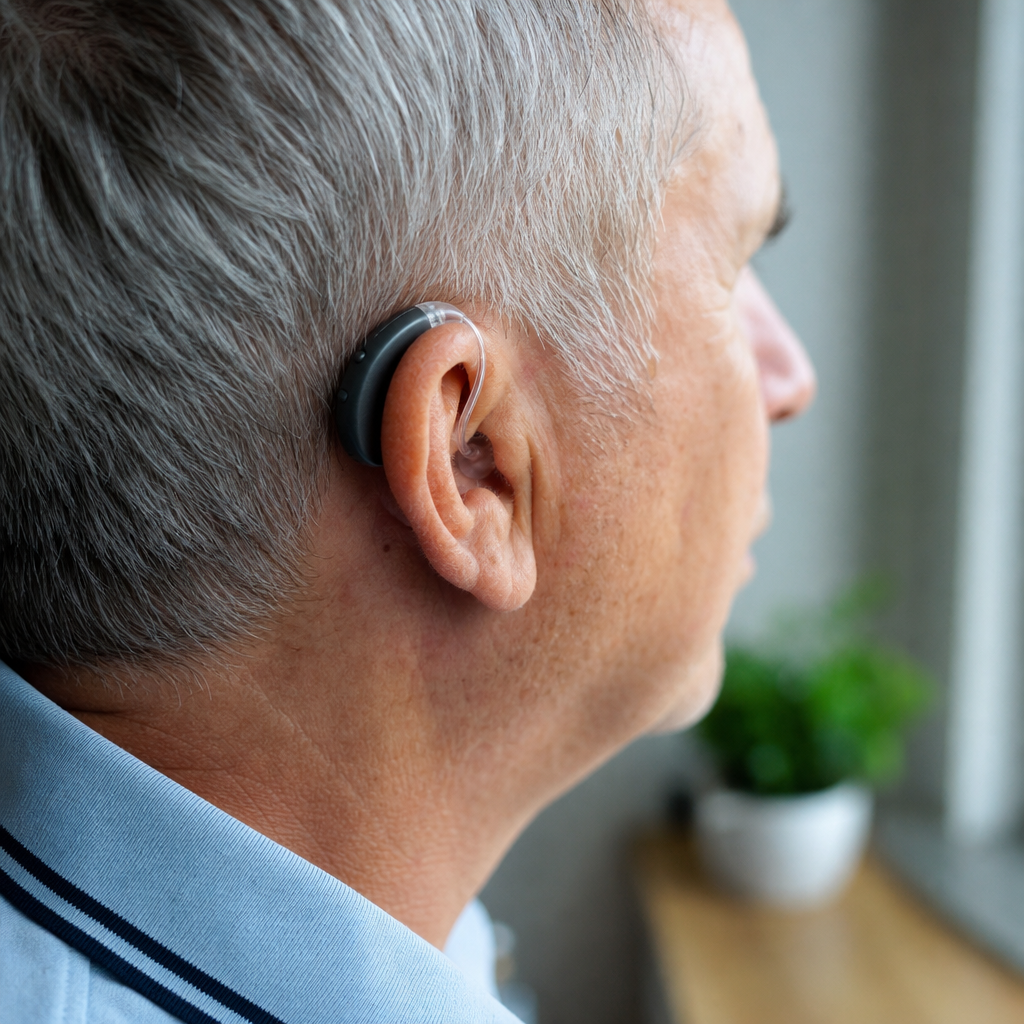
Severe hearing loss changes far more than volume. It affects speech clarity, listening stamina, confidence in group settings, telephone use, and safety cues such as alarms, traffic, and public announcements. In 2025, the best hearing aids for severe hearing loss are more capable than previous generations, but choosing well still requires understanding power, speech processing, fit, connectivity, and the limits of amplification. This guide covers the general landscape so readers can compare devices, ask better questions at a clinic, and navigate related topics across the broader hearing aids category.
Severe hearing loss usually refers to thresholds around 71 to 90 decibels hearing level, while profound loss is generally above 90 decibels. In practical terms, a person may hear loud sounds yet miss most speech without powerful amplification and clear programming. The best hearing aids for severe hearing loss must deliver enough output without distortion, reduce feedback, preserve speech cues, and stay comfortable for all-day wear. They also need secure retention, reliable battery life, and accessories that help in difficult environments such as restaurants, worship spaces, meetings, classrooms, and cars.
I have seen the difference the right fitting makes when a patient moves from hearing environmental sound to actually following conversation. The biggest mistake is assuming any premium device will work if it is expensive enough. Power hearing aid selection depends on the audiogram, word recognition scores, ear anatomy, dexterity, lifestyle, tinnitus needs, and whether a person may be approaching cochlear implant candidacy. The strongest products in 2025 combine high-gain receivers or custom power shells, sophisticated directional microphones, telecoil or Auracast-ready connectivity, robust rechargeable systems, and verification with real-ear measurements.
This article explains what to look for, which hearing aid styles tend to perform best, which 2025 models stand out, and how to judge value beyond the sticker price. It also addresses common questions directly: Which hearing aids are strongest? Are behind-the-ear models better for severe hearing loss? When is a cochlear implant evaluation appropriate? By the end, you should have a practical shortlist and a framework for discussing options with an audiologist.
What severe hearing loss requires from a hearing aid
The first requirement is usable power. That means enough gain and maximum power output to make speech audible across frequencies, especially in the high frequencies where consonants live. A hearing aid may advertise advanced artificial intelligence features, but if it cannot meet target amplification safely and comfortably, it is not appropriate. For severe hearing loss, behind-the-ear models with custom earmolds, receiver-in-canal devices with power or ultra-power receivers, and full-shell custom instruments are usually the main options. Open-fit styles generally do not provide enough control of feedback or sufficient low-frequency support for this degree of loss.
Speech understanding matters more than loudness. Modern devices use multichannel compression, impulse noise management, adaptive directionality, and frequency lowering to improve access to speech details. Frequency lowering can be helpful when high-frequency hearing is very poor, shifting or compressing speech information into a range the listener can detect. This feature must be programmed carefully, because too much lowering can make speech sound unnatural. Clinics that verify fittings with probe-microphone measures consistently produce better outcomes than those relying only on manufacturer first-fit settings.
Durability and handling are also critical. Severe hearing loss users often wear their devices every waking hour, stream calls, and depend on remote microphones in noise. Rechargeable lithium-ion systems are now strong enough for many power users, but some people still do better with disposable batteries, particularly if they need extended runtime or live in areas where charging routines are difficult. Moisture resistance, wax management, retention locks, and earmold tubing quality have a direct impact on day-to-day performance.
Best hearing aids for severe hearing loss in 2025
The strongest overall category in 2025 is still power behind-the-ear hearing aids from major manufacturers. Phonak Naida Lumity remains a leading choice because it combines very high output, dependable Bluetooth connectivity, strong speech-in-noise processing, and broad earmold options. It is often recommended for users who need substantial gain but still want modern streaming and app control. ReSound ENZO Q continues to matter for listeners who prioritize high power with direct streaming ecosystems, while Starkey Edge AI and Genesis AI power configurations appeal to users who want health features, rechargeability, and aggressive feedback control.
Oticon Xceed remains one of the most respected options for severe to profound hearing loss because its power platform was built around preserving access to a wider sound scene rather than narrowing aggressively. Many users describe it as less tiring in complex environments when programmed well. Signia Motion Charge&Go SP X and newer power-focused Signia offerings are often considered when rechargeability, speech enhancement, and tinnitus support are priorities. Widex has traditionally been favored by some musicians and sound-quality-sensitive users, though availability of ultra-power configurations and fitting suitability should be checked case by case.
The best hearing aid is not the one with the longest feature list. It is the one that matches the audiogram, ear canal acoustics, communication demands, and benefit expectations. For example, a person with severe rising loss and good low-frequency residual hearing may do well with a different coupling strategy than someone with severe sloping loss and poor word recognition. If speech discrimination remains very low even with appropriate amplification, the conversation should expand beyond hearing aids alone to include assistive listening devices, captioning, and implant evaluation.
| Model family | Why it stands out for severe hearing loss | Best fit for | Main caution |
|---|---|---|---|
| Phonak Naida Lumity | Very high power, strong Bluetooth options, broad accessory ecosystem | Users needing maximum versatility and streaming | Size can feel noticeable for first-time wearers |
| Oticon Xceed | Powerful output with excellent access to surrounding speech cues | Users who struggle in dynamic group conversations | Requires careful programming to avoid overload |
| ReSound ENZO Q | High power with established wireless accessory support | Users relying on remote microphones and TV systems | Model updates vary by market and clinic |
| Starkey power styles | Strong feedback control, rechargeability, health and app features | Tech-forward users wanting all-day integration | Feature complexity can overwhelm some users |
| Signia power BTE styles | Solid speech enhancement, tinnitus tools, rechargeable choices | Users balancing power with comfort and convenience | Performance depends heavily on earmold and fit |
Choosing the right style, earmold, and features
For severe hearing loss, style is not cosmetic first; it is acoustic first. BTE devices dominate because they separate the electronics from the ear canal, allowing larger batteries, more amplifier headroom, stronger receivers, and more flexible earmold coupling. Custom earmolds are usually essential. A well-made full-shell or skeleton mold in acrylic or silicone improves retention, controls feedback, and shapes the sound. Vent size matters: a larger vent may improve comfort or reduce occlusion, but it can leak amplified sound and reduce available gain. In many severe fittings, the vent must be small or absent.
Receiver-in-canal devices can work for some severe losses if fitted with power receivers and closed domes or custom molds, but they are not always the best answer. Thin receiver wires may be less durable for some users, and feedback margins can be tighter than with traditional BTE power setups. In-the-ear custom devices can help with dexterity and glasses wear, yet they may not match the output, battery capacity, or microphone placement advantages of a power BTE. The right choice depends on anatomy and targets, not fashion.
Feature priorities should be practical. Directional microphones are essential because severe hearing loss users often need every possible improvement in signal-to-noise ratio. Remote microphones can make a dramatic difference at restaurants, lectures, and family gatherings by placing the talker’s voice close to the hearing aid microphone. Telecoil remains valuable in venues with loop systems. Bluetooth LE Audio and Auracast are increasingly relevant in 2025 because they support public and shared audio streaming, though adoption still varies across phones, televisions, and public infrastructure.
How to evaluate hearing aid benefit before you buy
A good appointment should include more than a sales conversation. Start with a current audiogram, bone-conduction results, uncomfortable loudness levels when needed, and speech testing in quiet. Ask for aided verification using real-ear measurement. This is the clinical gold standard for confirming that the hearing aid is delivering amplification close to prescriptive targets such as NAL-NL2 or DSL. Without verification, even an excellent hearing aid may be underfit, especially in severe losses where clinicians sometimes reduce gain too much to avoid complaints during the first fitting.
Speech-in-noise testing adds useful context. Tools such as QuickSIN or the Hearing in Noise Test help quantify how much difficulty remains in realistic environments. If aided scores remain very poor, accessories may be necessary, or hearing aids may no longer be the full solution. Trial periods are important because adaptation takes time. In my experience, the first two weeks reveal comfort and physical fit issues, while the next four to six weeks reveal real communication benefit. Fine-tuning should be based on specific listening notes, not vague comments that everything sounds bad.
Value should include service. Ask whether the quoted price covers earmold remakes, programming visits, charger replacement policy, loaner devices during repair, and accessory bundles. Premium tiers can improve automation and environmental adaptation, but basic and mid-level technology can still perform very well when power, earmold acoustics, and verification are right. A well-fitted mid-tier power BTE often beats a poorly fitted flagship model.
When hearing aids are not enough
One of the most important parts of any severe hearing loss discussion is knowing the limit of hearing aids. If word recognition is very poor, if you cannot understand speech on the phone despite optimized amplification, or if speech in quiet remains unclear at appropriate loudness, a cochlear implant evaluation may be appropriate. This does not mean hearing aids have failed completely; it means the inner ear may no longer be delivering enough usable information for amplification alone. Many adults wait too long because they assume implants are only for total deafness, which is incorrect.
Assistive technology can also bridge gaps. Remote microphones from Phonak Roger, ReSound Multi Mic, Oticon ConnectClip, and similar systems often provide more day-to-day benefit in noise than another round of hearing aid adjustments. Captioned telephones, smartphone live transcription, TV streamers, and alerting devices for doorbells, smoke alarms, and baby monitoring reduce listening strain. Communication strategies matter too: better lighting, reduced distance, one speaker at a time, and confirmation of key details materially improve outcomes.
The best long-term plan is often layered: powerful hearing aids, verified programming, accessories for difficult environments, and periodic reassessment. Hearing changes, speech understanding can decline independently of thresholds, and technology options expand every year. Users who treat hearing care as an ongoing process generally do better than those who buy devices once and try to make them last unchanged for seven or eight years.
The best hearing aids for severe hearing loss in 2025 are powerful, carefully fitted, and supported by the right accessories and follow-up care. For most people, that points toward power BTE devices from established brands such as Phonak, Oticon, ReSound, Starkey, and Signia, paired with custom earmolds and real-ear verification. The core buying rule is simple: prioritize audibility, speech clarity, and fit before extras. Streaming, apps, and health features are useful, but they are secondary to meeting amplification targets and maintaining comfort across a full day.
Remember the bigger picture. Severe hearing loss is not only about hearing more sound; it is about understanding speech with less fatigue and participating more fully in work, family life, and public settings. If current hearing aids are underperforming, the answer may be a stronger device, a better earmold, a remote microphone, or an implant evaluation rather than endless minor tweaks. Use this hub as your starting point, then compare style-specific guides, brand reviews, and accessory articles within the hearing aids section to build a solution that matches your real listening life.
If you are shopping this year, book a comprehensive evaluation with an audiologist who uses real-ear measurements and discusses both hearing aids and implant candidacy honestly. That single step will do more to improve your results than any product brochure.
Frequently Asked Questions
What features matter most when choosing the best hearing aids for severe hearing loss in 2025?
For severe hearing loss, the most important feature is not simply “more volume.” The best devices need enough power and headroom to make speech audible without becoming distorted or uncomfortable. That usually means looking closely at high-gain, high-output hearing aids designed for more advanced hearing loss, often in behind-the-ear styles that can accommodate stronger receivers, larger batteries or better power management, and custom earmolds for a more secure acoustic seal. Without that seal, amplified sound can leak out and cause feedback, which limits how much useful amplification a person can actually wear.
Speech understanding is just as important as raw power. In 2025, better hearing aids for severe hearing loss typically include advanced speech processing that helps separate speech from background noise, emphasizes important speech cues, and manages sudden loud sounds more comfortably. Directional microphones, adaptive noise reduction, feedback suppression, and individualized fitting software all play a major role. Many modern devices also include dedicated programs for difficult environments such as restaurants, group conversations, cars, and lecture settings, which can make listening less exhausting over the course of a day.
Connectivity is another major factor. Bluetooth streaming for phone calls, media, and video can improve clarity by sending sound directly to the hearing aids instead of relying on room acoustics. Some users with severe hearing loss also benefit from companion accessories such as remote microphones, TV streamers, and tabletop microphones for meetings or family dinners. These tools can significantly improve speech access in situations where hearing aids alone may not be enough.
Finally, fit and follow-up care matter more than many buyers expect. Even the most advanced hearing aid will underperform if it is poorly programmed, physically uncomfortable, or not matched to the listener’s hearing profile. The best choice in 2025 is usually the device that combines sufficient power, excellent speech support, strong feedback control, practical connectivity, and expert fitting based on real-ear verification and ongoing adjustments.
Are behind-the-ear hearing aids usually better than in-the-ear models for severe hearing loss?
In many cases, yes. Behind-the-ear, or BTE, hearing aids are often the preferred option for severe hearing loss because they can deliver more amplification and more acoustic control than smaller in-the-ear designs. They also tend to work better with custom earmolds, which help keep amplified sound in the ear canal and reduce whistling or feedback. That matters a great deal when a person needs substantial gain, because even a technically powerful device can become impractical if it cannot deliver that amplification cleanly and consistently.
BTE models also offer practical advantages beyond power. They typically have more room for larger components, which can support stronger receivers, more durable construction, and longer battery life or better recharge performance. For some users, they are easier to handle than very small custom devices, especially if dexterity or vision is a concern. They may also pair more effectively with accessories such as remote microphones and telecoils, both of which can be especially helpful for people who struggle in noise, on the phone, or in public venues.
That said, in-the-ear options are not automatically ruled out. Some custom devices can work well for certain people with severe hearing loss, depending on the shape of the hearing loss, ear anatomy, and specific listening goals. The tradeoff is that smaller shells usually leave less room for high-power components and may be more limited in battery life, venting options, and feedback control at higher amplification levels. Cosmetic preference can matter, but with severe hearing loss, performance generally needs to come first.
The best answer is usually based on a professional evaluation rather than style alone. If maximum output, feedback management, accessory compatibility, and day-long listening performance are top priorities, BTE hearing aids often have the edge in 2025. They are not always the only choice, but they are very often the most practical and effective one.
Can hearing aids restore normal hearing for someone with severe hearing loss?
No, hearing aids do not restore hearing to normal in the medical sense, and it is important to set realistic expectations from the start. What they can do is improve access to sound, especially speech, environmental cues, and alerts that might otherwise be missed. For many people with severe hearing loss, the right hearing aids can make conversations easier to follow, reduce listening strain, improve awareness of surroundings, and support greater confidence at home, at work, and in social settings. That can be life-changing, even though it is not the same as natural hearing.
The reason expectations matter is that severe hearing loss often affects more than audibility. Speech clarity can remain reduced even when sounds are made louder, particularly if parts of the inner ear are damaged in ways that affect how sound is processed. This is why some people say they can hear that someone is talking but still struggle to understand the words, especially in noisy places or group conversations. Modern hearing aids in 2025 are much better at enhancing speech and controlling listening environments, but they still have limits. They cannot fully recreate the ear’s original sensitivity or perfectly remove all background noise.
Even so, hearing aids can provide major functional benefits when they are well selected and properly fitted. People often notice better awareness of alarms, turn signals, traffic, public announcements, and household sounds. Phone use may improve through direct streaming, and listening fatigue may decrease because the brain no longer has to work as hard to piece together incomplete sound. In some cases, hearing aids are most successful when used alongside communication strategies such as face-to-face conversation, good lighting, reduced background noise, captioning, and assistive listening accessories.
If speech understanding remains poor even with appropriately fitted power hearing aids, a specialist may discuss whether other options, including cochlear implant evaluation, should be considered. So while hearing aids do not “cure” severe hearing loss, they are still a critical tool for improving communication, safety, and quality of life when matched to the right person and expectations.
How important are Bluetooth, remote microphones, and other accessories for severe hearing loss?
They are often extremely important. For people with severe hearing loss, accessories are not just convenience features; they can be the difference between struggling and communicating effectively in real-world environments. Bluetooth streaming allows audio from compatible phones, tablets, computers, and televisions to go directly into the hearing aids, reducing the negative effects of distance, room echo, and competing noise. That direct signal can make phone calls and streamed media clearer and less tiring to follow than listening through a speaker across a room.
Remote microphones can be even more valuable in daily life. A remote mic placed near a conversation partner, teacher, presenter, or dining companion sends their voice directly to the hearing aids, which dramatically improves the signal-to-noise ratio. This is especially helpful in restaurants, meetings, cars, classrooms, places of worship, and family gatherings where background noise and distance make speech much harder to understand. For many people with severe hearing loss, a high-quality remote microphone delivers a bigger practical improvement in noisy settings than changing from one premium hearing aid brand to another.
Other tools can also matter. TV streamers can improve television clarity without forcing everyone else in the room to tolerate very high volume. Telecoils and Auracast or compatible public audio systems may help users hear more clearly in theaters, airports, lecture halls, and houses of worship, depending on venue support. Smartphone apps can provide discreet volume changes, program switching, location-based settings, and sometimes remote support from a hearing care professional.
When comparing the best hearing aids for severe hearing loss in 2025, it is wise to look beyond the hearing aid itself and consider the full ecosystem. A strong accessory lineup, dependable wireless performance, and easy everyday usability can substantially improve speech understanding, convenience, and independence across the situations that matter most.
When should someone with severe hearing loss consider a cochlear implant evaluation instead of hearing aids alone?
A cochlear implant evaluation may be worth considering when powerful, properly fitted hearing aids are no longer providing enough speech understanding, especially in everyday conversation. This is one of the most important questions in severe hearing loss, because many people spend years trying stronger hearing aids when the bigger issue is not audibility alone but limited clarity. If a person consistently says, “I can hear sound, but I can’t understand the words,” even after careful programming and follow-up, that can be a sign that hearing aids may not be enough by themselves.
Other signs include poor word recognition scores, heavy dependence on lip reading, major difficulty on the phone even with streaming, and ongoing struggle in one-on-one conversations despite using quality power hearing aids. Family members often notice the gap first: the hearing aid user may hear that someone is speaking but respond inaccurately or miss key parts of the message. If communication remains difficult in relatively quiet settings, not just noisy ones, that is another reason to ask for a specialist opinion.
A cochlear implant evaluation does not automatically mean someone will receive an implant, nor does it mean hearing aids have failed in a personal sense. It is simply a more advanced assessment to determine whether the inner ear is getting enough usable benefit from amplification. In many cases, earlier evaluation is better than waiting until communication has deteriorated further. Modern candidacy pathways have expanded, and some people who assume they are “not deaf enough” may still qualify based on speech understanding rather than hearing thresholds alone.