
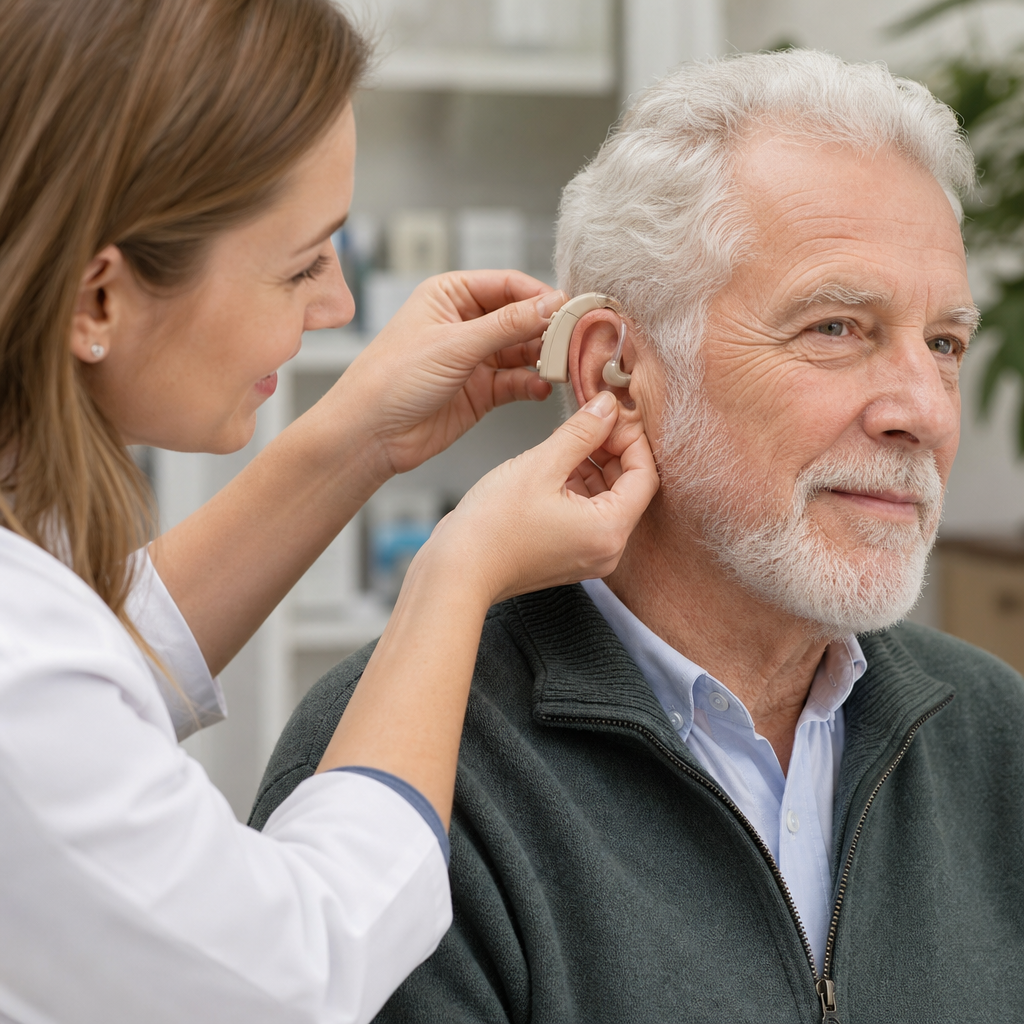
Free hearing aids can be life changing, but the phrase often causes confusion because “free” may mean fully subsidized, loaned through a program, bundled with insurance, or donated by a charity. In my work helping people compare hearing aid options, I have seen many families assume they do not qualify, only to discover state programs, veterans benefits, nonprofit assistance, or trial-based devices that dramatically reduce out-of-pocket cost. A practical guide to free hearing aids must therefore explain what hearing aids are, who typically needs them, which programs may cover them, and what limits usually apply.
Hearing aids are small electronic devices worn in or behind the ear that amplify and process sound for people with hearing loss. Modern models use microphones, digital signal processing, amplifiers, and speakers to improve speech understanding, reduce background noise, and support daily communication. Hearing loss itself ranges from mild to profound and may be conductive, sensorineural, or mixed. The best solution depends on the type and severity of loss, ear anatomy, lifestyle, and whether medical treatment is also needed. That is why no trustworthy article about free hearing aids should promise one universal path.
This topic matters because untreated hearing loss is linked to social isolation, poorer job performance, fatigue, and lower quality of life. Research published in major medical journals has also associated untreated hearing loss with higher risks of depression and cognitive decline, although hearing aids are not a cure for those broader issues. Cost remains one of the biggest barriers. Traditional prescription hearing aids can range from roughly $2,000 to $7,000 per pair, depending on technology level, fitting services, warranty coverage, and follow-up care. Even lower-cost over-the-counter devices can be unaffordable for many households, especially older adults on fixed incomes.
For that reason, this guide to free hearing aids serves as a general hub page: it maps the main funding sources, eligibility routes, application steps, and tradeoffs so readers can quickly identify the next article or program to explore in depth. It also answers the core question directly: yes, some people can get hearing aids at no personal cost, but access usually depends on age, income, insurance category, military status, medical need, or local charitable support.
Who can get free hearing aids and what “free” usually means
The first step is to define the different ways hearing aids become free to the user. In strict terms, a fully free hearing aid means the device, fitting, and required visits are covered by a public program, insurer, employer-related benefit, veterans system, school support service, or charity. More commonly, people receive hearing aids with zero upfront cost but still face limits such as batteries, replacement molds, repair fees, or travel costs for appointments. Some programs lend devices rather than transfer ownership. Others cover one basic model but not premium features like Bluetooth streaming, rechargeable batteries, or advanced directional microphones.
Eligibility differs sharply by country and even by state or province. In the United States, children often have the strongest coverage pathways through Medicaid, the Children’s Health Insurance Program, early intervention systems, and school-based support. Adults with low income may qualify through Medicaid in states that cover hearing aids, but adult coverage is inconsistent because Medicaid benefits are set partly at the state level. Veterans may receive hearing aids through the U.S. Department of Veterans Affairs if they meet clinical and enrollment criteria. Workers injured on the job may obtain devices through workers’ compensation when hearing loss is occupationally related.
Older adults frequently assume Medicare will provide free hearing aids, but Original Medicare generally does not cover hearing aids or routine hearing aid exams. Some Medicare Advantage plans do offer hearing benefits, yet those benefits often include copays, network restrictions, annual maximums, or discounts rather than truly free devices. This distinction matters because many marketing pages blur the line between insurance assistance and no-cost provision. The safest rule is simple: ask for the exact covered amount, the approved brands, the number of devices included, and the cost of future services before agreeing to anything.
Public programs, insurance, and veterans benefits
Public funding is often the strongest route for people seeking free hearing aids. Medicaid is the most important example in the United States, but rules vary. Some states provide comprehensive hearing aid benefits for children and limited or no benefits for adults. Prior authorization may be required, and programs commonly demand a documented hearing evaluation from a licensed audiologist or physician. In practical terms, applicants usually need proof of income, residency, identity, and a clinical report showing hearing loss affects communication. Because processing can take time, it helps to ask the clinic whether it submits authorization requests directly.
For children, federal disability and education frameworks can help families access hearing technology when hearing loss affects language development or classroom participation. Early hearing detection and intervention programs, state assistive technology projects, and school district services may support devices, FM or DM classroom systems, earmolds, and follow-up monitoring. I have seen parents save months by starting with a pediatric audiology clinic that already knows which state and school forms are required. That coordination matters because a child may need not only the device, but also speech support, classroom accommodations, and periodic reprogramming as hearing needs change.
Veterans benefits deserve special attention because they are among the most reliable hearing aid pathways for eligible adults. The VA provides hearing evaluations, hearing aids, accessories, and follow-up care for many enrolled veterans when clinical need is established. The exact eligibility rules can change, but hearing care is a common and well-developed service within the VA system. For veterans, the key advantage is not just the hearing aid itself; it is the complete clinical pathway, including fitting, real-ear verification, counseling, and repairs. Those services are essential because a hearing aid without proper adjustment often ends up unused in a drawer.
Private insurance and employer plans are less predictable. A few plans cover hearing aids generously, especially for children, while many offer partial reimbursement or negotiated discounts through hearing networks. Health savings accounts and flexible spending accounts can reduce the effective cost with pretax funds, though that is not the same as getting free hearing aids. Workers’ compensation can be valuable in cases of documented noise-induced hearing loss from industrial, construction, transportation, or military-adjacent work, but claims usually require employment records, audiograms, and a clear medical link between the job and the hearing damage.
Charities, nonprofits, community clinics, and donation programs
When public coverage is unavailable, nonprofit sources can fill important gaps. Hearing Charities of America has supported hearing assistance efforts, and local Lions Clubs frequently help residents obtain hearing exams or devices. The Starkey Hearing Foundation has historically operated hearing missions and assistance initiatives, though program structures can change over time. Sertoma clubs, religious organizations, community foundations, and state-level hearing aid banks may also offer grants or refurbished devices. These programs are especially useful for adults who earn too much for Medicaid but still cannot afford private pricing.
Donation and recycling programs usually work by collecting used hearing aids, refurbishing them, then fitting them to qualified recipients through participating hearing professionals. This model can be highly effective, but it has limits. Not every hearing aid can be reprogrammed for every loss, and older devices may lack current features or software support. Earmolds often need replacement for hygiene and fit reasons. Batteries and repair services may not be included. In my experience, applicants do best when they ask whether the program covers the full care package: exam, fitting, verification, orientation, repairs, and supplies for at least the first year.
Community clinics and university audiology programs are another overlooked source of lower-cost or free hearing aids. Universities with audiology training programs sometimes offer reduced-fee testing and fittings performed by students under licensed supervision. Public hospitals and community health centers may partner with charities or state agencies. Rural areas may have fewer local options, but state assistive technology programs sometimes maintain lending libraries or referral networks. If transportation is a barrier, ask whether teleaudiology follow-ups are available. Remote fine-tuning cannot replace every in-person service, but it can reduce travel for counseling and basic programming adjustments.
| Source | Who it helps most | What may be covered | Common limits |
|---|---|---|---|
| Medicaid | Low-income children and adults in covered states | Exam, hearing aids, fitting, follow-up | Adult benefits vary by state, prior authorization |
| VA | Eligible veterans | Evaluation, devices, accessories, repairs | Enrollment and clinical eligibility rules |
| School or early intervention services | Children with educational impact | Devices, classroom systems, monitoring | Tied to developmental or school needs |
| Nonprofit or charity programs | Uninsured or underinsured people | Refurbished or donated hearing aids | Limited inventory, waitlists, variable service support |
| University clinics | Budget-conscious patients | Reduced-fee testing and fitting | Not always free, scheduling constraints |
How to apply and how to improve your chances of approval
The application process for free hearing aids is usually straightforward but document heavy. Start with a current hearing test from a licensed audiologist. If you do not yet have one, call local audiology practices, hospital hearing centers, or university clinics and ask for the lowest-cost diagnostic evaluation. Request a copy of your audiogram and clinical notes. Many assistance programs require evidence that the hearing loss affects communication at work, school, or home, so detailed notes matter. If you have tinnitus, balance symptoms, sudden hearing changes, ear pain, or one-sided hearing loss, mention that immediately because medical referral may be needed before a hearing aid fitting.
Next, build a simple application file. Include identification, proof of address, proof of income, insurance information, the audiogram, and a short personal statement describing how hearing loss affects daily life. I advise people to be concrete rather than emotional: “I miss medication instructions at appointments,” “I cannot hear customers in my job,” or “my child cannot follow classroom discussion.” Programs reviewing limited funds respond best to measurable impact. If you are applying through more than one route, keep a spreadsheet with deadlines, contact names, and required forms. The biggest cause of delay is missing paperwork, not lack of need.
It is also smart to ask the clinic three technical questions before accepting any device. First, will the hearing aids be programmed to your prescription using evidence-based fitting formulas such as NAL-NL2 or DSL where appropriate? Second, will the provider perform real-ear measurement to verify the sound level at the eardrum? Third, what follow-up schedule is included? These questions separate a true clinical fitting from a simple handoff. In hearing care, the service model often matters as much as the hardware. Even an older donated device can work well when properly selected, fitted, verified, and supported.
Important tradeoffs, alternatives, and common mistakes
Free hearing aids are valuable, but they are not always the best long-term choice for every person. A basic donated device may provide excellent speech support in quiet settings yet struggle in restaurants, worship services, or meetings with competing voices. Some older instruments cannot connect to smartphones or remote microphones. Others use disposable batteries when a user would prefer rechargeability. None of these issues makes the device bad; they simply affect fit between technology and lifestyle. The right decision depends on communication needs, dexterity, vision, motivation, and whether consistent follow-up care is available.
Over-the-counter hearing aids have changed the market for adults with perceived mild to moderate hearing loss. They are not usually free, but some cost far less than prescription devices and may be a practical alternative when assistance programs are unavailable. The U.S. Food and Drug Administration created the OTC category to improve access, yet these products are appropriate only for adults and only for certain levels of hearing difficulty. They are not suitable for children or for people with red-flag symptoms such as sudden hearing loss, ear drainage, significant asymmetry, or severe hearing impairment. For those cases, professional evaluation is essential.
The most common mistakes are waiting too long, applying to only one program, and focusing only on the price of the device. Hearing aids succeed when users receive counseling, realistic expectations, and adjustment time. Most people need several weeks to adapt fully to amplified sound, and many need more than one programming visit. If speech still sounds unclear, the issue may be earwax, poor fit, untreated middle-ear disease, unrealistic expectations, or the need for assistive listening technology in addition to hearing aids. Remote microphones, captioned phones, TV streamers, and communication strategies often produce large gains at modest cost.
Another mistake is assuming hearing aids restore normal hearing. They do not. They improve access to sound, especially speech, but noisy environments remain challenging. The strongest outcomes come from combining good amplification with healthy communication habits: face the speaker, reduce background noise, improve lighting for visual cues, and ask for clear speech rather than louder shouting. If you are searching for free hearing aids, use this hub as your starting point, then contact local audiology clinics, your insurer, veterans services, and nonprofit groups today. The right program may already exist in your area, and the sooner you apply, the sooner communication becomes easier.
Frequently Asked Questions
Are hearing aids really free, or does “free” usually mean something else?
In most cases, “free hearing aids” does not mean every person can walk into a clinic and receive a brand-new pair at no cost with no eligibility rules. More often, the term refers to several different pathways that can reduce or eliminate out-of-pocket expense. For example, some state assistance programs fully subsidize hearing aids for qualifying children, older adults, or low-income residents. Veterans may receive hearing aids through VA benefits if they meet eligibility requirements. Certain nonprofit organizations and charities provide donated or refurbished devices to people who cannot afford them. In other cases, hearing aids are “free” only in the sense that they are included through insurance coverage, a managed care plan, a workers’ compensation claim, or a hearing benefit package. There are also loaner and trial programs that allow people to use devices temporarily at no charge, which can be extremely helpful but are not the same as permanent ownership.
This distinction matters because families often hear the word “free” and either assume it is too good to be true or assume they will automatically qualify. The reality is somewhere in between. Many legitimate programs do exist, but each has its own application process, income guidelines, residency rules, medical documentation requirements, or provider network restrictions. A smart approach is to treat “free hearing aids” as an umbrella term covering public benefits, charity support, insurance-based coverage, manufacturer assistance, and temporary device access. Once you understand that, it becomes much easier to identify which option applies to your situation and avoid disappointment caused by misleading advertising or vague promises.
Who typically qualifies for free or low-cost hearing aids?
Qualification depends entirely on the source of assistance, but several groups are more likely to have access to programs that bring hearing aid costs down substantially. Children often have the strongest support because many states prioritize pediatric hearing care through Medicaid, early intervention programs, school-based support, or specialized children’s health services. Veterans are another major group, since the Department of Veterans Affairs may cover hearing evaluations, hearing aids, fittings, batteries, and follow-up care for eligible individuals. Low-income adults may qualify through Medicaid in some states, though adult hearing aid coverage varies widely by location. Older adults with limited income may also find help through state vocational rehabilitation agencies, senior assistance programs, or local nonprofit organizations.
Eligibility can also extend beyond income alone. Someone may qualify because hearing loss affects their ability to work, communicate safely, or participate in daily life. In those cases, vocational rehabilitation services or disability-related programs may help. Insurance policyholders may have hearing aid benefits built into a Medicare Advantage plan, employer-sponsored coverage, or a private hearing discount network. Some charities focus on people who are uninsured or underinsured, while others prioritize those facing a documented financial hardship. The key takeaway is that many people rule themselves out too early. If you need hearing aids, it is worth checking multiple channels rather than assuming you earn too much, are too old, or do not fit a specific category.
Where should I look first if I need help finding free hearing aids?
The best starting point is usually a licensed hearing care provider or audiology clinic, because they can help confirm your hearing needs and often know which assistance programs are active in your area. A proper hearing test is important not only for selecting the right device but also because many public and charitable programs require documentation of hearing loss from a qualified professional. From there, ask specifically about state Medicaid coverage, county assistance, hospital charity programs, manufacturer patient assistance options, refurbished device programs, and local nonprofit referrals. Many clinics have seen a wide range of funding situations and can point you in the right direction quickly.
Beyond your provider, check your state’s Medicaid office, vocational rehabilitation department, and services for children with special health care needs if the person needing devices is a child. Veterans should contact the VA directly or speak with a veterans service officer. If you have insurance, call the member services number and ask whether hearing aids, hearing exams, fittings, earmolds, batteries, and follow-up visits are covered. Nonprofits such as hearing-focused charities, Lions Club chapters, community foundations, religious aid groups, and regional assistive technology programs may also offer direct support or referrals. It is often most effective to create a simple checklist and work through each source one by one. Because hearing aid funding is fragmented, persistence is often what uncovers the best option.
What costs are usually covered when hearing aids are provided through a free or assistance program?
This is one of the most important questions to ask before accepting any offer, because the hearing aids themselves may be covered while other necessary services are not. A comprehensive hearing aid package often includes the hearing evaluation, device selection, fitting, programming, follow-up adjustments, earmolds if needed, and sometimes ongoing supplies such as batteries, domes, wax guards, or charging accessories. Some programs also cover repairs and replacement within a certain time period. Others provide only the devices, leaving the patient responsible for office visits, customization, or maintenance. A “free hearing aid” can become less affordable if service fees are charged separately.
You should also ask whether the program covers one hearing aid or two, whether there are restrictions on technology level, and whether the devices are new, refurbished, or loaned. For many people, refurbished hearing aids can still be an excellent option, but it is helpful to know that upfront. Clarify what happens if your hearing changes, if the device needs repair, or if the trial does not work well for you. Good programs are usually transparent about these details and explain exactly what is included and what is not. The goal is not just to obtain a hearing aid, but to receive enough professional support for the device to actually improve daily hearing and communication.
How can I avoid scams or misleading offers when searching for free hearing aids?
Start by being cautious with advertisements that make sweeping promises such as “everyone qualifies,” “brand-new hearing aids with no exam,” or “free hearing aids today with no strings attached.” Legitimate hearing aid programs usually involve some combination of hearing testing, eligibility review, financial screening, insurance verification, or provider consultation. Be especially careful if a company pressures you to act immediately, asks for large upfront fees while calling the devices free, or avoids giving clear information about who funds the offer. Free should mean you understand exactly what is covered, what your obligations are, and whether the hearing aids are permanent, temporary, donated, or tied to a subscription or membership arrangement.
A reliable path is to work through known sources: licensed audiologists, hearing instrument specialists, hospital systems, state agencies, the VA, established nonprofits, and reputable insurance providers. Verify credentials, read reviews, and ask for all terms in writing. It is also wise to ask direct questions: Are these devices new or refurbished? Who owns them? What follow-up care is included? What happens if they need repair? Is there a return period? Is there any monthly fee? Clear answers are a good sign; vague or evasive responses are not. In my experience, the safest and most successful approach is to combine professional guidance with careful verification. There are real opportunities to lower hearing aid costs dramatically, but the best outcomes come from programs that are transparent, clinically appropriate, and matched to your actual hearing needs.