
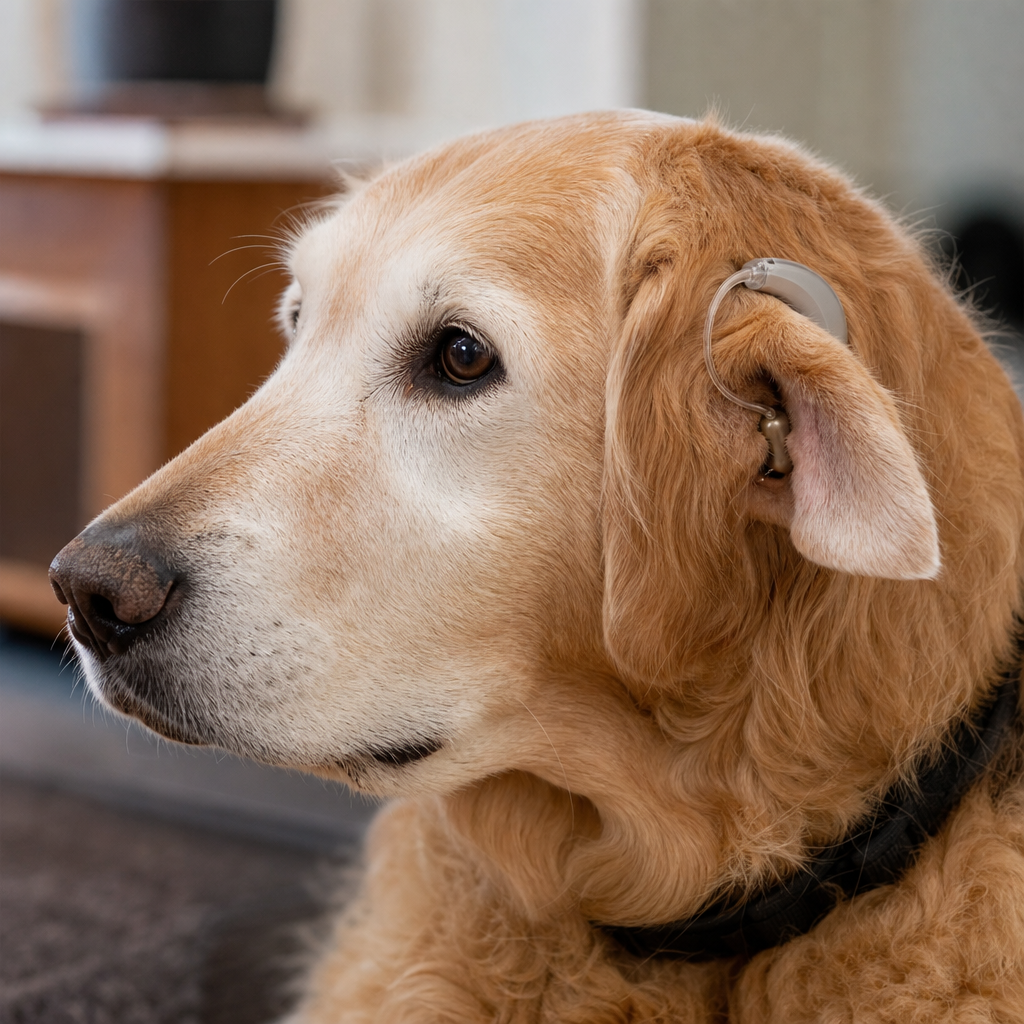
Dog hearing aids are specialized amplification devices designed to help dogs with partial hearing loss detect sounds more clearly, respond to cues, and stay safer in daily life. In practice, they sit at the intersection of veterinary medicine, audiology, behavior training, and assistive technology. I have worked with owners navigating canine hearing loss after chronic ear disease, age-related decline, and congenital deafness, and the first lesson is always the same: not every dog with reduced hearing is a candidate, but the right dog can benefit meaningfully from a carefully planned approach.
Hearing loss in dogs can be conductive, meaning sound is blocked by inflammation, wax, debris, infection, or structural problems in the ear canal, or sensorineural, meaning the inner ear or auditory nerve is impaired. Conductive loss may improve when the underlying condition is treated. Sensorineural loss is usually permanent. That distinction matters because a hearing aid amplifies sound; it does not cure infection, regenerate hair cells in the cochlea, or restore a damaged nerve. Owners need realistic expectations from the start.
This guide to dog hearing aids covers the general landscape: who may benefit, how candidacy is evaluated, what devices look like, how fitting and training work, what limitations to expect, and how to compare hearing aids with non-device communication strategies. As a hub article, it is meant to orient you before you go deeper into diagnostics, cost, breeds, training, maintenance, and alternatives. For families deciding whether to pursue canine hearing assistance, the central question is simple: will amplification improve this dog’s function and quality of life enough to justify the fitting process and ongoing care?
What dog hearing aids are and when they can help
A dog hearing aid typically consists of a microphone, amplifier, processor, battery, and output component housed in a custom or semi-custom form that sits on or near the ear. Some systems adapt human behind-the-ear technology to canine anatomy using custom molds or retention gear. Others function more like wearable sound-delivery devices paired with training systems. The goal is not perfect hearing. The practical goal is improved environmental awareness and better access to meaningful sounds such as a caregiver’s voice, a whistle, a clicker, a door opening, or an approaching vehicle.
The best candidates usually have residual hearing rather than complete deafness. Senior dogs with gradual age-related decline may still detect some frequencies and can sometimes benefit from amplification, particularly in controlled home settings. Dogs recovering from treated ear conditions may also be assessed once inflammation is stable. Working dogs, therapy dogs, and highly handler-focused companion dogs can do well when they tolerate equipment and already have a strong reinforcement history. By contrast, dogs with severe chronic otitis, painful ears, heavy discharge, major canal stenosis, or profound sensorineural deafness are often poor candidates until broader medical questions are addressed.
Function matters more than labels. If a dog cannot hear a recall indoors but still notices high-frequency sounds nearby, an assistive device may help. If a dog startles because it cannot localize sound, amplification may not solve the problem and can even increase confusion. That is why clinicians focus on observable outcomes: response to name, orientation to sound sources, compliance with learned cues, stress level, and safety during walks or around household activity.
How veterinarians assess candidacy and diagnose hearing loss
The evaluation process should start with a veterinarian, ideally one comfortable with otology, and in complex cases a veterinary dermatologist, neurologist, or specialist in ear disease. A proper workup includes a history of onset, breed risk, recurrent infections, medications, vestibular signs, trauma, and behavior changes. Otoscopic examination checks for wax, discharge, inflammation, masses, ruptured eardrums, or narrowed canals. Cytology may identify yeast or bacteria. Imaging can be useful if middle ear disease is suspected.
The most objective test for canine hearing is BAER, short for brainstem auditory evoked response. BAER measures electrical activity along the auditory pathway after sound stimulation and is widely used to confirm hearing, especially in puppies from at-risk breeds such as Dalmatians, Australian Cattle Dogs, Bull Terriers, and English Setters. BAER can determine whether hearing is present in one or both ears, but it does not by itself predict whether a dog will succeed with a hearing aid. Real-world candidacy also depends on temperament, ear health, residual functional hearing, and owner commitment.
Behavioral hearing tests at home are helpful but limited. Owners often clap, jingle keys, squeak toys, or call from behind the dog. Those tests can be misleading because dogs may respond to vibrations, air movement, visual cues, or routine patterns rather than sound itself. I have seen owners assume total deafness when the real problem was painful chronic otitis, and I have also seen them assume normal hearing because the dog responded to meal preparation vibrations. Objective testing and ear examination prevent expensive mistakes.
Types of dog hearing aids and fit considerations
There is no single universal dog hearing aid. Most options fall into adapted conventional hearing devices, custom-fitted systems created with veterinary and audiology input, and experimental or low-volume specialty products. The major challenge is anatomy. A dog’s ear canal is L-shaped, mobile, and often hairy, and many breeds have floppy pinnae, active lifestyles, or ear disease histories that make retention difficult. Moisture, wax, shaking, scratching, and rough play all increase failure risk.
Fit is therefore the make-or-break issue. A device that sounds impressive on paper but will not stay in place is not a practical solution. Custom ear molds may improve retention, but they require healthy tissue, accurate impressions, and regular reassessment. Behind-the-ear components may need harnesses, headbands, or protective snoods to prevent dislodgement. Feedback, occlusion effects, and discomfort are common fitting problems. The device also has to survive what a human hearing aid rarely faces: rolling on carpet, running through brush, pawing, water exposure, and vigorous head shaking.
| Option | Best use case | Main advantages | Main limitations |
|---|---|---|---|
| Adapted behind-the-ear device | Dogs with stable ears and good tolerance for wearables | Uses proven amplification technology, adjustable programming | Retention can be difficult, vulnerable to moisture and scratching |
| Custom earmold system | Dogs needing a more secure, individualized fit | Better seal, potentially less feedback, tailored canal fit | Requires healthy ears, remakes may be needed as fit changes |
| Remote sound cue or assistive listening setup | Dogs not suited to full-time ear-worn devices | Can support training without continuous wear | Does not restore general hearing, limited to specific contexts |
| Non-device visual and vibration cues | Dogs with profound deafness or poor device tolerance | Reliable, low maintenance, widely trainable | No auditory access, depends on line of sight or conditioned signals |
Battery life, programmability, and serviceability also matter. Human devices from established manufacturers may offer better processing and adjustment options than niche products, but they still need adaptation for canine use. Owners should ask who will clean, reprogram, repair, or replace the device, and whether follow-up support exists locally. A sophisticated aid without ongoing support is rarely a good long-term investment.
Fitting, acclimation, and training for daily success
Successful use depends less on the hardware alone than on the fitting and acclimation plan. Dogs do not understand why a foreign object is attached to their ear, so desensitization is essential. I introduce wear in very short sessions paired with high-value reinforcement, calm handling, and no competing stressors. The first goal is tolerance, not sound response. Once the dog accepts the device, amplification levels can be adjusted gradually to avoid overload.
Training should focus on meaningful sounds with clear consequences. A recall cue, a marker word, a whistle, or a hand-clap pattern linked to rewards works better than hoping the dog will spontaneously interpret every household sound. Owners should train in quiet spaces first, then add controlled distractions, then generalize to the yard or neighborhood. Sessions need to be short and consistent. Dogs with long-standing hearing loss may show confusion at first because sounds they have ignored for months or years suddenly become salient again.
Management remains important even with good progress. Outdoor safety should still rely on leashes, fenced areas, and visual check-ins because amplification does not guarantee precise sound localization. Many dogs hear something sooner without accurately identifying where it came from. Families should also monitor stress. If the dog becomes more reactive, shakes excessively, paws at the device, or seems overwhelmed in noisy environments, programming or use patterns may need to change. Better hearing is only beneficial if it improves function without undermining comfort.
Benefits, limitations, and realistic outcomes
The biggest benefit of dog hearing aids is improved access to sound in situations that matter to the dog and owner. That may mean hearing a caregiver approach, orienting to the food bowl being set down, noticing a training cue, or responding more reliably indoors. For some senior dogs, restored awareness can reduce apparent confusion and improve engagement. For handler-oriented dogs, it can strengthen communication and preserve routines that were fading as hearing declined.
Limitations are substantial and should be stated plainly. Dog hearing aids do not work equally well for all causes of hearing loss. They can be expensive, fragile, and time-intensive. Many dogs never tolerate consistent wear. Moisture and ear disease can interrupt use. Sound amplification may help detection without restoring clarity, which means a dog may notice noise but still struggle to distinguish one cue from another. Performance in a quiet room can be far better than performance in a busy park, kennel, grooming shop, or vehicle.
There is also an ethical point owners sometimes miss: a deaf or hard-of-hearing dog can live a rich, safe life without a hearing aid. Device use is not a moral requirement or a measure of dedication. In many cases, visual signals, tactile prompts, vibration collars used humanely for conditioned cues, and strong environmental management produce excellent quality of life. Hearing aids are best viewed as one tool among several, not the default answer for every dog with hearing loss.
Costs, maintenance, and owner responsibilities
Cost varies widely because canine hearing assistance often involves both medical and technical services. Expenses may include veterinary exams, cytology, ear treatment, BAER testing, impressions or molds, the device itself, fitting sessions, programming adjustments, retention accessories, batteries or charging systems, and eventual repairs or replacement. In human audiology, advanced hearing devices can cost thousands of dollars, and adapted canine solutions can land in a similar range once customization is included. Budgeting only for the hardware is a common mistake.
Maintenance is ongoing. Ears must stay clean and medically stable. Devices need regular cleaning to remove wax, dander, and moisture. Fit can change over time, especially if a dog gains or loses weight, develops renewed inflammation, or simply wears down retention components. Owners should inspect the skin for pressure spots and watch for odor, discharge, or increased scratching. If infection recurs, device use may need to stop immediately until the ear is treated.
The owner’s role is larger than many expect. You are not just buying equipment; you are committing to observation, training, troubleshooting, and realistic safety management. The families who do best are systematic. They track response patterns, note when the dog seems comfortable or overstimulated, and work closely with the veterinary team and fitter. That disciplined follow-through often determines whether the device becomes useful or ends up in a drawer.
Alternatives and complementary communication strategies
For many dogs, the most reliable communication system does not depend primarily on amplification. Hand signals are the foundation because dogs learn visual cues quickly and they remain effective regardless of device wear. Tactile prompts, such as a gentle shoulder touch followed by a known cue, are useful at close range. Vibration collars, when introduced with careful conditioning and never used as punishment, can function like a silent tap on the shoulder for recall or attention. Deaf-dog educators have used these methods successfully for years.
Environmental changes also make a measurable difference. Stomping lightly on the floor can create vibrations to get attention indoors. Flashing porch lights can be paired with coming inside. Leash handling, strategic positioning, and reward timing can reduce startle responses. In multi-dog homes, some deaf dogs follow a hearing housemate and benefit from social cues. These strategies are often combined with hearing aids rather than replaced by them. A dog may wear an aid during daytime household activity yet still rely on hand signals as the primary communication channel.
If you are building a complete plan, think in layers: medical treatment first, objective diagnosis second, communication system third, and device support fourth. That order prevents owners from chasing technology before solving infection, pain, or training gaps. It also produces the most resilient outcome, because if the device fails, the dog still has a reliable way to understand and respond.
Dog hearing aids can be valuable tools for selected dogs with residual hearing, healthy enough ears, and owners willing to invest in fitting, training, and ongoing care. The key takeaway is that amplification is not a cure for deafness and not a substitute for veterinary diagnosis. It works best as part of a broader hearing-loss plan grounded in ear health, objective testing, realistic expectations, and practical communication methods.
When a dog is a good candidate, the benefits are concrete: better awareness, stronger response to cues, improved engagement, and potentially safer day-to-day living. When a dog is not a good candidate, alternatives such as hand signals, tactile prompts, vibration-based attention cues, and environmental management can deliver excellent results. That balanced perspective helps owners avoid both false hope and unnecessary pessimism.
Use this guide as your starting point for the broader hearing aids topic, then move into detailed resources on diagnosis, device types, fitting, training, costs, breed considerations, and maintenance. If you suspect your dog is losing hearing, schedule a veterinary ear exam first, document what your dog can and cannot hear at home, and build a plan from evidence rather than guesswork.
Frequently Asked Questions
What are dog hearing aids, and how do they work?
Dog hearing aids are specialized sound-amplification devices intended to help some dogs with partial hearing loss detect important sounds more clearly. In simple terms, they work by capturing sound through a microphone, processing and amplifying it, and then delivering that sound at a level the dog may be better able to perceive. The concept is similar to hearing assistance in people, but applying it to dogs is much more complex because canine ears, behavior, anatomy, and tolerance for wearable devices vary widely.
These devices are not a one-size-fits-all solution. A dog’s hearing loss may be caused by chronic ear disease, age-related decline, congenital conditions, trauma, or nerve-related problems, and the underlying cause matters a great deal. If the hearing loss is due to a problem in the ear canal or middle ear, treatment of the medical issue may help. If the problem is sensorineural, meaning the inner ear or auditory nerve is affected, amplification may help in some cases, but results can be inconsistent. That is why veterinary evaluation is the starting point, not the device itself.
In practice, successful use depends on far more than just volume. Sound quality, frequency range, fit, comfort, and the dog’s willingness to accept the equipment all influence outcomes. Dogs also rely heavily on body language, vibration, scent, and routine, so hearing aids are usually only one piece of a broader support plan. For the right candidate, they may improve awareness of household sounds, owner cues, and environmental signals. For the wrong candidate, they can create stress, irritation, or little meaningful benefit. The goal is not to “fix” deafness, but to improve function, communication, and safety where possible.
Which dogs are the best candidates for hearing aids?
The best candidates are usually dogs with partial, not complete, hearing loss; stable ear health; and a temperament that allows for gradual training and handling around the head and ears. Dogs that still respond inconsistently to certain noises, voices, whistles, or high-value sound cues may have enough residual hearing to benefit from amplification. By contrast, dogs with profound deafness, advanced inner ear damage, or auditory nerve dysfunction may gain little or nothing from a hearing aid, even if the device is technically well made.
Medical suitability matters just as much as hearing status. Dogs with chronic ear infections, severe inflammation, painful ear canals, heavy discharge, or significant anatomical changes in the ears are often poor candidates until those problems are treated. In some cases, the ears are simply too sensitive or unhealthy to tolerate any device associated with the ear region. A full veterinary exam, and sometimes referral to a specialist, is important to determine whether the issue is conductive, sensorineural, temporary, or progressive.
Behavior and lifestyle also play a major role. A calm, food-motivated dog that can be trained to wear goggles, wraps, or other gear usually has a better chance of adapting than a dog that panics when touched near the head. Owners also need realistic expectations and consistency. Hearing aids tend to work best in homes willing to combine them with visual signals, touch cues, leash safety, environmental management, and reinforcement-based training. In other words, the ideal candidate is not just a dog with hearing loss, but a dog-owner team prepared for a careful, structured trial process.
Can a hearing aid restore my dog’s hearing completely?
No, a hearing aid should not be expected to restore normal hearing in the way many owners hope. The more realistic goal is improved sound awareness, not a complete return to natural hearing. Even in the best situations, a dog may hear some sounds more consistently without understanding them immediately or responding the way they once did. Hearing is not just about volume; it also involves clarity, frequency discrimination, brain processing, attention, and learned associations. If any part of that chain is impaired, the final result may still be limited.
This is especially important in older dogs and dogs with long-standing hearing loss. When hearing has declined gradually over time, the dog may have already adapted by relying more on vision, scent, routine, and vibration. Adding amplified sound may help the dog notice a door opening, an owner entering a room, or a cue delivered at close range, but it does not necessarily mean the dog will suddenly respond reliably at a distance or in distracting environments. Some dogs need substantial retraining to attach meaning to sounds they have not heard clearly in a long time.
Owners should also understand that not all hearing loss is amplifiable. If the inner ear structures or auditory nerve are severely damaged, making sounds louder may not make them more usable. That is why honest assessment is essential. A hearing aid can be worthwhile if it improves quality of life, communication, or safety even modestly. But it should be viewed as one supportive tool among many, not a guaranteed cure. Dogs often thrive when owners focus on practical outcomes such as better cue recognition, easier indoor communication, and reduced startle risk rather than chasing perfect hearing.
How are dog hearing aids fitted, and what does the adjustment process look like?
Fitting a dog for a hearing aid is typically more involved than many people expect. It begins with a veterinary assessment to identify the cause of hearing loss, evaluate ear health, and rule out problems that would make use uncomfortable or unsafe. In some cases, additional hearing evaluation is recommended to determine whether the dog has enough residual hearing to justify amplification. If the dog appears to be a reasonable candidate, the next steps involve selecting or adapting a device, considering head and ear anatomy, and planning how the dog will wear it securely.
The adjustment period is rarely instant. Most dogs need a gradual desensitization plan that starts with handling exercises, positive associations around the device, and short wear sessions before any meaningful sound exposure is attempted. This is especially true for dogs with a history of ear pain or sensitivity. Owners generally need to reward calm behavior, keep early sessions brief, and watch carefully for signs of stress such as pawing at the head, freezing, shaking, avoidance, or agitation. Comfort and emotional acceptance come first; amplification can be fine-tuned only if the dog tolerates the device.
Once the dog is wearing the aid comfortably, owners usually begin with controlled, predictable sounds and simple communication exercises. The idea is to help the dog notice sound without being overwhelmed. Progress is measured by real-world function: Does the dog orient more reliably to the owner’s voice, a hand clap, a training whistle, or a household cue? Does the dog appear less startled when approached because sound awareness improves? Adjustment may involve repeated refinements, and some dogs never become consistent users. Success depends on medical guidance, patience, and a training plan that respects the dog’s comfort and sensory needs.
Are there alternatives to hearing aids for dogs with hearing loss?
Yes, and for many dogs, alternatives or complementary strategies are actually more practical and more effective than hearing aids alone. Dogs are highly adaptable, and many do very well with communication systems built around visual signals, touch cues, vibration, predictable routines, and environmental management. Hand signals can replace verbal commands for everyday behaviors such as come, sit, stay, wait, and go to bed. Light cues, gentle floor vibrations, and conditioned touch signals can also help a dog navigate daily life confidently.
Safety management is especially important for dogs with reduced hearing. Secure fencing, leash use in open areas, identification tags, microchipping, and careful supervision near roads, bikes, wildlife, and unfamiliar dogs are critical because an impaired dog may not detect hazards or warnings. Inside the home, owners can reduce startle by approaching within the dog’s visual field, using gentle vibration before touching the dog, and maintaining consistent patterns for feeding, walks, and bedtime. These adjustments often make a bigger difference in quality of life than any device.
Training remains central regardless of whether a hearing aid is used. Positive reinforcement can teach a dog to check in visually, respond to hand targets, follow flashlight recall cues in low light, and tolerate handling or wearable equipment. If the hearing loss followed chronic ear disease or aging, ongoing veterinary care is also essential to manage discomfort and monitor progression. The most effective support plan is usually layered: treat underlying medical issues, build a visual communication system, protect the dog’s safety, and consider hearing aids only when they are likely to add meaningful benefit. That balanced approach is what gives most hearing-impaired dogs the best chance to stay confident, responsive, and secure in everyday life.