
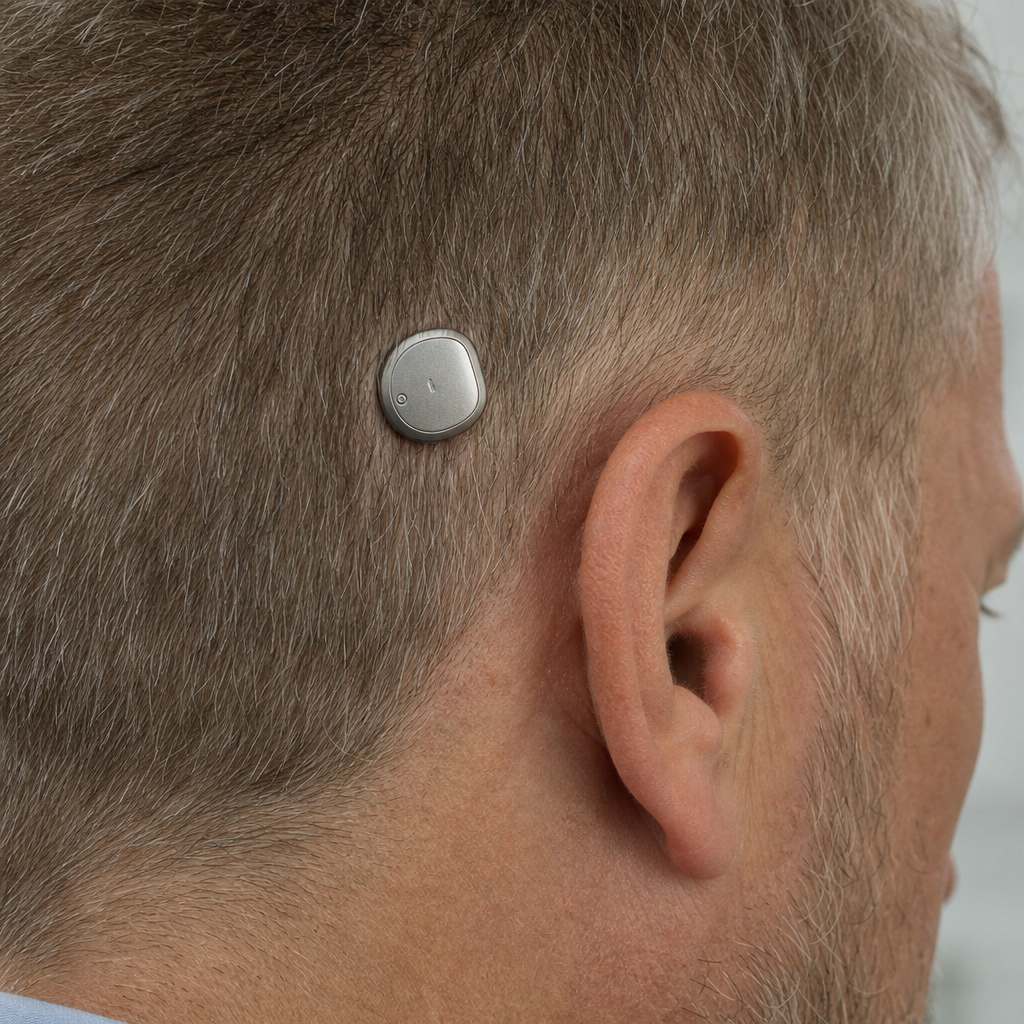
Bone-anchored hearing aids are hearing devices that send sound to the inner ear through bone conduction instead of pushing amplified sound through the ear canal. This guide to bone-anchored hearing aids explains what they are, who they help, how they work, and what patients should weigh before choosing one. In clinical practice, I have seen these systems change outcomes for people who struggled with conventional hearing aids because of chronic ear drainage, malformed outer ears, or single-sided deafness. They matter because they offer a different pathway to hearing: vibrations travel through the skull to the cochlea, bypassing damaged or blocked outer and middle ear structures. That makes them especially relevant for conductive hearing loss, mixed hearing loss with a significant conductive component, and some cases of unilateral profound hearing loss. The term often refers broadly to both surgically implanted systems and non-surgical bone conduction solutions worn on a softband or adhesive adapter. Understanding the distinction is important because candidacy, benefit, maintenance, and cost differ substantially. Patients also need clear expectations. These devices can improve access to speech, environmental awareness, and listening comfort, but they do not restore normal hearing or work equally well for every anatomy and hearing profile.
What bone-anchored hearing aids are and how they work
A bone-anchored hearing aid, often shortened to BAHA or described more generally as a bone conduction hearing system, captures sound with microphones in an external processor. The processor converts sound into vibrations. Those vibrations are transmitted either through a small implant fixed in the skull bone behind the ear or through pressure applied to the skin by a headband, adhesive mount, or similar attachment. From there, vibrations reach the cochlea, where hair cells turn mechanical energy into nerve signals for the brain.
The key concept is bypass. A conventional air-conduction hearing aid depends on a reasonably usable ear canal, eardrum, and middle ear to carry amplified sound inward. A bone-anchored system bypasses those structures. If the cochlea has enough reserve function, the person can hear despite chronic middle-ear disease, canal atresia, or conductive disruption. In single-sided deafness, sound picked up on the deaf side crosses by bone conduction to the better-hearing cochlea, improving awareness of sounds arriving from the poorer side.
Modern systems generally fall into two categories. Percutaneous devices use an abutment that passes through the skin, creating a direct mechanical connection between processor and implant. Transcutaneous devices keep the skin intact and transmit vibrations or signals across the skin using magnets or an active implanted component. Direct-drive percutaneous systems typically deliver strong, efficient vibration transfer, while transcutaneous systems often offer cosmetic and skin-care advantages. The tradeoff is that transmission across skin can reduce output in some passive magnetic designs.
In practical fittings, performance depends on several variables: bone conduction thresholds, processor power, microphone directionality, feedback management, and the thickness of skin or soft tissue over the implant area. These details matter more than marketing labels. Two devices may look similar yet produce very different outcomes because of coupling efficiency and candidacy match.
Who is a candidate for a bone-anchored hearing aid?
The best candidates are people who cannot rely on standard hearing aids or who would gain more from bone conduction routing. The three classic groups are conductive hearing loss, mixed hearing loss, and single-sided deafness. In conductive hearing loss, the inner ear may work relatively well, but the outer or middle ear blocks sound. Examples include chronic otitis media with persistent drainage, congenital aural atresia, ossicular chain disruption, and postoperative mastoid cavities that do not tolerate earmolds.
In mixed hearing loss, there is both a conductive problem and an inner-ear component. Candidacy depends on the bone conduction thresholds staying within the fitting range of the processor. If inner-ear function is too limited, the device may not provide enough audibility. This is why audiologists focus closely on bone conduction test results rather than only the air-conduction audiogram. For single-sided deafness, the poor ear has little or no usable hearing, while the other ear hears normally or near normally. The device does not make the deaf ear hear again; instead, it routes sound from that side to the better ear.
Age, anatomy, skin condition, and medical history also affect candidacy. Many centers use non-surgical trial options first, such as a softband or soundarc, to estimate real-world benefit before surgery. A child born with microtia and canal atresia may wear a softband early and move to an implant later once skull thickness and age criteria are met. Adults with diabetes, smoking history, poor wound healing, or unrealistic cosmetic expectations need especially careful counseling because these factors can affect surgical and long-term outcomes.
Not everyone who qualifies audiometrically is a good candidate in daily life. Dexterity, hygiene habits, tolerance for wearing a processor all day, work environment, and willingness to attend follow-up care are decisive. In my experience, the strongest outcomes come when the patient understands both the hearing benefits and the maintenance responsibilities before moving ahead.
Types of bone-anchored hearing systems and key differences
The market includes several well-established approaches, and choosing among them requires understanding the mechanics. Percutaneous systems connect the external processor to the implant through an abutment. They tend to provide efficient vibration transfer and are often favored when maximum output is needed for mixed losses near the upper limit of bone conduction candidacy. Their downside is daily skin care around the abutment and a visible external post.
Transcutaneous systems come in passive and active forms. Passive magnetic systems hold the processor on the outside with an internal magnet under intact skin. They avoid an open skin penetration, which many patients prefer cosmetically and from a hygiene standpoint. However, the soft tissue between the processor and bone can reduce transmission, especially at higher power demands. Active transcutaneous systems place the vibrating transducer under the skin, with the external component sending energy across the skin. These can reduce damping compared with passive magnetic designs while preserving intact skin.
Non-surgical bone conduction devices deserve attention in any general guide because they are often the first step. Softbands, headbands, and adhesive bone conduction solutions are useful for infants, for trialing benefit before surgery, and for adults who either are not surgical candidates or simply do not want an implant. They can deliver meaningful access to sound, though comfort, pressure, retention, and cosmetics vary.
| System type | Main advantage | Main limitation | Common use case |
|---|---|---|---|
| Percutaneous implant | Strong direct vibration transfer | Visible abutment and skin care needs | Mixed loss needing higher output |
| Passive transcutaneous implant | Intact skin and simpler appearance | Some signal loss through soft tissue | Conductive loss with cosmetic priority |
| Active transcutaneous implant | Better transmission with intact skin | More complex surgery and cost | Patients wanting skin preservation and performance |
| Softband or adhesive device | No surgery and easy trial | Less stable wear and lower long-term convenience | Young children or pre-surgical evaluation |
Brand selection should follow anatomy and hearing goals, not advertising. Audiologists and otologic surgeons typically compare power output, MRI considerations, retention method, wireless connectivity, accessory ecosystem, and service support. A device with robust Bluetooth streaming may be attractive, but if its power range does not match the patient’s bone thresholds, it is the wrong recommendation.
Evaluation, surgery, fitting, and recovery
The evaluation process starts with a full audiologic workup: pure-tone testing, speech measures, bone conduction thresholds, otologic examination, and often aided trials with a non-surgical simulator. Imaging may be needed for congenital conditions or prior surgery. For single-sided deafness, counseling should include a blunt explanation that these devices improve access from the deaf side but do not reliably restore true binaural hearing cues such as interaural timing. That nuance prevents disappointment later.
Surgery is usually outpatient and performed by an ear, nose, and throat surgeon or neurotologist. Techniques vary by system, but the general goal is stable fixation of a titanium implant or placement of an internal component in the bone behind the ear. Titanium is used because it integrates well with bone through osseointegration, a process established in craniofacial and dental implant science. Healing time depends on age, bone quality, and device type. Some processors are fitted weeks after surgery, once the site is stable.
The fitting appointment is not a formality; it is where benefit is shaped. The audiologist programs the processor to the patient’s bone conduction thresholds, verifies comfort, activates directional microphones if appropriate, and fine-tunes speech understanding in quiet and noise. Real-world follow-up is essential. Patients often need adjustments for wind noise, retention strength, streaming balance, or workplace listening. Children need periodic reassessment as they grow and educational demands change.
Recovery and maintenance differ by design. Percutaneous systems require careful cleaning around the abutment to reduce debris buildup and skin irritation. Transcutaneous systems avoid a skin opening but can still cause pressure discomfort or magnet-related soreness if retention is too strong. I routinely tell patients that a successful implant is not a one-day event; it is a long-term partnership among surgeon, audiologist, device manufacturer, and patient.
Benefits, limitations, costs, and everyday expectations
The main benefit of a bone-anchored hearing aid is access to sound when air-conduction hearing aids are medically unsuitable or acoustically ineffective. Patients with draining ears often report immediate relief from no longer blocking the canal with an earmold. Children with atresia may gain better speech access during critical language years. Adults with single-sided deafness commonly notice improved awareness of speech from the impaired side, especially in cars, meetings, and outdoor walking.
Limitations must be stated clearly. These devices do not cure hearing loss. In noisy places, benefit varies and may be modest without good microphone settings and realistic communication strategies. For single-sided deafness, localization usually remains limited because the brain is still receiving sound primarily through one functioning cochlea. Surgical systems also carry risks: skin reactions, failure of osseointegration, numbness, discomfort, device loss after trauma, and the need for revision surgery, though serious complications are uncommon in experienced hands.
Cost is another major factor. Total expense can include evaluation, imaging, surgery, the implant, the external processor, accessories, future upgrades, and follow-up care. Coverage policies differ widely by insurer and by whether the system is classified as prosthetic or hearing technology. In many regions, implantable bone conduction systems are more likely to receive medical insurance coverage than conventional hearing aids, but approvals are never automatic. Documentation of medical necessity matters. Centers that submit detailed notes on chronic ear disease, failed hearing aid use, or congenital malformation usually navigate authorization more effectively.
Day to day, users should expect a learning period. Wearing time typically builds over days or weeks. Batteries or rechargeable routines, app controls, moisture precautions, and processor placement all affect success. The biggest practical advice is simple: trial whenever possible, ask for side-specific listening examples, and measure outcomes with speech testing and validated questionnaires rather than relying only on first impressions.
How this guide fits the broader hearing aids journey
As a hub within the hearing aids topic, this guide to bone-anchored hearing aids should help readers know when to continue exploring related options. If you have usable ear canals and stable middle-ear function, traditional behind-the-ear or receiver-in-canal hearing aids may still be the best starting point. If hearing loss is severe to profound in both ears and speech understanding remains poor despite powerful amplification, cochlear implant evaluation may be more appropriate than a bone conduction device. If the issue is one deaf ear and one normal ear, compare bone-anchored systems with CROS hearing aids, because each solves the head-shadow problem differently.
The central takeaway is that bone-anchored hearing aids are not niche gadgets. They are established medical hearing systems with clear indications, proven physics, and meaningful quality-of-life benefits when matched to the right patient. Start with a comprehensive hearing test, include an otologic exam, and request a non-surgical demonstration if you are considering one. A careful evaluation now is the fastest route to choosing the right hearing solution with confidence.
Frequently Asked Questions
What is a bone-anchored hearing aid, and how is it different from a traditional hearing aid?
A bone-anchored hearing aid, often called a BAHA or bone conduction hearing system, is a hearing device that sends sound vibrations through the bones of the skull directly to the inner ear, bypassing the outer ear canal and middle ear. That is the key difference from a traditional hearing aid, which works by amplifying sound and delivering it through the ear canal in the usual way. For many people, standard hearing aids are very effective, but they depend on the ear canal and middle ear being able to handle amplified sound. When those structures are blocked, chronically infected, malformed, or otherwise not functioning well, a bone-anchored system may offer a better route for hearing.
In practical terms, the system includes a sound processor worn externally and a way to transmit sound through bone conduction. Depending on the design, that may involve a surgically placed implant or a non-surgical attachment method such as a softband or adhesive adapter. Once sound is picked up by the processor, it is converted into vibrations that travel through bone to the cochlea, which is the hearing organ of the inner ear. If the cochlea is healthy enough to receive those signals, the brain can interpret them as sound. This approach can be especially valuable for patients who cannot comfortably or effectively wear a conventional hearing aid in the ear canal.
Who is a good candidate for a bone-anchored hearing aid?
Bone-anchored hearing aids are often recommended for people with conductive hearing loss, mixed hearing loss, or single-sided deafness. They can be particularly helpful when the problem is not primarily in the inner ear itself, but in the outer or middle ear’s ability to carry sound normally. Good candidates often include patients with chronic ear drainage, repeated ear infections, ear canal problems that make wearing an in-ear device difficult, congenital malformations of the outer ear such as microtia or atresia, or a history of ear surgeries that have changed the anatomy of the canal or middle ear. In these situations, bypassing the ear canal can improve both hearing access and day-to-day comfort.
They may also help people with single-sided deafness, where one ear does not hear and the other ear has usable hearing. In that setting, the processor can pick up sound from the deaf side and send it through bone conduction to the functioning inner ear on the opposite side. This does not restore true two-eared hearing in the same way as normal binaural hearing, but it can improve awareness of sound coming from the poorer side and reduce the “head shadow” effect that makes speech harder to catch in certain listening environments. The best candidates are identified through a full hearing evaluation, medical examination, and often an in-office trial with a headband or test device to see how much benefit the patient notices before making a final decision.
How does a bone-anchored hearing aid actually work day to day?
Day to day, a bone-anchored hearing aid functions as a compact sound processor that captures sounds from the environment, analyzes them, and converts them into mechanical vibrations. Those vibrations are then transmitted through the skull bone to the cochlea. Because the inner ear receives the signal directly through bone conduction, the system avoids the need to send amplified sound through an ear canal that may be blocked, irritated, or medically unsuitable for a traditional aid. From the user’s perspective, the experience is often described as hearing more clearly without needing something placed inside the ear canal.
Modern systems are designed with practical daily use in mind. Many include directional microphones, noise reduction features, Bluetooth connectivity, and programmable settings for different environments. Some people use implantable systems that connect directly or through the skin to an implanted fixture, while others may begin with non-surgical options. Daily wear involves placing the processor correctly, keeping it clean and dry, changing or charging batteries as recommended, and attending follow-up visits for programming adjustments. Like all hearing technology, success depends not just on the device itself but on proper fitting, realistic expectations, and time for the brain to adapt to a new way of receiving sound.
Is getting a bone-anchored hearing aid a surgery, and what should patients consider before choosing one?
Some bone-anchored hearing systems do involve surgery, but not all of them. Surgical systems typically place a small titanium implant in the skull behind the ear so the sound processor can transmit vibrations efficiently. The specific procedure, healing time, and attachment style depend on the system being used and the patient’s anatomy, age, skin health, and hearing goals. At the same time, non-surgical bone conduction options are available and may be used as temporary, long-term, or trial solutions depending on the case. This is why the phrase “bone-anchored hearing aid” is sometimes used broadly, even though the exact technology can differ from one patient to another.
Before choosing one, patients should weigh several factors carefully. These include the type and degree of hearing loss, whether the inner ear has enough function to benefit, skin and bone health, lifestyle needs, maintenance requirements, cosmetic preferences, comfort, insurance coverage, and willingness to undergo a procedure if needed. It is also important to understand what the device can and cannot do. For example, a bone-anchored system may improve access to sound and speech in many settings, but it may not fully normalize hearing in background noise or restore natural localization in every patient. A thoughtful discussion with an otologist, ENT specialist, and audiologist is the best way to compare options and decide whether this approach fits the patient’s medical and hearing profile.
What are the main benefits and limitations of bone-anchored hearing aids?
The main benefit of a bone-anchored hearing aid is that it provides a route to hearing when the ear canal or middle ear is the reason traditional amplification has failed. For patients with chronic drainage, canal closure, malformed outer ears, or long-standing middle ear disease, that can be a major quality-of-life improvement. Many users appreciate that the device leaves the ear canal open, which can reduce irritation and make hygiene easier. Others benefit from clearer access to speech because the system bypasses damaged sound-conducting structures and sends information directly to the inner ear. In single-sided deafness, the benefit is often improved awareness of sounds from the non-hearing side, which can make communication easier in everyday situations.
At the same time, there are limitations that should be understood upfront. These devices are not the right answer for every form of hearing loss, especially when inner ear function is too poor to use the incoming signal effectively. Some users need time to adapt to the sound quality, and performance can still be challenging in noisy environments. Surgical systems may involve healing time, skin care, and long-term maintenance around the implant area depending on the design. Even non-surgical systems require consistent wear and proper fitting. The most successful outcomes tend to happen when patients are selected carefully, tested thoroughly, and counseled honestly about expected benefits. When used for the right reasons, bone-anchored hearing aids can be an excellent solution, but they work best as part of a personalized hearing care plan rather than as a one-size-fits-all device.