

Political campaigns and elections are fundamental elements of democratic societies, critical junctures where citizens exercise their rights and influence decision-making. Yet, historically, these arenas have not always been accessible to all community segments, particularly individuals who are deaf or hard of hearing. In recent years, there’s been a growing awareness and advocacy for enhanced inclusivity, aiming to ensure that electoral processes are accessible to the deaf community. Such progress is vital because full participation and representation in electoral activities are essential for democracy’s integrity and vibrancy. By ensuring access, we move toward a more inclusive society, respecting the rights and needs of all citizens.
Understanding Legal Rights for Deaf Voters
The foundation of advocating for deaf access in political processes is understanding the legal rights that protect and promote accessibility. In many democracies, legislation exists to support the participation of individuals with disabilities in elections. For example, the Americans with Disabilities Act (ADA) in the United States guarantees that public entities provide equal access to individuals with disabilities, which includes those who are deaf or hard of hearing. Similarly, international frameworks, such as the United Nations Convention on the Rights of Persons with Disabilities (CRPD), underscore the importance of accessible elections globally. These legal structures mandate that campaigns and polling places offer accommodations to ensure that deaf citizens can fully participate in political life.
Despite these legal protections, implementation can be inconsistent. Awareness and understanding of these rights are crucial for both voters and campaign organizers. Advocacy groups play a significant role in educating deaf individuals about their rights, helping them navigate challenges they may face during political campaigns or when voting. Moreover, these groups work tirelessly to hold authorities accountable for providing necessary accommodations, ensuring that legal provisions translate into tangible, accessible solutions during elections.
The Role of Social Advocacy in Political Accessibility
Social advocacy forms the cornerstone of efforts to ensure that electoral processes are accessible to the deaf community. Advocacy groups, often led by members of the community, engage in a variety of activities aimed at promoting inclusivity. These activities range from raising awareness about the challenges faced by deaf voters to working directly with political campaigns to implement accessibility measures. The advocacy efforts also include lobbying for policy changes that facilitate more inclusive electoral processes such as mandating sign language interpreters at debates and ensuring campaign materials are available in accessible formats.
The influence of advocacy is reflected in the gradual changes seen in how campaigns engage with deaf voters. Campaign strategies increasingly include captions for digital content, sign language interpreters at live events, and clear communication of agendas in visual formats. Additionally, advocacy has led to significant policy changes in numerous jurisdictions, further ensuring electoral processes accommodate more diverse communication needs. Collaboration between advocacy groups, government agencies, and political organizations is key to sustaining this momentum and addressing gaps that still exist in ensuring electoral access for the deaf community.
Technological Innovations Enhancing Deaf Access
In the quest to make political campaigns and elections more accessible to the deaf community, technology plays a pivotal role. Modern innovations provide numerous tools that can significantly enhance accessibility. For instance, closed captioning and real-time transcription technologies enable deaf individuals to engage with campaign speeches and debates. Video relay services and video remote interpreting also allow for more dynamic interactions with campaign representatives and electoral officials, providing deaf voters with the opportunity to ask questions and engage in discussions on an equal footing with their hearing peers.
Moreover, app-based platforms are becoming increasingly popular for distributing political information, often including features such as sign language avatars or eye-tracking capabilities that allow personalized settings for ease of access. These technologies not only improve the accessibility of campaign content but also empower deaf voters by providing them with the information necessary to make informed electoral choices. For campaigns, embracing these technologies underscores a commitment to inclusivity, potentially broadening their reach within the community and enhancing their democratic legitimacy. The future of accessible political campaigns is intricately linked to these ever-evolving technological tools that continue to bridge communication gaps.
Poll Worker Training and Sensitization
Another crucial component of making elections accessible to the deaf community is the training and sensitization of poll workers. Since these individuals are often the first point of contact for voters at polling stations, it is essential that they are equipped to meet the needs of deaf voters. Comprehensive training programs, focusing on effective communication with individuals who are deaf or hard of hearing, contribute significantly to ensuring smooth and respectful electoral experiences. This includes familiarizing poll workers with legal obligations, teaching basic sign language, and guiding them on the use of communication technologies at polling stations.
Sensitization efforts also emphasize the importance of empathy and patience, reinforcing poll workers’ roles in facilitating accessible electoral processes. Additionally, creating an environment where deaf voters feel comfortable asking for the assistance they need is a priority. By offering such training, electoral bodies and advocacy groups can help dismantle barriers that still exist at the polling place, fostering a more inclusive democratic environment. Feedback from the deaf community can be instrumental in these training programs, contributing to ongoing improvements in poll worker engagements.
Practical Steps for Campaigns to Ensure Accessibility
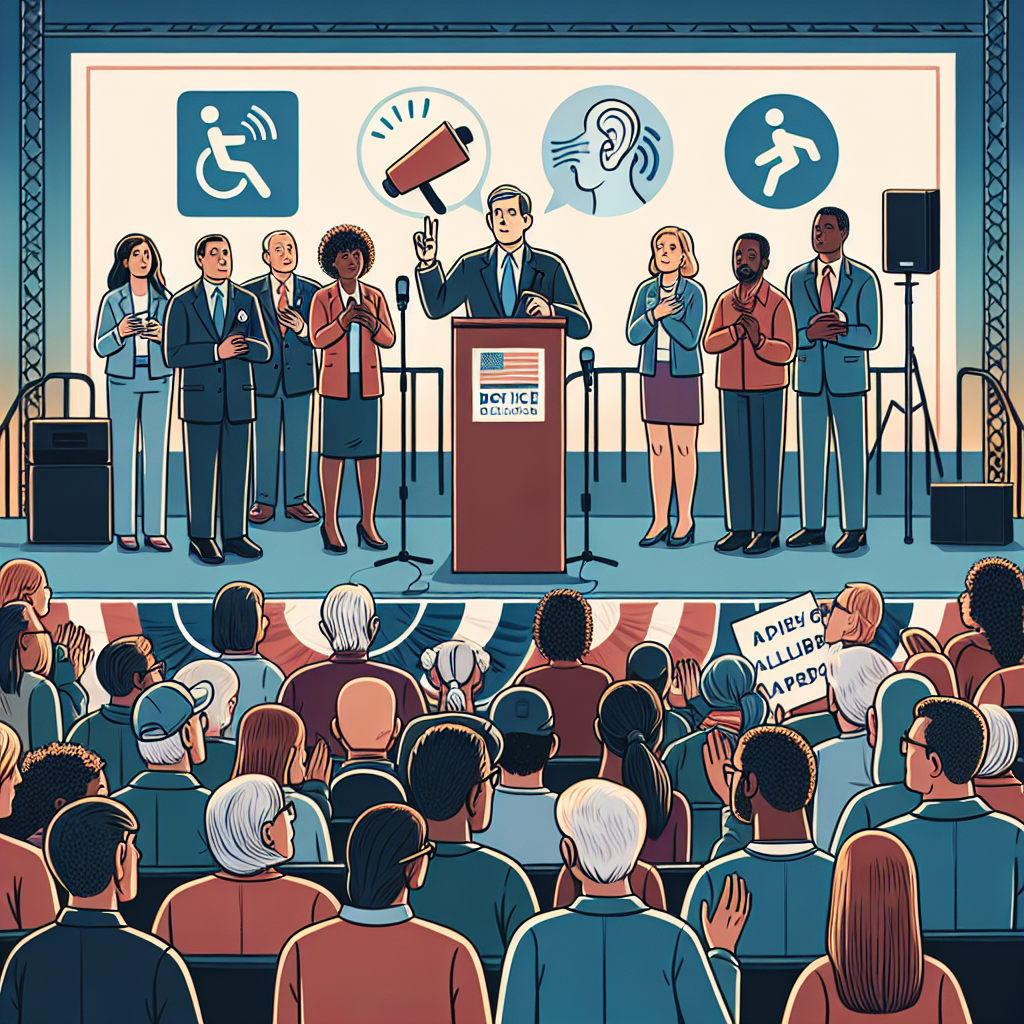
For political campaigns aiming to be inclusive, adopting practical measures to ensure accessibility is vital. Campaigns should, for instance, ensure all event locations are ADA-compliant and provide sign language interpreters for live events. They could also incorporate closed captions in all video content, and utilize staff or volunteers trained in sign language. Additionally, producing campaign literature in multiple formats, including braille and easy-read versions, ensures every voter has access to the information they need.
Developing a comprehensive accessibility plan early in the campaign process can help identify needs and allocate resources effectively. This plan should involve consulting with deaf advocacy organizations to fine-tune approaches and confirm that the measures taken meet the community’s expectations. Moreover, asking for feedback from deaf participants after events can provide valuable insights into how future engagements can be improved. Ultimately, by following through with these measures, political campaigns can affirm their commitment to inclusivity and democratic participation, demonstrating genuine respect for all constituents.
Conclusion: Building a Future of Inclusive Democracy
The journey towards ensuring full and equal access to political campaigns and elections for the deaf community is ongoing and complex, requiring a multifaceted approach. Anchored by legal frameworks, propelled by advocacy, enhanced by technology, and strengthened through practical measures, this effort represents a shared commitment to inclusivity. The engagement of all stakeholders—from policymakers and advocacy groups to individual voters—ensures that progress is not just made but sustained.
Creating an inclusive democratic environment is not merely a legal obligation but a moral one, affirming the dignity and equality of every individual. As democratic societies evolve, they must uphold principles of accessibility and inclusivity, recognizing that an election’s success is ultimately measured by its ability to include all voices. By conscientiously addressing barriers and advocating for tangible solutions, we pave the way for a future where political campaigns and elections are truly accessible to everyone, reinforcing the integrity of our democratic institutions for generations to come.