

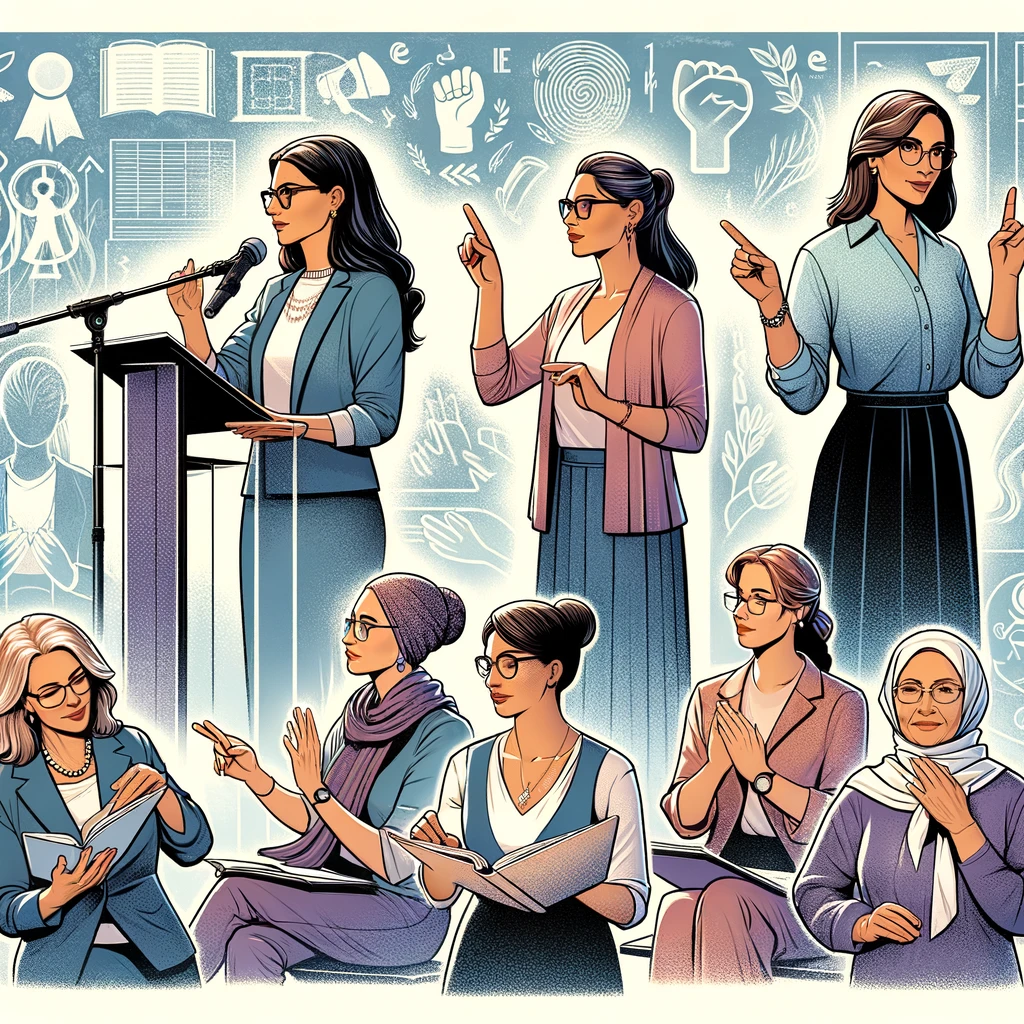
March, Women’s History Month, offers a perfect opportunity to shine a light on the remarkable women who have significantly contributed to the Deaf community. While Helen Keller and Marlee Matlin are often the most recognized, numerous other deaf women have left indelible marks on history. Their stories are not just about overcoming challenges but also about pioneering change, advocating for rights, and breaking barriers in various fields.
Helen Kirkpatrick Watts – A Militant for Suffrage
Helen Kirkpatrick Watts stood out as a militant suffragette. Rebelling against her Victorian upbringing, she became a vocal advocate for women’s voting rights. Her approach to activism was grounded in visible protest rather than mere discussions. She endured multiple imprisonments and participated in hunger strikes, demonstrating her dedication to the cause. Awarded the Suffragette Medal, Watts symbolizes self-sacrifice and relentless pursuit of equality.
Princess Alice of Battenberg – Royal Humanitarian
Princess Alice, the great-granddaughter of Queen Victoria, was not just royalty but also a deaf humanitarian. Despite her challenges, she became an army nurse, sheltered a Jewish family during WWII, and dedicated her life to charity work. For her bravery and kindness, Alice was posthumously honored as a Hero of the Holocaust by the British government.
Harriet Martineau – A Pioneer in Sociology
Harriet Martineau, an abolitionist, feminist, and writer, made significant contributions to sociology. Despite her deafness and living in a patriarchal society, she published numerous articles and books, establishing herself as one of the first female journalists and sociologists. Her work focused on societal inequalities and women’s status, making her a crucial figure in the foundation of sociology.
Ashley Fiolek – Champion on the Tracks
Born deaf, Ashley Fiolek has shattered stereotypes in the world of motocross. She became the first woman signed to the American Honda Racing team and claimed multiple Women’s Motocross Championships. Her success on the track and as a motorcycle stunt performer reflects her belief in the power of hard work and perseverance.
Ruth Benedict – A Trailblazer in Anthropology
Ruth Benedict revolutionized anthropology in the United States. As the first female leader of the American Anthropological Association in the 1930s, she urged the integration of folklores and cultures in anthropological studies. Her influential book, “Patterns of Culture,” reshaped the way cultures are understood and studied.
Annie Jump Cannon – A Star in Astronomy
Cannon’s deafness didn’t hinder her passion for astronomy. A graduate of Wellesley College, she combined her knowledge in astronomy with photography to develop the Harvard Classification Scheme, a system still used in astronomy today. Her achievements include being the first woman to receive an honorary doctorate in science from Oxford University and her activism in the women’s suffrage movement.
Claudia Gordon – Breaking Barriers in Law and Politics
Claudia Gordon, the first black deaf female attorney in the U.S., has a remarkable story of overcoming adversity. Facing discrimination after losing her hearing at a young age, she later became a policy advisor for the Department of Homeland Security and has dedicated her life to advocating for the rights of disabled Americans.
Dolores R. Ramirez (Barrett) – Advocate for Deaf Housing
Dolores Ramirez Barrett, the first Latina graduate from Gallaudet, became a notable advocate for the Deaf community. She focused her efforts on creating deaf-friendly housing in Arizona, resulting in the establishment of Apache ASL Trails apartments, which cater to the needs of deaf residents with ASL-fluent staff and accessible technology.
Ida Wynette Gray Hampton – Educator and Trailblazer
Ida Wynette Gray Hampton was the first Black Deaf woman to graduate from Gallaudet. Her dedication as a teacher at the Florida School for the Deaf and Blind for over three decades significantly impacted students with multiple disabilities. Her contributions extend beyond education, leaving a lasting legacy in the Deaf community.
Juliette Gordon Low – A Guiding Force for Girls
Juliette Gordon Low, who lost her hearing in adulthood, founded the Girl Scouts in America at age 51. Inspired by the Boy Scouts and Girl Guides in Great Britain, she established the first groups in Savannah, Georgia. Her initiative has grown into a global movement, empowering millions of girls worldwide for over a century.
Mojo Mathers – A Voice in Politics
Mojo Mathers, the first deaf New Zealand Parliament Member, faced hearing loss due to complications at birth. Overcoming significant challenges, she became an influential political figure, advocating for accessibility and rights for the deaf community. Her persistence in fighting for and securing necessary accommodations in Parliament highlights her commitment to inclusivity and equal opportunities.
Linda Bove – A Pioneer in Entertainment
Linda Bove, a deaf actress, made significant contributions to mainstream entertainment. She is renowned for her role as Linda the Librarian on “Sesame Street,” where she introduced millions of children to deafness and American Sign Language. Her portrayal broke stereotypes and opened doors for future generations of deaf actors and performers.
Phyllis Frelich – A Trailblazer on Stage
Phyllis Frelich, a deaf actress, inspired the critically acclaimed play “Children of a Lesser God.” Her exceptional performance earned her a Tony Award for Best Actress. The play’s success, which later became a film, marked a significant moment in the representation of deaf individuals in the arts.
Sheena McFeely – An Advocate Through Literature
Sheena McFeely, an author, and entrepreneur, uses her platform to empower young deaf girls. Her children’s book, “Shay and Ivy: More Than Just a Princess,” celebrates the opportunities created by deaf women throughout history and encourages young girls to aspire to greatness, irrespective of their hearing status.
Conclusion
The narratives of these influential deaf women illuminate the diverse avenues through which they have shaped history and advocacy in the Deaf community. From the fields of politics, law, education, entertainment, to social reform, their contributions underline a common theme: deafness is a part of their identity, but it does not define their capability or limit their potential. As we commemorate Women’s History Month, it is crucial to recognize and celebrate these pioneers who have not only overcome personal challenges but have also paved the way for future generations. Their legacies inspire us to acknowledge the diverse and dynamic roles that women play in our communities and the significant impact they continue to have in shaping a more inclusive and equitable society.