
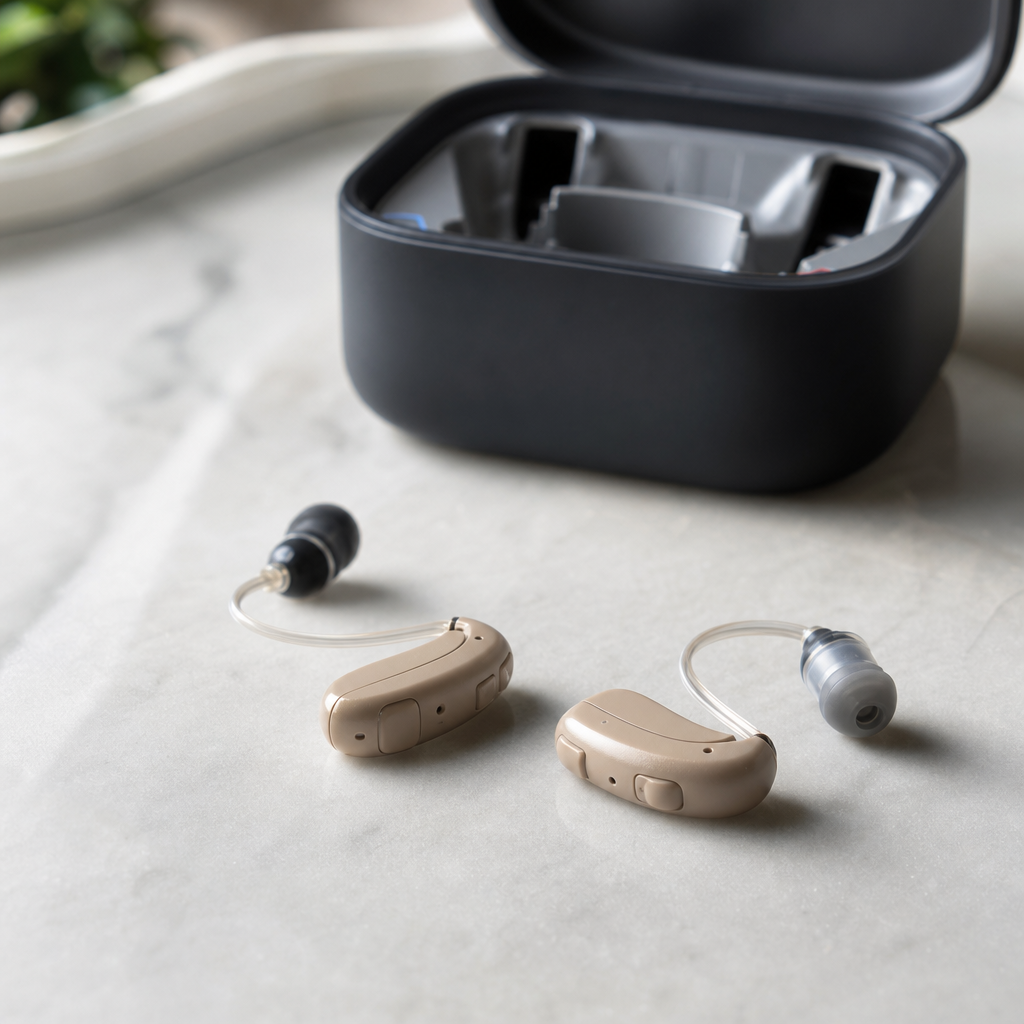
Hearing aid ear buds sit at the intersection of consumer audio and medical hearing support, giving people with mild to moderate hearing loss a more discreet, familiar way to hear conversations, media, and everyday sounds. The term usually refers to compact in-ear devices that resemble wireless earbuds but include features traditionally associated with hearing aids, such as sound amplification, directional microphones, feedback control, noise reduction, and app-based personalization. In practice, this category now spans prescription hearing aids with earbud styling, self-fitting over-the-counter devices, and hearables designed for both streaming and speech enhancement. That range matters because shoppers often assume all in-ear hearing devices work the same way. They do not.
I have worked with patients and buyers comparing these products side by side, and the biggest source of confusion is not price. It is fit for purpose. Someone who mainly struggles in restaurants needs a different solution than someone who wants phone calls, music, and occasional speech support in meetings. Another key distinction is regulatory status. In the United States, prescription hearing aids are intended for diagnosed hearing loss and are fitted with professional oversight, while over-the-counter hearing aids are cleared for adults with perceived mild to moderate hearing loss and can be purchased without an exam, fitting, or prescription. Personal sound amplification products, often called PSAPs, can make quiet sounds louder but are not regulated as hearing aids.
Understanding hearing aid ear buds matters because hearing loss is common and often untreated. According to the National Institute on Deafness and Other Communication Disorders, roughly one in eight people in the United States aged twelve or older has hearing loss in both ears based on standard hearing examinations. Untreated hearing loss can affect communication, work performance, listening effort, social connection, and fatigue. Better device design has lowered the stigma barrier for many first-time users. Earbud-shaped hearing devices feel less medical, pair easily with smartphones, and can be easier to accept for people who already wear Bluetooth earbuds daily.
This hub article explains what hearing aid ear buds are, who they help, how they differ from standard hearing aids and regular earbuds, what features matter, what tradeoffs to expect, how much they cost, and when to seek clinical care. If you are starting your research under the broader Hearing Aids topic, this page gives you the framework you need before moving into detailed comparisons, reviews, fitting guides, and maintenance articles.
What Hearing Aid Ear Buds Are and How They Work
Hearing aid ear buds use a miniature chain of components similar to traditional digital hearing aids: microphones capture sound, a digital signal processor analyzes and shapes it, an amplifier boosts selected frequencies, and a receiver delivers the processed sound into the ear canal. The sophistication lies in the processing. Good devices do not simply make everything louder. They apply frequency-specific gain based on an audiogram or an in-app hearing test, reduce steady-state background noise, limit sudden loud sounds through output compression, and manage acoustic feedback so the device does not whistle.
Most modern models also include beamforming or directional microphone systems. These help prioritize sounds from the front, especially speech, while reducing competing noise from the sides and rear. In real life, that means a device may improve conversation at a dinner table, though it will not make a noisy restaurant sound quiet. Hearing technology improves signal quality, not the laws of acoustics. Closed or vented ear tips also shape performance. A tighter seal can improve low-frequency retention and streaming quality, while a more open fit may reduce the plugged-up sensation known as occlusion.
Many devices now combine hearing support with consumer features such as Bluetooth streaming, tap controls, voice assistant access, and rechargeable batteries. That convergence has created a new expectation: users want one device for hearing speech, taking calls, listening to music, and moving through daily life without changing hardware. The best products balance those goals, but compromises remain. A design optimized for music fidelity may not deliver the same all-day comfort, battery endurance, or advanced fitting flexibility as a dedicated medical hearing aid from brands like Phonak, Oticon, ReSound, Signia, Starkey, or Widex.
Who Should Consider Them and Who Should Not
Hearing aid ear buds are best suited to adults with mild to moderate hearing loss who value discretion, smartphone control, and multipurpose use. They can be a strong entry point for someone who notices difficulty hearing speech in meetings, group conversations, religious services, lectures, or when watching television at higher volume than others prefer. They are also attractive to people who resist conventional behind-the-ear models for cosmetic or lifestyle reasons. I have seen adoption improve dramatically when users feel the device looks like something they would have chosen anyway.
They are not the right choice for everyone. People with severe or profound hearing loss often need more amplification headroom, custom earmolds, stronger receivers, and tighter clinical programming than earbud-style devices can provide. Users with significant dexterity issues may struggle with tiny in-ear housings and charging cases. People prone to earwax buildup, chronic otitis externa, or narrow ear canals may find in-ear wear difficult or irritating. Anyone with sudden hearing loss, one-sided hearing loss, ear pain, drainage, persistent tinnitus in one ear, or dizziness should seek medical evaluation first, because those symptoms can indicate conditions beyond age-related hearing loss.
Age matters too. Over-the-counter devices are for adults only. Children with hearing loss need pediatric assessment, verification, and ongoing follow-up. Even among adults, there is a difference between convenience and appropriateness. If speech is consistently unclear rather than merely quiet, you need a full hearing evaluation. Clarity problems can stem from auditory distortion that amplification alone cannot fully solve, and a proper audiogram helps set realistic expectations from the start.
Hearing Aid Ear Buds vs Traditional Hearing Aids vs Regular Earbuds
The simplest way to compare these categories is by purpose. Traditional hearing aids are medical devices built first for audibility, speech understanding, and long-term wear. Regular earbuds are built first for entertainment audio and calls. Hearing aid ear buds try to bridge both worlds. That can be extremely useful, but shoppers should understand the practical differences before buying.
| Device type | Primary purpose | Best for | Main limitations |
|---|---|---|---|
| Prescription hearing aids | Treating diagnosed hearing loss with professional fitting | Users needing precise programming, advanced speech features, or complex hearing profiles | Higher cost, more clinical steps, less earbud-like styling in many models |
| OTC hearing aid ear buds | Self-fitting support for perceived mild to moderate hearing loss | Adults wanting lower cost, discreet design, and app control | Less individualized support, variable sound quality, not suitable for severe loss |
| PSAPs or enhanced earbuds | Environmental amplification and media use | Situational listening for people without diagnosed hearing loss | Not regulated as hearing aids, limited fitting precision, may amplify noise poorly |
| Standard wireless earbuds | Music, calls, and entertainment | Users without hearing support needs | No hearing-loss treatment, no prescribed gain targets, limited speech compensation |
In daily use, the most important difference is fitting accuracy. A true hearing aid applies gain by frequency according to validated rationale such as NAL-NL2 or DSL principles, then ideally confirms output with real-ear measurement. Earbud-style devices sold direct to consumers often rely on self-tests and preset profiles. Some do this surprisingly well, especially for straightforward high-frequency loss, but they still lack the precision of in-clinic verification. Another difference is wear time. Traditional hearing aids are generally built for all-day use with strong moisture resistance, robust feedback management, and comfort over many hours. Earbud-style devices may feel great for commuting and calls but less comfortable over an entire day.
Features That Matter Most Before You Buy
If you are evaluating hearing aid ear buds, start with hearing performance, not marketing language. Look for frequency-specific amplification rather than generic volume boost. Check whether the device offers a self-administered hearing assessment, customizable programs, speech-in-noise mode, directional microphones, feedback suppression, and compression that keeps loud sounds tolerable. Battery life matters because features like streaming and active noise processing consume power quickly. Eight to sixteen hours of mixed use is common, but true all-day use with heavy streaming may require midday charging.
Fit and seal are equally important. A poor seal can reduce amplification effectiveness, increase feedback risk, and hurt speech clarity. Good products include multiple ear tip sizes and sometimes open and closed domes. Water and dust resistance should not be ignored. An IP rating such as IP54 or IP57 can make a real difference for exercise, humid climates, and daily reliability. Connectivity is another major factor. Some devices support Made for iPhone, ASHA for Android, Bluetooth LE Audio, or Auracast readiness, which can improve streaming efficiency and public venue accessibility over time.
App quality often separates strong products from frustrating ones. A useful app lets you adjust volume per ear, change programs, control environmental balance, run hearing checks, locate lost devices, and contact support. I advise buyers to read app store reviews as carefully as device reviews because software stability affects satisfaction as much as hardware. Also check the return window and warranty. Because comfort and sound preference are highly individual, a risk-free trial of at least thirty to forty-five days is far more valuable than a small discount.
Benefits, Tradeoffs, and Real-World Performance
The main benefit of hearing aid ear buds is accessibility. They often cost less than prescription hearing aids, feel familiar to first-time users, and can combine hearing support with streaming and phone functions in one compact device. For many adults with early-stage hearing difficulty, that convenience removes enough friction to prompt action. Better hearing during conversations can reduce listening effort, which many users describe as the exhausting concentration required to keep up in noisy environments.
Still, there are tradeoffs. Small in-ear housings have limited space for batteries, microphones, antennas, and receivers. That can affect battery life, wind noise handling, and power output. Because these devices sit in or near the ear canal opening, own-voice perception can be an issue, especially with closed tips. Some users adapt quickly; others dislike the sensation. Bluetooth audio can also create competing priorities. A device that sounds pleasing for music may not deliver the most transparent speech processing, and aggressive noise handling can sometimes make environments sound artificial.
Real-world success depends heavily on expectations and setup. In quiet one-to-one conversation, many users with mild hearing loss do very well. In complex noise, performance varies widely by microphone design, processing quality, and fit. No device fully restores normal hearing, and no earbud can separate speech from noise perfectly. The best results come when users match the device to their hearing profile, wear it consistently, and spend time adjusting to amplified sound over several weeks rather than judging it in a single afternoon.
Cost, Clinical Care, and How to Choose Well
Pricing ranges broadly. Basic sound-amplifying earbuds may cost under one hundred dollars, while credible OTC hearing aid ear buds often land between several hundred and around one thousand dollars. Prescription devices with professional fitting, follow-up care, and advanced processing can run well beyond that. Price should be interpreted in context. Clinical evaluation, fitting, verification, cleanings, firmware updates, counseling, and repair support all have value. A cheaper device that sits in a drawer after a week is more expensive than a well-matched device used every day.
The smartest buying path begins with an honest self-check. If you have never had a hearing test, start there, especially if your hearing loss seems uneven, sudden, or worse in one ear. An audiologist can identify whether you are a good OTC candidate or whether medical referral is needed. If your loss is mild to moderate and symmetrical, a high-quality self-fitting option may be perfectly reasonable. Focus on audibility, comfort, return policy, battery performance, and support quality rather than brand hype alone.
As the hub page for this subtopic, the core takeaway is simple: hearing aid ear buds can be an excellent solution when they are chosen for the right level of hearing loss and the right listening goals. They are not interchangeable with regular earbuds, and they are not always a substitute for professionally fitted hearing aids. Learn your hearing profile, compare features that affect speech understanding, and prioritize fit, trial period, and support. Then take the next step: get a hearing test or shortlist reputable devices so you can hear more clearly with confidence.
Frequently Asked Questions
What are hearing aid ear buds, and how are they different from traditional hearing aids or regular wireless earbuds?
Hearing aid ear buds are compact in-ear devices that combine features from consumer earbuds and hearing support technology. They are designed to look and feel more like familiar wireless earbuds, but they also include functions that can help people with mild to moderate hearing loss hear speech and everyday sounds more clearly. Depending on the device, those features may include speech-focused sound amplification, directional microphones, noise reduction, feedback management, customizable listening programs, and smartphone app controls.
The biggest difference between hearing aid ear buds and regular wireless earbuds is purpose. Standard earbuds are mainly built for media playback, calls, and convenience. Even when they include transparency or ambient sound modes, those features are not always tuned for ongoing hearing support throughout the day. Hearing aid ear buds, by contrast, are designed to enhance environmental listening and spoken communication, not just stream audio.
Compared with traditional hearing aids, hearing aid ear buds often prioritize familiarity, discreet styling, and consumer-friendly usability. Many users like that they resemble mainstream tech products instead of medical devices. However, traditional prescription hearing aids still tend to offer broader fitting flexibility, more advanced hearing-loss compensation, and stronger support for people with more significant or complex hearing needs. In short, hearing aid ear buds can be an appealing middle ground for users who want a modern, less clinical option, but they are not always a one-to-one replacement for professionally fitted hearing aids.
Who are hearing aid ear buds best suited for?
Hearing aid ear buds are generally best suited for adults with mild to moderate hearing loss who want a discreet, easy-to-use solution for improving daily listening. They can be especially helpful for people who struggle in common real-world situations such as conversations in restaurants, meetings at work, family gatherings, watching TV at a comfortable volume, or hearing announcements in public places. They may also appeal to people who have noticed hearing difficulties but are hesitant to wear traditional hearing aids because of appearance, cost, or stigma.
These devices can also be a practical option for tech-comfortable users who want app-based adjustments and a familiar earbud-style design. Many models let users fine-tune volume, change sound profiles, focus on voices, or switch between settings for quiet rooms and noisy environments. That level of personalization can make them attractive to people who want more control over how they hear throughout the day.
That said, they are not ideal for everyone. People with severe or profound hearing loss, significant one-sided hearing loss, persistent tinnitus concerns, sudden changes in hearing, ear pain, dizziness, or underlying medical ear conditions should not assume hearing aid ear buds are enough on their own. Those situations often call for a professional hearing evaluation. The best candidates are users with relatively straightforward hearing needs who want meaningful support in a compact, consumer-friendly format, while understanding that more advanced cases may require traditional hearing care.
Do hearing aid ear buds actually work in noisy environments?
They can help, but expectations should be realistic. Many hearing aid ear buds include features specifically intended to improve listening in background noise, such as directional microphones that prioritize sounds coming from in front of the user, digital noise reduction that softens steady ambient sounds, and processing designed to make speech more distinct. In a busy restaurant, office, or social event, these features can make conversations easier to follow than they would be with unaided hearing.
However, no device can completely eliminate the challenge of noisy environments. Background noise is one of the hardest listening situations for any hearing technology, including premium hearing aids. Hearing aid ear buds may improve speech clarity, reduce listening effort, and help users catch more of what is being said, but they do not create perfect hearing. Performance varies based on microphone quality, fit, sound processing, the severity of the user’s hearing loss, and how well the settings are customized.
Users often get the best results when they combine the technology with simple listening strategies. Facing the person speaking, reducing distance, choosing quieter seating, and using a speech-focused mode in the app can all make a noticeable difference. So yes, hearing aid ear buds can work in noisy environments and often provide meaningful improvement, but they are most effective when seen as a support tool rather than a complete fix for every difficult listening situation.
What features should you look for when choosing hearing aid ear buds?
When comparing hearing aid ear buds, it is important to look beyond the appearance and focus on how well the devices support hearing in real-life situations. One of the most important features is sound personalization. The best models offer hearing tests, hearing profile setup, or app-based adjustments that tailor amplification to the user’s needs instead of simply making everything louder. Personalized sound is usually far more effective than basic volume boost alone.
Microphone performance is another major factor. Directional microphones can help you focus on conversations, while noise reduction can soften background distractions like traffic, fan noise, or crowd hum. Feedback control is also essential, especially for in-ear devices, because it helps reduce the annoying whistling sound that can happen when amplified sound leaks and is re-captured by the microphone.
Comfort, battery life, and fit matter more than many people expect. If a device is uncomfortable or constantly needs charging, it is less likely to be used consistently. Look for multiple ear tip sizes, stable placement in the ear, and enough battery life to support your routine. Streaming quality may also be important if you want one device for both hearing support and media playback. Finally, consider ease of use: app controls, preset modes, call handling, Bluetooth reliability, and customer support all contribute to the day-to-day experience. A good pair of hearing aid ear buds should not just amplify sound; it should fit your hearing needs, your lifestyle, and your comfort level.
Should you choose hearing aid ear buds instead of seeing a hearing professional?
Hearing aid ear buds can be a useful solution, but they should not automatically replace a professional evaluation. If your hearing difficulties are mild, gradual, and mostly limited to challenging listening situations, these devices may be a reasonable starting point. They can offer a lower-barrier way to address hearing struggles, especially for people who want a discreet and familiar option before committing to traditional hearing aids.
At the same time, a hearing professional does more than recommend devices. They can identify the type and degree of hearing loss, rule out medical red flags, explain whether one ear is performing differently from the other, and help determine whether earbud-style hearing support is actually appropriate. This is important because hearing loss is not always simple. In some cases, symptoms that seem minor can point to earwax blockage, middle-ear issues, asymmetrical hearing loss, or other conditions that should be evaluated rather than masked.
A practical approach is to think of hearing aid ear buds as part of the broader hearing care landscape, not a universal substitute for it. For some people, they will be enough. For others, they may serve as a stepping stone that highlights the benefit of amplification before moving to more advanced hearing solutions. If you have ongoing trouble hearing, uncertainty about your symptoms, or signs that your hearing is worsening, seeing a hearing professional is still one of the smartest steps you can take.