
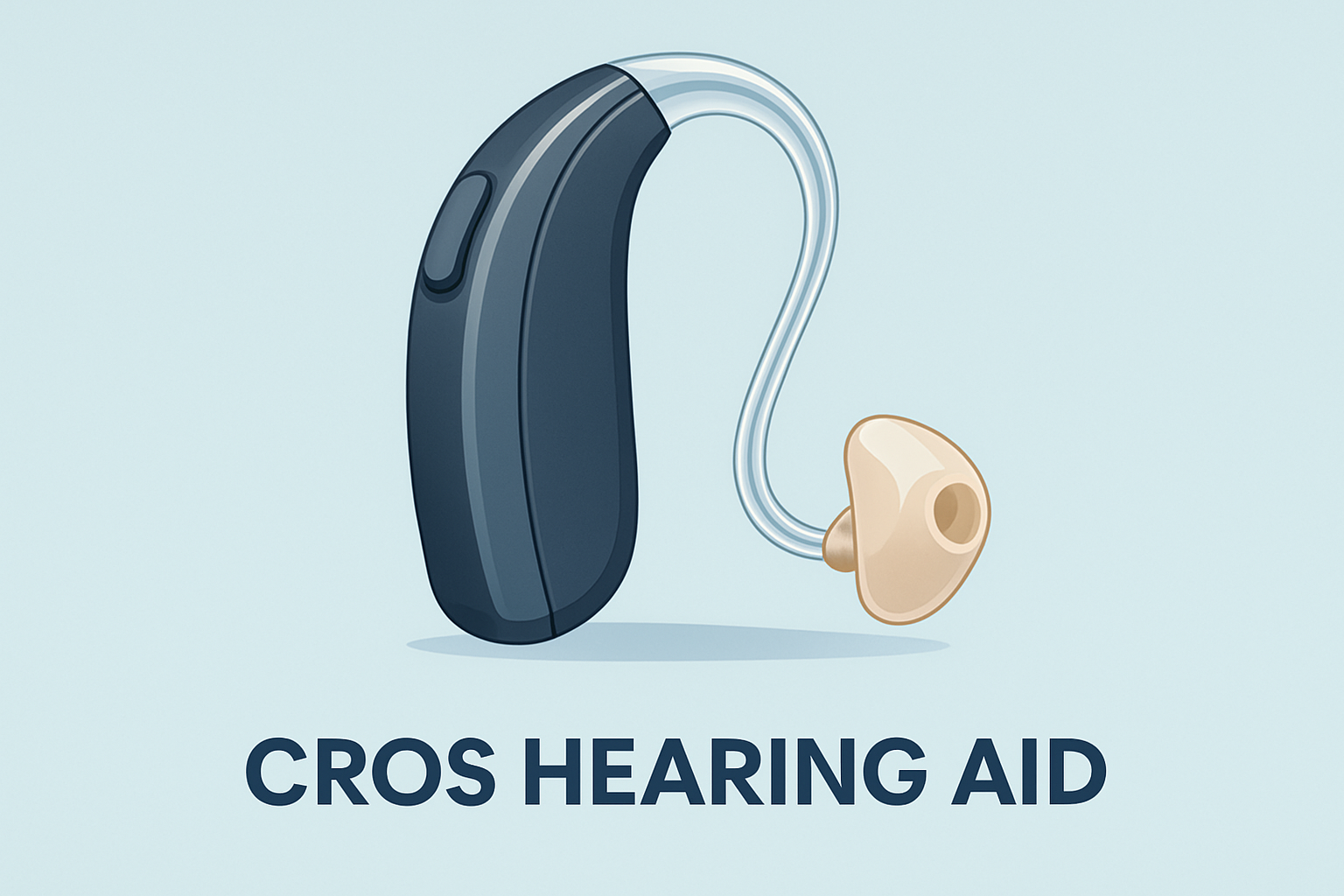
Cros hearing aids are revolutionary devices that have drastically improved the quality of life for those with unilateral hearing loss, often referred to as single-sided deafness. Cros stands for “Contralateral Routing of Signals.” This technology was designed to aid those whose one ear is completely non-functional in terms of hearing, while the other ear has normal hearing capabilities. A Cros hearing aid picks up sound from the non-hearing ear and transmits it to the hearing ear, thereby providing a more balanced auditory experience.
Understanding Cros hearing aids and their functionalities is crucial for those who experience unilateral hearing loss. This category of hearing impairment can create challenges in social environments, affect spatial awareness, and greatly impact an individual’s quality of life. Knowledge of Cros systems offers a potential solution, making it easier to engage in conversations and activities that would otherwise be difficult or exhausting. In this article, we’ll explore the specifics of Cros hearing aids, their benefits, and things you should consider if you’re thinking about using them.
How Cros Hearing Aid Technology Works
The primary function of a Cros hearing aid is to take sound from the ear that doesn’t work and send it to the ear that does. This functionality is accomplished using advanced wireless technologies that ensure the sound is transmitted quickly and with minimal latency. The device consists of two parts: the Cros transmitter and the receiver. The transmitter typically sits behind the non-hearing ear and captures sound. The receiver, on the other hand, is usually placed behind the hearing ear and transmits the sound from the transmitter.
For example, imagine being in a crowded room, where sound is coming from all directions. Without a Cros device, the individual with unilateral hearing loss would only be able to hear what is directed at their functional ear, missing out on potentially important auditory information from their environment. With the use of a Cros hearing aid, the user can receive audio input from the side of the non-hearing ear, which is then sent to the hearing ear. This results in a more comprehensive auditory experience, nearly akin to having normal hearing capabilities in both ears.
Real-World Benefits of Cros Hearing Aids
One of the standout features of Cros hearing aids is their ability to significantly improve spatial awareness. For somebody with hearing in one ear, determining the direction of sound is often challenging, which could pose a risk in situations like crossing streets or locating someone calling your name in a crowd. With a Cros hearing aid, you regain some ability to localize sounds, thus enhancing your awareness of the surrounding environment.
Moreover, Cros hearing aids are beneficial in social interactions, especially in noisy environments. Imagine attending a family dinner at a bustling restaurant; trying to follow conversation when you can only hear from one side can be overwhelming. A Cros system helps to balance the conversation, minimizing the need to frequently turn your head or shift your position to catch what’s being said. Users often report feeling less fatigued and more engaged in social settings when using their Cros devices.
| Feature | Cros Hearing Aid | Conventional Hearing Aid |
|---|---|---|
| Sound Source | Non-hearing Ear | Amplifies Sound |
| Transmission | Wireless to Hearing Ear | Direct Amplification |
| Specialization | Single-sided Deafness | Bilateral Hearing Loss |
Considerations Before Choosing Cros Hearing Aids
Before selecting a Cros hearing aid, it’s important to consult an audiologist to verify that it suits your specific needs. Factors such as the level of hearing in your good ear, the types of environments you frequently find yourself in, and personal preferences will influence the decision. Additionally, newer developments like BiCros hearing aids—which cater to individuals who have hearing impairment in both ears—might be recommended for those who don’t have complete hearing in their better ear but could still benefit from signal transmission.
It is also crucial to evaluate the ease of use, battery life, and available additional features when choosing a Cros hearing aid. Some devices come with functionalities such as Bluetooth connectivity, volume controls, and rechargeable battery options, providing a modern and user-friendly experience. Make sure to consider your lifestyle and how these features can enhance your daily activities.
Maintaining Your Cros Hearing Aid
Maintenance and care are essential for ensuring your Cros hearing aid performs optimally. Regular cleaning and proper handling will extend the device’s lifespan and reliability. Most manufacturers provide detailed instructions for maintaining Cros hearing aids, and it is wise to follow these guidelines diligently. Monthly or quarterly visits to your audiologist for cleaning and check-ups are also recommended to keep the device in peak working condition.
Battery management is another critical aspect. Whether you choose a rechargeable model or one that requires disposable batteries, understanding battery usage and knowing when and how to replace or recharge them will ensure that you are never caught unawares. Regularly check for wear and tear, particularly in parts like the transmitter’s microphone, which might need replacement over time.
Cost & Insurance Coverage
The price of Cros hearing aids can vary depending on the brand, features, and additional services like fitting and follow-up visits. On average, the cost for these devices is comparable to traditional hearing aids, though extra costs may arise from specialized features or design.
Insurance coverage for Cros hearing aids can be a determining factor for many. Some insurance plans include partial or full coverage for hearing aids, which may encompass Cros devices. It’s advisable to check with your insurance provider about your coverage options. Some non-profit organizations also provide assistance programs to help manage the cost of hearing aids for those who qualify.
Conclusion: Key Takeaways and Final Thoughts
Cros hearing aids are a remarkable solution for individuals with unilateral hearing loss, offering them an improved ability to hear and interact with their environment. By transmitting sounds from the non-hearing side to the hearing ear, these devices provide a more complete and balanced auditory experience, thereby enhancing spatial awareness and easing social interactions.
The main benefits of using a Cros hearing aid include improved sound localization, better engagement in noisy environments, and reduced listening fatigue. However, it’s essential to consult an audiologist to determine if a Cros system is the most suitable choice for you and to consider factors such as lifestyle compatibility, ease of use, and cost.
If unilateral hearing loss affects your daily life, taking the step to explore Cros hearing aids could be a pivotal change. Consult with a professional, test the technology, and see if this solution fits your needs. It might just open up your world in ways you hadn’t thought possible.
Frequently Asked Questions
1. What exactly is a Cros hearing aid, and how does it work?
A Cros hearing aid is a specialized device designed for individuals with unilateral hearing loss, known as single-sided deafness. Cros stands for “Contralateral Routing of Signals,” a technology that significantly enhances the quality of life for those who have one ear with no hearing capability while the other ear functions normally. The device works by capturing sound from the non-hearing ear and wirelessly transmitting these sounds to the hearing ear. This transmission allows individuals to have a sense of hearing from the side of the non-hearing ear, which can be crucial in situations where detecting the direction of sound is important, like in social gatherings or busy environments.
The Cros hearing aid system comprises of two components: a microphone and a receiver. The microphone, placed behind or inside the non-hearing ear, picks up the sound and sends it wirelessly to the receiver in the hearing ear. This seamless communication ensures that the user can perceive sounds from both directions, creating a balanced auditory experience that mimics natural hearing more closely. It’s important to note that the technology does not restore hearing in the non-functional ear, but rather helps the functioning ear perceive sounds from all directions.
2. Who can benefit from using Cros hearing aids?
Cros hearing aids are beneficial for individuals with unilateral hearing loss or single-sided deafness. This condition might arise due to various causes, including congenital factors, infections, injuries, tumors, or other medical conditions affecting the ear. People who experience complete hearing loss in one ear but maintain normal hearing capability in the other ear are ideal candidates for Cros hearing aids.
This group of users often faces challenges in directional hearing and may struggle in environments with background noise or in situations where locating the source of a sound is necessary. Hence, Cros hearing aids play a significant role in enhancing sound perception and improving communication abilities, allowing users to feel more engaged and confident in social interactions and daily activities.
3. What are the main advantages of using Cros hearing aids?
Cros hearing aids offer numerous advantages that significantly impact the lives of those with single-sided deafness. Firstly, they provide a more balanced auditory experience, allowing users to hear sounds from all directions, significantly improving spatial awareness. This can be particularly beneficial in various situations such as crossing the street, attending meetings, or socializing in noisy environments.
Additionally, Cros hearing aids enhance speech understanding by allowing users to better detect voices, even in challenging acoustic settings. They also reduce the head shadow effect, a common phenomenon where sounds on the side of the non-hearing ear are blocked by the head, thus not reaching the functioning ear effectively. With a Cros hearing aid, sounds are transmitted directly to the hearing ear, minimizing this issue and contributing to a clearer hearing experience.
Lastly, the use of Cros technology can significantly reduce listening effort, preventing fatigue and allowing users to engage more fully and effectively without straining. These advantages collectively contribute to improved quality of life, increased safety, and greater ease in communication.
4. Are there different types of Cros hearing aids available?
Yes, there are different types of Cros hearing aids designed to cater to various preferences and lifestyle needs. The main types include behind-the-ear (BTE) and in-the-ear (ITE) models, each offering distinct features and stylistic options. BTE models are worn behind the ear and are often preferred for their comfort and ability to accommodate larger batteries, providing longer wearing times without frequent replacements.
Alternatively, ITE models fit snugly inside the ear, offering a discreet look for those who prioritize aesthetics. Both types can leverage advanced wireless technology and digital sound processing to ensure high-quality sound transmission and user-friendly operation.
Furthermore, some systems offer additional features such as rechargeable batteries, Bluetooth connectivity, and programmable settings to customize auditory profiles. It’s essential for potential users to consult with audiologists to understand their specific needs and choose a Cros hearing aid model that aligns with their lifestyle, hearing requirements, and cosmetic preferences.
5. How can someone acquire a Cros hearing aid, and what is the fitting process like?
Acquiring a Cros hearing aid typically begins with a consultation with an audiologist or a hearing healthcare professional who can conduct a comprehensive hearing assessment. This evaluation helps determine if a Cros system is suitable for the individual’s specific type of hearing loss. The audiologist will discuss various options, focusing on the user’s needs, lifestyle, and preferences to recommend the most appropriate model.
The fitting process is crucial to ensuring optimal performance and comfort of the Cros hearing aid. During the fitting, the device is precisely adjusted to meet the unique hearing profile of the user. The professional will program the aid to transmit sounds effectively to the hearing ear, and various settings may be tested and adjusted to ensure clarity of sound in multiple situations—whether during quiet conversations or in noisier environments.
Users will receive thorough instructions on operating and maintaining their devices. Follow-up appointments are often necessary to fine-tune the hearing aid, address any issues, and ensure the user is comfortable and satisfied with the performance of their Cros hearing aid. Having the right support and guidance from a qualified audiologist is key to successfully adapting to and benefiting from the technology.