
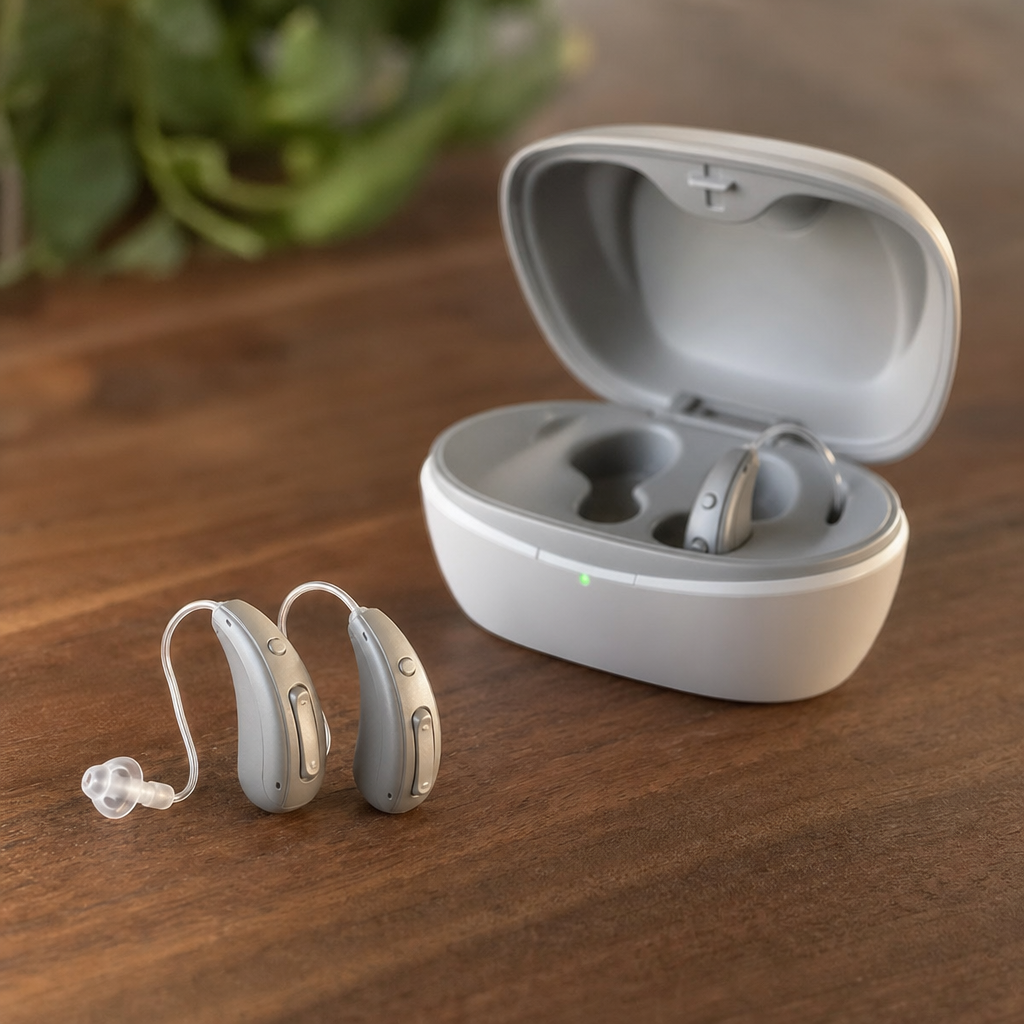
Over-the-counter hearing aids have changed how adults with mild to moderate hearing loss buy hearing help, compare features, and start treatment without waiting months for a clinic appointment. In practical terms, the best over-the-counter hearing aids are devices cleared for adults age eighteen and older that can be purchased directly online or in stores, then fitted by the user through onboard controls, a smartphone app, or preset listening programs. This category matters because untreated hearing loss is linked with social withdrawal, listening fatigue, falls, and poorer quality of life, yet traditional hearing aids have long been limited by high prices, bundled service models, and access barriers.
I have worked with consumers comparing hearing devices, and the pattern is consistent: most people do not begin by asking for audiology theory. They ask simple, urgent questions. Will these help me hear my family better? Are they comfortable? How much do they cost? Can I return them if they do not work? A useful guide answers those questions directly while also explaining the differences between hearing aids, personal sound amplification products, and prescription devices. Over-the-counter hearing aids are medical devices regulated for a specific use case. They are not generic amplifiers, and they are not designed for severe hearing loss. Understanding that boundary is the first step toward buying well.
The reason this topic deserves a full hub article is that shopping for hearing aids now involves more variables than ever: self-fitting software, rechargeable batteries, Bluetooth streaming, remote support, feedback suppression, directional microphones, and varying return policies. Some devices are excellent for first-time users in quiet homes. Others perform better in restaurants, group conversations, and TV listening. The best choice depends on hearing profile, dexterity, comfort preferences, smartphone compatibility, and budget. This guide covers those fundamentals so readers can evaluate options confidently and know when a prescription assessment is the smarter path.
What over-the-counter hearing aids are and who should use them
Over-the-counter hearing aids are intended for adults with perceived mild to moderate hearing loss. Mild hearing loss usually means soft speech, distant voices, and consonants such as f, s, and th are harder to catch. Moderate hearing loss often means conversation becomes difficult without higher volume, especially in noise. If you mainly struggle in restaurants, meetings, the car, or while watching television, an OTC device may be appropriate. If speech sounds muffled even in quiet, one ear is much worse than the other, or you have sudden changes in hearing, OTC is not the right first stop.
There are several warning signs that require medical or audiology evaluation before buying any hearing aid. These include sudden hearing loss within the last six months, ear pain, drainage, persistent dizziness, ringing in one ear, visible ear deformity, and large left-right hearing differences. Earwax impaction can also mimic hearing loss and should be ruled out. In my experience, many disappointing purchases happen because buyers treat a medical or conductive problem as if it were routine age-related hearing loss. A simple hearing test or ear exam can save money and frustration.
Style also matters. Most OTC products are receiver-in-canal or slim behind-the-ear devices because they balance comfort, acoustics, and battery space. In-the-ear options exist, but they are less common in the OTC market. People with arthritis, reduced vision, or limited fingertip control often do better with larger behind-the-ear shells, rechargeable cases, and app-based controls instead of tiny onboard buttons. Users who wear glasses should pay close attention to shell shape and wire routing. Comfort is not a side issue; uncomfortable devices end up in drawers.
How to judge the best over-the-counter hearing aids
The best over-the-counter hearing aids are not simply the loudest or the cheapest. They are the devices that combine safe output, enough fitting flexibility, useful speech enhancement, reliable support, and a return window long enough for real-life testing. Start with the fitting method. Self-fitting models that use an in-app hearing check or hearing profile calibration generally provide a better starting point than one-size-fits-all presets. Fine-tuning matters because too much gain is fatiguing, while too little gain makes speech clarity disappointing. Look for multiple environment programs, user-adjustable volume, and frequency shaping rather than basic amplification alone.
Sound processing features separate average devices from strong performers. Directional microphones help prioritize speech in front of the wearer. Digital noise reduction reduces steady background sounds like fans or road noise, though it cannot erase complex restaurant noise completely. Feedback management suppresses whistling. Sudden sound compression keeps dishes clattering or doors slamming from becoming painfully sharp. Latency is also important for streamed calls and video. If the app crashes often, pairing drops repeatedly, or controls are confusing, daily use suffers even if the hardware is otherwise good.
Support and policy terms deserve equal weight. Reputable brands provide at least a forty-five-day return window, transparent warranty coverage, replacement fees, charger details, and access to hearing care professionals by phone, chat, or video. The Federal Trade Commission’s basic shopping logic applies here: compare total ownership cost, not headline price alone. A pair that costs more upfront but includes remote adjustments, domes, wax guards, and a solid warranty can be the better value. I also advise checking whether replacement parts are easy to order and whether the company publishes user manuals before purchase.
| Buying factor | What to look for | Why it matters |
|---|---|---|
| Hearing range | Designed for mild to moderate loss | Improves safety and fit expectations |
| Fitting method | Self-fitting app or customizable presets | Better speech clarity than generic amplification |
| Power source | Rechargeable lithium-ion or easy battery access | Affects convenience and ongoing costs |
| Speech features | Directional microphones, noise reduction, feedback control | Helps in daily conversations and noisy settings |
| Support | Remote care, tutorials, responsive service | Reduces abandonment by new users |
| Risk control | Trial period, warranty, transparent return process | Protects buyers during adaptation |
Top features, tradeoffs, and real-world performance
Rechargeable batteries are now standard in many of the best over-the-counter hearing aids, and for most users they are the better choice. A full charge often lasts all day, and a charging case simplifies the routine. Disposable batteries still have one advantage: they can be swapped instantly during travel or power outages. Bluetooth streaming is another widely requested feature, but performance depends on phone compatibility and the Bluetooth protocol used. iPhone support is often smoother across brands; Android support varies more. Before buying, confirm whether the device supports direct streaming, hands-free calling, or only app control.
Noise handling requires realistic expectations. No hearing aid restores normal hearing in a crowded restaurant, because microphones on or near the ear cannot fully separate every talker from reverberation and clatter. Better devices improve the signal-to-noise ratio with directional microphones, adaptive processing, and wind noise management, but they still perform best when users combine technology with listening strategies. Sit with your back to a wall, face the main speaker, reduce distance, and choose quieter seating. The best OTC models make those strategies more effective; they do not make acoustics disappear.
Comfort and occlusion are equally important. Some first-time users dislike the plugged-up sensation created by closed domes, especially if low-frequency hearing remains fairly good. Open domes can feel more natural and reduce one’s own voice booming in the ear, but they also let in more environmental sound and may limit available gain. This is why dome selection and insertion depth matter so much. During product testing, I have seen buyers blame sound quality when the real issue was poor physical fit. A well-fitted midrange device often beats a premium device worn incorrectly.
Leading brands and how buyers should compare them
Several brands dominate discussion of over-the-counter hearing aids: Jabra Enhance, Sony, Lexie, Eargo, Audien, and MDHearing are commonly researched, while some prescription manufacturers also influence expectations through their app design and acoustic standards. The right comparison is not brand versus brand in the abstract. It is product fit versus user need. Jabra Enhance models are often praised for strong app support and remote care. Sony’s self-fitting products attract buyers who value consumer electronics integration. Lexie has emphasized approachable setup and service plans. Eargo built recognition around discreet in-canal style, though fit preferences vary widely.
Price tiers usually reflect customization, service, and processing sophistication more than raw loudness. Entry-level devices may offer preset programs, basic noise handling, and limited professional support. Midrange models typically add better app-based tuning, directional microphones, and longer trials. Premium OTC options may include stronger self-fitting workflows, better streaming, and more responsive remote support. Cheap devices sold primarily through marketplaces should be scrutinized carefully. If the listing avoids discussing hearing loss range, output limits, return procedures, or warranty details, that is a warning sign. Medical devices should be sold with clear clinical boundaries and clear consumer protections.
For a hub page, it helps to segment your next-step research. Readers deciding between styles should compare receiver-in-canal and in-the-ear designs. Readers focused on budget should review the best OTC hearing aids under a defined price threshold. Smartphone users should compare iPhone versus Android compatibility. Shoppers with tinnitus should read guidance on whether amplification may reduce listening strain and make ringing less intrusive, while understanding that hearing aids are not a cure. Those internal pathways make evaluation easier because the category is broad, and no single “best” device serves every listener equally well.
Setup, adaptation, and common mistakes new users make
Buying the device is only the beginning. Most hearing aid success comes from setup quality and adaptation over the first few weeks. Start in quiet environments for short periods, then increase wear time daily. Practice with one voice, then small groups, then noisier rooms. The brain needs time to re-learn amplified high-frequency detail, and at first ordinary sounds such as paper rustling, dishes, turn signals, or footsteps may seem strangely sharp. That reaction is normal. Gradual exposure works better than forcing all-day wear on the first day and concluding the aids are too loud or unnatural.
App calibration should be done carefully and in a quiet room. If the hearing check is rushed or masked by background noise, the initial fitting can be inaccurate. Follow the insertion guide exactly, because poor seal and shallow placement reduce bass response, increase feedback risk, and distort the hearing test. If there are multiple dome sizes in the box, try them. Larger is not always better. A secure but comfortable fit usually produces the clearest result. Keep wax guards clean, store the devices dry, and charge them consistently. Moisture and earwax are two of the most common causes of weak performance.
Common mistakes include expecting perfect hearing in noise, turning volume up instead of refining the fit, using the wrong program all day, and giving up before the adjustment period is complete. Another mistake is skipping follow-up support. If the brand offers remote fine-tuning, use it. Specific feedback helps: say that women’s voices sound sharp, television remains unclear, or restaurants are still difficult at a certain distance. That gives support staff enough information to adjust gain, compression, or program emphasis. Vague complaints like “they do not work” are harder to solve and often lead to avoidable returns.
When OTC is enough and when prescription care is better
Over-the-counter hearing aids are enough for many adults with straightforward mild to moderate hearing loss who want affordable, fast access and are comfortable using apps or simple controls. They are especially useful for first-time buyers who need help in common situations such as family conversation, television listening, meetings, worship services, and occasional restaurants. For these users, the main benefit is not just lower price. It is lower friction. They can start sooner, test features at home, and decide whether amplification meaningfully improves daily life before moving into more customized care.
Prescription hearing aids remain the better option for severe or complex hearing loss, asymmetrical loss, poor word recognition, chronic ear disease, or users who need custom earmolds, telecoil support, advanced tinnitus management, or extensive in-person verification. Real-ear measurement, which uses probe microphones to confirm amplified sound at the eardrum, is a major advantage of clinical fitting and remains the gold standard for accuracy. People who have tried OTC devices and still struggle should not assume hearing aids have failed entirely. Often they simply need a fuller diagnostic workup, a different style, or a professionally verified prescription fitting.
The best over-the-counter hearing aids offer a practical entry point into hearing care, but the best outcome comes from matching device, hearing profile, and expectations. Use this hub as your starting map: learn who OTC devices are for, compare fitting methods and support, focus on comfort and return policies, and build realistic expectations for noise performance. If your hearing challenges fit the category, a well-chosen OTC pair can improve conversations, reduce fatigue, and make daily life easier. The next step is simple: compare models methodically, protect yourself with a strong trial period, and act before hearing loss limits more of your routine.
Frequently Asked Questions
What are over-the-counter hearing aids, and who are they designed for?
Over-the-counter hearing aids are hearing devices intended for adults age 18 and older with perceived mild to moderate hearing loss. Unlike prescription hearing aids, they can be purchased directly online, in pharmacies, big-box retailers, or hearing device stores without first scheduling a traditional in-person fitting. The idea behind this category is convenience and access: adults who have trouble hearing conversations, television, meetings, or speech in moderate background noise can often begin treatment faster instead of waiting weeks or months for an appointment.
The best over-the-counter hearing aids are designed to let users handle much of the setup themselves. Depending on the model, this may include adjusting volume on the device, selecting preset listening modes, taking an in-app hearing check, or fine-tuning settings such as treble, bass, speech clarity, or background noise reduction through a smartphone app. Many modern OTC models also include rechargeable batteries, Bluetooth streaming, directional microphones, feedback management, and different ear tip sizes for a more comfortable fit.
That said, OTC hearing aids are not the right choice for everyone. They are generally best for adults with mild to moderate hearing difficulty, especially those who can still communicate fairly well in quiet settings but struggle more in restaurants, group conversations, or while watching TV. People with more severe hearing loss, sudden hearing changes, one-sided hearing loss, chronic ear pain, drainage, dizziness, or a history of medical ear conditions should not rely on self-fitting alone. In those cases, a medical evaluation or professional hearing exam is the safer path. In short, OTC hearing aids are meant to expand access, but the best results still come from matching the device to the right type of hearing need.
How do I know if an over-the-counter hearing aid is good quality?
A good over-the-counter hearing aid should do more than simply make sounds louder. Quality devices are built to improve speech understanding, reduce unnecessary background noise when possible, minimize whistling or feedback, and offer enough customization to match your listening needs. One of the first things to look for is whether the product is clearly marketed as an OTC hearing aid for adults with mild to moderate hearing loss, rather than a basic sound amplifier. Hearing aids are meant to process sound in a more sophisticated way, while amplifiers often just raise overall volume without helping speech clarity.
From there, pay attention to practical performance features. Strong OTC models typically offer multiple listening programs, volume control, rechargeable batteries or reliable power options, comfortable and secure ear tips, and a fitting process that is straightforward enough for first-time users. App-based customization can be especially helpful because it gives users more control over sound balance and listening environments. Bluetooth connectivity is also a valuable feature for some buyers, especially if they want to stream phone calls, music, or television audio directly into the device.
Support matters too. A high-quality OTC hearing aid should come from a company that provides clear setup instructions, responsive customer service, a reasonable trial period, and a return policy that gives you time to see whether the device truly helps in daily life. Since hearing aid adjustment takes time, a trial window of at least a few weeks is important. Reviews can also be useful, but they should be read carefully. Look for patterns in feedback about comfort, sound quality, charging reliability, app stability, and how easy it is to get help if a problem comes up.
Finally, consider transparency. The best brands tend to explain exactly what type of hearing loss the product is meant for, how fitting works, and what limitations users should know about. If a device promises unrealistic results, avoids giving technical details, or makes vague claims without explaining who it is for, that is a reason to be cautious. Good OTC hearing aids combine clear labeling, user-friendly design, useful sound features, and dependable after-purchase support.
Are over-the-counter hearing aids as effective as prescription hearing aids?
Over-the-counter hearing aids can be very effective for the right person, but they are not a perfect replacement for prescription hearing aids in every situation. For adults with mild to moderate hearing loss, especially those who are comfortable using apps and self-adjusting settings, a well-made OTC device can provide meaningful improvement in speech understanding, listening comfort, and overall day-to-day communication. For many people, they are an excellent first step because they reduce cost barriers and allow faster access to treatment.
Prescription hearing aids, however, still offer advantages in more complex cases. They are selected and programmed by hearing care professionals based on a full hearing evaluation. That process can be especially important for people with severe hearing loss, unusual hearing patterns, significant difficulty understanding speech, or medical issues that could be affecting hearing. Professional fitting can also help fine-tune gain, compression, feedback control, and physical fit in ways that may be harder to achieve with an OTC product alone.
Effectiveness also depends on expectations. No hearing aid, OTC or prescription, restores natural hearing perfectly. What it can do is improve access to speech and environmental sounds, reduce strain during conversation, and help users participate more fully in daily activities. The best OTC hearing aids can perform very well in common situations such as one-on-one conversation, TV watching, and quieter social settings. They may be less effective in highly complex sound environments if the user needs advanced programming or very precise customization.
The bottom line is that OTC hearing aids are often effective enough to make a real difference for adults with mild to moderate hearing loss, particularly when the device is a true hearing aid, the fit is comfortable, and the user takes time to adjust settings properly. Prescription devices remain the better option when hearing needs are more severe, medically complicated, or difficult to manage without expert support.
What features should I compare when choosing the best over-the-counter hearing aid?
When comparing OTC hearing aids, start with the basics: sound performance, fit, ease of use, and support. Sound quality is the most important factor, so look for features that improve clarity rather than just loudness. These can include noise reduction, directional microphones, feedback suppression, multiple listening modes, and the ability to personalize settings. Some devices offer in-app hearing assessments or self-fitting tools that tailor amplification to your hearing profile, which can be especially useful for first-time buyers.
Fit and form factor are also key. OTC hearing aids come in several styles, including behind-the-ear designs with slim tubes or receivers and in-ear styles that sit more discreetly in the ear canal. The best choice depends on comfort, dexterity, appearance preferences, and how much amplification you need. Behind-the-ear styles often provide a balance of power, battery space, and handling ease, while in-ear models may feel more discreet but can be trickier for some users to insert and adjust.
Battery type is another major consideration. Rechargeable hearing aids are popular because they eliminate the need to change tiny disposable batteries and are generally easier for daily use. If you travel often or want maximum flexibility, battery life and charging convenience should be high on your checklist. Connectivity can matter too. Bluetooth streaming, app control, and remote adjustment tools can make a hearing aid more versatile, but not everyone needs these extras. Some users prefer simpler onboard controls and preset programs instead of relying on a smartphone.
Just as important are return policies, warranty coverage, customer support, and the length of the trial period. Since hearing aids usually require an adjustment period, you want enough time to test them in real-world situations such as family dinners, work meetings, grocery stores, and outdoor activities. A strong support system can make a big difference if you need help with setup, sound adjustments, or troubleshooting. In the end, the best OTC hearing aid is not just the one with the longest feature list, but the one that matches your hearing needs, lifestyle, comfort preferences, and budget.
When should I skip over-the-counter hearing aids and see a hearing professional instead?
You should skip OTC hearing aids and seek professional care if your hearing loss seems sudden, rapidly worsening, limited to one ear, or accompanied by symptoms such as ear pain, drainage, ringing that is new or severe, dizziness, pressure, or repeated ear infections. These signs may point to a medical issue that needs diagnosis before any hearing device is used. Hearing changes can sometimes be related to wax blockage, middle ear problems, medication effects, nerve issues, or other conditions that should not be self-treated with amplification alone.
You should also consider professional evaluation if you suspect your hearing loss is more than mild to moderate. Signs include frequently missing most of a conversation even in quiet settings, needing very high TV volume, struggling to hear close family members clearly, or finding that amplified sound still does not make speech understandable. In these situations, a prescription hearing aid or a more customized treatment plan may be necessary. A hearing care professional can perform testing that reveals whether the issue is mainly reduced volume, poor speech discrimination, or a more complex hearing pattern.
Another reason to see a professional is if you try an OTC hearing aid and it does not help enough, feels uncomfortable, creates too much distortion, or becomes frustrating to adjust. Sometimes the problem is not the concept of hearing aids but the fit, programming, or the type of hearing loss involved. A professional can often identify why results are disappointing and recommend better options. This may include prescription hearing aids, earwax removal, medical referral, communication strategies, or assistive listening devices for specific situations.</p