
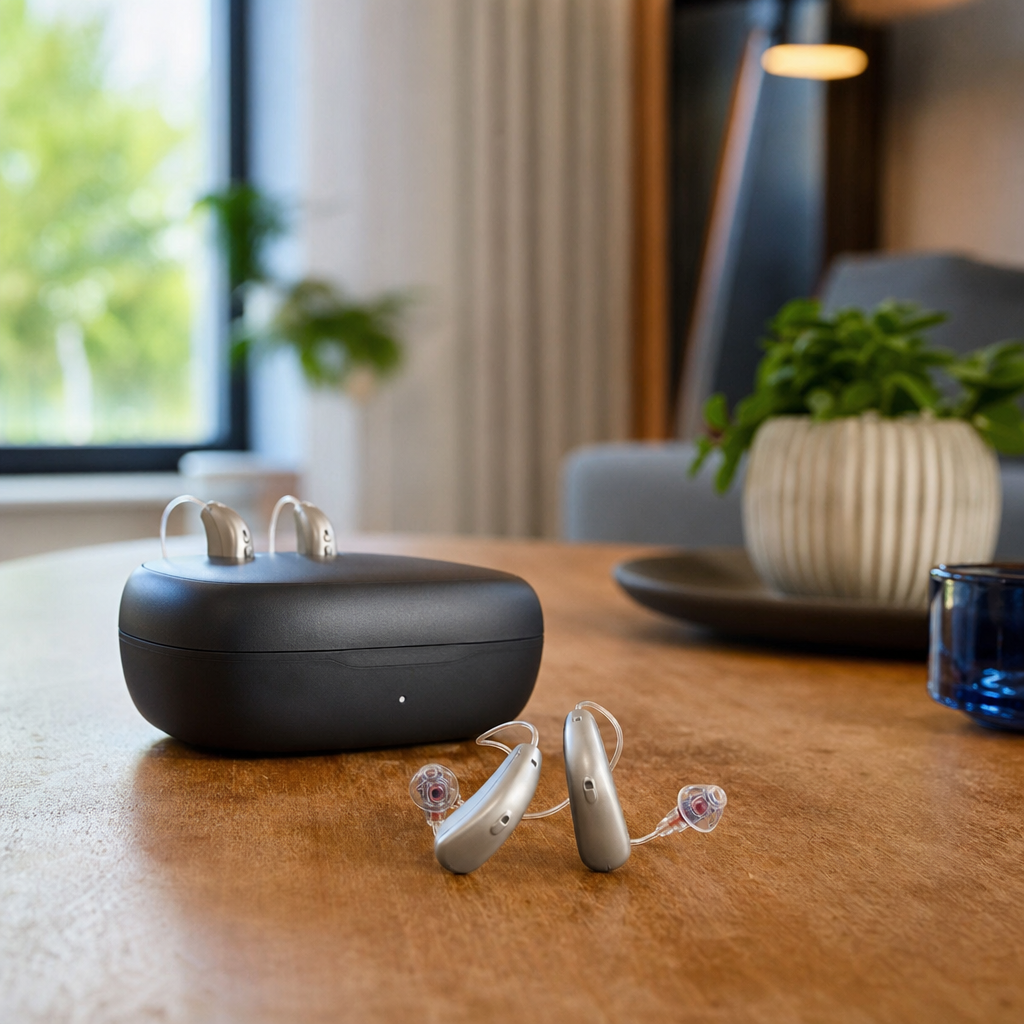
Oticon hearing aids prices vary widely because the brand sells several technology tiers, multiple form factors, and fitting packages that may or may not include professional care, warranty coverage, and follow-up adjustments. For shoppers researching hearing aids, understanding what you are actually paying for matters as much as the sticker price. Oticon is one of the best-known hearing aid manufacturers in the world, with a long history in digital hearing technology and a broad lineup that serves mild, moderate, severe, and profound hearing loss. In practical terms, that means one person may see an advertised Oticon price near the low end for a basic behind-the-ear model, while another may receive a quote several times higher for premium rechargeable devices with advanced speech processing and bundled audiology care.
When people ask about Oticon hearing aids prices, they are usually asking three different questions at once: how much the devices cost, what features they get at each price point, and whether the total investment is worth it over several years of daily use. I have worked with patients comparing quotes from local clinics, big-box providers, and online sellers, and the biggest source of confusion is that hearing aids are not priced like ordinary electronics. The invoice often combines hardware, hearing testing, fitting verification, earmolds, cleanings, programming visits, remote support, and loss coverage. Two quotes for the same Oticon model can look far apart even when the devices themselves are priced similarly.
That is why this guide focuses on the full picture. You will learn how Oticon pricing is structured, what affects cost, which product families commonly appear in the market, what insurance or financing may reduce out-of-pocket expense, and how to evaluate value instead of chasing the lowest number. As a hub page for the broader Hearing Aids topic, this article covers the general landscape so you can compare Oticon with other brands, understand provider quotes, and move into more specific articles with a clear baseline. If your goal is to buy confidently, budget realistically, and avoid common pricing traps, start with the factors that shape every Oticon quote.
What determines Oticon hearing aids prices
Oticon hearing aids prices are determined by four core variables: technology level, style, service bundle, and sales channel. Technology level refers to the processing features inside the device, including speech-in-noise performance, directional microphones, environmental classification, feedback management, wind noise control, tinnitus features, Bluetooth streaming, and app-based controls. Premium tiers usually cost more because they include faster processing, more automation, and better performance in complex listening environments such as restaurants, meetings, classrooms, worship spaces, and family gatherings.
Style also affects price. Receiver-in-canal models are common because they balance cosmetic appeal, comfort, and power, but custom in-the-ear devices, power behind-the-ear options, and invisible styles can change manufacturing costs and fitting complexity. Rechargeable models often cost more upfront than disposable-battery versions, although many users consider them more convenient over time. Service bundles matter just as much. A clinic that includes real-ear measurements, multiple follow-up visits, routine cleanings, wax guard replacement, and a three-year warranty may charge more than a seller offering hardware only. In many cases, the higher quote is actually the better value.
Sales channel is the final major variable. Independent audiology clinics, ENT practices, hearing instrument specialists, hospital systems, warehouse clubs, and direct-to-consumer platforms all structure pricing differently. Some emphasize bundled care, while others separate professional services from the devices. That difference explains why consumers searching online often see broad national ranges rather than a single exact price. Oticon hearing aids prices are therefore best understood as a total treatment cost, not just a device cost.
Typical price ranges and what buyers usually get
In the current market, Oticon hearing aids prices commonly fall between about $1,000 and $4,000 per ear, depending on model generation, provider, and bundled services. Lower-end quotes often involve entry-level or older-technology devices, fewer included appointments, or promotional pricing. Mid-range quotes are common for mainstream rechargeable receiver-in-canal products with app control and solid everyday speech support. Premium quotes generally reflect flagship platforms, broader automatic adaptation, stronger speech understanding in noise, and robust bundled aftercare.
Consumers should be careful with advertised “starting at” prices because they may refer to one device rather than a pair, and they often exclude diagnostic testing or fitting. Most people buy two hearing aids because bilateral fitting usually improves localization, listening balance, and speech understanding in noise. As a result, the real-world total for a pair can be substantially higher than the first number seen in an ad. I always recommend asking for an itemized estimate showing the per-ear device charge, professional fees, warranty length, charger cost if applicable, and whether future programming is included.
| Price Tier | Typical Pair Price | Common Features | Best Fit For |
|---|---|---|---|
| Entry | $2,000–$3,000 | Basic noise reduction, standard directional microphones, app support on some models | Quieter lifestyles, simple listening needs |
| Mid | $3,000–$5,000 | Better speech-in-noise support, rechargeability, Bluetooth streaming, more automation | Mixed environments, regular social activity |
| Premium | $5,000–$8,000+ | Advanced scene analysis, stronger directional performance, top platform features, fuller care bundles | Frequent background noise, demanding listening situations |
These ranges are realistic but not universal. Geographic region, clinic reputation, and provider expertise can move a quote materially. Newer product generations also tend to command higher prices than older platforms still sold at discount. If you are comparing models, focus on the listening environments you actually face each week. Many buyers overspend on premium features they rarely use, while others choose the cheapest option and then struggle in restaurants or group conversations, where stronger signal processing would have made a noticeable difference.
Oticon product families and how they affect cost
Oticon’s lineup has included major families such as Oticon Intent, Oticon Real, Oticon More, Oticon Own, Oticon Zircon, Oticon Xceed, and pediatric-focused lines like Oticon Play PX. Not every provider carries every family at all times, and older generations may remain available after a newer flagship launches. That matters because the same clinic may quote a current premium model and a previous-generation mid-tier model that differ by thousands of dollars even though both are from the same brand.
Flagship families like Intent, Real, and More are generally priced higher because they emphasize advanced processing for speech clarity and listening comfort. Oticon has marketed concepts such as BrainHearing and deep neural network-based processing to improve access to surrounding sounds rather than simply amplifying speech in a narrow beam. In clinical terms, these systems attempt to preserve a fuller sound environment while still supporting conversation. Whether that premium is justified depends on hearing loss, cognitive load in daily environments, and how often the user is in noise. For socially active adults, the difference can be meaningful.
More budget-conscious families such as Zircon may offer strong core performance without every flagship feature, making them a practical middle ground. Custom models like Oticon Own can also affect price because they require ear impressions or digital ear scans and are built to the anatomy of the ear canal or concha. Power devices such as Xceed serve severe to profound losses and may involve earmolds, stronger receivers, and more specialized fitting expertise. In other words, the brand name alone does not tell you the price; the family, feature tier, and fitting requirements do.
What is included in the price at clinics and retailers
One of the most important questions to ask is, “What exactly is included in this Oticon hearing aid price?” In many professional practices, the quote includes a hearing evaluation, consultation, fitting appointment, verification with real-ear measurement, orientation, follow-up fine-tuning, clean-and-check visits, and manufacturer warranty coverage. Real-ear measurement is especially important because it verifies that amplified sound at the eardrum matches the prescribed targets, often based on recognized fitting formulas such as NAL-NL2 or DSL. A lower price without verification can produce a worse outcome than a higher price with proper fitting.
Many bundled packages also include a repair warranty for two to three years and a one-time loss-and-damage replacement, though deductibles may apply. Rechargeable systems may include the charger, but not always. Custom earmolds, television streamers, remote microphones, and smartphone accessories are frequently separate line items. Some providers include unlimited follow-up care for the life of the warranty, while others limit the number of post-fit visits. These details matter because hearing aids need adjustment over time as users adapt, hearing changes, or listening demands shift.
Retail channels with lower advertised prices may unbundle services, which can be fine for experienced wearers who know exactly what they need. For first-time users, however, service quality strongly influences satisfaction. I have seen patients abandon good devices simply because they never received proper counseling on insertion, maintenance, realistic expectations, and acclimatization. The price of Oticon hearing aids should always be evaluated alongside the clinical support behind them.
Insurance, Medicare, financing, and ways to save
Coverage for Oticon hearing aids depends on your insurance plan, not on Oticon itself. Original Medicare generally does not cover routine hearing aids, though some Medicare Advantage plans offer hearing benefits through contracted networks or fixed allowances. Employer insurance, state employee plans, union plans, Medicaid programs in some states, and Veterans Affairs pathways may reduce costs significantly for eligible users. Health savings accounts and flexible spending accounts can often be used for hearing aids, batteries, chargers, and related appointments, which helps with tax-advantaged payment.
Financing is common in hearing care. Many clinics offer monthly payment plans, third-party healthcare financing, or promotional no-interest periods for qualified buyers. While financing improves access, always review the total cost and any deferred-interest terms. A less obvious saving strategy is to ask about previous-generation Oticon models. When a new platform launches, many practices discount older stock that still provides excellent performance for many listeners. That can be one of the smartest ways to control cost without dropping to an entry-level tier.
You can also save by requesting an itemized quote and comparing equivalent service levels across providers. Ask whether the practice price-matches, whether remote follow-up is included, and whether the trial period carries a refund fee. In the United States, many states require a trial period for prescription hearing aids, but the exact terms vary. A slightly higher price with a strong trial, good verification, and responsive aftercare is often safer than a bargain purchase with limited support.
How to judge value and choose the right Oticon model
The best way to judge Oticon hearing aids prices is to match the technology to your real listening demands, not your idealized lifestyle. Start by listing where you struggle most: one-on-one conversations, restaurants, the car, television, worship services, open offices, outdoor walking, or phone calls. Then ask the provider to explain which specific Oticon tier addresses those environments and why. A credible answer will reference directional microphone behavior, noise management, feedback control, rechargeability, telecoil availability, Bluetooth compatibility, and power options, not vague claims about “better sound.”
It is also important to evaluate hearing aid value over the likely ownership period, which is often three to five years. Divide the total out-of-pocket cost by years of use and by estimated daily wear time. A pair costing $6,000 over four years may feel expensive, but for someone wearing them twelve hours a day, the hourly cost can be easier to justify than many routine subscriptions or consumer electronics purchases. More importantly, better hearing supports communication, employment, safety, and social connection. Untreated hearing loss has been associated in research with isolation, fatigue, and reduced quality of life, so value is not purely financial.
Finally, choose a provider who measures outcomes, not just sales. Ask whether they use speech-in-noise testing, validation questionnaires such as the APHAB or COSI, and real-ear verification at fitting. Those practices indicate a disciplined approach to care. Oticon hearing aids can be an excellent investment when the model, programming, and support match the user. If you are comparing options within the wider Hearing Aids category, use this page as your baseline: understand the price drivers, insist on transparent quotes, and select the level of technology that fits your hearing loss, environments, and budget. Then book a hearing evaluation and start comparing real proposals with confidence.
Frequently Asked Questions
How much do Oticon hearing aids typically cost?
Oticon hearing aid prices can range from roughly $1,000 to $4,000 or more per ear, depending on the model, technology level, and where you buy them. Entry-level devices are usually the most affordable and may work well for people with quieter lifestyles or simpler hearing needs. Mid-range options often include stronger speech enhancement and better performance in background noise, while premium models generally offer the brand’s most advanced sound processing, wireless features, and automatic environmental adjustments. In real-world shopping, many people will see bundled prices quoted per pair rather than per device, which can make comparisons confusing if one provider includes services and another does not.
That is why the “price” of an Oticon hearing aid is not just about the hardware. Some clinics include hearing testing, fitting appointments, real-ear measurements, cleanings, follow-up visits, trial periods, loss-and-damage coverage, and warranty support in the total cost. Others charge separately for some or all of those services. As a result, two quotes for the same Oticon model can look very different. If you are comparing offers, ask for a detailed breakdown so you know exactly what is included and whether the lower upfront number actually represents better value over time.
Why do Oticon hearing aid prices vary so much from one model to another?
Oticon sells hearing aids across several technology tiers, and that is one of the biggest reasons prices vary so widely. Higher-tier devices are designed to do more of the heavy lifting in difficult listening environments, such as restaurants, group conversations, meetings, and outdoor spaces with wind or traffic noise. These models often have more sophisticated sound processing, better speech-in-noise performance, faster automatic adjustments, and broader customization options. Lower-tier models can still provide meaningful hearing help, but they may have fewer advanced features and may not handle complex listening situations as smoothly.
Form factor also affects cost. Behind-the-ear, receiver-in-canal, and custom in-the-ear styles each come with different manufacturing requirements, power capabilities, and feature sets. Rechargeable versions may carry a different price than disposable-battery models, and custom-molded products may involve additional lab work. On top of that, pricing can reflect whether the hearing aids support Bluetooth streaming, app controls, tinnitus features, telecoil compatibility, or accessory integration. In short, the more personalization, automation, and advanced listening support a device offers, the more likely it is to sit at the higher end of Oticon’s price spectrum.
What is included in the price of Oticon hearing aids?
The answer depends heavily on the provider, which is why this question is so important. In many traditional hearing clinics, the quoted price includes much more than the devices themselves. A comprehensive package may cover a diagnostic hearing exam, consultation, device programming, ear measurements, custom fitting, verification testing, orientation on use and maintenance, follow-up adjustments, and ongoing support for a set period of time. Some providers also include routine cleanings, wax management help, software updates, repair handling, and loaner devices if your hearing aids need service. Those added services can significantly improve your experience, especially in the first few months.
Warranty terms are another major part of the value. Oticon hearing aids often come with a manufacturer warranty, but the exact length and what it covers can vary by product and seller. Some packages also include loss-and-damage protection, which can be very valuable given the cost of replacement devices. Because hearing aids work best when they are professionally fine-tuned over time, follow-up care should never be treated as a minor extra. Before you buy, ask whether the price includes future adjustments, how long after purchase those visits remain covered, and whether there are any separate fees for repairs, domes, wax guards, chargers, or accessories.
Are more expensive Oticon hearing aids always worth it?
Not always. The best value depends on your hearing loss, lifestyle, listening demands, and budget. For someone who spends a lot of time in noisy public places, attends meetings, enjoys restaurants, or frequently talks with multiple people at once, a higher-tier Oticon model may absolutely be worth the extra money because it can reduce listening effort and improve clarity in challenging situations. Premium features are often most noticeable when the environment is unpredictable and noisy. In that case, paying more can translate into a better day-to-day hearing experience and less fatigue.
On the other hand, if your hearing needs are more straightforward and you spend most of your time in quieter settings, a mid-level or even entry-level device may serve you very well. The goal is not to buy the most expensive hearing aid on the market; it is to buy the one that matches how you actually live. A good hearing care professional should be able to explain what benefits you would gain by moving up to a higher technology tier and whether those benefits are likely to matter for your listening profile. Ask for practical examples, not just feature lists. That kind of conversation usually leads to a smarter purchase than assuming the highest price automatically means the best choice for everyone.
How can I compare Oticon hearing aid prices and make sure I am getting good value?
Start by comparing like for like. Ask each provider for the exact Oticon model name, technology tier, style, battery or rechargeable option, and whether the quote is for one hearing aid or a pair. Then request a written list of everything included: testing, fitting, verification, follow-up visits, cleanings, warranty length, loss-and-damage coverage, trial period, return terms, and any ongoing service plan. This is the only reliable way to compare prices fairly. A quote that looks higher at first may actually include a much more complete care package, while a lower quote may leave you paying extra later for fittings, adjustments, or support.
It is also smart to ask about financing, insurance benefits, health savings account eligibility, and whether there are manufacturer promotions or clinic discounts available. If you are considering over-the-counter or online options for price reasons, remember that professionally fit prescription hearing aids often include a level of personalization and aftercare that can be especially important for long-term success. Finally, focus on overall value rather than sticker shock alone. With Oticon hearing aids, what you are really paying for is a combination of technology, fit, service, and support. When those pieces align with your needs, the investment usually makes far more sense than looking at the device price in isolation.