
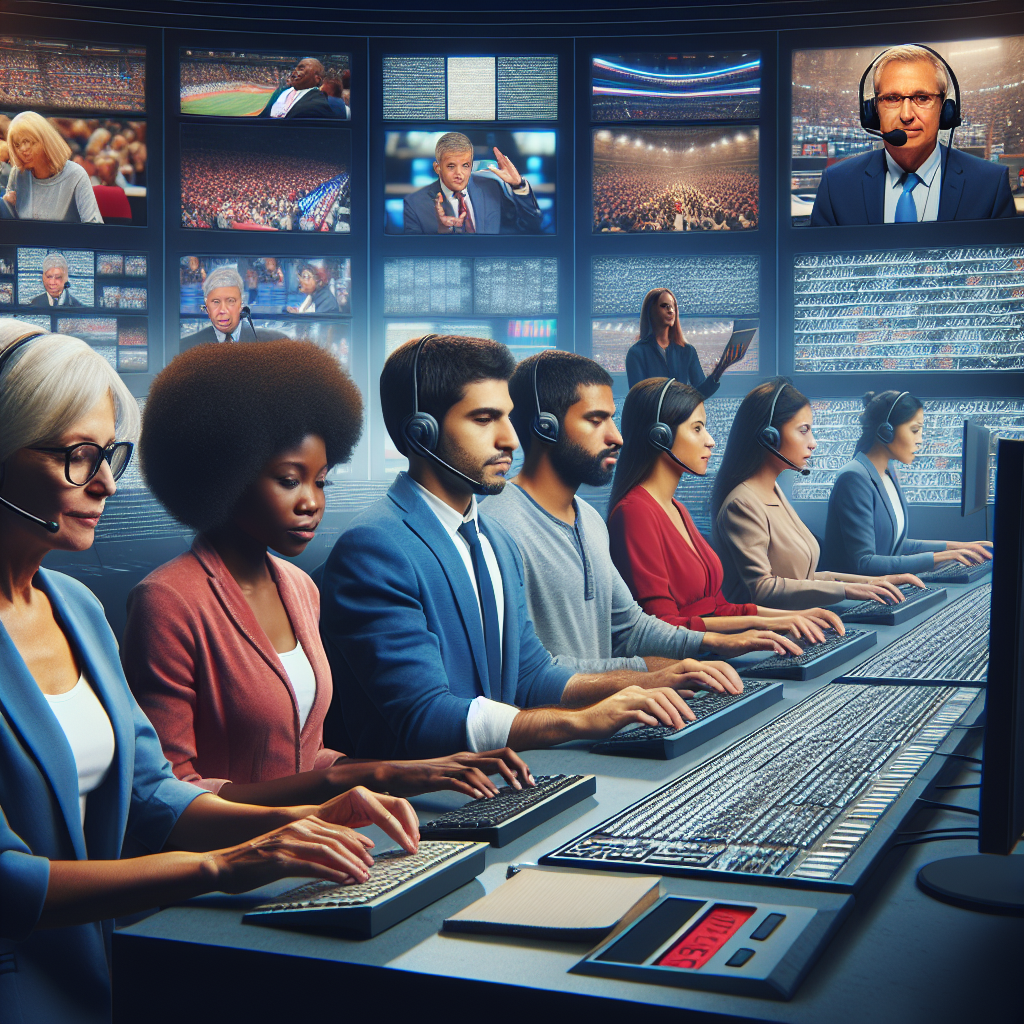
In today’s digitally connected world, access to information and entertainment is a fundamental right. However, for the Deaf and hard-of-hearing community, this access can often be limited by a lack of proper resources and accommodations. Captioning, both in live and recorded formats, plays a crucial role in ensuring that everyone, regardless of their hearing ability, can fully engage with content. This article delves into the importance of captioning, how it works, the challenges faced in its implementation, and the impact it has on the Deaf community. We will also explore various initiatives and resources that aim to promote Deaf education and awareness, further emphasizing the significance of equal access.
The Importance of Captioning
Captioning serves as an invaluable tool for Deaf and hard-of-hearing individuals, granting them access to the spoken content in videos, movies, TV shows, live events, and educational materials. Beyond just dialogue transcription, captions often include non-verbal sounds like music, laughter, and sound effects, offering a fuller, more immersive experience. Without captions, many Deaf individuals would miss out on critical information conveyed through audio. Additionally, captioning benefits other audiences as well, such as non-native speakers, children learning to read, and individuals in noisy environments where hearing the audio might be challenging. The inclusivity brought about by captioning fosters a more engaged and informed society.
Types of Captioning
There are two primary types of captioning: open and closed. Open captions are always visible and cannot be turned off by the viewer. They are frequently used in cinema and public screenings where the accessibility of every audience member must be ensured. Closed captions, on the other hand, can be turned on or off by the user and are commonly found on TV, streaming services, and DVDs. Closed captions offer greater flexibility for the viewer, allowing them to choose whether or not to utilize the feature. Additionally, there are live captions used during real-time events, which are generated as the speech occurs, often through the efforts of professional captioners or automated systems reliant on speech-to-text technology. All these forms of captioning share the same ultimate goal: equal access to information for all.
Challenges in Implementation
Despite its importance, there are several challenges associated with the implementation of captioning. One major issue is the quality of captions. In many cases, especially with automated captions, there can be significant inaccuracies and timing issues that hinder comprehension. Professional, human-generated captions are generally more accurate but are also more costly and time-consuming to produce. There are also legal and regulatory hurdles; while some regions mandate captioning for broadcast content, the requirements for online media are often less stringent, resulting in inconsistent access. Furthermore, there is a shortage of trained captioning professionals, making it difficult for organizations to readily provide high-quality captions.
Deaf Education and Awareness
Educating both the general public and the Deaf community about the value of captioning is vital for promoting wider acceptance and implementation. Awareness campaigns, workshops, and advocacy groups play a significant role in highlighting the accessibility needs of Deaf individuals. Schools and educational institutions should integrate captioning education into their curricula, ensuring that new generations are aware of how to create and use captions effectively. Moreover, employers and content creators should be encouraged to prioritize captioning in their products and services. By increasing awareness and understanding, we can foster a more inclusive environment where the needs of Deaf individuals are consistently met.
Technological Innovations
Recent advancements in technology are providing new opportunities to enhance the quality and accessibility of captioning. Speech recognition technology has significantly improved, leading to more accurate automated captions. Additionally, artificial intelligence and machine learning algorithms are being employed to refine the context and meaning of spoken words, thereby producing captions that are more coherent and reliable. Innovations like augmented reality (AR) also offer exciting possibilities, such as projecting captions directly onto smart glasses for live events. As these technologies continue to evolve, they have the potential to break down barriers and further improve access for the Deaf and hard-of-hearing community.
Conclusion
Captioning is more than just a convenience; it is a critical component of accessibility for the Deaf and hard-of-hearing community. By ensuring that captions are accurate, timely, and widely available, we can provide equal access to information and entertainment for all individuals, regardless of their hearing ability. The challenges in implementation should not deter us but rather motivate us to innovate and advocate for better solutions. Through education, awareness, and technological advancements, we can champion the cause of equal access and create a more inclusive society. Let us all be “captioning champions” and support initiatives that strive to make the world more accessible for everyone.