
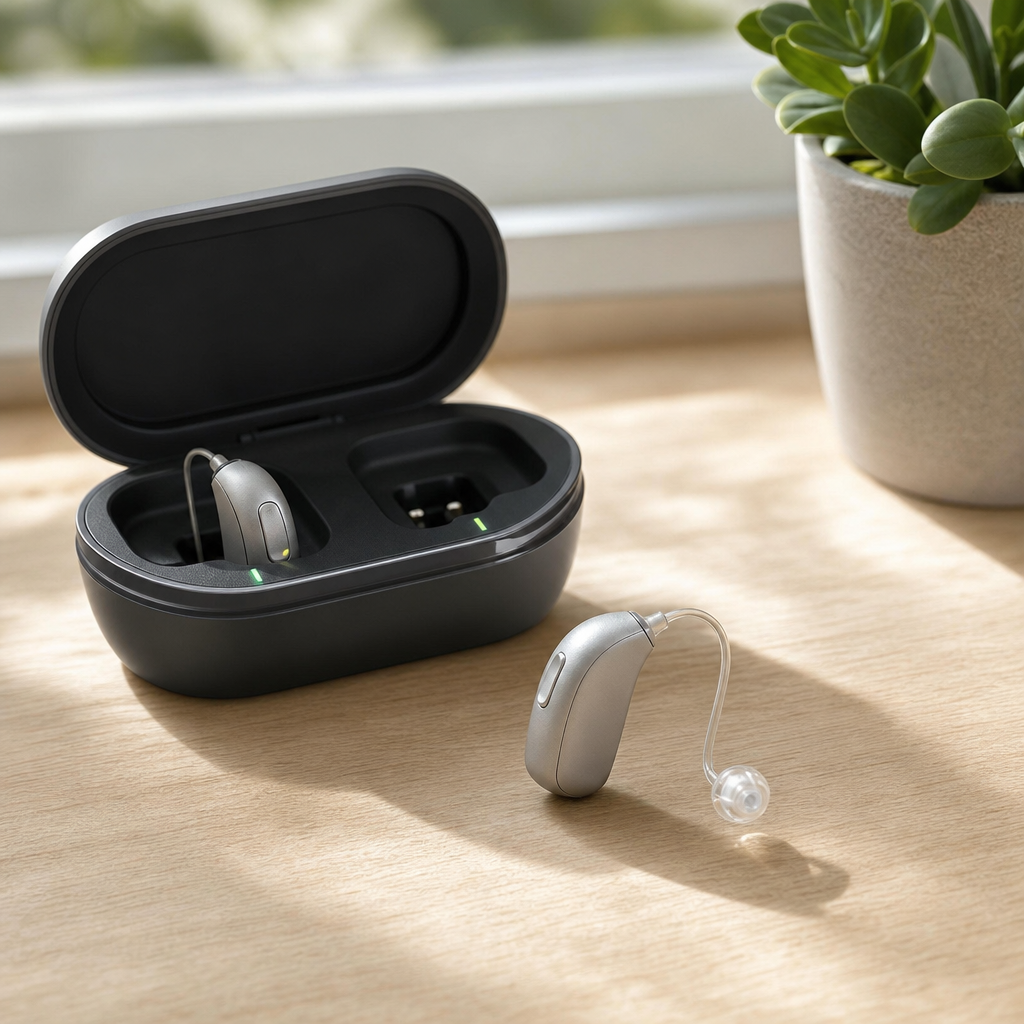
Rechargeable hearing aids in 2025 combine better battery chemistry, smarter speech processing, and more practical everyday design, making them the default choice for many people with mild to severe hearing loss. A rechargeable hearing aid uses an internal lithium-ion or silver-zinc battery that is topped up in a charging case or dock instead of replaced with disposable cells. That sounds simple, but the shift matters because battery reliability affects everything else: consistent amplification, streaming performance, moisture resistance, travel convenience, and total ownership cost. In clinic fittings, I have seen people succeed faster when charging becomes part of a nightly routine rather than a weekly struggle with tiny battery doors.
The best rechargeable hearing aids in 2025 are not defined by one brand or one headline feature. They are defined by fit to hearing loss, speech understanding in noise, comfort, connectivity, battery runtime, and aftercare. A premium device with brilliant noise reduction can still be the wrong choice if the receiver fit is unstable or if the wearer needs simple controls and a long-lasting charger for travel. At the same time, newer over-the-counter and prescription models have narrowed the gap in convenience, app control, and audio streaming. Buyers now face more choices than ever, from invisible custom styles to full-featured behind-the-ear devices with telecoil, Auracast readiness, and AI-assisted listening programs.
This hub article explains what to look for, how the leading categories compare, and which rechargeable hearing aids stand out in 2025 for common needs. It also answers the practical questions people ask first: how long batteries last, whether rechargeable models are safe for daily wear, what Bluetooth standards matter, and when a disposable-battery model still makes sense. If you are comparing hearing aids for yourself or a family member, the goal is straightforward: choose a device that improves speech clarity in real places, not just on a spec sheet.
What makes a rechargeable hearing aid the best in 2025
The best rechargeable hearing aids in 2025 share six traits. First, they deliver stable all-day battery life, typically 18 to 30 hours per charge depending on streaming use, tinnitus programs, and fitting strength. Second, they offer strong speech-in-noise processing through directional microphones, adaptive beamforming, impulse noise reduction, and wind management. Third, they fit modern connectivity needs, including Made for iPhone support, Android streaming through ASHA or Bluetooth LE Audio implementations, and easy app-based controls. Fourth, they are durable, with IP ratings, nano-coatings, or sealed designs that reduce damage from sweat and humidity. Fifth, they support efficient fitting through real-ear measurement and remote fine-tuning. Sixth, they have a support ecosystem that includes chargers, domes, wax guards, earmolds, firmware updates, and a clinician or service team that responds quickly.
In practice, the “best” model depends on hearing profile and lifestyle. For an active retiree who takes calls, streams podcasts, and spends time outdoors, battery runtime and wind control may matter more than maximum invisibility. For a first-time wearer with mild hearing loss, comfort, app simplicity, and clear speech in restaurants usually matter most. For someone with severe hearing loss, power, feedback management, custom earmolds, and direct access to assistive listening accessories become essential. I rarely recommend shopping by brand reputation alone because performance varies by hearing loss configuration, ear anatomy, and quality of the fitting.
Top rechargeable hearing aid categories and who they suit
Rechargeable hearing aids in 2025 fall into a few core categories. Receiver-in-canal, or RIC, models remain the most popular because they combine cosmetic discretion with strong acoustic performance and flexible receiver power levels. Most premium rechargeable launches still center on RIC devices because they handle open fits well, stream reliably, and allow easy maintenance. Behind-the-ear, or BTE, rechargeable models are the workhorses for greater power needs, pediatric use, and people who prefer larger controls and robust earmold retention. In-the-ear, or ITE, and custom in-the-canal rechargeable options have improved, but battery size and heat management still limit some custom designs compared with RIC models.
Prescription models from major manufacturers such as Phonak, Oticon, ReSound, Signia, Starkey, and Widex continue to lead in fitting flexibility, advanced signal processing, and clinical support. Over-the-counter rechargeable hearing aids and self-fitting devices have improved sharply, especially for adults with perceived mild to moderate hearing loss and no red-flag medical symptoms. Good OTC options can be entirely appropriate when they include in-app hearing checks, multiple listening presets, and support for returns and adjustments. However, users with asymmetrical loss, severe tinnitus, recurrent ear disease, sudden hearing changes, or poor speech understanding usually do better with a full audiologic evaluation and prescription fitting.
| Category | Best for | Main strengths | Potential tradeoffs |
|---|---|---|---|
| RIC rechargeable | Most adults with mild to severe loss | Natural sound, strong streaming, flexible power options | Receiver wire needs periodic replacement |
| BTE rechargeable | Severe loss, dexterity needs, pediatric use | More power, larger controls, durable fit | More visible behind the ear |
| Custom rechargeable | Users prioritizing one-piece fit and discretion | No receiver wire, secure custom shell | Shorter runtime and fewer power options in some models |
| OTC/self-fitting rechargeable | Mild to moderate loss with low complexity | Lower upfront cost, fast access, app convenience | Less individualized fitting and limited diagnostics |
Best rechargeable hearing aids in 2025 by use case
For the broadest group of users, premium rechargeable RIC devices remain the strongest all-around choice in 2025. Models in this class typically provide excellent directional processing, automatic environmental classification, direct Bluetooth streaming, hands-free calling on selected phones, and charger options that add onboard battery storage for travel. Phonak’s Lumity and Infinio families, Oticon Intent, ReSound Nexia, Signia Pure Charge&Go IX, Starkey Genesis AI, and Widex SmartRIC are the kinds of devices that frequently appear on shortlists because they balance sound quality, battery performance, and support. Exact ranking changes with ear canal acoustics, fitting formula, and user preference, so there is no single winner across every listener.
For speech in noise, devices with well-tuned adaptive directionality and motion-aware processing tend to perform best in restaurants, family gatherings, and moving environments. Oticon Intent has drawn attention for incorporating user-intent sensors that influence processing decisions, while Signia’s integrated-beamforming strategies and Starkey’s speech optimization tools have proven useful for busy social settings. For universal Bluetooth compatibility and strong recharge systems, Phonak remains a practical recommendation, especially for users with mixed device ecosystems. For low listening effort and a natural sound impression in quiet and music, Widex continues to attract experienced wearers who are sensitive to processing delay and sound texture.
For severe hearing loss, rechargeable BTE and power RIC solutions from Phonak, ReSound, and Signia deserve attention because they can pair higher-gain fittings with earmolds, telecoil options, and robust accessory support. For first-time users seeking a simpler entry point, reputable self-fitting products from brands with medical-device infrastructure can work well, but they should still be chosen after checking for wax blockage, middle-ear issues, and baseline hearing thresholds. In my experience, the best use-case decision comes from matching three things: audiogram, real listening goals, and willingness to manage settings through an app.
Battery life, charging systems, and long-term ownership
Battery life is one of the main reasons people choose rechargeable hearing aids, and in 2025 the category is mature enough that most quality devices last a full waking day. A realistic target is 20 to 24 hours with moderate streaming, though some models exceed that and some custom styles fall below it. Streaming audio, using tinnitus maskers, high gain, cold temperatures, and frequent phone calls all shorten runtime. Travel chargers with integrated power banks are especially useful for weekend trips and power outages. They matter more than buyers expect because a charger can be as important as the hearing aid itself when daily wear is uninterrupted.
Most devices use sealed lithium-ion cells designed for several years of service. That eliminates the hassle of size 312 or 13 battery changes, which is a major quality-of-life improvement for people with arthritis, tremor, or low vision. The tradeoff is that when internal battery capacity eventually declines, service often requires manufacturer repair rather than a simple battery swap at home. In practice, many users upgrade before capacity loss becomes a major issue, but anyone planning to keep devices for five or six years should ask about battery service policy, charger warranty, and replacement costs. Silver-zinc systems exist in some niche products and can be user-replaceable, but lithium-ion remains dominant.
Ownership costs go beyond the purchase price. Ask whether the quoted cost includes charger replacement, loaner devices, office visits, remote care, earmold remakes, domes, wax filters, and loss-and-damage coverage. Rechargeable hearing aids save money on disposable batteries over time, but premium technology levels still carry higher upfront pricing. For many users, the convenience and reliability justify that premium, especially when hearing aids are worn twelve to sixteen hours a day.
Features that actually improve daily hearing
Marketing language can make every hearing aid sound revolutionary, so it helps to focus on the features that consistently improve outcomes. Real-ear measurement is not a product feature, but it is the most important part of verifying that a rechargeable hearing aid is performing to target. A well-fit midlevel device often outperforms an expensive premium model that was never verified in the ear. Beyond fitting, the features that matter most are adaptive directional microphones, feedback cancellation, noise reduction that preserves speech cues, frequency lowering when high-frequency audibility is limited, and a reliable smartphone app with simple manual overrides.
Bluetooth matters, but not for the reason many advertisements imply. Streaming music and calls is useful, yet stable connectivity, low drain, and easy switching between phone and hearing aid are what users notice every day. Bluetooth LE Audio and Auracast are important developments because they promise lower power use, better broadcast audio access in public spaces, and more standardized compatibility. Still, support varies by phone and firmware, so buyers should verify how a specific hearing aid behaves with their exact handset. Telecoil is still valuable in 2025 for theaters, houses of worship, and legacy assistive systems, and it should not be dismissed just because Bluetooth is newer.
For tinnitus, integrated sound therapy can help, but it works best alongside counseling and accurate amplification of environmental sound. For fall alerts, health tracking, or AI transcription features, usefulness depends on the wearer. I have seen these extras add real value for some users and become ignored clutter for others. If speech clarity is the primary goal, prioritize fitting quality, microphone performance, and comfort before choosing wellness features.
How to choose the right rechargeable hearing aid
Start with a current hearing evaluation that includes air and bone conduction thresholds, speech testing, otoscopy, and a review of medical red flags. Then decide where hearing breakdown happens most often: restaurants, meetings, television, phone calls, worship services, driving, or outdoor conversation. Those details shape the recommendation. Someone struggling in meetings may need stronger directional programs and remote microphone compatibility. Someone frustrated by television may benefit from direct streaming accessories or a dedicated TV transmitter. Someone with dexterity issues may need a larger BTE shell, magnetic charger alignment, and fewer app controls.
Ask direct questions before buying. How many hours will the battery last with two hours of streaming? Is the charger portable? What IP rating does the device have? Can the audiologist perform real-ear verification? What is the trial period? Are follow-up adjustments included? Does the model support telecoil, LE Audio, or hands-free calling with your phone? Answers to these questions reveal more than brand marketing. The best rechargeable hearing aid in 2025 is the one you will actually wear, charge, clean, and trust in difficult listening situations.
Finally, use this hub as the starting point for deeper comparisons across styles, brands, OTC options, and fitting approaches within the wider Hearing Aids topic. Rechargeable technology has reached the point where convenience no longer requires major acoustic compromise. If you are ready to narrow your options, compare devices by hearing loss, daily routine, and support plan, then book a fitting or trial with those priorities in mind.
Frequently Asked Questions
What makes the best rechargeable hearing aids in 2025 different from older models?
The best rechargeable hearing aids in 2025 are notably better than earlier generations because several core technologies have improved at the same time. Battery chemistry is more stable and efficient, which means users can expect more reliable all-day performance without the anxiety that the hearing aids will fade before evening. Modern lithium-ion and, in some cases, silver-zinc systems are designed to hold a consistent charge better, recharge faster, and tolerate everyday use more effectively than the rechargeable options available just a few years ago.
Beyond battery life, the biggest upgrade is in sound processing. Newer models use smarter speech enhancement, better noise management, and more adaptive listening programs that automatically adjust to restaurants, meetings, cars, outdoor environments, and streaming audio. Instead of simply making everything louder, the best devices in 2025 are much better at emphasizing speech while reducing background distraction. That creates a more natural listening experience and reduces fatigue over the course of the day.
Design has improved too. Today’s rechargeable hearing aids are generally more practical, with sleeker housings, stronger moisture resistance, easier chargers, and more dependable connectivity with smartphones, TVs, and accessories. For many people, the overall result is not just convenience, but better real-world hearing performance. That is why rechargeable models are now the default choice for many users with mild to severe hearing loss rather than a niche alternative to disposable-battery devices.
How long do rechargeable hearing aid batteries last on a full charge?
In 2025, most high-quality rechargeable hearing aids are built to provide a full day of use on a single charge, and that often means anywhere from around 18 to 30 hours depending on the model, power requirements, and how the devices are used. People who stream a lot of phone calls, music, or television audio may see shorter runtime than someone who primarily uses the hearing aids for conversation in quieter settings. Features such as Bluetooth streaming, advanced noise reduction, tinnitus programs, and powerful amplification for more significant hearing loss can all draw more energy.
Charging time has also improved. Many current devices can reach a practical day’s use after just a few hours in the charger, and some offer quick-charge features that provide several hours of operation from a relatively short charging session. This is especially useful for people who forget to charge overnight or need extra power before a long day out.
It is also important to think about long-term battery lifespan, not just daily runtime. Rechargeable hearing aid batteries are designed to last for years, but like all rechargeable cells, they gradually lose some capacity over time. Even so, the better models in 2025 are engineered for stable performance over extended use, and many users will go several years before noticing a meaningful decline. If battery longevity is a top priority, it is worth comparing the manufacturer’s expected charge cycle life, service policies, and replacement options through your hearing care provider.
Are rechargeable hearing aids better than hearing aids with disposable batteries?
For most people in 2025, rechargeable hearing aids are the better option because they are easier to manage, more convenient day to day, and increasingly just as dependable as traditional battery-powered devices. Instead of handling tiny disposable cells, users simply place the hearing aids in a charging dock or case at night. That can be a major benefit for anyone with reduced dexterity, arthritis, vision challenges, or anyone who simply wants a lower-maintenance routine.
Rechargeable models also eliminate the need to keep buying and storing disposable batteries, which many users see as both a cost and lifestyle advantage. There is less interruption during the day, less worry about carrying spares, and less waste over time. As rechargeable technology has matured, performance has improved enough that the convenience tradeoff that once existed is much smaller than it used to be.
That said, “better” still depends on the user. Disposable-battery hearing aids can still make sense for certain situations, such as very remote travel where charging access is limited, or for people who strongly prefer swapping a battery instantly rather than recharging. Some users also like the predictability of carrying spare batteries in case of emergencies. But for the majority of wearers, especially those using modern hearing aids with streaming and advanced processing, rechargeables now offer the best balance of convenience, reliability, and overall usability.
Who should consider rechargeable hearing aids in 2025?
Rechargeable hearing aids are a strong choice for a wide range of users in 2025, including people with mild, moderate, severe, and in some cases even more complex levels of hearing loss. They are especially well suited to adults who wear their hearing aids all day and want a simple nightly charging routine rather than the hassle of replacing tiny batteries. If you value convenience, dependable daily use, and seamless integration with phones and media devices, rechargeable models are likely worth serious consideration.
They are also ideal for users who have trouble handling small objects. This includes people with arthritis, tremors, reduced finger strength, or vision limitations. For these individuals, a charging case can make hearing aid care dramatically easier. Instead of opening battery doors and managing small coin-sized cells, they can dock the devices quickly and consistently.
Rechargeable hearing aids are also a smart fit for people with active lifestyles. Many of the best 2025 models include improved moisture resistance, durable construction, and portable charging options that support commuting, workdays, travel, and social life. However, people who spend long periods away from reliable power or who need very specific form factors should still compare models carefully. The right choice depends not only on your hearing loss, but also on your daily schedule, dexterity, technology preferences, and access to support from a hearing care professional.
What should you look for when choosing the best rechargeable hearing aids in 2025?
The first thing to look at is hearing performance, not just the battery. A hearing aid should match your degree and pattern of hearing loss, provide clear speech understanding, and work well in the environments that matter most to you. The best rechargeable hearing aids in 2025 combine strong amplification with intelligent sound processing, including background noise reduction, directional microphones, feedback control, and automatic adjustments between listening situations. If speech clarity in difficult places is your top concern, these features matter more than marketing claims about convenience alone.
Next, evaluate battery practicality. Look for realistic all-day battery life, reliable charging, and a charger that fits your routine. Some chargers are simple desktop docks, while others are portable cases with built-in backup power for travel. Quick-charge capability can be valuable if your schedule is unpredictable. It is also wise to ask how the battery performs after years of use and what service or replacement support is available if capacity declines.
Connectivity and comfort should also be high on the list. In 2025, many premium hearing aids support direct streaming from smartphones, hands-free calling, app-based controls, and compatibility with TV accessories and remote microphones. At the same time, none of that matters if the devices are uncomfortable or difficult to wear. Pay attention to fit, size, moisture resistance, ease of insertion, and how simple the controls are to use.
Finally, consider professional support and long-term value. The best hearing aid is not just the one with the most features, but the one that is properly fitted, adjusted, and supported over time. Ask about follow-up care, hearing tests, tuning appointments, warranty coverage, trial periods, and cleaning or maintenance services. In a category where battery reliability affects consistent amplification and overall user confidence, the best rechargeable hearing aids are the ones that combine strong technology with a practical fit for your real life.