
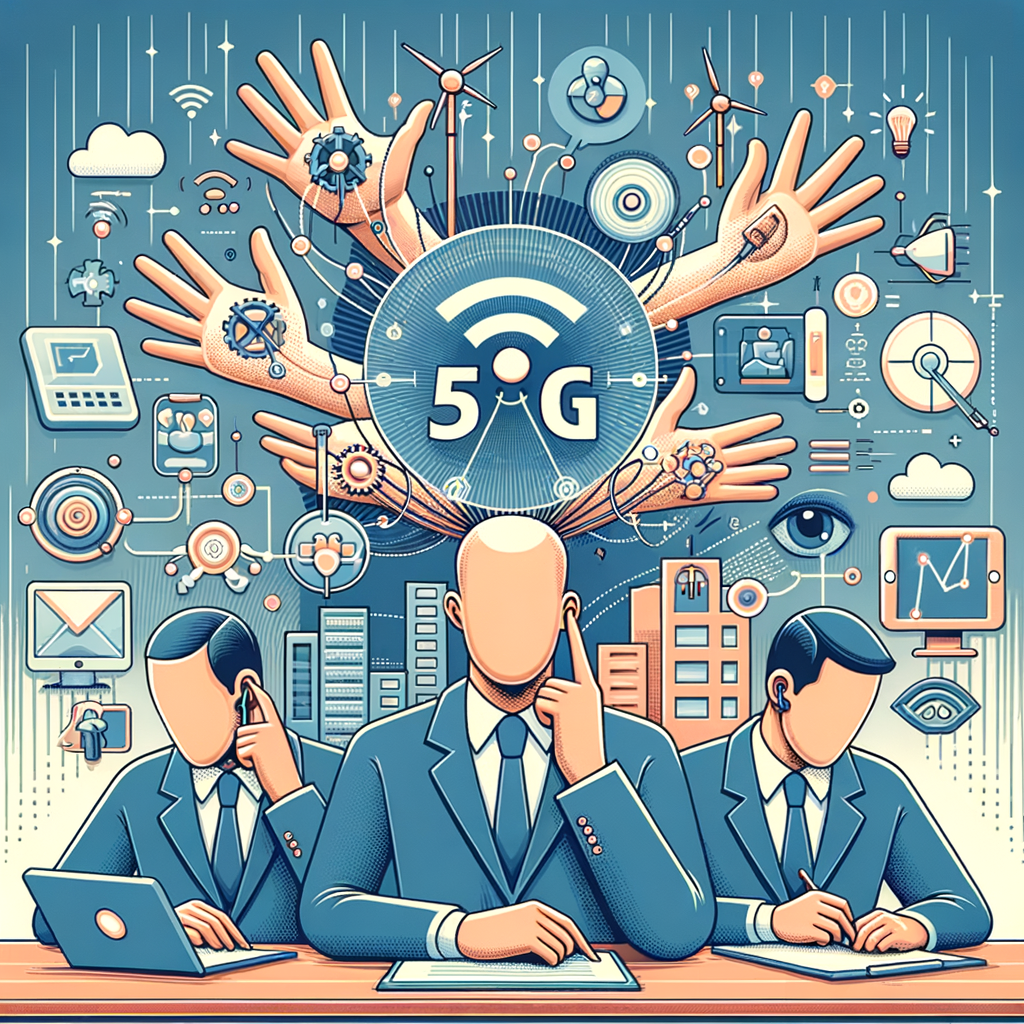
The proliferation of 5G networks is set to revolutionize various aspects of daily life, and one of the most promising areas is the enhancement of communication for the deaf and hard-of-hearing community. With its unprecedented speed and connectivity, 5G technology offers significant potential to improve accessibility and inclusivity in communication. Traditionally, deaf communication relies on methods such as American Sign Language (ASL), lip-reading, and text-based technologies. However, these methods often come with limitations, such as reduced comprehensibility in poor lighting conditions or reliance on a solitary method, making interactions less fluid. Enter 5G—capable of delivering faster data rates, reduced latency, improved reliability, and greater capacity, allowing for a more integrated communication experience. This article delves deep into how 5G technology can transform communication for the deaf through advanced applications, seamless integrations, and innovative technologies. These improvements extend beyond basic interaction, fostering greater empowerment and independence for those who are deaf or hard of hearing.
Enhanced Video Calling and Real-time Communication
One of the most immediate benefits of 5G for the deaf community is the enhancement of video calling capabilities. Video calls have become a critical form of communication, especially for those who use sign language. With 5G, the enhancement in bandwidth allows for high-definition video calls with minimal latency. This ensures that video feeds are smoother and more detailed, making sign language and facial expressions clearer. The ability to communicate through accurate real-time visuals is vital, as any delay or disruption can impede understanding and flow during conversations. Additionally, the enhanced video quality allows users to pick up on subtle facial cues and expressions, which are integral components of sign language.
Augmented Reality (AR) and Virtual Reality (VR) Applications
The impact of 5G in augmenting reality technology cannot be overstated. For the deaf community, AR can provide real-time subtitles and translations of spoken language into text or sign language through wearable devices or smart glasses. These solutions are tailor-made to enhance day-to-day activities, providing instantaneous translation without the need for a phone or traditional screen. Meanwhile, VR can facilitate immersive environments where users can practice and develop their sign language skills or engage in virtual social settings. Further, VR simulations can offer training for diverse real-world scenarios, empowering the deaf to communicate across different contexts safely and confidently. The robust connectivity of 5G ensures these applications operate seamlessly, without lag or interruption.
IoT and Smart Devices for Accessibility
The Internet of Things (IoT) ecosystem, when powered by 5G, significantly enhances the accessibility options available to the deaf community. Devices such as smart home assistants, equipped with advanced AI, can offer real-time translations of spoken words to text, alert users to important sounds like doorbells or alarms through vibrations or visual alerts, and enable efficient two-way communication. Meanwhile, wearable technology such as smartwatches can be synchronized with hearing aids, enhancing assistive hearing capacities. The reduced latency and disruption chances offered by 5G infrastructure mean faster and more accurate responses, allowing individuals to gain more autonomy in their daily lives.
Machine Learning and AI Integration
Machine learning and AI, when combined with 5G, present numerous opportunities to enhance communication for the deaf community. Leveraging 5G, AI can provide real-time translation services beyond human capacity, with applications that convert spoken language directly into sign language animations and vice versa. AI-driven applications can also be harnessed for predictive text, which can anticipate phrases or words to speed up the typing process for individuals who use text-based methods for communication. With the massive data-processing capabilities of 5G, these AI tools can function more efficiently, adapting to user behavior and preferences for a personalized communication experience.
Automation in Public and Commercial Spaces
The promise of 5G also extends to the realm of public and commercial environments, enhancing inclusivity and communication for the deaf community. In such spaces, real-time digital signage can provide instructions or notifications in text format or sign language, enabling fluid navigation and interaction. AI-driven kiosks, powered by 5G, can provide customer service in a variety of languages and formats, offering inclusivity without the necessity of staff intervention. These elements align to form a more accessible public environment, empowering the deaf to engage in society without additional assistance.
Healthcare and Emergency Services Transformation
In areas such as healthcare and emergency services, where time and clarity are of the essence, 5G’s enhanced capabilities are invaluable. For deaf patients, video consultations with healthcare providers in high resolution make interpreting symptoms and instructions more accurate. Video interpretations of sign language reduce misunderstandings and improve the quality of care provided. Moreover, emergency services can leverage 5G for instantaneous communications through video or text with deaf individuals, ensuring rapid response and precise understanding in critical situations. Smart devices can also alert users to emergencies through advanced notification systems, delivering critical warnings in languages or formats that are most useable for the individual.
Educational Opportunities and Integration
The realm of education stands to benefit from 5G through the deployment of more immersive and interactive learning environments for deaf students. Remote learning platforms can offer sign language interpretation, captioning, and real-time communication to ensure accessibility for all students. Enhanced video quality of lectures allows deaf students to access sign language interpreters and provides visual clarity for those relying on lip-reading. Additionally, virtual classrooms enable participation from anywhere, breaking down geographic barriers to education. Moreover, through AI-powered educational tools, learning resources can be personalized to suit the needs and learning styles of deaf students, paving the way for inclusive education.
Social Interaction and Community Building
With 5G, the potential for enhanced social interaction and community building is immense for the deaf. Social media platforms can integrate real-time captioning and language translation, removing language barriers and facilitating diverse interactions. Virtual events ensure inclusion through real-time interpretation, allowing deaf individuals to participate fully in social or professional gatherings. The promise of 5G also extends to fostering online communities, where deaf individuals can collaborate, share experiences, and support one another through enhanced communication tools. This ensures that geographical and linguistic boundaries fade, cultivating a global and interconnected deaf community.
Extending International Communication
5G’s ability to handle data-heavy applications effectively opens new doors for international communication, an important factor in our increasingly globalized world. Real-time translation software powered by AI, accessible instantaneously through 5G, could make language no longer a barrier for deaf individuals communicating with others worldwide. The automatic conversion between various international sign languages, supported by 5G’s improved processing speeds, has the power to unite different communities and cultures, fostering more inclusivity and understanding across borders.
Conclusion
The advent of 5G networks holds transformative potential for the deaf community by delivering enhanced communication tools and resources. From improved video clarity and response times, vital for sign language and lip-reading, to AI-driven translation and VR/AR aids, 5G propels significant advancements in accessibility and inclusivity. These innovations do not merely enhance personal communication but also extend to education, healthcare, public interaction, and international engagement, ensuring that deaf individuals can participate fully in all areas of life. As these technological advancements become more widespread, the empowerment of the deaf and hard of hearing community will scale to new heights, fostering equality, autonomy, and access like never before. 5G is not just a technological milestone; it is an enabler for social transformation. The integration of this powerful network promises a future not only of connectivity but of inclusivity, breaking down existing barriers and building bridges for a more accessible world, where everybody has an equal opportunity to communicate and engage with the society around them.
Frequently Asked Questions
1. How does 5G technology improve communication for the deaf and hard-of-hearing community?
The introduction of 5G networks brings remarkable improvements in communication for the deaf and hard-of-hearing community through a combination of ultra-fast data transfer speeds and enhanced connectivity capabilities. Traditionally, deaf communication has relied on methods such as American Sign Language (ASL), lip-reading, and text-based communications. However, with 5G’s high-speed network, video calls featuring ASL can be transmitted more seamlessly, offering clearer, less-laggy visuals, making it easier for those involved in the communication to understand each other.
In addition, 5G technology supports the development of real-time translation applications. These applications can translate spoken language into text or sign language on the fly, providing instant access to verbal information that was previously difficult to monitor or understand. This real-time processing power enhances the inclusivity in various settings such as classrooms, workplaces, and social gatherings.
2. What are some specific applications of 5G technology that can aid deaf communication?
One of the groundbreaking applications of 5G technology is in enhancing augmented reality (AR) and virtual reality (VR) capabilities, which can be leveraged to create immersive communication experiences for the deaf community. For example, AR devices can project text captions in real-time or display translated sign language using avatars, fostering an environment where deaf individuals can participate more fully.
Another exciting application is in smart devices—like smartphones and wearable tech—that utilize 5G to execute real-time transcriptions or provide tactile feedback. These services empower deaf and hard-of-hearing users to navigate their environment, follow conversations, and receive important alerts through multiple sensory means.
3. What advantages does 5G provide over previous mobile networks for the deaf and hard-of-hearing?
The primary advantage of 5G over previous mobile networks is its much lower latency and greater bandwidth. Earlier technologies may have struggled with the data demands of video calls or live translation apps, resulting in lag or dropped connections. In contrast, 5G’s reliable connectivity ensures smoother, more stable communication sessions. This reliability is crucial for sign language video calls, where even a slight delay can disrupt the flow of a conversation.
Furthermore, 5G supports the connection of a vast number of devices at once, which is paramount in settings such as conferences and public events where multiple users may access communication tools simultaneously without affecting performance. This increased capacity allows for more inclusive participation and access to pertinent communication channels for everyone involved.
4. Can 5G assist in emergency situations for the deaf and hard-of-hearing community?
Absolutely. 5G’s speed and responsiveness have the potential to significantly improve emergency communication for the deaf and hard-of-hearing. In emergency scenarios, time is of the essence, and 5G’s ability to deliver real-time alerts and messages can make the difference between safety and danger.
With 5G, emergency alerts can be sent via text or video relay services instantaneously to devices like smartphones or smart home systems. Additionally, 5G-enabled devices could be programmed to deliver haptic feedback — such as vibrations or light signals — alerting users to critical warnings even if they’re unable to see or hear conventional alerts. By facilitating instantaneous and clear communication, 5G ensures more efficient and effective emergency response for those who rely on visual or text-based communication modes.
5. What impact does 5G have on the development of assistive technologies for the deaf?
5G significantly accelerates the development and improvement of assistive technologies for the deaf and hard-of-hearing community. The high data transfer rates allow for more complex applications and functionalities to be designed without concerns about lag or connection issues. For example, speech-to-text and sign language recognition software can operate with greater accuracy and speed because of the processing capabilities supported by 5G.
Moreover, 5G propels the growth of AI-powered platforms that learn and adapt over time to improve their support mechanisms for individual users. AI can be trained to understand specific needs or preferences of users, such as interpreting regional sign dialects or adjusting to be more intuitive in interactions. This personalization ensures that the assistive technologies evolve to be more effective and user-friendly, enhancing communication and day-to-day interactions for the deaf community.