
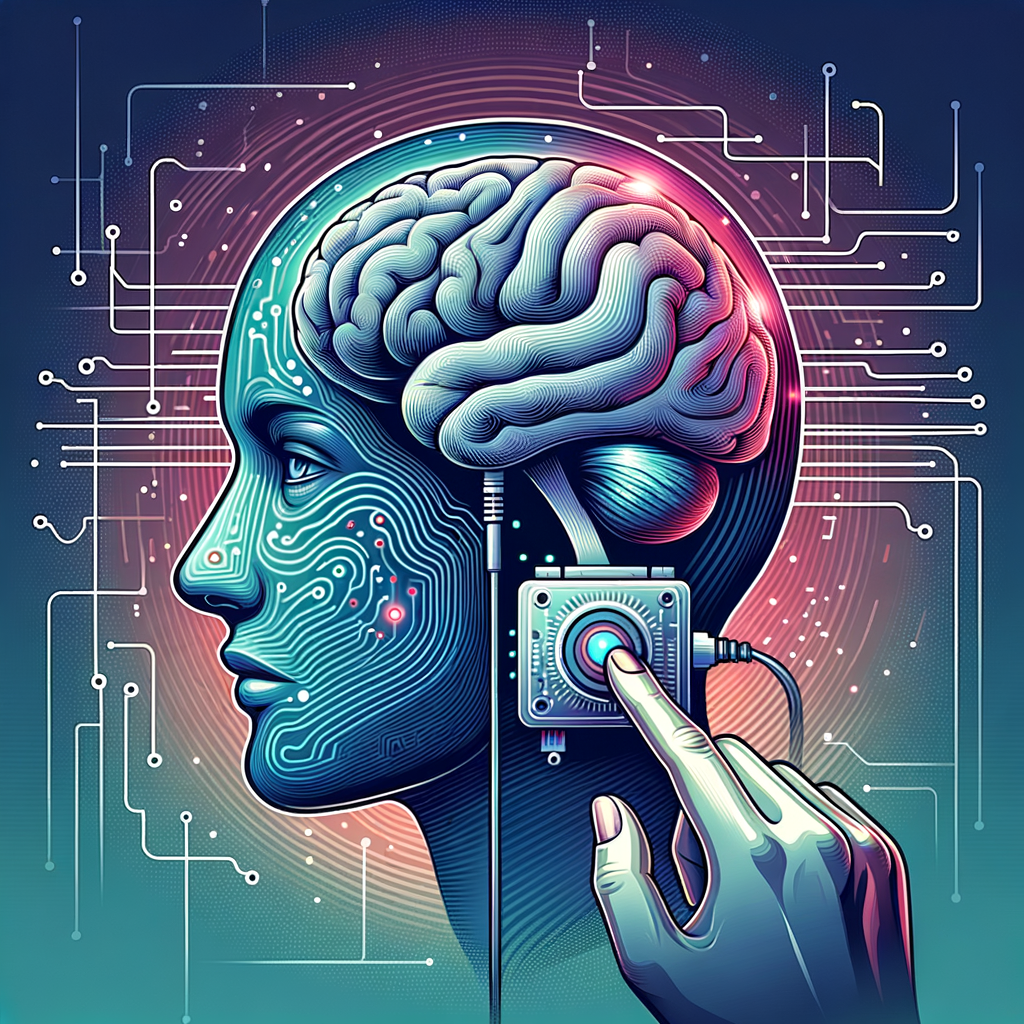
Brain-Computer Interfaces (BCIs) represent an exciting frontier in assistive technology, offering unprecedented opportunities for individuals with different disabilities, including the deaf community. BCIs are systems that facilitate direct communication between the brain and external devices, translating neural activity into commands that can control software or hardware systems. The potential impact of BCIs on communication methods for deaf users is significant and is transforming the landscape of accessibility. As technology advances, BCIs could offer new ways to overcome the limitations that traditional aids might have for individuals who are deaf or hard of hearing.
Deafness is a visible disability, but it presents unique challenges that are not readily apparent to those without personal experience. Traditional devices such as hearing aids, cochlear implants, and various sound amplification technologies have made significant strides; however, they are not universally effective, particularly for those with profound deafness. The appeal of BCIs lies in their potential to bypass some of the physiological constraints that have traditionally been circumvented by less direct means. By directly interpreting brain signals, BCIs could not only enhance communication but also enrich the sensory experiences available to deaf individuals.
The integration of BCIs into the realm of assistive technology for the deaf is still in its formative phase. However, exploring its potential applications, technological developments, challenges, and ethical considerations is crucial to understanding how it will shape the future of accessibility. As such, this article delves deep into the ways BCIs are poised to revolutionize communication and interaction for deaf users, exploring implications that extend beyond mere convenience to touch on dignity, empowerment, and quality of life.
Understanding Brain-Computer Interfaces
BCIs work by detecting and interpreting electrical signals produced by the brain. These signals are typically monitored using Electroencephalography (EEG), a non-invasive method that uses sensors placed on the scalp. Other techniques can be more invasive, using implanted electrodes for more direct and detailed signal acquisition. In the context of communication, BCIs interpret the brain’s intention to create words or actions, translating thoughts into comprehensible digital outputs.
In recent years, research has focused on refining the technology to better capture and interpret these signals accurately. Sophisticated algorithms powered by machine learning and artificial intelligence have been developed to improve the speed and reliability of signal interpretation. For deaf users, this could translate into more efficient communication systems, providing new pathways to engage with the world that are not contingent on auditory perception.
The Role of Neuroscience in BCIs
An essential component of BCI technology is the underlying neuroscience that understands how the brain processes auditory information. While a deaf individual may not process sound in the conventional manner, the brain’s response to such stimuli – visual or otherwise – can still be mapped. Visual and tactile languages, such as Sign Language, engage different brain regions, offering insights into alternative communication methods leveraged through BCIs.
Advances in neuroscientific understanding have broadened potential applications of BCIs far beyond the initial scope, which primarily focused on mobility assistance for individuals with paralysis. For deaf users, the exploration intersecting areas such as shared brainwave patterns, language processing centers, and sensory substitution systems – converting non-auditory stimuli into meaningful input – are critical areas of study making BCIs transformative for deaf communities.
Technological Advances Tailored to Deaf Users
Developing BCIs specifically for deaf individuals presents unique challenges but also unique opportunities. Developers focus on crafting systems that enhance interaction through alternative modalities. This includes enabling closed-loop systems where the interface responds not only to brain signals but to environment-triggered data which influences how an individual’s brain interprets or wishes to respond in conversation.
One promising avenue is the intersection of BCIs with augmented reality (AR). By incorporating visual data into BCI systems, deaf users could have seamless multipurpose platforms that convert brain signals into text, supplemented by visual representations of speech in real-time. This concept builds on existing technologies such as visual sound wave forms and real-time captioning, pushing them to a level of sophistication and utility yet to be realized.
Challenges in Implementing BCIs for the Deaf
Despite the promise, there are substantive challenges in developing BCIs efficaciously for the deaf. For one, the technology must be extremely precise given the subtlety and complexity of brain signals—it must delineate between a vast array of mental states and intentions. Enhancements in signal clarity and noise reduction are crucial for BCIs seeking to translate thoughts into accurate, understandable communication outputs.
Further, there is a significant cultural consideration. The deaf community has its own rich culture and language (such as American Sign Language), and any BCI development must respect and reflect this. Incorporating cultural considerations into the design of BCIs will be key in ensuring their adoption and effectiveness.
Moreover, economic and accessibility barriers remain hurdles for widespread adoption. Current BCI systems can be prohibitively expensive, and the skills required to operate them not universally available. Ensuring affordable, user-friendly technology that can be serviced and supported in diverse socioeconomic contexts is critical.
Ethical and Social Implications
As with any groundbreaking technology, BCIs come with potential ethical implications. Privacy concerns are paramount, as BCIs must handle sensitive neural data subject to misuse if not properly safeguarded. There must be stringent measures protecting the individuals’ rights regarding how their neural data is used, stored, and shared.
Societal implications also involve concerns regarding autonomy and agency. BCIs should enhance autonomy but should not create dependencies that interfere with the user’s existing communication capabilities. Increasing empowerment while respecting the autonomy of the deaf community, without compromising their cultural identity, must be at the forefront of BCI development.
The potential for BCIs to dramatically alter the landscape of disability culture is immense. By providing new forms of interaction, they question longstanding assumptions about ability and inclusivity. Yet, they pose questions regarding the integration of technology into personal identity, especially where cultural identity and community interaction are involved.
Future Directions for BCIs
The future of BCIs for deaf individuals is bright, with ongoing research and development promising to push the boundary of what’s possible. Collaboration between technologists, neuroscientists, linguists, and the deaf community is essential for crafting solutions that are both technologically feasible and culturally considerate.
Long-term, the goal is to create BCIs that facilitate seamless communication using brain-computer channels that require minimal conscious effort and maximal intuitive use. Such systems could revolutionize how deaf users interact with digital environments and one another, establishing a ubiquitous digital literacy that transcends traditional sensory limitations.
Conclusion
The integration of Brain-Computer Interfaces into the pantheon of assistive technologies for the deaf promises to redefine the limits of human-machine interaction. By offering a medium where thoughts can be directly translated into communication, BCIs could provide new levels of autonomy, empowerment, and interaction for deaf users.
While the path ahead involves overcoming significant technological, economic, and cultural concerns, the potential benefits are profound. BCIs hold the promise of enabling deaf users to engage in more nuanced, natural interactions with their environments and communities.
The continued collaboration between scientists, technologists, and the deaf community will be crucial in ensuring these advanced systems are inclusive and sensitive to the cultural and personal identities they seek to assist. This convergence of technology and human experience could usher in a new era of communication, forever altering the landscape of assistive devices for the deaf.
“`htmlFrequently Asked Questions
1. What exactly are Brain-Computer Interfaces (BCIs) and how do they work?
Brain-Computer Interfaces (BCIs) are fascinating pieces of technology that essentially allow for direct communication between the human brain and external devices. Imagine bypassing traditional forms of communication like speech or text and having your thoughts directly translated into actions. That’s the magic BCIs offer. They operate by capturing neural signals from the brain using sensors typically placed on the scalp or implanted within the brain. These signals are then interpreted by sophisticated algorithms that convert them into commands to control devices from computers to smartphones. This technology offers enormous potential, particularly for people with disabilities, providing new ways of interacting with the world that seemed like science fiction just a few years ago.
2. How can BCIs benefit the deaf community specifically?
For the deaf community, BCIs could be revolutionary. Communication relies heavily on the translation of thoughts into physically spoken or written words, which poses obvious challenges when hearing is impaired. BCIs can provide an alternative route. They could enable direct translation of thought into text or sign language on a screen, offering a seamless form of communication. In scenarios like meetings, social gatherings, or customer service interactions, the ability to have thoughts captured and processed into real-time communication would be invaluable, providing rich, immediate interactions without the reliance on an interpreter or less efficient text-based solutions.
3. What are some challenges that BCIs face in terms of widespread implementation for the deaf community?
While BCIs hold incredible promise, there are significant hurdles to overcome. One of the foremost challenges is the accuracy and speed of the technology. Collecting and interpreting brain signals in real time to match the speed and nuances of natural conversation is a complex task. Moreover, the user interface must be intuitive and comfortable for everyday use. Accessibility is another concern; BCIs need to be affordable and easy to use for widespread adoption. Ethical considerations also come into play, such as privacy issues tied to brain data and ensuring user consent and control over their neural information.
4. Are there any current BCI technologies on the market specifically designed for deaf users?
As of now, BCIs are still largely in the research and development stage and there isn’t a commercially available BCI designed specifically for deaf users. However, there are several promising projects and experiments underway. Researchers are exploring devices that could potentially read brain signals associated with language and expression and convert them into cohesive communication forms that deaf individuals could use. The integration of artificial intelligence that learns and adapts to a user’s brain patterns is one area of major development, potentially leading the way to specialized applications for deaf users.
5. What future developments can we expect in the realm of BCIs for deaf individuals?
The future of BCIs for the deaf community is bright and rapidly evolving, driven by advancements in both neuroscience and technology. We can expect more portable and non-invasive devices, perhaps wearable technology that integrates seamlessly into everyday life. Enhanced machine learning algorithms could lead to more accurate translations of thoughts into communication, breaking down barriers in both personal and professional settings. Additionally, as public and private investment in this technology grows, we might see the expansion of BCI applications beyond just communication, tapping into areas like education, entertainment, and virtual reality, making interactions even more immersive and inclusive for deaf individuals. While it might take a decade or two for these developments to become mainstream, the trajectory is promising, potentially inching us toward a future where communication is effortlessly inclusive, regardless of auditory ability.
“`