
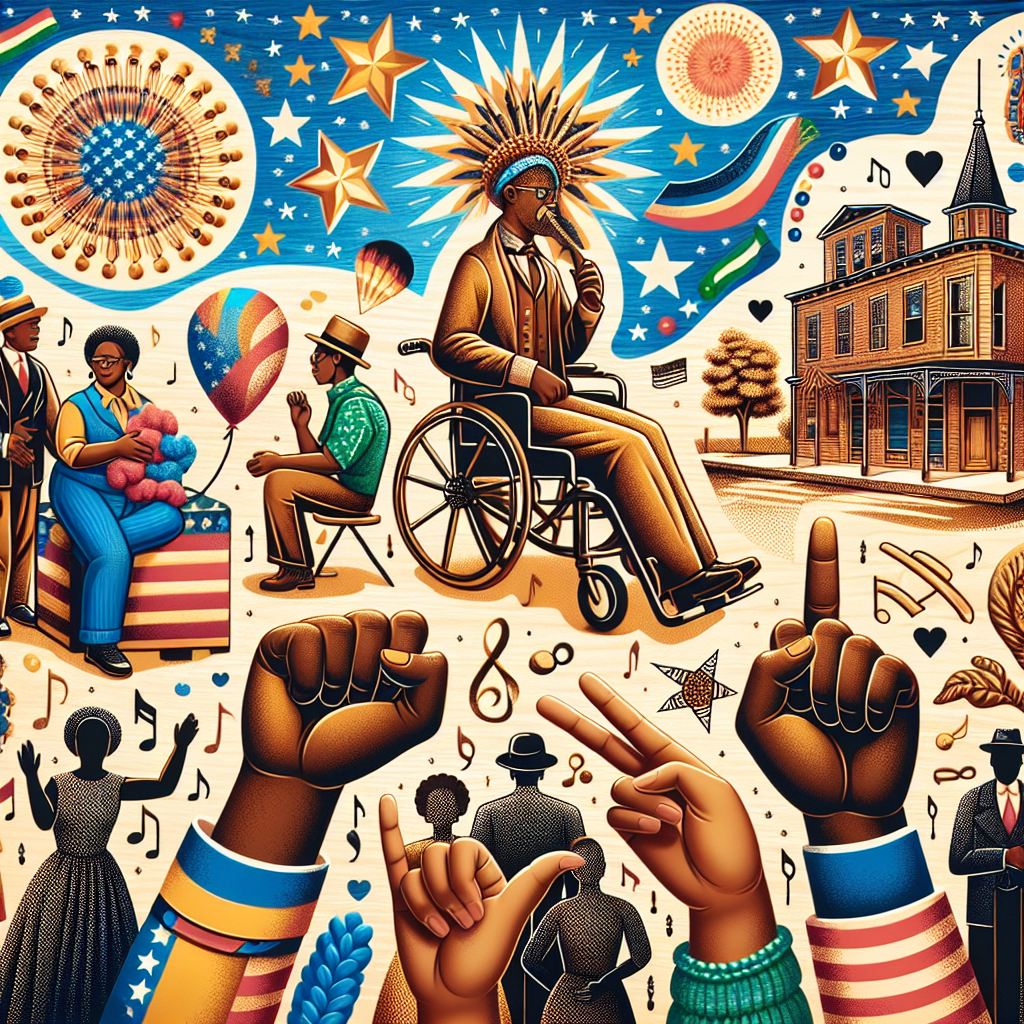
Juneteenth, celebrated annually on June 19th, marks the day in 1865 when enslaved African Americans in Texas learned of their freedom – a full two years after the Emancipation Proclamation was signed. While this day has become a symbol of liberation and a testament to the resilience of the African American community, there is a significant subset of this population whose struggles and triumphs often go unnoticed: Black Deaf Americans. Their journey, intertwined with the broader Black and Deaf experiences, deserves its own recognition and celebration, especially on a day as poignant as Juneteenth.
Black Deaf Americans have historically faced unique challenges, navigating a society that often marginalizes them on two fronts: race and disability. For many, the fight for freedom and equality extends beyond systemic racism to include barriers within Deaf communities and the broader social framework. Despite these hurdles, Black Deaf individuals have made remarkable contributions to society, excelling in various fields and advocating for the rights of both the Black community and the Deaf community.
This article sheds light on the significance of Juneteenth for Black Deaf Americans, acknowledges their contributions, and underscores the ongoing need for awareness and advocacy to ensure true equality and recognition. By delving into the intersectionality of being Black and Deaf, we can gain a deeper understanding of their unique experiences and the resilience they exhibit. Let us explore the vibrant history, impactful contributions, and ongoing challenges of Black Deaf Americans as we commemorate Juneteenth.
Understanding the Intersectionality of Being Black and Deaf
The experience of being both Black and Deaf is shaped by a complex interplay of racial and disability identities. Intersectionality, a term coined by civil rights advocate and scholar Kimberlé Crenshaw, helps us understand how different forms of discrimination intersect. For Black Deaf individuals, this intersectionality means facing compounded layers of prejudice and exclusion.
The history of Black Deaf education provides a lens into this unique intersectionality. For many years, Black Deaf children were denied access to quality education due to segregation. Prior to the establishment of the first Black Deaf school in 1869, Black Deaf children had little to no access to formal education. Segregated schools for the Deaf, although better than no education, were often underfunded and lacked resources compared to their white counterparts. Despite these adversities, many Black Deaf individuals succeeded in their educational pursuits, breaking barriers and paving the way for future generations.
Understanding the intersectionality of being Black and Deaf also involves recognizing the cultural and linguistic diversity within the Deaf community. Black American Sign Language (BASL), which developed as a result of segregation in Deaf education, is a crucial element of Black Deaf culture. BASL has its own unique grammar, syntax, and vocabulary, reflecting the rich cultural heritage of Black Deaf Americans. By appreciating BASL and its importance, we can gain a deeper understanding of the cultural identity of Black Deaf individuals and the resilience they exhibit in preserving their linguistic heritage.
Contributions of Black Deaf Americans to Society
Black Deaf Americans have made significant contributions to various fields, from academia to the arts, often overcoming substantial barriers to do so. One prominent example is Dr. Glenn B. Anderson, the first Black Deaf person to earn a Ph.D. in the United States. Dr. Anderson has been a leading advocate for Deaf education and has played a pivotal role in advancing the rights of Deaf individuals.
In the arts, artists like Ann Silver and the National Black Deaf Advocates (NBDA) have used their work to highlight the experiences of Black Deaf individuals, promote Deaf culture, and challenge societal norms. Ann Silver, a renowned Deaf artist, has created powerful visual art that explores her experience as a Black Deaf woman, addressing themes of identity, resilience, and social justice.
Additionally, the contributions of Black Deaf athletes, such as Curtis Pride, a former Major League Baseball player, have challenged stereotypes and showcased the talents and capabilities of Deaf individuals in sports. Pride’s achievements on the field, combined with his advocacy off the field, have inspired countless Black Deaf individuals to pursue their dreams and push the boundaries of what is possible.
By highlighting the achievements of Black Deaf Americans, we can recognize their resilience, strength, and the significant impact they have made in shaping various aspects of our society. Their contributions serve as powerful reminders of the potential that can be unlocked when barriers are removed, and equal opportunities are provided.

Challenges Faced by Black Deaf Americans
While significant progress has been made in advocating for the rights of Black Deaf Americans, numerous challenges persist. One major issue is access to appropriate education and healthcare services. Despite the existence of laws such as the Americans with Disabilities Act (ADA), many Black Deaf individuals still encounter systemic barriers that hinder their access to equitable education and holistic healthcare services.
Discrimination and microaggressions in both the general and Deaf communities continue to be significant challenges. Black Deaf individuals often face biases and discriminatory attitudes based on their race and their deafness. These prejudices can lead to feelings of isolation and exclusion, affecting their mental health and overall well-being.
Representation and visibility also remain critical issues. Although strides have been made in increasing representation of Black Deaf individuals in media and leadership positions, there is still a long way to go in ensuring their voices are adequately heard and represented. Lack of representation can perpetuate stereotypes and misconceptions, further marginalizing the Black Deaf community.
Addressing these challenges requires a multi-faceted approach that includes education, advocacy, and policy changes. By amplifying the voices of Black Deaf individuals, providing resources and support, and challenging systemic inequalities, we can work towards creating a more inclusive and equitable society for all.
Importance of Awareness and Advocacy
Raising awareness about the unique experiences and contributions of Black Deaf Americans is crucial in combating stigma and creating a more inclusive society. Education plays a vital role in this process. Incorporating Deaf culture and Black Deaf history into educational curriculums can foster understanding and appreciation among students. By educating future generations, we can challenge stereotypes and promote empathy and inclusivity.
Advocacy is another powerful tool in promoting the rights and well-being of Black Deaf individuals. Organizations like the National Black Deaf Advocates (NBDA) and local advocacy groups work tirelessly to address the needs of the Black Deaf community. These organizations provide resources, support, and platforms for Black Deaf individuals to share their stories and advocate for their rights.
Additionally, allies play a crucial role in raising awareness and advocating for change. By listening to and amplifying the voices of Black Deaf individuals, allies can help dismantle systemic barriers and promote a more inclusive society. This involves actively challenging discriminatory practices, advocating for policy changes, and supporting initiatives that promote accessibility and equity for all.
Ultimately, awareness and advocacy go hand in hand. By raising awareness about the experiences and contributions of Black Deaf Americans, we can create a more informed and empathetic society. Through advocacy, we can work towards dismantling barriers, promoting inclusivity, and ensuring that the rights and voices of Black Deaf individuals are rightly recognized and respected.
Celebrating Juneteenth with Black Deaf Americans
As we celebrate Juneteenth, it is essential to honor the contributions and experiences of Black Deaf Americans. Juneteenth serves as an opportunity to not only reflect on the historical significance of freedom but also to recognize the ongoing struggle for equality and justice.
One way to celebrate Juneteenth with Black Deaf Americans is to create inclusive events that prioritize accessibility. This includes providing interpreters, ensuring venues are accessible, and incorporating elements of Deaf culture and Black Deaf history into the celebrations. By doing so, we can create spaces where Black Deaf individuals feel valued, included, and celebrated.
Storytelling is another powerful way to celebrate Juneteenth with Black Deaf Americans. Sharing the stories and achievements of Black Deaf individuals through various mediums, such as documentaries, books, and social media, can help raise awareness and promote understanding. By amplifying their voices, we can highlight their resilience and contributions, fostering a greater appreciation for their unique experiences.
June 19th is also an opportune time to support Black Deaf businesses and organizations. By patronizing Black Deaf-owned businesses and donating to advocacy groups, we can contribute to their economic empowerment and the advancement of their initiatives. Supporting these businesses and organizations not only provides tangible support but also sends a powerful message of solidarity and recognition.
Lastly, celebrating Juneteenth with Black Deaf Americans involves engaging in meaningful conversations and learning from their experiences. Taking the time to listen, learn, and reflect on the intersecting challenges they face can foster empathy and promote positive change. By acknowledging their contributions and advocating for their rights, we can ensure that Juneteenth becomes a celebration of freedom and equality for all.
Conclusion
Juneteenth is a day of immense historical and cultural significance, marking a moment of liberation and reflection for the African American community. As we celebrate this day, it is imperative to recognize and honor the contributions of Black Deaf Americans, whose voices and experiences often remain in the margins.
The journey of Black Deaf individuals is characterized by resilience, strength, and a relentless pursuit of equality. From overcoming barriers in education and healthcare to making significant contributions in various fields, Black Deaf Americans have shown remarkable perseverance. By understanding the intersectionality of their experiences and acknowledging their challenges, we can work towards creating a more inclusive and equitable society.
Acknowledging the unique contributions of Black Deaf Americans requires raising awareness and advocating for their rights. Education, storytelling, and allyship play a vital role in this process. By incorporating Deaf culture and Black Deaf history into our educational systems, supporting advocacy organizations, and amplifying the voices of Black Deaf individuals, we can challenge stereotypes, promote inclusivity, and ensure that their voices are heard and valued.
As we commemorate Juneteenth, let us strive for a future where the contributions and experiences of Black Deaf Americans are rightly recognized and celebrated. By dismantling systemic barriers, promoting accessibility, and fostering understanding, we can create a society where every individual, regardless of their race or disability, has the opportunity to thrive and contribute to the greater good.
Juneteenth is not just a celebration of freedom; it is a call to action and a reminder of the ongoing struggle for equality and justice. Let us honor the legacy of Black Deaf Americans by advocating for their rights, celebrating their achievements, and working towards a future where true freedom and inclusivity are realized for all.