
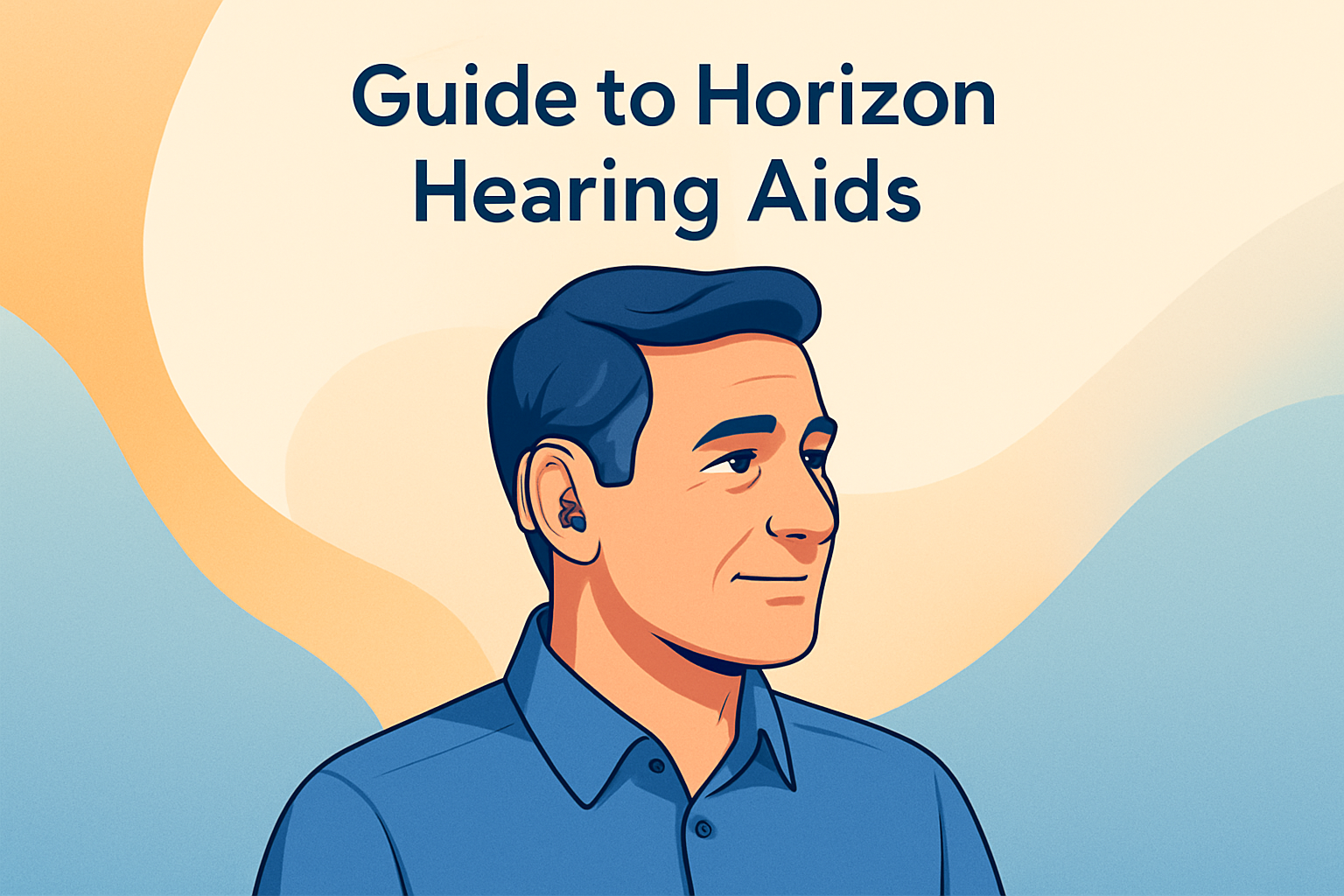
Horizon hearing aids are private-label devices sold through hearing care clinics, and they matter because the name often appears on receipts, warranty cards, and fitting software even when patients are unsure who actually manufactures the technology inside. In practice, Horizon has been associated with models produced for large retail networks and independent providers, so understanding the brand means looking beyond the label to the platform, feature set, service model, and follow-up care. A hearing aid is a miniature medical device that amplifies and processes sound to improve speech understanding, listening comfort, and environmental awareness for people with hearing loss. Horizon products typically include standard categories such as receiver-in-canal, behind-the-ear, and custom in-ear styles, with features like directional microphones, noise reduction, feedback cancellation, tinnitus programs, and wireless streaming depending on generation. This topic matters because buyers do not just purchase hardware; they commit to an ecosystem of audiology appointments, software programming, batteries or charging routines, repair logistics, and long-term support. I have worked with patients who arrived convinced they needed a different brand, only to discover their current Horizon device was capable of much better performance after proper verification, dome changes, or a revised fitting formula. That is common in hearing care. The quality of the fit, the accuracy of the hearing test, and the clinician’s use of real-ear measurement often matter as much as the logo on the shell. For anyone researching Horizon hearing aids, the key questions are straightforward: who are they for, what features do they offer, how do they compare with major brands, what do they cost, and how should you evaluate whether they are the right choice for your hearing needs?
What Horizon hearing aids are and how the brand is positioned
Horizon hearing aids are best understood as clinic-dispensed hearing solutions rather than a single globally dominant manufacturer brand like Phonak, Oticon, ReSound, Signia, Starkey, or Widex. In the hearing industry, private-label and exclusive brands are common. A provider may offer devices branded under a house name while the underlying technology platform comes from an established manufacturer. For the patient, this arrangement affects documentation, replacement parts, software compatibility, and sometimes access to comparable models across clinics. It does not automatically mean the product is lower quality. Many private-label devices use proven chipsets and fitting algorithms adapted for a specific distribution channel.
When I review older Horizon hearing aids in clinic, I focus on four identifiers: the physical style, the serial number, the battery door or charger type, and the fitting software used to program the device. Those details usually reveal the product family more reliably than the outer nameplate. Patients are often surprised to learn that what matters most is not whether Horizon appears on the casing, but whether the device supports enough channels for fine-tuning, whether it has effective adaptive directionality, and whether the clinic can still service it. This is particularly important for devices that are several years old, because hearing aids have practical lifespans, and manufacturer support windows eventually close.
From an SEO and answer-engine perspective, the direct answer is this: Horizon hearing aids can be a solid option when they are professionally fit, supported by ongoing care, and matched to the wearer’s hearing profile, listening demands, dexterity, and budget. They are less ideal when buyers cannot confirm service access, warranty terms, or the technology level included in the quoted price. If you are comparing Horizon with better-known names, ask the provider to explain the equivalent mainstream platform, the exact feature tier, and the expected upgrade path. That one conversation can prevent confusion later.
Key features, technology levels, and everyday performance
The real performance of Horizon hearing aids depends on the generation and technology tier, but the core features generally follow the same pattern used across the hearing industry. Entry-level models usually prioritize basic amplification, feedback suppression, and simple environmental adaptation. Mid-level devices add stronger directional microphone systems, more refined background noise management, and better wireless options. Premium tiers typically offer faster automatic scene analysis, more precise speech-in-noise processing, motion-aware adjustments, app control, and broader connectivity for phones or TV accessories.
Patients frequently ask what these terms actually mean in daily life. Directional microphones help the device emphasize sounds in front of you, especially speech, while reducing competing sound from other directions. Noise reduction does not erase background sound; it lowers the annoyance of steady noise so listening feels less effortful. Feedback cancellation controls whistling caused by sound leaking and being re-amplified. Compression manages loudness so soft speech becomes more audible without making loud sounds intolerable. Frequency shaping adjusts amplification differently across pitches to match the hearing test. These are foundational functions, not luxury extras.
Wireless features are now central for many users. Depending on the Horizon model, you may have direct streaming for phone calls, media playback, remote control through a smartphone app, or teleaudiology support for fine-tuning without an office visit. Rechargeable models are especially popular because they eliminate routine battery changes and simplify handling for users with arthritis or poor vision. Still, disposable battery models remain practical for travelers, for people with limited charging access, and for users who prefer quick power replacement instead of waiting on a charger.
One practical lesson from fittings is that premium technology does not help much if the acoustics are wrong. I have seen expensive devices underperform because the receiver gain, venting, or earmold style was mismatched to the hearing loss. Conversely, a well-fit mid-tier device can produce excellent speech clarity for a user whose main needs are one-on-one conversation, TV listening, and moderate restaurant noise. Horizon hearing aids should be judged the same way: not by marketing language alone, but by how effectively the programmed settings solve real listening problems in your daily routine.
Styles, suitability, and who should consider Horizon hearing aids
Horizon hearing aids are commonly available in several physical styles, and the best option depends on the severity of hearing loss, ear anatomy, dexterity, cosmetic preference, and listening goals. Receiver-in-canal devices are the most widely recommended because they balance amplification power, comfort, and discreet appearance. The speaker sits in the ear canal while the main body rests behind the ear, allowing flexible receiver replacements and strong fitting range. Behind-the-ear models are slightly larger but often easier to handle, more durable, and suitable for more severe hearing loss. Custom in-the-ear and in-the-canal styles place more of the device inside the ear, which some users prefer for cosmetics or glasses compatibility, though they can be less ideal for heavy moisture exposure or very limited dexterity.
People with mild to moderate sensorineural hearing loss are often strong candidates for Horizon products, especially if they want clinic-based care without necessarily paying top-tier flagship pricing. Adults who need help in meetings, family gatherings, worship spaces, and routine phone use may do very well with a mid-range receiver-in-canal model. Users with severe hearing loss need a more careful evaluation because power output, receiver strength, earmold coupling, and feedback control become more critical. If speech discrimination scores are poor, expectations also need to be realistic. Hearing aids improve audibility and access to speech cues, but they do not restore normal hearing.
Another important suitability question is whether the buyer values service continuity. Horizon hearing aids are a better fit when purchased through a clinic that offers verification testing, trial support, and maintenance. They are a weaker choice when sold in a transactional way without clear long-term follow-up. This is especially true for first-time wearers, who usually need several adjustments during the adaptation period.
| Style | Best for | Main advantages | Potential limits |
|---|---|---|---|
| Receiver-in-canal | Mild to severe loss | Versatile, discreet, easy receiver changes | Small parts require careful handling |
| Behind-the-ear | Moderate to profound loss | More power, durability, easier controls | More visible behind the ear |
| In-the-ear | Mild to severe loss | Single-piece custom fit, simpler insertion | More exposed to wax and moisture |
| In-the-canal/CIC | Mild to moderate loss | Very discreet, natural phone placement | Fewer features, smaller batteries, harder to adjust |
In real-world counseling, I ask patients to rank their top three listening priorities before choosing a style. If understanding speech in noise is the main goal, microphone placement and directional performance may matter more than invisibility. If manual handling is difficult, a rechargeable behind-the-ear model may beat a tiny custom aid every time. That framework applies directly to Horizon hearing aids and leads to better outcomes than choosing based on appearance alone.
Cost, warranties, fitting process, and how Horizon compares with major brands
Hearing aid pricing varies by clinic, region, bundled services, and technology level, so there is no single universal Horizon price list. In most markets, professionally fit hearing aids range from roughly $2,000 to $7,000 or more per pair, with premium technology and extensive service plans at the higher end. Horizon hearing aids may fall below flagship-name competitors in some clinics, but the quoted number only becomes meaningful when you know what is included. Ask whether the price covers the diagnostic hearing exam, earmolds or domes, real-ear measurement, follow-up visits, cleanings, loss-and-damage coverage, charger, accessory support, and the trial period. A lower upfront quote can become less attractive if important services are billed separately.
Warranties commonly include repair coverage for two to three years, plus a one-time loss-and-damage replacement subject to a deductible. Rechargeable batteries may have separate terms, and older models may transition to limited parts availability before the device itself stops functioning. This is one reason I encourage patients to request written documentation rather than relying on verbal summaries. If a clinic cannot clearly state who services Horizon devices, how long turnaround takes, and whether loaners are available during repair, that is a warning sign.
The fitting process should follow recognized best practice. That means a case history, otoscopy, pure-tone and speech testing, counseling on realistic expectations, physical fit selection, programmed settings based on a validated prescription such as NAL-NL2 or DSL principles where appropriate, and verification with real-ear measurement. Real-ear measurement is the gold standard because it checks what sound level actually reaches the eardrum in your ear canal. Without it, programming is partly guesswork. Studies repeatedly show that manufacturer first-fit settings often miss target, especially in the high frequencies that carry critical speech information.
Compared with major brands, Horizon hearing aids may offer similar core functions but differ in app polish, accessory ecosystem, platform update frequency, and cross-clinic recognizability. Mainstream global brands often have broader consumer information, more transparent model families, and easier comparison shopping. Horizon may compete well on value and clinic support when the provider is strong. The bottom line is direct: compare service quality and verifiable outcomes, not just labels. Ask for speech-in-noise counseling, a trial plan, and a follow-up schedule. Those details predict satisfaction better than brand familiarity alone.
How to choose, maintain, and troubleshoot Horizon hearing aids
Choosing Horizon hearing aids starts with matching technology to your actual lifestyle. If your week includes business meetings, restaurants, group family events, and regular smartphone use, a mid-to-premium tier may be justified. If most listening happens in quiet settings, a simpler tier may be enough. During consultations, I recommend bringing a written list of the places where hearing is hardest, because vague statements like “I just want to hear better” are not actionable for programming. Specific examples are useful: trouble hearing grandchildren in the car, missing comments in staff meetings, difficulty following dialogue on television, or frustration ordering at noisy counters.
Once fitted, daily maintenance becomes the difference between reliable performance and preventable frustration. Clean microphone openings and domes regularly, wipe moisture from the shell, replace wax guards as instructed, and store the devices safely. Rechargeable models should be charged in a dry, stable location, and battery-contact models need fresh cells stored at room temperature. If sound becomes weak, do not assume the device is broken. In many cases the cause is a clogged wax filter, blocked dome, moisture in the receiver, or a depleted battery. These are routine fixes.
Troubleshooting also includes understanding adaptation. New wearers often notice paper rustling, dishes clinking, and their own footsteps more than expected. That does not necessarily mean the programming is wrong. The brain is re-learning to process sounds that were previously reduced by hearing loss. Still, persistent sharpness, occlusion, or poor speech clarity should be addressed promptly with the clinician. Fine-tuning may involve gain changes, vent adjustments, directional settings, compression tweaks, or counseling on communication strategies.
For long-term value, schedule periodic checks even if the aids seem to work well. Hearing can change gradually, and devices need recalibration, firmware updates, and physical inspection. If your Horizon hearing aids are older than five to six years, ask whether repair parts remain available and whether newer wireless compatibility would materially improve daily use. Better streaming, rechargeability, and more advanced speech-in-noise processing can be meaningful upgrades, but only if they solve a real problem. The smartest buying decision is a documented, measured, service-backed fit that supports your hearing today and remains manageable over time.
Horizon hearing aids can be a practical, high-value choice when you evaluate them the way hearing professionals do: by technology level, fitting quality, verification, warranty support, and the clinic’s willingness to provide ongoing care. The name on the shell matters less than the platform inside and the expertise behind the programming. For most buyers, the critical questions are simple. Does the device match your hearing loss? Does it include the features you will actually use? Is the fitting verified with real-ear measurement? Are service terms clear in writing? And can you return during the trial period if the benefit is not there?
The strongest takeaway is that hearing aid success is rarely accidental. It comes from an accurate hearing assessment, a realistic discussion of listening goals, careful physical selection, and follow-up adjustments based on real-world experience. I have seen Horizon users do exceptionally well when these fundamentals are handled correctly, and I have seen disappointment when they are skipped. That pattern is consistent across the industry. Whether you are considering your first pair or replacing older devices, take the time to compare styles, ask about the underlying platform, and insist on best-practice fitting standards.
If you are shopping now, make a shortlist of your top listening challenges, book a consultation with a qualified audiologist or hearing instrument specialist, and ask direct questions about Horizon hearing aids before you buy. A clear, measured fitting will tell you far more than branding alone, and it is the surest path to better hearing confidence every day.
Frequently Asked Questions
What are Horizon hearing aids, and why does the name show up if patients do not recognize the manufacturer?
Horizon hearing aids are generally considered private-label devices, which means the name on the product, receipt, warranty paperwork, or fitting software may not be the same name as the original hearing technology manufacturer. This is common in the hearing industry. A clinic, buying group, or retail network may offer devices under a house brand like Horizon while the internal platform is sourced from a major hearing aid company. For patients, that can create understandable confusion: the hearing aid says Horizon, but online searches may not clearly show who built the circuitry, software ecosystem, and wireless features behind it.
What matters most is that the Horizon label usually tells only part of the story. To understand what you are actually wearing, it helps to identify the underlying technology platform, the style of device, the generation of the chip, and the level of service bundled with the purchase. In many cases, hearing care professionals can explain whether a Horizon model is based on a specific manufacturer’s technology and how it compares with equivalent products sold under other names. That information is useful because it affects app compatibility, accessory options, repair pathways, firmware support, and expectations for performance in noise, streaming, and everyday listening situations.
Who makes Horizon hearing aids?
There is not always a single simple answer, because Horizon has been associated with hearing aids produced for different providers and retail channels over time. Private-label brands can change sourcing arrangements, and the same brand name may cover more than one platform depending on the clinic network, product generation, or model family. That is why two people with Horizon hearing aids may not necessarily have devices built on the exact same technology base.
If you want a reliable answer for your specific pair, the best approach is to ask the dispensing clinic for the model number, platform name, and original manufacturer if available. You can also review the fitting software name, wireless accessory compatibility, app pairing instructions, and battery or charger details, since these often provide clues about the technology underneath the label. An experienced audiologist or hearing instrument specialist can usually help decode that information. Knowing the original platform can be especially helpful when comparing features, researching expected performance, understanding whether replacement parts are still supported, and planning future upgrades.
Are Horizon hearing aids good quality, or does a private-label brand mean lower performance?
A private-label name does not automatically mean lower quality. In many cases, private-label hearing aids are built on established technology from major manufacturers and can perform very well when they are properly selected, programmed, and supported. Sound quality and user satisfaction depend on much more than the brand printed on the case. The fit to your hearing loss, the accuracy of the programming, the use of real-ear verification, the comfort of the physical style, and the availability of follow-up care all play major roles in the final outcome.
That said, not all Horizon models are equal. As with any hearing aid line, performance can vary by technology tier and generation. Entry-level devices may provide basic amplification and simpler noise handling, while premium versions may include more advanced speech enhancement, feedback control, directional microphone systems, rechargeability, Bluetooth streaming, tinnitus features, and automatic environmental adaptation. A strong hearing aid experience is usually the result of both capable hardware and high-quality professional care. So rather than asking only whether Horizon is “good,” it is more useful to ask which Horizon model you are considering, what platform it uses, what features are included, and how much service and long-term support come with it.
How can I compare Horizon hearing aids with name-brand options from major manufacturers?
The smartest way to compare Horizon hearing aids with major branded products is to focus on the underlying technology and the service package, not just the label. Start by asking for the exact model, technology level, and feature list. Important comparison points include performance in background noise, Bluetooth connectivity, rechargeable battery life, telecoil availability, app controls, remote adjustments, feedback management, water and dust resistance, and compatibility with accessories such as TV streamers or remote microphones. If Horizon is based on a known platform, your provider may be able to show you the closest equivalent in the original manufacturer’s lineup.
You should also compare what happens after the sale. Follow-up appointments, adjustment policies, trial periods, warranty coverage, loss and damage terms, in-office cleanings, and repair turnaround can matter just as much as the device itself. In many cases, patients do well with a private-label hearing aid because the clinic provides excellent fitting and ongoing care. In other cases, a name-brand option may offer clearer documentation, easier consumer research, or broader app and accessory support. A fair comparison looks at total value: device performance, professional expertise, convenience, support, and long-term ownership costs. That is the level where a meaningful decision gets made.
What should I ask my hearing care provider before buying or servicing Horizon hearing aids?
Before buying Horizon hearing aids, ask your provider to explain exactly what model you are getting and what technology sits behind the Horizon name. Useful questions include: What manufacturer platform is this based on? Is it an entry, mid, or premium level device? What features are included for speech in noise, streaming, rechargeability, tinnitus management, and app control? Will you perform real-ear measurements during the fitting? What follow-up schedule is included? What is covered under the warranty, and is there loss and damage protection? These questions help you understand not just the product, but the care system that comes with it.
If you already own Horizon hearing aids and need servicing, ask whether the model is still supported, whether the software is current, and whether parts, chargers, receivers, domes, and custom molds are still available. It is also worth asking whether your hearing aids can be reprogrammed if your hearing has changed, whether firmware updates are available, and whether your devices remain compatible with current smartphones and accessories. The more specific your provider can be, the easier it is to make informed decisions about maintenance, repair, or replacement. For most patients, clarity about support and future service is every bit as important as understanding the original brand name.