
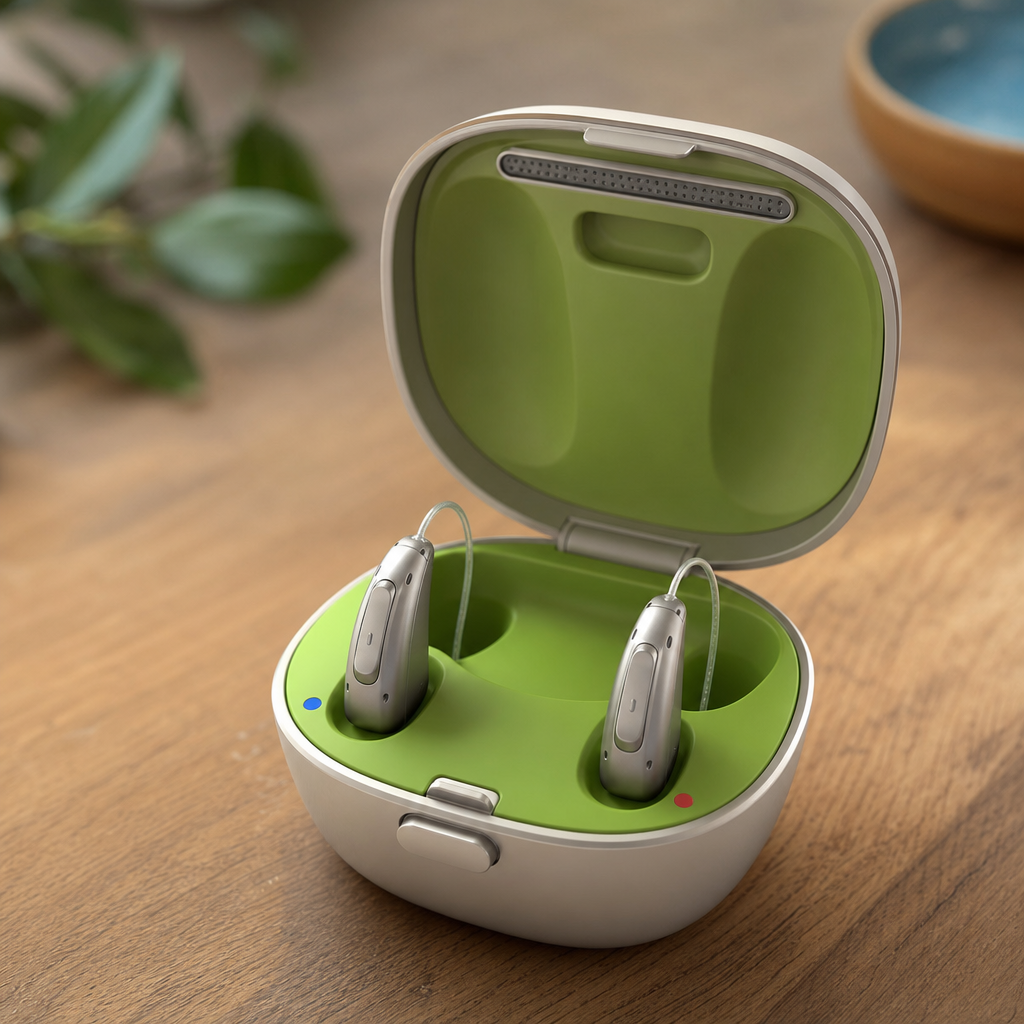
A Phonak hearing aid charger is more than a convenience accessory; it is a core part of daily hearing aid performance, battery health, and long-term reliability. For anyone using rechargeable Phonak hearing aids, understanding how the charger works, which models fit which devices, how long charging takes, and what common problems mean can prevent unnecessary downtime and expensive replacements. In practice, I have seen charging confusion cause more missed hearing time than software faults, simply because many users are handed a charger at fitting and never shown the details that matter after the first week.
Phonak is one of the best-known hearing technology manufacturers, and its rechargeable systems are widely used across receiver-in-canal, behind-the-ear, and pediatric hearing aid lines. A charger in this context is the powered dock designed to replenish the sealed lithium-ion or related rechargeable battery built into compatible Phonak hearing aids. Unlike disposable zinc-air battery systems, rechargeable models depend on correct charging habits, a stable power source, and the right charger format. That makes charger knowledge essential, not optional.
This matters for three reasons. First, hearing aids are medical devices worn for long hours in varied environments, so charging reliability directly affects communication, safety, and work performance. Second, chargers vary by generation and product family, meaning compatibility errors are common. Third, charging behavior affects battery lifespan, moisture management, and travel readiness. If you want dependable all-day use, fewer service visits, and a simpler routine, learning the basics of the Phonak hearing aid charger is one of the highest-value steps you can take.
What a Phonak hearing aid charger does and why it matters
A Phonak hearing aid charger supplies controlled electrical power to rechargeable hearing aids through precisely aligned charging contacts or molded charging bays. Most current Phonak systems are designed around rechargeable chemistry managed by internal firmware and charger electronics, which together regulate current, temperature, and charging state. The charger is not just a plug. It is part of the battery management system. When that system works properly, the user gets predictable daily runtime, safe charging overnight, and less handling than with disposable batteries.
For most users, the practical question is simple: how do I keep my hearing aids ready every day? The answer is to use the designated charger, place the aids correctly, confirm charging indicator lights, and maintain a clean, dry charging environment. In clinic settings, I routinely explain that a hearing aid that appears dead in the morning is often not defective at all. It may have been seated incorrectly, connected to a low-output USB port, or matched to the wrong charging dock after a model upgrade. Those are simple issues, but only if you know what to check.
Rechargeable charging also changes user behavior. Many people no longer need to open battery doors, stock disposable cells, or worry about midweek battery changes. That is especially helpful for users with arthritis, low vision, tremor, or reduced dexterity. Parents of children wearing Phonak Sky rechargeable models often report that a charger simplifies school-night routines because the devices go in one place at the same time every evening. Adults who stream phone calls and media benefit too, because streaming increases power demand and consistent overnight charging helps maintain full-day performance.
Phonak charger types and model compatibility
Phonak has released several charger formats, and compatibility depends on the exact hearing aid family, not just the brand name. Common examples include Charger Case Combi units, standard desktop chargers, Charger Ease designs, and travel-oriented charging options for select product generations. Some include integrated drying chambers or space for accessories, while others are compact docks focused solely on charging. Newer Phonak lines may also use redesigned contact geometry, so an older charger that looks similar may not work with a newer aid.
The most important rule is this: always confirm compatibility by the exact hearing aid model name. A Phonak Audéo Lumity rechargeable device may require a different charger than an older Audéo Paradise rechargeable aid. Naída, Sky, CROS, and custom rechargeable products can each have distinct charger requirements. In real fittings, confusion often happens when households have multiple Phonak users or when someone replaces hearing aids but keeps old accessories in the same drawer. Labeling chargers immediately reduces mistakes.
| Charger consideration | What to verify | Why it matters |
|---|---|---|
| Hearing aid family | Audéo, Naída, Sky, CROS, custom, or another line | Different families may use different charger shapes and charging contacts |
| Product generation | Exact platform such as Marvel, Paradise, Lumity, or Infinio generation if applicable | Similar-looking devices are not always cross-compatible |
| Portable use | Desktop charger or travel charger with onboard battery | Travel needs affect convenience and charging consistency |
| Drying features | Whether the charger includes drying or storage functions | Moisture control can improve reliability in humid conditions |
| Power connection | Wall adapter, USB input, or region-specific plug requirements | Insufficient or unstable power can interrupt charging |
If you are unsure which charger you need, check the hearing aid packaging, user guide, Phonak support documentation, or your audiologist’s fitting records. Do not assume fit based on appearance alone. A correct match protects both charging reliability and warranty support.
How charging works, how long it takes, and what runtime to expect
Most Phonak rechargeable hearing aids are designed for daily charging, typically overnight, with a full charge supporting all-day use. Exact charge times and runtimes vary by model, battery age, streaming use, environmental conditions, and whether the device is paired to wireless accessories. In broad terms, many Phonak rechargeable systems can reach a full charge within a few hours and then provide a full waking day of operation. Faster top-up charging may also deliver several hours of use from a shorter charging session, though exact figures depend on the device generation.
When users ask what affects runtime most, the answer is usually wireless activity. Bluetooth streaming, remote microphone use, and frequent app connections increase energy consumption. Powerful fittings for severe hearing loss can also use more power than mild-loss fittings because the receiver and processing demands are higher. Temperature matters as well. Very hot cars, cold travel conditions, and damp bathrooms are poor charging environments. I advise placing the charger in a stable bedroom or living area, not beside a sink or on a cluttered extension strip.
Indicator lights are the first diagnostic tool. Most Phonak chargers and hearing aids provide LED feedback showing when the aid is charging, fully charged, or not seated correctly. If no light appears, check the power source, cable, adapter, and hearing aid placement before assuming failure. If one hearing aid charges normally and the other does not, inspect the charging contacts for debris such as skin oil, dust, or wax residue. A soft dry cloth is usually the correct first cleaning method. Liquids and household cleaners should be avoided unless specifically approved by the manufacturer.
Best practices for daily use, maintenance, and travel
The best daily routine is consistent and simple. Place both hearing aids in the charger at about the same time each night, verify charging indicators, and leave them undisturbed until morning. Avoid tossing hearing aids onto a bedside table when tired, because skipped charging quickly turns into inconsistent use. If your charger includes a lid or retention design, close it fully so the devices remain stable. Families caring for older adults often benefit from a visual checklist near the charger: clean, dock, confirm light, unplug only if needed.
Maintenance is equally straightforward. Keep the charger on a flat surface with ventilation. Clean around the charging wells and contacts regularly using the tools recommended by your hearing care provider. Prevent wax guards, domes, or earmold tubing from interfering with seating. If moisture is an ongoing issue, ask whether your charger includes a drying function or whether a separate hearing aid dryer is advisable. For people in humid climates, athletes, and outdoor workers, moisture management is not a minor detail. It often determines whether charging remains reliable month after month.
Travel adds another layer. Before a trip, confirm the charger, cable, adapter, and any power bank or regional plug converter are packed together. If you rely heavily on streaming for calls, navigation, or captions, plan for charging access every night. Portable charging cases can be especially useful on long flights, road trips, or overnight stays where outlets are limited. I also recommend carrying your audiologist’s contact details and the exact hearing aid model name in your phone. If a charger is lost during travel, those details speed up replacement dramatically.
One common question is whether it is safe to leave hearing aids in the charger after they reach full charge. For compatible Phonak systems used with the proper charger, the answer is generally yes. Charging circuits are designed to manage the battery state without continuously overdriving it. Still, long-term battery health benefits from normal use patterns, moderate temperatures, and avoidance of counterfeit power accessories.
Common Phonak charger problems and how to troubleshoot them
Most charging problems fall into a small set of categories: no power to the charger, poor seating, dirty contacts, environmental stress, cable or adapter failure, or battery wear over time. Start with the simplest checks. Make sure the wall outlet works. Confirm the approved cable and power adapter are firmly connected. Remove and reseat each hearing aid. Look for indicator lights. Compare the left and right devices. If one side works and the other does not, the issue is usually local to the hearing aid or its contact area rather than the charger base itself.
Another frequent issue is intermittent charging. Users often describe a hearing aid that charges only when “wiggled” into place. That usually points to debris, damage, or a seating mismatch. Inspect for bent contact points, cracked charger wells, or accessories attached incorrectly. If the aid has recently been dropped, internal alignment may also be affected. Do not force it into the charger. Forcing can damage the contacts further. Instead, stop using that charger position and have the system inspected by a qualified provider.
Battery aging is a separate issue. Rechargeable batteries lose capacity gradually over hundreds of cycles. If the hearing aids still charge normally but no longer last a full day, especially after a year or more of regular use, battery wear may be the cause. Your audiologist can compare expected runtime to actual performance and determine whether service is needed. This is one reason careful documentation matters. When a user can say, “My Audéo charger shows full in the morning, but the left aid now dies by 4 p.m. after normal use,” troubleshooting becomes much faster and more accurate.
If a charger gets wet, unplug it immediately and stop using it until it has been assessed according to manufacturer guidance. Do not try improvised drying with ovens, hair dryers, or direct heat. Electronics damaged by moisture can fail unpredictably. When in doubt, replace the accessory rather than risking damage to expensive hearing aids.
How to choose the right replacement charger and when to get professional help
When replacing a Phonak hearing aid charger, buy for exact compatibility, reliability, and support, not just price. Original manufacturer accessories or replacements supplied through an authorized hearing care provider are the safest option because they match the intended charging specifications and preserve clear support pathways. Third-party accessories may look identical online, but mismatched voltage, poor contact tolerance, and weak quality control can create charging instability that is hard to diagnose later.
Professional help is appropriate when charging indicators fail repeatedly, runtime drops sharply, one aid behaves differently from the other, or physical charger damage is visible. An audiologist or hearing instrument specialist can test charger output, inspect contacts under magnification, review software logs where available, and confirm whether the issue lies with the charger, battery, or hearing aid electronics. They can also advise on related topics such as hearing aid care, hearing aid battery performance, hearing aid moisture control, and Bluetooth streaming settings, all of which influence charging outcomes over time.
A Phonak hearing aid charger is central to dependable hearing, not a minor add-on. The right charger, matched to the exact hearing aid model, supports safe overnight charging, full-day runtime, and a simpler routine for users of all ages. Consistent placement, clean contacts, stable power, and travel planning prevent most problems before they start. When issues do appear, basic troubleshooting solves many of them quickly, and professional assessment handles the rest with far less guesswork than trial and error.
If you use rechargeable Phonak hearing aids, take five minutes today to confirm your charger model, inspect the contacts, and review your nightly routine. That small check can protect your devices, reduce service interruptions, and keep your hearing support ready every morning.
Frequently Asked Questions
1. How do I know which Phonak hearing aid charger is compatible with my hearing aids?
Phonak charger compatibility depends on the exact hearing aid family, style, and generation you wear, so the safest approach is to match the charger to the model name printed on your hearing aid paperwork, app, or packaging. Rechargeable Phonak devices are not all interchangeable with every charger. Some models use a standard charging case, while others are designed for a Charger Ease, Charger Case Go, Life Charger, or model-specific charging solution built for waterproof or newer platform devices. Even if two chargers look similar, the internal contact layout, charging pins, and power requirements may be different.
A practical rule is this: never assume a charger will fit just because the hearing aids sit physically inside it. A proper match means the hearing aids align correctly, begin charging immediately, and are approved by Phonak for that specific product line. If you are unsure, check the hearing aid model name in the myPhonak app, your user guide, or the label from your audiologist. Using the wrong charger can lead to failed charging, intermittent contact, unnecessary battery strain, and confusion that looks like a hearing aid fault when the real issue is simply incompatibility. If there is any doubt, confirm the exact charger name with your hearing care provider before buying a replacement.
2. How long does a Phonak hearing aid charger take to fully charge, and how long should the battery last?
Most rechargeable Phonak hearing aids are designed to charge fully in a few hours, often around three hours for a full charge under normal conditions, though exact times can vary by model, battery condition, and charger type. Many users get a substantial amount of use from a shorter charge as well, which can be helpful if the hearing aids were not placed in the charger overnight. In day-to-day use, a full charge is typically intended to provide all-day performance, but that “all day” number depends on streaming time, Bluetooth use, hearing aid power level, environmental demands, and battery age.
In real-world use, battery duration is not always identical from one user to another. Someone who streams calls, television audio, or music for hours each day may notice shorter runtime than someone using the hearing aids mainly for conversation. Cold temperatures, aging rechargeable cells, and inconsistent seating in the charger can also affect perceived battery performance. If your hearing aids used to last all day and now start fading early, the cause may be a dirty charger contact, power interruption overnight, or gradual battery wear rather than a sudden device failure. The best routine is to charge the hearing aids every night, use the original Phonak power supply when possible, and monitor changes over time. A gradual drop in runtime usually suggests normal battery aging; sudden unreliable charging usually points to contact, charger, or power issues.
3. What do the charger lights or indicators mean on a Phonak hearing aid charger?
Phonak charger indicator lights are there to show whether the charger has power and whether the hearing aids are charging correctly, but the exact light pattern can vary slightly by charger model. In general, a steady or pulsing light near the hearing aid indicates active charging, while a solid light may indicate the device is fully charged. If no light appears at all, that usually means one of three things: the charger is not receiving power, the hearing aid is not seated correctly, or the hearing aid and charger contacts are not making a proper connection.
This is one of the most common sources of confusion because users often think “the charger is broken” when the hearing aid simply has not dropped fully into place. Rechargeable hearing aids usually need to sit in a very specific orientation so the charging points align exactly. Wax, dust, skin oils, or debris can also block contact and prevent the expected light behavior. If the indicator flashes abnormally or does not respond as expected, start with the basics: confirm the wall outlet works, inspect the cable and power adapter, remove and reseat each hearing aid, and gently clean the charger wells and hearing aid contact points using the manufacturer-recommended method. If the lights still do not match normal charging behavior, the problem may be the charger, the hearing aid battery, or internal contact wear, and that is when professional inspection becomes worthwhile.
4. Why is my Phonak hearing aid not charging properly, and what should I check first?
If a Phonak hearing aid is not charging properly, the most likely causes are much simpler than people expect. Start by checking that the charger is plugged into a working outlet and that the cable and power adapter are secure. Next, remove the hearing aids and place them back into the charger carefully, making sure they are fully seated. Many charging problems happen because one device is slightly misaligned, especially in dim lighting or when the user is rushing at night. If the charging indicator does not appear, inspect the hearing aid contacts and the charger contacts for wax, dust, or residue. Even a thin film of debris can interrupt charging.
It is also important to consider environment and routine. Chargers should be kept on a stable surface, away from excessive heat, moisture, and bathroom humidity. If you use a portable charging case, make sure the case itself has enough stored power. If only one hearing aid is failing to charge, compare how each side sits in the charger and whether one contact area looks more worn or dirty than the other. If both hearing aids fail at the same time, the issue is more likely related to the charger, power source, or cable. If one aid consistently undercharges despite proper placement and cleaning, the internal rechargeable battery may be weakening. Persistent charging failure should not be ignored, because repeated incomplete charging can lead to missed hearing time, communication problems, and unnecessary stress. A hearing care provider can quickly determine whether the issue is the charger, the battery, or the device itself.
5. How can I extend the life of my Phonak hearing aid charger and rechargeable batteries?
The best way to extend the life of a Phonak hearing aid charger and its rechargeable system is to use it consistently, keep it clean, and avoid preventable stress on the battery and charging components. Place the hearing aids in the charger every night rather than letting them drain completely on a regular basis. Rechargeable hearing aid batteries are designed for routine daily charging, and stable habits are better than inconsistent top-ups mixed with deep discharges. Use the charger and power adapter recommended for your Phonak model whenever possible, because off-brand accessories can create charging irregularities or long-term wear.
Cleaning matters more than many users realize. Hearing aids collect wax, skin oils, and dust throughout the day, and those materials can transfer into the charger wells and onto contact points. A brief cleaning routine helps maintain reliable contact and prevents the kind of intermittent charging that slowly damages confidence in the device. Storage also matters: avoid leaving the charger in a hot car, near windows with direct sun, or in damp areas where condensation can build up. If your charger has a built-in drying feature or protected case design, use it as intended. Finally, pay attention to changes in charging time and battery runtime. Rechargeable batteries do age, and performance usually declines gradually. Catching that decline early allows you to replace a battery or charger before it causes daily interruptions. In most cases, careful charging habits and basic maintenance do more to preserve reliability than any advanced troubleshooting step.