

In the annals of Paralympic history, few stories resonate as profoundly as that of Becca Meyers. A deaf swimmer who has overcome monumental challenges, Meyers has not only defied the odds but has also redefined them. Her journey, marked by resilience, determination, and an unyielding passion for swimming, serves as a beacon of inspiration to athletes and individuals facing similar challenges worldwide.
Early Life and Diagnosis
Becca Meyers was born with Usher Syndrome, a rare genetic disorder that affects both hearing and vision. Diagnosed at a young age, she faced a future fraught with challenges. Usher Syndrome type III, the variant of the condition Meyers has, leads to progressive loss of both hearing and vision over time. Despite these daunting prospects, Meyers found solace and strength in the water.
Finding Refuge in Swimming
Meyers began swimming at the age of five. It was in the pool that she discovered a world where her disabilities seemed to vanish. The water became her sanctuary, a place where she could compete on an equal footing with others. Her parents, supportive of her passion, encouraged her to pursue swimming competitively. This decision would set Meyers on a path to greatness, one that would see her break barriers and set new standards in Paralympic swimming.
Rising Through the Ranks
Meyers’ talent in the pool became evident early in her career. She started competing in local swim meets, quickly moving up the ranks in the Paralympic swimming circuit. Her breakthrough came in 2012 when she qualified for the London Paralympic Games. Though she was relatively unknown in the international scene, Meyers made a splash, winning two medals – a silver and a bronze. This achievement was more than a victory; it was a statement that Meyers was a force to be reckoned with in the world of Paralympic swimming.
Confronting Challenges
However, Meyers’ journey was not without its struggles. As a deaf-blind athlete, she faced unique challenges that went beyond the physical demands of the sport. Communication barriers, difficulties in navigating new environments, and the need for specialized support were constant hurdles. Yet, Meyers’ indomitable spirit saw her through these challenges. She adapted, learned, and grew stronger with each obstacle, showcasing not just her athletic prowess but her remarkable resilience.
Olympic Glory
The 2016 Rio Paralympics marked a turning point in Meyers’ career. She entered the Games as a seasoned competitor, with expectations running high. Meyers did not disappoint. She dominated the pool, winning three gold medals and setting two world records. Her performance in Rio was a testament to her hard work, dedication, and the relentless pursuit of excellence. Meyers had not only cemented her status as a Paralympic champion but also as an inspiration to athletes with disabilities worldwide.
Advocacy and Beyond
Beyond her achievements in the pool, Meyers has become a vocal advocate for athletes with disabilities. She has spoken out about the need for better support systems, increased accessibility, and greater recognition of the challenges faced by deaf and blind athletes. Her advocacy work extends beyond the realm of sports, touching on broader issues of disability rights and inclusion.
Legacy and Impact
Becca Meyers’ legacy is one of unyielding perseverance in the face of adversity. Her journey from a young girl grappling with a daunting diagnosis to a celebrated Paralympic champion is a narrative of triumph over trials. Meyers has not only rewritten the record books in Paralympic swimming but has also paved the way for future generations of athletes with disabilities.
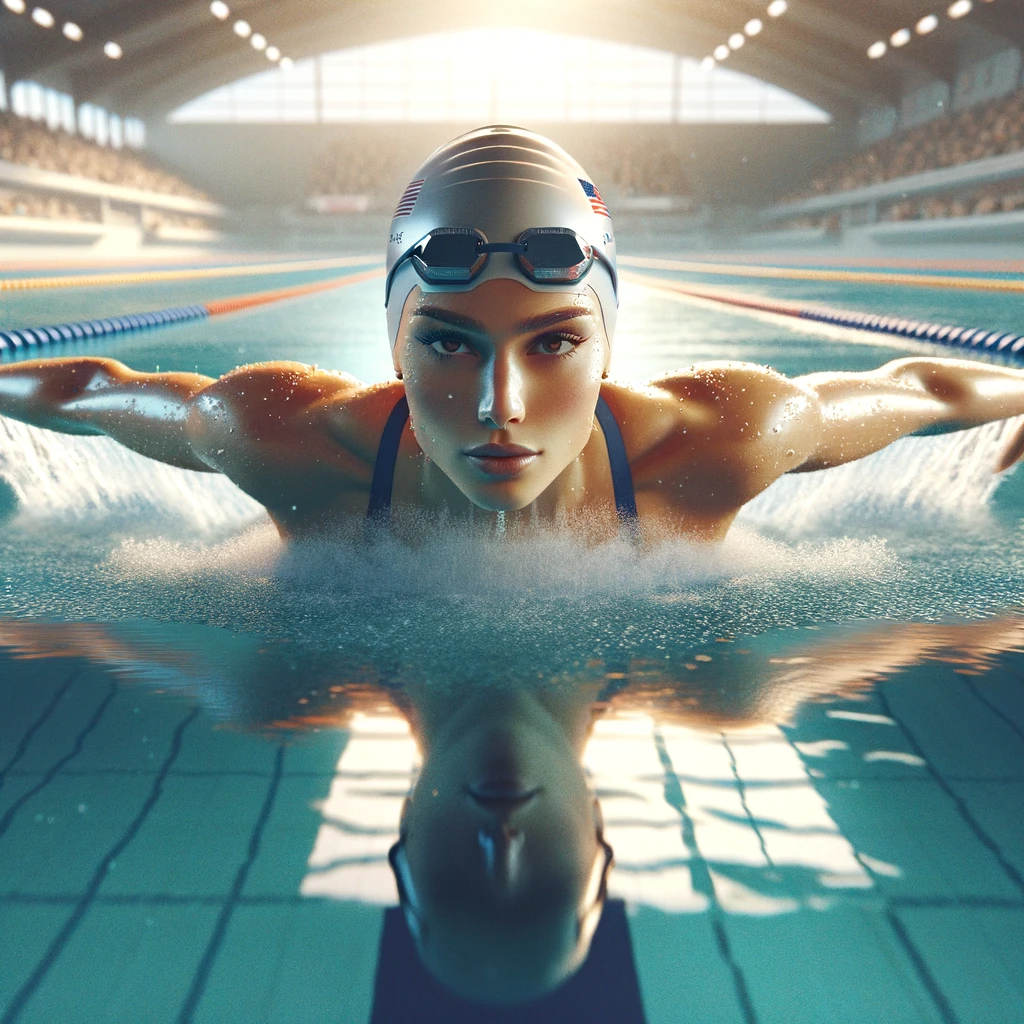
Overcoming Challenges and Achieving Excellence
Becca Meyers’ journey as a deaf swimmer is not just about her disability, but also about the sheer resilience and determination she has shown in overcoming it. Born with Usher syndrome, Meyers has been deaf since birth and started losing her vision during her childhood. Despite these challenges, her passion for swimming never wavered. She found solace and strength in the water, where she felt more in control and less hindered by her sensory limitations.
Her parents, both educators, played a pivotal role in her upbringing. They instilled in her the belief that she could achieve anything she set her mind to, regardless of her disabilities. This support system was crucial in fostering Meyers’ self-belief and determination.
Training Regimen and Communication Techniques
Meyers’ training regimen is rigorous and tailored to her needs. Since she cannot hear the start signals or see the wall clearly, her coaches have developed unique methods to help her. They use lights or a tap system, where a coach taps her with a pole to signal turns and finishes during practice. This method has been instrumental in her training, allowing her to compete on equal footing with her peers.
Communication with her coaches and teammates also involves a mix of lip-reading, sign language, and written instructions. This adaptability and willingness to find solutions epitomize Meyers’ approach to life and sport.
Notable Achievements and Records
Becca Meyers has made a name for herself in the swimming world with numerous accolades. She is a multi-time Paralympic gold medalist, holding several world records in her class. Her achievements are a testament to her skill and dedication. She has not only excelled in national competitions but also on the international stage, winning medals at the Paralympic Games and World Championships.
Her performance at the 2016 Rio Paralympics was particularly remarkable. Meyers won three gold medals and set two world records, solidifying her status as one of the top Paralympic swimmers in the world.
Advocacy for Athletes with Disabilities
Beyond her swimming career, Meyers is a vocal advocate for athletes with disabilities. She has been instrumental in raising awareness about the challenges faced by athletes like her. Her efforts have contributed to improving conditions and accessibility in sports for people with disabilities. She often speaks about the importance of inclusivity in sports and the need for better resources and support for disabled athletes.
The Tokyo 2020 Paralympics Controversy
The Tokyo 2020 Paralympics brought a significant challenge for Meyers. Due to COVID-19 protocols, her personal care assistant, who is also her mother, was not allowed to accompany her. This decision presented a considerable obstacle, as Meyers relies on her assistant for navigating venues and communicating. Ultimately, she made the heart-wrenching decision to withdraw from the Games, citing the lack of adequate support for her needs.
This decision sparked a global conversation about the rights and needs of Paralympic athletes. Meyers’ stand highlighted the often-overlooked struggles that athletes with disabilities face and prompted discussions on how sporting events can be more inclusive and accommodating.
Legacy and Future Endeavors
Becca Meyers’ legacy extends beyond her swimming achievements. She is a trailblazer for athletes with disabilities, showing that with the right support and determination, anything is possible. Her journey inspires many young athletes who face similar challenges.
As for her future, Meyers continues to train and compete, always striving to push her limits. She is also focused on her advocacy work, aiming to make sports more accessible and inclusive for everyone.
In conclusion, Becca Meyers is not just a Paralympic champion but a symbol of resilience, determination, and advocacy. Her life story is a powerful reminder of the human spirit’s ability to overcome adversity and achieve greatness.
Frequently Asked Questions
1. What challenges did Becca Meyers face as a deaf swimmer with Usher Syndrome?
Becca Meyers was born with Usher Syndrome, a rare genetic disorder that causes both hearing and vision loss. This condition is monumental for anyone, but for a swimmer, it presents unique hurdles. She started losing her hearing and sight gradually, necessitating interventions like cochlear implants for auditory assistance. The combination of these challenges means that even in the pool, where verbal communication and sight are crucial, Meyers has had to train differently than her peers. Her resilience and adaptability allowed her to develop techniques that rely heavily on tactile and visual cues to compete at the highest levels, making her achievements in swimming all the more remarkable.
2. How did Becca Meyers begin her swimming career?
Becca Meyers found her passion for swimming at a young age. Despite the immense obstacles presented by her condition, the pool became a sanctuary where she could concentrate on her abilities rather than her disabilities. Her first exposure to competitive swimming came through participation in local swim meets, where she quickly made a name for herself with her natural talent and fierce determination. Under the guidance of dedicated coaches who were willing to adapt training methods to her needs, she blossomed into a world-class swimmer.
3. What accomplishments has Becca Meyers achieved in her Paralympic career?
Becca Meyers has an impressive Paralympic resume. She has competed in multiple Paralympic Games, earning several gold, silver, and bronze medals. Meyers made a significant impact in the 2016 Rio Paralympics, where she won three gold medals and set world records. Her achievements have not only been defined by medals but also by her role as a trailblazer, pushing boundaries and raising awareness for differently-abled athletes worldwide.
4. How does Becca Meyers advocate for athletes with disabilities?
Apart from her athletic achievements, Becca Meyers is a strong advocate for athletes with disabilities. She uses her platform to address the challenges faced by those with physical impairments, specifically in sports. Meyers has spoken out about the necessity for better accommodation and inclusivity at competitive events, such as ensuring that athletes like herself have access to ASL interpreters and proper on-site assistance. Her advocacy emphasizes that all athletes, regardless of disability, deserve the resources they need to perform to their best abilities.
5. How has Becca Meyers inspired others beyond the swimming pool?
Becca Meyers’ story of overcoming adversity resonates far beyond the confines of competitive swimming. Her journey is a testament to the power of perseverance and resilience. She frequently engages with young athletes, particularly those with disabilities, encouraging them to pursue their passions and dreams regardless of the challenges they face. By sharing her experiences, Becca Meyers not only inspires hope but also shifts societal perceptions, pushing for a world where differences are embraced and celebrated as sources of strength.