
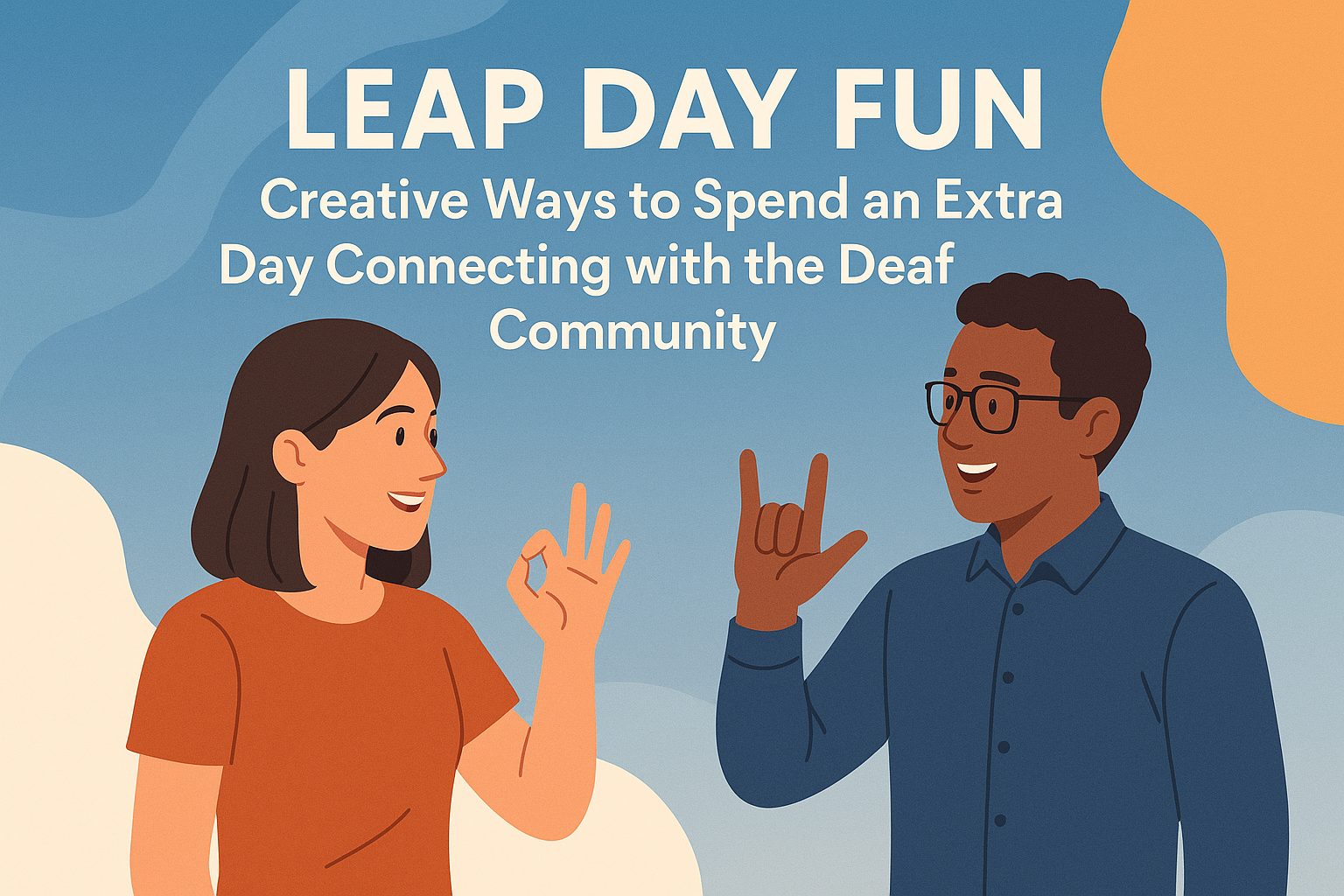
Leap Day is a unique occurrence that happens every four years, adding an extra day to the shortest month of the year, February. This day, the 29th of February, exists to help synchronize our calendar year with the solar year. Although it may seem like just another day, Leap Day presents a rare opportunity—24 extra hours—to do something special. It’s the perfect chance to reach out and connect with different communities, particularly the Deaf community.
The Deaf community is a group of individuals who share a common culture and language: American Sign Language (ASL). Communication is central to fostering understanding and empathy, and learning ASL or other sign languages can bridge gaps between the Deaf and hearing communities. Building connections with the Deaf community matters as it promotes inclusivity and broadens cultural understanding. Engaging with this community on Leap Day not only enriches personal experiences but also helps break down barriers that can exist in society.
This article delves into creative ways to spend Leap Day connecting with the Deaf community. It covers interactive activities, educational opportunities, and avenues for volunteering that can make your extra day truly meaningful. By the end, you’ll be equipped with actionable ideas to make Leap Day count while fostering relationships within the Deaf community.
Attend a Sign Language Workshop
One of the most direct ways to connect with the Deaf community on Leap Day is to attend a sign language workshop. Many community centers and organizations offer introductory courses in ASL, providing a fantastic opportunity to learn the basics of the language. These workshops are often designed to be beginner-friendly, making them suitable for individuals who have had little to no exposure to sign language.
A real-world example of such an event is the “Learn ASL in a Day” workshop hosted by libraries and community centers across various cities. During these workshops, participants learn essential signs, greetings, and phrases. The interactive nature of the workshop encourages attendees to pair up and practice, ensuring a hands-on learning experience.
- Greetings and Introductions
- Common Phrases and Expressions
- Non-verbal Communication Tips
By attending a sign language workshop, you not only gain a new skill but also demonstrate your commitment to communication and inclusion. This can lead to future opportunities for involvement with the Deaf community.
Participate in a Deaf Culture Event
Deaf culture events, like festivals or art shows, provide an excellent platform for connecting with the community. These events highlight the rich cultural experiences of Deaf individuals, offering music, theatre, and visual arts adapted for Deaf audiences. Participating in these events allows you to appreciate the creativity and talent within the Deaf community.
An example is the “Deafinitely Fabulous Arts Festival” which showcases Deaf artists and performers. From ASL poetry to visual art, this event provides an immersive experience into Deaf culture. Engaging in these events offers a unique perspective on how art can transcend the barriers of sound and engage through visual storytelling and rhythm.
Experiencing art and culture through the lens of the Deaf community not only enhances your cultural knowledge but also supports artists and performers who share their heritage and identity through their work. Such involvement can inspire further cultural exploration and advocacy.
Volunteer with Organizations Supporting the Deaf
Many organizations work tirelessly to support the Deaf community through outreach programs and resources. Volunteering your time with these organizations can be a rewarding way to make a difference on Leap Day. Whether it’s assisting in administrative tasks or participating in fundraising events, volunteers play a vital role in the success of these organizations.
Take, for instance, the Hands & Voices organization, which supports families with Deaf or hard-of-hearing children. Volunteers can help organize events, manage communications, or contribute to outreach efforts that ensure families receive the resources they need. Investing your time with such organizations emphasizes the importance of accessing support structures within the Deaf community.
Not only does volunteering provide tangible help, but it also enriches your understanding of the community’s challenges and triumphs. It can serve as a stepping stone to becoming an active advocate for Deaf rights and inclusion beyond Leap Day.
Table Showing Ways to Engage
| Activity | Benefits | Example |
|---|---|---|
| Sign Language Workshop | Learn ASL basics | Local library course |
| Deaf Culture Event | Appreciate Deaf creativity | Deafinitely Fabulous Arts Festival |
| Volunteering | Functional support and community understanding | Hands & Voices Organization |
Engage in Online Deaf Community Platforms
The online world offers a plethora of resources and communities dedicated to the Deaf and hard-of-hearing. From social media groups to forums, joining these platforms is a convenient way to engage with the Deaf community. These spaces provide valuable insights into the lived experiences, perspectives, and dialogues of Deaf individuals.
For example, Facebook hosts pages like “ASL That!” where users share educational content, personal stories, and humorous anecdotes related to Deaf life. Engaging in such forums not only expands your understanding but also offers a platform to ask questions, share observations, and become a part of the digital Deaf community.
Inclusivity thrives when online dialogues invite diverse voices, and your participation contributes to these conversations. It also serves as a resourceful means of staying updated on Deaf culture events and advocacy initiatives globally.
Reflect on Your Experience and Building Further Connections
Spending Leap Day with a focus on connecting with the Deaf community can be a transformative experience. It opens doors to lifelong learning, cultural enrichment, and relationship-building with individuals who can impart profound insights.
Reflecting on your Leap Day experience is crucial. Consider what you’ve learned, how it has altered your perceptions, and in what ways you can continue contributing to the Deaf community. Maybe you’ve developed an interest in further ASL training or found a cause you’re passionate about supporting. Reviewing personal growth can guide you in forging sustained connections with the Deaf community.
Taking the next steps could involve committing to regular Deaf community events, volunteering on an ongoing basis, or advocating for accessibility in diverse settings. Leap Day is just the beginning of your journey into deeper engagement and understanding.
Conclusion: Making Leap Day Count and Continuing the Journey
Leap Day presents a rare opportunity to reach out, connect, and learn from a community that thrives on rich culture and unique experiences. Through workshops, cultural events, volunteering, and online engagement, you’ve explored tangible ways to spend this extra day fostering connections within the Deaf community.
The key takeaway is that true communication extends beyond spoken words—it’s about mutual respect, learning, and openness to different ways of expression. By enhancing your understanding and connection with the Deaf community, you contribute to a more inclusive society. Leap Day may last only 24 hours, but the impacts of your engagement can resonate long after.
As the day concludes, consider how you will continue this learning journey. Commit to ongoing involvement, whether it’s deepening your ASL skills or becoming a regular volunteer. Make Leap Day the first of many moments dedicated to building bridges and broadening horizons.
Let this experience be a call-to-action for nurturing relationships, advocating for rights, and fostering an inclusive environment for everyone. By choosing to engage thoughtfully, you create ripples of positive change—making each day count in your endeavor to connect with the Deaf community.
Frequently Asked Questions
1. What are some creative ways to connect with the Deaf community on Leap Day?
Leap Day is the perfect time to engage with the Deaf community in fun and meaningful ways. Here are some creative ideas you might consider:
First, you might host a Deaf culture event. This can be a workshop or a movie night featuring films created by Deaf filmmakers or with Deaf actors. Consider inviting a Deaf speaker to share their experiences and insights about Deaf culture and inclusivity.
Another great idea is to start learning American Sign Language (ASL). Even a one-day crash course can be a rewarding and eye-opening experience. You can find digital resources or even connect with local ASL instructors for beginners’ sessions.
Consider volunteering with organizations that support the Deaf community. They often need assistance with various tasks or at events. Your involvement will not only help out but also allow you to build connections with members of the community.
Finally, consider participating in a social media campaign or awareness drive. Leap Day is a fantastic opportunity to share your learning journey online, encouraging others to reach out and engage with the Deaf community too.
2. How can learning ASL benefit both hearing and Deaf people?
Learning American Sign Language (ASL) benefits both hearing and Deaf people in numerous ways. For hearing individuals, ASL opens a channel to communicate with Deaf friends, family, or colleagues. It helps break down barriers and fosters more inclusive communication in personal and professional realms.
For Deaf individuals, when hearing people learn ASL, it creates a more accessible environment. It shows respect towards Deaf culture and enhances their ability to communicate effectively in settings where they might otherwise feel excluded or misunderstood.
ASL is also known to improve cognitive abilities such as spatial awareness, memory, and visual attention. Plus, being bilingual in sign language adds a valuable skill to your resume, making you more diversified and adaptable in workplaces that serve diverse communities.
3. Are there specific events or activities held on Leap Day that celebrate Deaf culture?
While there might not be events specifically tied to Leap Day, various activities on this day can be tailored to celebrate and explore Deaf culture. Community centers, schools, or advocacy groups sometimes host special events to spotlight Deaf culture, such as exhibitions, sign language workshops, or Deaf theater productions.
Deaf community centers might organize family-friendly regional events where all can learn about Deaf culture through storytelling or performances. These celebrations typically feature activities showcasing the creativity and talent within the Deaf community.
If there isn’t a dedicated event in your area, consider collaborating with local Deaf groups to create your own Leap Day celebration, highlighting Deaf achievements and traditions.
4. What should I know about Deaf culture before participating in community events?
Before participating in Deaf community events, it’s important to understand and respect Deaf culture, which emphasizes a rich history, language (ASL), and social norms that might be different from mainstream culture. Here are a few key considerations:
First, practice patience and approach all interactions with an open mind. Be mindful of communication preferences, as some Deaf individuals may prefer different methods, such as signing or writing.
Understanding that eye contact is crucial in sign language communication will help you engage more effectively. Ensure you maintain eye contact when signing and refrain from looking away frequently.
Lastly, remember that Deaf culture is a proud identity. Avoid framing Deafness as a disability; rather, understand it as a unique linguistic and cultural group with its own identity and strengths.
5. How can technology assist in connecting with the Deaf community on Leap Day?
Technology plays a significant role in bridging the gap between hearing and Deaf communities and can be particularly useful on Leap Day. Here are some ways technology can assist:
Video conferencing tools, with their video call capabilities, are ideal for learning ASL online or attending virtual Deaf culture events. Platforms like Zoom allow for live interaction in group sessions with interpreters.
There are numerous apps designed to teach ASL and help in practicing your skills. Apps like “The ASL App” or “SignSchool” offer interactive lessons that can be both enjoyable and educational.
Social media is another powerful tool for connecting with the Deaf community. Engage in Deaf forums, share Leap Day initiatives, or promote events and activities. Follow organizations that support and advocate for Deaf rights to stay informed and connected with the community’s needs and stories.