

It’s often said that adversity builds character, but for individuals who are deaf or hard of hearing, adversity also builds resolve, determination, and innovation. The notion that a person with a hearing impairment cannot achieve professional success is an outdated stereotype that belongs in the annals of history. Nowadays, more and more deaf individuals are crafting successful, satisfying, and inspiring careers across diverse fields. From educators and entrepreneurs to artists and scientists, they are paving the way for the next generation of deaf professionals. This article explores some of the inspiring stories of these remarkable individuals and sheds light on how they have surmounted the barriers imposed by a society that still has much to learn about inclusivity.
Before we delve into these stories, it’s crucial to understand the importance of deaf education and awareness. For many deaf individuals, access to quality education remains a significant hurdle. Traditional learning environments can be hostile and ill-equipped to meet their unique needs, and this lack of accommodation often leads to long-term disadvantages. However, progress is being made. Schools and universities are becoming increasingly inclusive, aided by advances in technology and greater societal awareness. Moreover, awareness campaigns and advocacy groups are working tirelessly to ensure that deaf individuals receive the support they need from an early age.
In the following sections, we will highlight several inspiring stories of deaf professionals who have not only excelled in their respective fields but have also become advocates for greater inclusion and accessibility in the workplace.
Breaking through in the Education Sector
For many deaf individuals, the journey toward a fulfilling career begins with education. One exemplary figure in the realm of education is Dr. Richard Orin Cornett, the inventor of Cued Speech. Although not deaf himself, his work has had a profound impact on the deaf community. Cued Speech is a visual mode of communication that uses hand shapes and placements in combination with the mouth movements of speech to make the phonemes of any spoken language look different from each other.
Another inspiring educator is Dr. Caroline Solomon, a deaf marine ecologist and a professor at Gallaudet University. She has made significant contributions to the field of environmental science and is a fervent advocate for STEM education among deaf students. Dr. Solomon’s work demonstrates that a lack of hearing doesn’t preclude one from excelling in scientific research and educational leadership. She actively participates in mentoring programs and champions better accessibility in higher education, proving that passion and intelligence are not bound by physical limitations.
Then, there’s Robert Davila, the former president of Gallaudet University, the world’s only liberal arts college for the deaf. Born to migrant workers, Davila lost his hearing at a young age due to spinal meningitis. Despite this setback, he excelled in his studies and went on to become a role model and a beacon of hope for many in the deaf community. His leadership at Gallaudet University ensured that thousands of deaf students received quality education and the chance to build successful careers.
Defying the Odds in the Business World
When it comes to the business realm, entrepreneurs like Russell Harvard have made significant strides. Harvard, an accomplished actor and entrepreneur, has starred in movies such as “There Will Be Blood” and TV shows like “Fargo.” Beyond his success in entertainment, he created his own business that focuses on providing resources and workshops to other deaf aspiring artists and entrepreneurs. Harvard’s dual roles as an actor and a business owner demonstrate that the deaf community is rich with untapped potential and diverse skills.
Another formidable business leader is Abigail Heringer, a contestant on the popular reality TV show “The Bachelor.” While she didn’t win the show, she won the hearts of millions by proudly embracing her cochlear implant and speaking openly about her deafness. Following her stint on the show, Heringer has become a social media influencer and advocate, educating the public about hearing loss and working with businesses to develop more inclusive marketing strategies.
Moreover, entrepreneurs like Matthew Morgan, who co-founded the Deafhood Foundation, are making substantial differences. The Deafhood Foundation aims to provide scholarships and resources to empower the deaf community. By focusing on capacity-building and leadership development, Morgan’s work ensures that future generations of deaf individuals have the tools and opportunities to succeed.
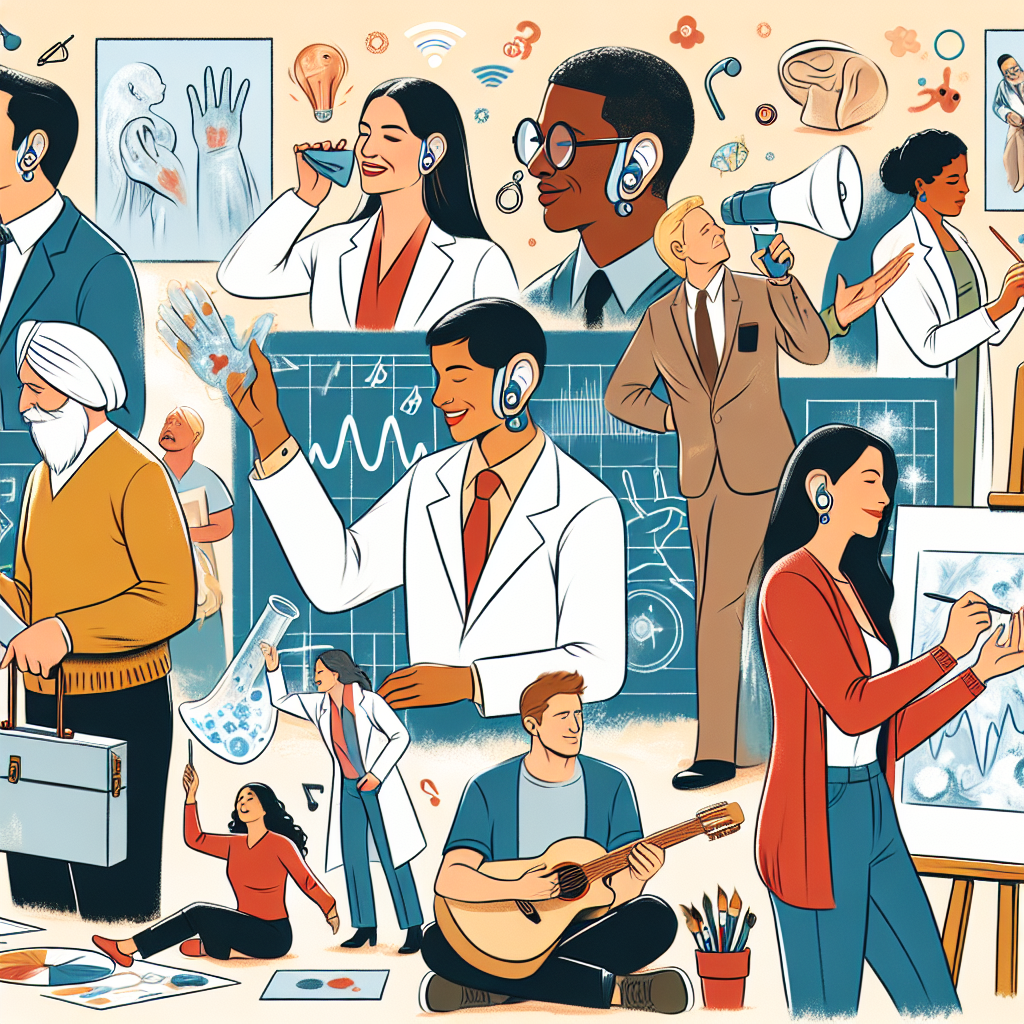
Excelling in the Arts and Media
The arts and media industry is another area where deaf professionals are making their mark. Take, for instance, the celebrated actress Marlee Matlin, who won an Academy Award for her role in “Children of a Lesser God.” Matlin has used her platform to become a prominent advocate for the deaf community, pushing for better representation and opportunities in Hollywood. Her involvement in various advocacy programs has paved the way for deaf actors and actresses to be considered for a broader range of roles.
Nyle DiMarco, a model and actor who also won “America’s Next Top Model” and “Dancing with the Stars,” is another iconic figure in the media world. DiMarco, who is deaf, has leveraged his fame to advocate for better educational opportunities for the deaf and has started the Nyle DiMarco Foundation to support this cause. By front-lining campaigns and initiatives, DiMarco is breaking down stereotypes and showing that deaf individuals are capable of excelling in the competitive world of entertainment.
Additionally, artists like Christine Sun Kim are redefining what it means to be a deaf artist. Kim, who specializes in sound art, uses her work to challenge the conventional ways we perceive sound and silence. Her installations and performances invite audiences to reconsider the cultural and social norms surrounding hearing and deafness. By doing so, Kim is not just excelling in her field; she’s reshaping it.
Innovating in Science and Technology
Science and technology are fields that are generally perceived as requiring superior auditory capabilities. Yet, many deaf individuals are not just participating but leading in these sectors. Dr. Vinton Cerf, often called one of the “Fathers of the Internet,” is hard of hearing. Despite this, his contributions to the development of TCP/IP protocols have laid the foundation for the modern internet. Cerf’s work is a testament to the fact that innovation and leadership in technology know no bounds.
Another notable figure is Dr. Glenn Anderson, a deaf psychologist and the first known African American deaf person to earn a Ph.D. Anderson has been a thought leader in advocating for mental health services tailored to the needs of the deaf community. His work emphasizes the importance of mental well-being alongside professional success and contributes significantly to the holistic growth of the deaf community.
Moreover, engineers like Haben Girma, the first deafblind graduate of Harvard Law School, are pushing the envelope in accessibility technology. Girma is a fervent advocate for the development of better assistive technologies and promotes inclusive design. Her work with tech giants like Apple and Google is helping create a more accessible digital world for everyone, not just the deaf community.
Making a Difference through Advocacy and Community Work
Advocacy plays a crucial role in creating a more inclusive society. Organizations like the National Association of the Deaf (NAD) work tirelessly to ensure that the rights of deaf individuals are protected and promoted. Howard A. Rosenblum, CEO of NAD, has led numerous initiatives aimed at increasing accessibility in workplaces, education institutions, and public services. Under his leadership, NAD has tackled significant issues ranging from healthcare access to employment discrimination.
Alongside organizational advocacy, there are countless community leaders making substantial impacts. Ella Mae Lentz, a poet and educator, has been a lifelong advocate for American Sign Language (ASL) and deaf culture. Her contributions to ASL literature and education have provided deaf individuals with the resources they need to enrich their lives culturally and linguistically. Lentz’s activism underscores the importance of preserving and promoting deaf culture in addition to advocating for broader rights.
Additionally, many deaf professionals contribute to advocacy through education and public speaking. For instance, Rachel Kolb, a Rhodes Scholar and writer, gives talks on her experiences as a deaf individual navigating the hearing world. Her eloquent writings and speeches offer invaluable insights into the challenges and triumphs faced by the deaf community, fostering greater understanding and empathy among hearing individuals.
Advocacy is not confined to formal organizations or public speaking engagements; it happens in everyday interactions and community involvement. Volunteers in local deaf clubs, mentors in educational programs, and activists fighting for accessibility in their neighborhoods all play pivotal roles in this ongoing effort.
Conclusion: Breaking Barriers and Shattering Stereotypes
The stories of these individuals demonstrate that the deaf community is rich with talent, ambition, and resilience. The barriers they face are not inherent to their deafness but are imposed by a society that often lacks understanding or fails to provide adequate accommodations. However, as awareness grows and advocacy efforts continue to gain momentum, more and more deaf individuals are finding the support they need to excel in their careers.
Through education, innovation, advocacy, and community involvement, these professionals are not just building successful careers—they are breaking down stereotypes and setting new standards for what is possible. Their achievements serve as powerful reminders that hearing barriers can be surmounted with determination, support, and inclusivity. As society progresses, it is crucial to continue these efforts to ensure that future generations of deaf individuals have an equitable share of opportunities to thrive and succeed.
The strides made by deaf professionals in various fields also highlight the importance of creating inclusive environments, whether in schools, workplaces, or public spaces. Inclusion isn’t just a lofty ideal; it’s a necessity for harnessing the full potential of a diverse society. As we celebrate their achievements, let us also commit to the ongoing work of making the world a more inclusive place for everyone, regardless of their physical abilities.