
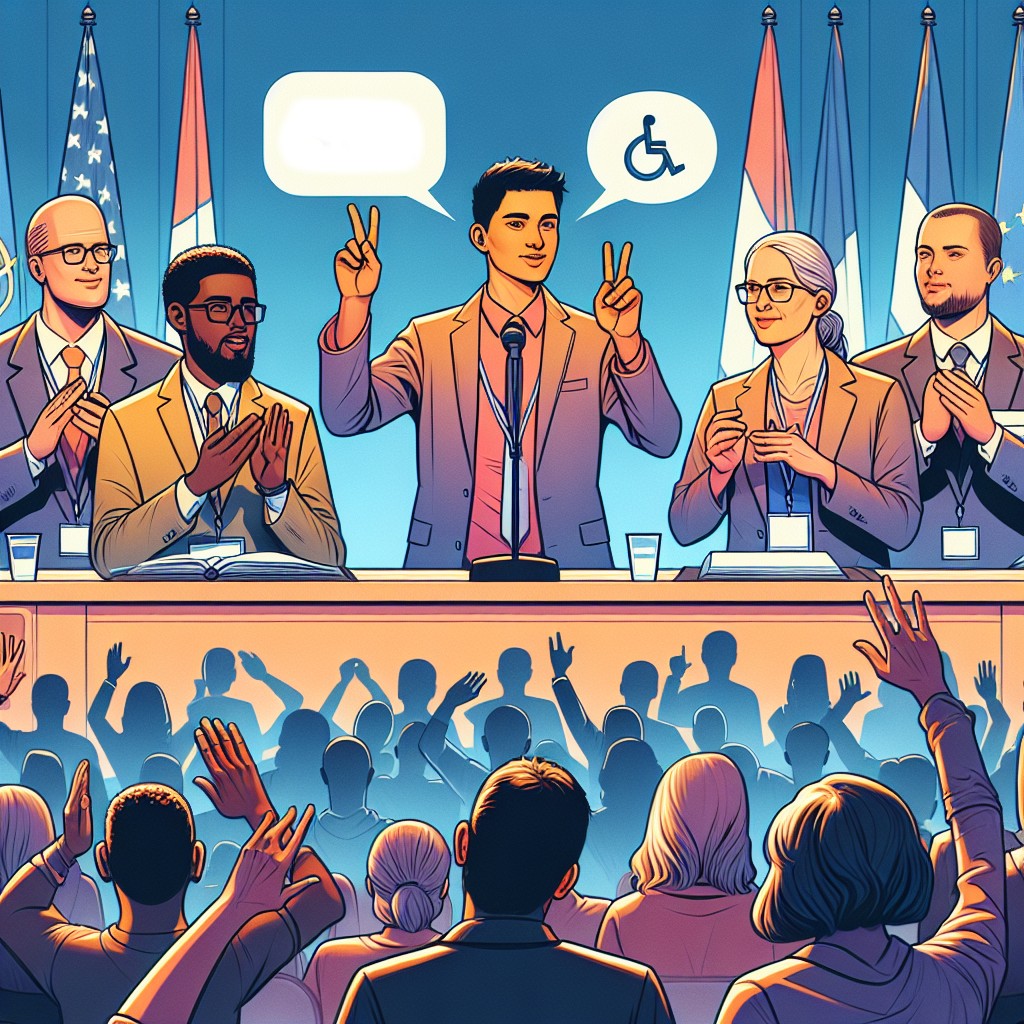
In the evolving landscape of disability advocacy, Deaf activists have taken a decisive stand in shaping global policy, breaking barriers and redefining accessibility paradigms. As advocates for a more inclusive and equitable world, these activists have diligently worked to elevate the status of the Deaf community in the legal and social spheres. With a growing recognition of the importance of inclusion and diversity, the efforts of Deaf activists have started to influence policies worldwide, making substantial strides in the field of disability rights.
The determination and unwavering commitment of Deaf activists have catapulted them into the forefront of disability advocacy. Their work involves raising awareness, promoting accessibility, and fostering a deeper understanding of Deaf culture and identity. By advocating for substantial changes in policy and societal attitudes, Deaf activists are setting the foundation for an era of inclusivity. Their advocacy transcends national borders, influencing global perceptions and prioritization of Deaf issues and rights.
The path to progress, however, is not without its challenges. Despite significant advancements, the Deaf community continues to face obstacles related to parity in education, employment, healthcare, and more. As aspects of daily life remain inaccessible or unfairly skewed against Deaf individuals, it becomes crucial to continue pushing for more comprehensive and inclusive disability policies worldwide. Understanding the importance of embracing diversity and ensuring equal opportunities for all – especially for the Deaf and hard of hearing – has thus become paramount.
Through organized movements and collective action, Deaf activists are actively shaping the narrative around disability policy. As they continue to rally for legal rights and social advocacy, their work also serves to emphasize the necessity of respectful dialogue and collaboration. This approach not only addresses the immediate needs of the Deaf community but also paves the way for a more informed and compassionate society.
Legal Framework for Deaf Rights
A crucial aspect of the work done by Deaf activists is the establishment of a robust legal framework that supports and protects the rights of Deaf individuals. Legal recognition is an essential step toward ensuring that Deaf people can access the resources and opportunities they need to fully participate in society.
Internationally, the United Nations Convention on the Rights of Persons with Disabilities (CRPD) stands out as a landmark treaty that has been instrumental in advocating for the rights of Deaf people. The CRPD emphasizes accessibility, participation, and equality, thereby setting the stage for necessary legal provisions. Deaf activists have used this framework to advance their cause, holding governments accountable for commitments made under the convention.
Additionally, national legislation plays a pivotal role in promoting and implementing policies that align with global standards. In recent years, multiple countries have introduced or amended disability acts to include specific provisions for Deaf individuals. These laws cover a range of areas such as education, employment, health, and communication access.
Furthermore, Deaf activists are working to close the implementation gap that often arises between legislation and practice. They strive to ensure that laws designed to protect the Deaf community are consistently upheld and that violations are appropriately addressed. This focus on enforcement and accountability further strengthens the legal standing of Deaf people across the globe.
Promoting Inclusive Education
Another critical area of advocacy by Deaf activists is education. Inclusive education is not just a legal right but a cornerstone for empowering Deaf individuals, providing them with the skills and confidence to thrive in various aspects of life. As such, activists have focused on ensuring Deaf students have equitable access to educational opportunities.
The concept of inclusive education entails making mainstream classrooms accessible and accommodating for Deaf students. This includes provisions for sign language interpreters, real-time captioning, and other assistive technologies that facilitate communication for Deaf learners. The goal is to create an environment where Deaf students can learn alongside their hearing peers without barriers.
Deaf activists are also advocating for the recognition and promotion of Deaf culture and sign language within educational settings. By integrating sign language into the curriculum and fostering a respect for Deaf culture, schools can become places where Deaf students feel valued and understood.
Several countries have made advances in recognizing national sign languages as official languages, which significantly bolsters inclusive education efforts. Through such recognition, Deaf students gain access to education that respects their linguistic and cultural identity, thereby enhancing learning outcomes and personal development.

Healthcare Access and Communication
Access to healthcare is a fundamental human right, and ensuring equitable healthcare access for the Deaf community is pivotal. Deaf activists have tirelessly worked to address disparities in healthcare access and quality, advocating for policies and practices that are sensitive to the unique needs of Deaf patients.
Communication barriers often lead to misunderstandings, misdiagnoses, and inadequate care in healthcare settings for Deaf individuals. To mitigate these issues, activists push for the implementation of sign language interpreters and other communication support services in hospitals and clinics.
Training healthcare providers to understand Deaf culture and the significance of using sign language in patient interactions is also a key focus. By increasing cultural competency among healthcare professionals, activists aim to foster an environment of trust and inclusivity within medical settings.
Moreover, national and international health policies are being reviewed and revised to incorporate the rights of Deaf people, emphasizing the necessity of inclusive healthcare services. This includes legislative mandates for accessible health information and infrastructure, ensuring that Deaf individuals receive the same quality of care as their hearing counterparts.
Employment Opportunities and Economic Inclusion
Economic inclusion represents another critical component of the advocacy efforts led by Deaf activists, as it directly influences the quality of life and independence of Deaf individuals. Ensuring equal employment opportunities is essential for achieving economic empowerment within the Deaf community.
Deaf activists are working to dismantle systemic barriers that prevent Deaf individuals from accessing job markets. This involves advocating for policies that promote fair hiring practices, including reasonable accommodations and equal pay for equal work.
Technology plays a transformative role in bridging gaps, as assistive devices and services enable Deaf individuals to perform job tasks effectively. Activists are encouraging employers to adopt these technologies and adapt workplace environments to be more inclusive of Deaf employees.
Furthermore, the representation of Deaf individuals in leadership and decision-making positions is another goal of advocacy efforts. By having a seat at the table, Deaf people can influence policies and practices that affect their professional lives, encouraging more holistic approaches to workplace diversity and inclusion.
Building Global Networks and Solidarity
The momentum of Deaf activism is fueled by a strong sense of global unity and cooperation. By building networks and forming coalitions with other disability and human rights organizations, Deaf activists are amplifying their voices on the international stage.
These networks act as platforms for exchanging ideas, sharing resources, and coordinating advocacy strategies. The strong sense of community allows for collective action, making global disability policy more responsive and inclusive. Virtual platforms and digital communication tools have further connected activists across geographical boundaries, fostering a sense of global solidarity.
International conferences and forums dedicated to disability rights also provide important venues for Deaf activists to share their experiences, challenges, and successes. These events serve as opportunities to highlight best practices and innovative solutions, contributing to a broader understanding of the complexities faced by the Deaf community.
Moreover, collaboration with international bodies such as the World Federation of the Deaf further strengthens activism efforts. By working together with these influential organizations, Deaf activists are able to address global disparities and push for systemic changes that benefit the broader disability community.
Conclusion: A Vision for the Future
As we reflect on the profound impact Deaf activists have had on shaping global disability policy, it becomes evident that their relentless efforts are driving substantial and meaningful changes. By emphasizing legal rights, advocating for inclusive education, fighting for healthcare access, promoting economic inclusion, and building strong international networks, these activists are challenging the status quo and redefining possibilities for the Deaf community worldwide.
The journey toward full equality and inclusion is ongoing, and much work remains. With each milestone achieved, however, Deaf activists continue to inspire a sense of hope and possibility. Their advocacy is a testament to the power of resilience, collaboration, and solidarity in the pursuit of a just and inclusive society for all.
Looking ahead, it is crucial that governments, organizations, and individuals join forces to support the rights of the Deaf community. By embracing diversity and championing accessibility, we can create a world where Deaf individuals are empowered to pursue their ambitions and contribute fully to the global community.
In summary, the influence of Deaf activists extends beyond policy changes; it lies in their ability to change perceptions, foster understanding, and build an enduring legacy of equity and justice. Their efforts underscore a universal truth: a fair and inclusive society benefits everyone, paving the way for a brighter, more harmonious future.