
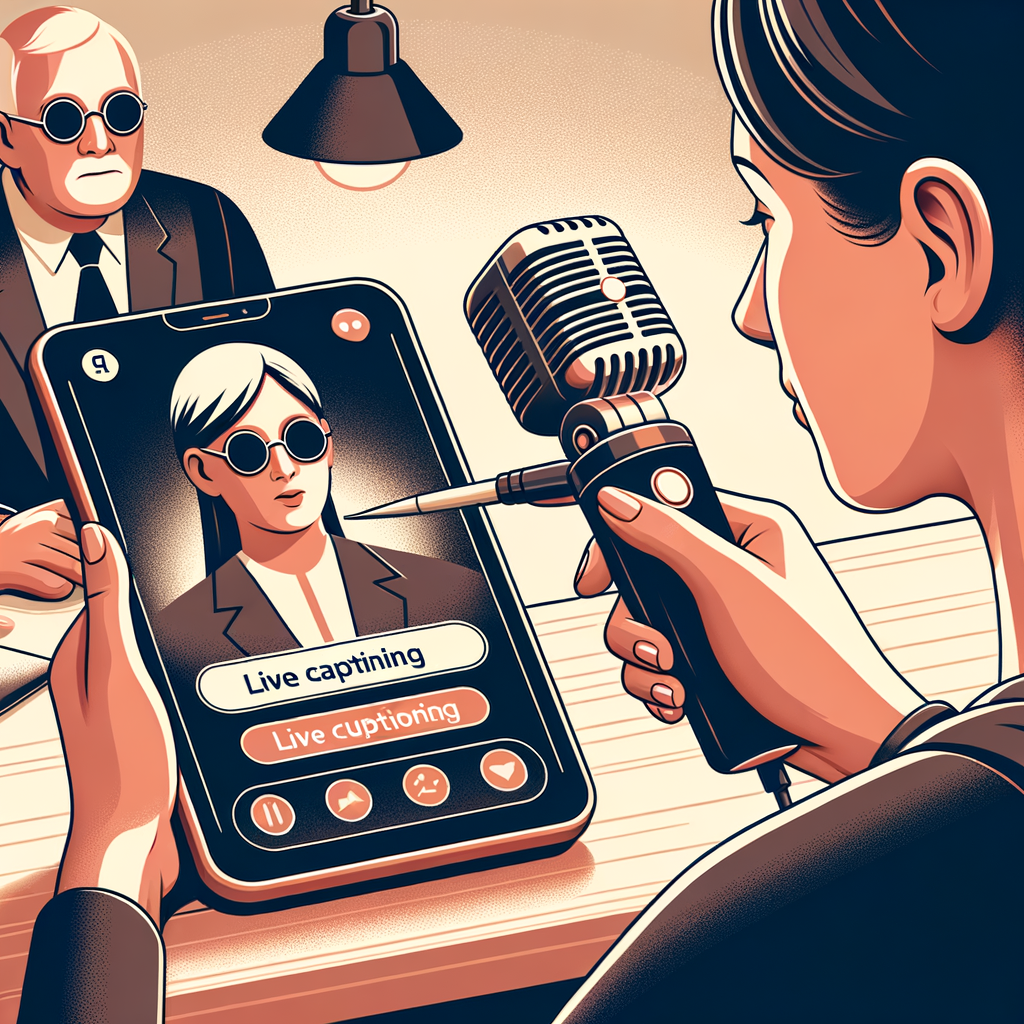
In today’s rapidly advancing technological landscape, artificial intelligence (AI) has become a powerful tool, reshaping various aspects of daily life. Among these is the transformation it brings to accessibility, particularly for the deaf and hard-of-hearing communities. With the development of AI-driven systems and applications, individuals with hearing impairments can now experience improved access to information, communication, and interaction with the world around them. This article delves into the ways AI is enhancing accessibility for the deaf, exploring innovations that are not only increasing inclusivity but also empowering individuals to live more connected and fulfilling lives. By examining these advancements, we can gain a deeper understanding of how technology is bridging gaps and fostering equal opportunities for everyone, regardless of their hearing abilities. This exploration will shine a light on the myriad innovations that AI is driving in the realm of accessibility, demonstrating its potential to revolutionize the way the deaf community engages with their environment. From communication aids to educational supports, AI stands as a groundbreaking force in leveling the playing field for those who have been historically disadvantaged by hearing impairments.
AI-Powered Communication Tools
One of the most significant areas where AI is making strides for the deaf community is in communication tools. These innovations are transforming how individuals convey and receive messages, ensuring that communication barriers are minimized if not eliminated altogether. Speech-to-text technology, for instance, leverages real-time transcription services to convert spoken language into written text. This functionality is vital in settings such as meetings, lectures, and media consumption, where real-time accessibility is crucial. Powered by AI algorithms, these tools are continuously improving in accuracy and speed, providing seamless interaction for users.
Moreover, AI-driven sign language recognition systems are making meaningful impacts. These systems can interpret sign language through computer vision technologies, translating signs into text or speech in real-time. This capability opens up new possibilities for deaf individuals to engage in conversations with those who may not understand sign language, thus breaking down communication barriers. This is particularly beneficial in scenarios where a human sign language interpreter is unavailable or impractical.
Additionally, AI chatbots and virtual assistants are increasingly being equipped with functionalities tailored for the deaf. By understanding the needs of deaf users, these AI systems can offer personalized responses either in written text or sign language, facilitating smoother interactions. Such developments extend to digital platforms, where accessibility features like automatic subtitles and captioning are becoming standard, enabling deaf users to consume content just as effortlessly as hearing individuals.
Enhancing Education and Learning
The educational sector is witnessing transformative changes thanks to AI, particularly for deaf students. Educational tools powered by AI are making learning environments more inclusive and effective. For instance, AI systems that generate real-time captions during lectures ensure that deaf students do not miss out on crucial information. These automatic captioning tools are designed to integrate seamlessly with digital classrooms, thereby fostering an environment where students with hearing impairments can thrive.
Additionally, AI is being used to develop personalized learning experiences for deaf individuals. Through adaptive learning technologies, educational platforms can cater to the unique learning styles and paces of students with hearing impairments. This personalized approach helps in addressing individual challenges, enhancing engagement, and improving overall academic performance.
Further, AI-driven sign language tutoring apps have emerged as valuable educational tools. These applications leverage AI to teach and practice sign language skills, providing feedback and assessment to improve proficiency. By making sign language learning more accessible, such tools promote greater fluency among hearing and non-hearing individuals alike, fostering better communication and interaction within integrated communities.
Improving Health and Well-being
AI has a critical role in enhancing the health and well-being of the deaf community. Accessibility-focused health applications powered by AI provide vital support that addresses specific needs. For instance, AI can facilitate better doctor-patient communication through translation services that convert sign language into text or speech, allowing for accurate and efficient medical consultations.
Additionally, AI-driven wearables and assistive devices broaden the scope of safety and independence for the deaf. Innovations such as smart hearing aids and alert systems notify users of environmental cues they cannot hear, like doorbells or alarms, through vibrations or visual alerts. Such technology is indispensable in enabling the deaf to respond promptly to their surroundings, ensuring their safety and enhancing their autonomy.
Moreover, mental health support catered specifically to the needs of the deaf community is an area where AI shows promise. Chatbots designed to communicate in sign language or text-based exchanges offer a sense of dialogue and connection for individuals seeking mental health assistance. This democratizes access to mental well-being resources, breaking down isolation barriers often faced by the deaf community.
Employment and Workplace Inclusion
The workforce landscape is undergoing transformations as AI drives access and inclusion in workplace settings for deaf individuals. Various AI-powered solutions enable better communication and collaboration between deaf and hearing employees. For example, AI transcription tools used during meetings or conferences convert spoken dialogues into written text instantly, ensuring deaf employees remain informed and engaged in real-time.
Furthermore, AI is playing a pivotal role in recruitment processes. Employers leveraging AI-driven platforms can create more inclusive hiring practices, where sign language proficiency or accessibility needs are taken into consideration without bias. These algorithms help identify candidates based on their skills and potential rather than their hearing status, thus promoting diversity in hiring.
AI also contributes to workplace training and development. AI systems that simulate real-life scenarios using virtual and augmented reality empower deaf employees to gain hands-on experience and practice skills in a controlled environment. This type of immersive training supports skill enhancement and career advancement opportunities tailored to individual needs.
Entertainment and Social Interaction
The entertainment industry is also benefiting from AI advancements, making significant strides in inclusivity for the deaf community. AI-driven technologies are revolutionizing how deaf individuals experience audiovisual media. Automatic captions and subtitling services powered by AI not only improve content accessibility but also enhance the overall viewing experience.
Social media platforms are also recognizing the importance of accessibility, implementing AI solutions to offer features like auto-captioning in user-generated videos. This inclusion ensures that deaf users can fully participate in social media trends and conversations that heavily rely on video content.
Moreover, AI-facilitated virtual reality experiences are being developed with accessibility in mind. These immersive environments provide deaf individuals the opportunity to engage with visual and interactive narratives, allowing for social interaction that transcends traditional barriers associated with hearing impairments.
Conclusion
Artificial intelligence is undeniably a transformative force in enhancing accessibility for the deaf. Across various sectors, AI-driven innovations are fostering inclusivity, making interaction, education, health, employment, and entertainment more accessible for the deaf community. These advancements not only break down barriers but also empower individuals with hearing impairments to lead more connected and enriched lives.
As technology continues to evolve, it is crucial to prioritize inclusivity in AI development, ensuring that solutions are designed with the needs of the deaf in mind. By leveraging AI’s potential to address accessibility challenges, society can move closer to a future where all individuals, regardless of their hearing abilities, enjoy equal opportunities to engage and succeed in every aspect of life. This vision of inclusivity and integration underscore the importance of continued investment and innovation in AI technologies that serve the needs of the deaf community.
Embracing the promise of AI requires ongoing collaboration between technologists, educators, healthcare providers, employers, and the deaf community itself. Through these collaborative efforts, we can ensure that AI not only improves the lives of individuals with hearing impairments but also contributes to a more inclusive and equitable society. With the potential to reshape perceptions and possibilities, AI stands ready to redefine the boundaries of accessibility and redefine what it means to connect and communicate in an entirely new era.
Frequently Asked Questions
1. How is AI improving accessibility for the deaf community?
AI is significantly enhancing accessibility for the deaf by introducing various tools and platforms designed to bridge communication gaps. This includes real-time speech-to-text transcription services, which automatically convert spoken language into written text, making conversations and presentations more accessible. Furthermore, AI-driven sign language recognition systems allow signing people to communicate more effectively with those who do not understand sign language, using technology to translate sign gestures into spoken or written language.
Another key application is the enhancement of video conferencing tools, which incorporate AI-powered captioning features. This capability enables deaf individuals to participate more fully in meetings and webinars by providing accurate, real-time captions. Additionally, AI is used to improve hearing aids by analyzing surrounding sounds to provide clearer audio to the user and filtering out background noise. These innovations are revolutionizing how deaf people interact with digital content and engage in social and professional settings.
2. Can AI help in learning or translating sign language?
Yes, AI can indeed assist in learning and translating sign language, making communication more seamless for the deaf community. AI systems are trained with vast datasets comprising thousands of sign language gestures, allowing them to recognize and interpret signs quickly. These systems utilize computer vision and machine learning algorithms to accurately map gestures to their corresponding meanings in real-time.
Moreover, AI-based educational platforms offer interactive sign language learning tools that can help both deaf individuals and hearing people looking to learn. These platforms often include visual aids, quizzes, and assessments to measure progress. AI is also helping develop applications that translate sign language into text or speech, enabling smoother exchanges between sign language users and non-signers. This ongoing development is playing a significant role in mainstreaming the learning of sign language and promoting inclusivity.
3. What role does AI play in enhancing communication for those hard of hearing?
AI is instrumental in enhancing communication for individuals who are hard of hearing by transforming various communication modalities to better suit their needs. AI-powered speech recognition tools turn spoken words into text, allowing those with hearing impairments to follow conversations, lectures, or videos more easily. This is particularly beneficial in educational settings, where students who are hard of hearing can keep pace with classroom discussions more effectively.
AI is also applied in augmented hearing technologies. Advanced hearing aids use AI to distinguish between background noise and important speech sounds, automatically adjusting volumes and amplifying important frequencies. These devices provide a tailored audio experience, improving the clarity and quality of sound for the user. By understanding the listening environment and user preferences, AI can significantly enhance the communication experience for those who are hard of hearing.
4. Are there AI-driven apps that assist the deaf in daily activities?
Absolutely! There are numerous AI-driven applications specifically designed to assist the deaf in various daily activities, bringing a new level of accessibility and independence. These apps encompass a range of functionalities, from visual alert systems for doorbells and alarms to navigation assistance in public settings. For instance, some apps use AI to convert auditory notifications and alerts into visual cues or vibrations, allowing users to remain informed without relying on sound.
Other exciting developments include AI-powered communication platforms where users can type or sign and receive text or spoken language translations instantly. Such tools are invaluable for personal interactions and professional environments. Additionally, some AI apps offer transcription services for phone calls, enabling users to read transcriptions of live conversations. These innovations are crucial in empowering the deaf community, facilitating better interaction, and enhancing quality of life.
5. Is AI effective in providing real-time captioning across various media?
AI is increasingly effective in providing real-time captioning, a feature that is transforming how deaf individuals engage with media. AI algorithms trained in natural language processing and speech recognition can quickly and accurately generate captions for live events, broadcasts, and recorded media. This technology ensures that deaf individuals have equal access to information presented in videos, webinars, and live speeches.
Many platforms, like streaming services and video conferencing software, now integrate AI-driven captioning features, enhancing visual media accessibility. While there can still be challenges with accuracy, especially with complex jargon, fast speakers, or varying accents, continuous advancements in AI models are making captions more reliable and contextually accurate. As AI technology develops, it is expected to further refine captioning capabilities, thereby removing barriers for the deaf community in consuming media content.