
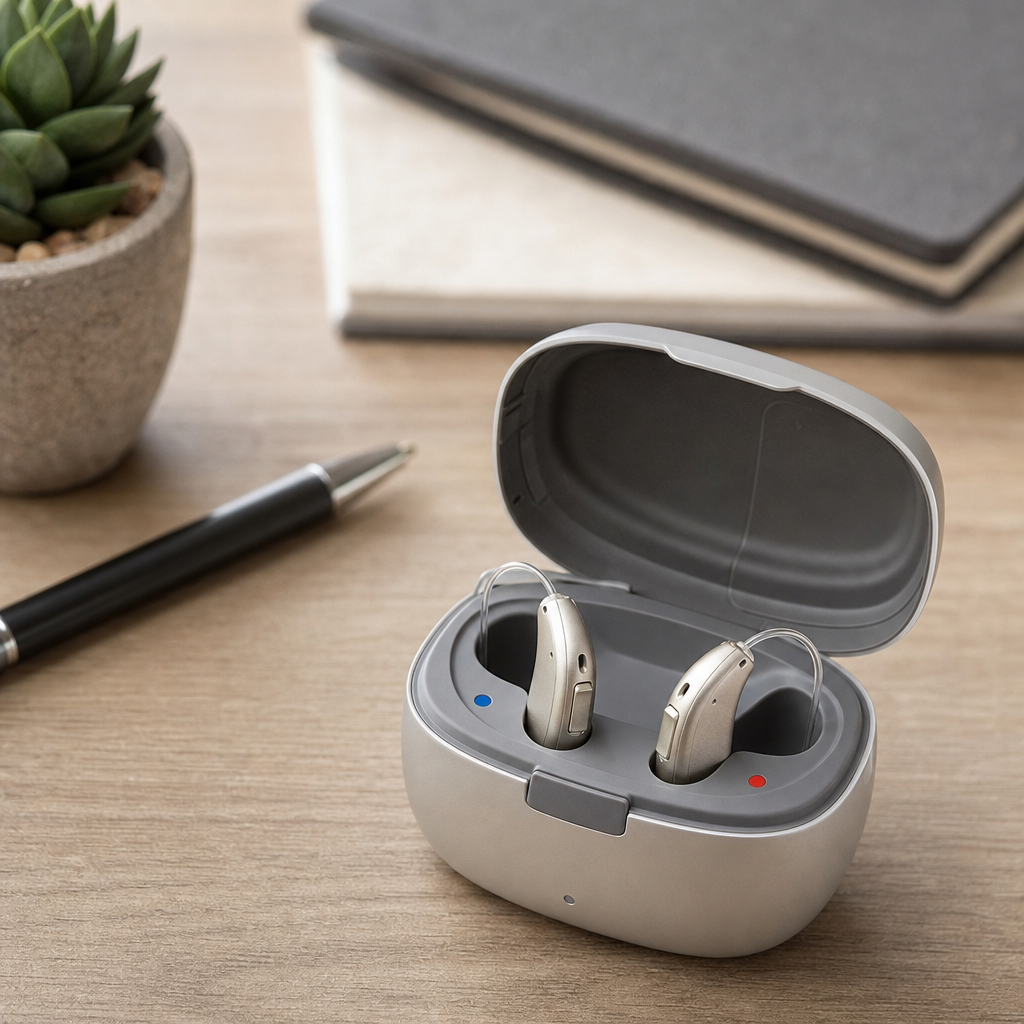
Oticon hearing aid cost is one of the first questions people ask, and it should be, because pricing shapes not only what you buy but how well you hear, how often you wear the devices, and how much support you receive after fitting. In practical terms, the cost of Oticon hearing aids usually reflects several components: the technology tier inside the device, the style of hearing aid, bundled professional services, warranty coverage, follow-up care, and the clinic or retailer you choose. Oticon is a major Danish manufacturer with a strong reputation for premium sound processing, Bluetooth connectivity, tinnitus support features, and a broad lineup that includes receiver-in-canal, behind-the-ear, and custom in-the-ear models.
When I help patients compare options, I explain that there is no single universal Oticon price. Two people can buy the same model name and pay materially different amounts depending on whether hearing tests, earmolds, real-ear verification, adjustments, loaner instruments, repair coverage, and loss-and-damage protection are bundled into the package. That is why a simple sticker price can be misleading. A cheaper quote may exclude critical care, while a higher quote may include years of follow-up visits and better long-term value.
This guide covers the general cost of Oticon hearing aids in a way that works as a hub for the broader hearing aids category. You will learn what affects pricing, typical price ranges, what features matter most, how insurance and financing change out-of-pocket expense, and how to judge value rather than price alone. If you are researching your first pair, replacing older devices, or comparing Oticon with other brands, the goal is straightforward: understand what you are paying for so you can make a confident decision.
What determines the cost of Oticon hearing aids
The cost of Oticon hearing aids is driven first by technology level. Premium tiers generally offer the most advanced speech-in-noise processing, more automatic environmental adjustments, stronger feedback management, expanded wireless features, and greater personalization through app controls. Entry and mid-level tiers still provide meaningful hearing improvement, but they may use fewer processing channels, simpler noise reduction logic, or reduced automation. For many users, the difference is most noticeable in busy restaurants, meetings, worship services, or family gatherings where multiple talkers compete with background noise.
Style also affects price. Receiver-in-canal models are commonly prescribed because they fit many hearing losses, remain discreet, and allow flexible programming. Behind-the-ear instruments may be preferred for severe to profound loss, pediatric use, or dexterity needs. Custom in-the-ear models can cost more when ear impressions, faceplate options, and custom manufacturing are involved. Rechargeability adds cost in some product lines, but many users find the convenience worth it because they avoid weekly battery changes and get sealed housings designed for modern daily wear.
Professional care is the second major pricing factor. A hearing aid is a medical device that performs best when programmed to your audiogram and verified in your ear. Best practice includes diagnostic testing, counseling, real-ear measurements, orientation, follow-up fine-tuning, and outcome validation using tools such as the Abbreviated Profile of Hearing Aid Benefit or the Client Oriented Scale of Improvement. Clinics that include this level of care may charge more upfront, but results are usually better and return rates are lower. In my experience, patients who receive careful verification and coaching adapt faster and report less listening fatigue.
Geography matters too. Urban practices with higher overhead and hospital-affiliated clinics often price differently from private practices or warehouse retailers. Some sellers bundle several years of service; others unbundle and charge separately for fitting, repairs, and office visits. Always ask for the complete cost structure in writing.
Typical price ranges and what they usually include
For a pair of Oticon hearing aids, a broad consumer range is often about $2,500 to $8,000 or more, depending on model family, technology tier, and service package. At the lower end, you may see older generations, basic technology, or unbundled pricing. Midrange packages commonly land around $4,000 to $6,000 per pair and can represent strong value for people with mild to moderate hearing loss who want dependable speech clarity, smartphone connectivity, and regular office support. Premium packages often exceed $6,000 and are aimed at users who spend time in complex sound environments or want the fullest feature set available.
These numbers should be treated as directional, not fixed. An online listing may quote device-only pricing, while a local audiology clinic may quote a bundled amount that includes hearing evaluation, fitting, verification, follow-up care, chargers, wax guards, domes, and warranty support. Because Oticon products evolve regularly, generation changes can create price gaps even within similar-sounding model names. A previous flagship may be discounted when a new platform launches, and for the right patient that can be a smart purchase.
| Cost factor | Lower-cost scenario | Higher-cost scenario | Why it changes value |
|---|---|---|---|
| Technology tier | Basic or older generation | Premium current platform | More advanced speech processing and automation can improve difficult listening performance |
| Service model | Device-only or limited visits | Bundled testing, fitting, and follow-up | Professional programming and coaching often determine real-world success |
| Style | Standard receiver-in-canal | Custom or power options | Custom manufacturing and specialized components add expense |
| Warranty | Shorter coverage | Extended repair and loss coverage | Better protection reduces future replacement risk |
When comparing quotes, ask whether the price is for one hearing aid or two. Many adults have hearing loss in both ears and benefit from binaural fitting, which improves localization, speech understanding, and listening comfort. Buying one device to save money can seem practical, but it can limit performance if both ears need amplification.
Oticon models, features, and how they influence value
Oticon has released several notable families, including Oticon Intent, Real, More, Own, Zircon, and Xceed, though availability varies by clinic and market. The details change over time, but the pattern is consistent: newer premium lines usually deliver stronger environmental analysis, better speech access in noise, enhanced wireless compatibility, and more seamless automatic adjustments. Oticon is known for emphasizing access to a broader sound scene rather than aggressively narrowing focus to one talker. For some users, this creates a more natural listening experience, though personal preference still matters.
Key features that commonly affect Oticon hearing aid cost include directional microphone systems, sudden sound stabilization, wind noise management, tinnitus sound support, telecoil availability in certain styles, rechargeability, app-based controls, and compatibility with accessories such as remote microphones or TV streamers. These features are not equally important for every buyer. Someone who mainly needs help during one-on-one conversations at home may do very well with mid-level technology. Someone who works in sales, attends conferences, and takes calls all day may benefit enough from premium processing to justify the extra cost.
Bluetooth and smartphone integration deserve special attention because they change daily usability. Many Oticon devices support direct streaming or accessory-based streaming for calls, media, and remote adjustments, depending on the phone and operating system. If hands-free calling, app controls, and telehealth support matter to you, confirm compatibility before purchase. I have seen buyers choose a device based on price alone, then feel disappointed when it did not support the phone workflow they expected.
Custom devices such as invisible or in-the-canal products can be appealing for cosmetic reasons, but they may involve tradeoffs in battery size, rechargeability, directional microphones, or earwax exposure. Cost should be weighed against lifestyle and maintenance realities, not appearance alone.
Professional fitting, warranties, and the hidden costs people miss
The most overlooked part of hearing aid pricing is professional fitting quality. Real-ear measurement, sometimes called probe-microphone verification, is the clinical standard for confirming that amplified sound at the eardrum matches prescriptive targets such as NAL-NL2. Without it, programming is partly guesswork. A hearing aid can be technically sophisticated and still perform poorly if it is not verified correctly. This is why I advise people to ask not only “What does Oticon cost?” but also “How will you fit and validate it?”
Warranties also vary more than shoppers expect. Typical manufacturer warranties may cover repairs for one to three years, while some packages include one-time loss-and-damage replacement with a deductible. Chargers, custom earmolds, and accessories may have separate warranty periods. If you lead an active lifestyle, work outdoors, or have a history of losing small devices, stronger protection can save substantial money later.
Maintenance is another real cost. Wax filters, domes, retention tails, tubing for some styles, and periodic clean-and-check appointments add up over time. Rechargeable devices remove disposable battery costs but may eventually require internal battery service depending on age and usage. For many users, these ongoing costs are modest, yet they should be discussed upfront so the ownership picture is complete.
Return policies are essential. Many states require a trial or return period for hearing aids, though rules differ. Ask about the exact length, any nonrefundable fitting fee, and the process for exchanging to another model if your first choice is not ideal. A fair return policy is not a bonus; it is part of responsible hearing care.
Insurance, financing, and ways to reduce out-of-pocket cost
Insurance coverage for Oticon hearing aids is inconsistent. Traditional Medicare generally does not cover hearing aids, though some Medicare Advantage plans include hearing benefits through third-party administrators or fixed allowances. Employer plans, union benefits, state vocational rehabilitation, workers’ compensation, Medicaid in some states, and Veterans Affairs pathways may also help, depending on eligibility. Because hearing aid benefits often change annually, verify details directly with your plan before you buy.
Health savings accounts and flexible spending accounts are often useful because hearing aids, batteries, and many related audiology expenses are eligible medical costs. Financing through the clinic or a medical credit provider can spread payments over months, which makes higher-value fitting packages more accessible. Some practices also offer subscription or lease-style models that combine devices and service for a recurring fee. These can work well for people who want predictable budgeting, but review upgrade terms and total long-term cost carefully.
One practical strategy is to compare three quotes using the same checklist: exact Oticon model, technology tier, whether the quote is per ear or per pair, hearing test inclusion, real-ear verification, number of follow-up visits, warranty details, loss coverage, charger or batteries, and trial period. This apples-to-apples approach prevents confusion and quickly reveals why one price differs from another. If your budget is tight, ask about previous-generation models, clinic demo units where appropriate, or stepping down one technology tier while keeping high-quality fitting services. That combination often preserves value better than choosing the cheapest possible seller.
How to decide whether Oticon is worth the price
Oticon is worth the price when the device matches your hearing loss, listening environments, dexterity, phone needs, and support expectations. It may not be the best value if you rarely encounter difficult noise and would do just as well with a lower-cost option fitted well. The right question is not whether Oticon is expensive. The right question is whether the total package improves communication enough to justify the investment for your specific life.
Start with your hearing goals. Do you want clearer conversation in restaurants, less TV volume conflict at home, easier meetings at work, or reduced listening fatigue by evening? Then match those goals to features and service. If speech in background noise is your top challenge, prioritize technology and fitting quality. If simplicity matters most, prioritize rechargeability, easy controls, and dependable follow-up support. For many adults, mid-tier Oticon instruments fitted with verification and reviewed after real-world use offer the strongest balance of cost and benefit.
In summary, the cost of Oticon hearing aids is more than a device price; it is the price of hearing technology plus the clinical expertise that makes that technology work. Compare complete packages, not headlines. Ask for written details, insist on proper verification, and evaluate warranty and trial terms before committing. If you are researching hearing aids generally, use this guide as your hub: understand pricing, then move into deeper comparisons of models, styles, and providers. The next step is simple—book a hearing evaluation and request an itemized Oticon quote built around your actual hearing needs.
Frequently Asked Questions
How much do Oticon hearing aids typically cost?
Oticon hearing aid cost can vary quite a bit, which is why there is no single price that applies to every buyer. In most cases, pricing depends on the technology level you choose, whether you need one device or two, the hearing aid style, and what services are included in the purchase. A more advanced Oticon model with premium sound processing, better speech-in-noise performance, and additional convenience features will generally cost more than an entry-level or mid-tier option. Likewise, discreet custom styles or rechargeable systems may affect the total price differently depending on the provider.
It is also important to understand that the quoted price often includes more than the hearing aid itself. Many clinics bundle the hearing test, fitting appointment, programming, follow-up adjustments, orientation, cleanings, service visits, and warranty support into the total cost. That means two quotes for Oticon devices may look very different even when the hearing aids are similar. One provider may offer a lower sticker price but charge separately for adjustments and aftercare, while another may include ongoing support for a set period. For that reason, the most accurate way to compare Oticon hearing aid cost is to look at the full package, not just the device alone.
What factors have the biggest impact on the cost of Oticon hearing aids?
Several major factors influence what you will pay for Oticon hearing aids, and understanding them makes it much easier to shop intelligently. The first is technology tier. Higher-tier devices typically include more sophisticated sound processing, faster automatic adjustments, better directional microphones, improved background noise management, and stronger performance in complex listening environments like restaurants, group conversations, and outdoor settings. People with active lifestyles or challenging hearing needs often benefit more from these advanced features, which is why premium models usually cost more.
The second major factor is hearing aid style. Behind-the-ear and receiver-in-canal designs are common and often offer flexibility, battery options, and strong performance. Smaller in-the-ear or custom-made styles may carry different manufacturing costs and feature limitations based on size. Third, bundled services matter a great deal. Professional hearing care is a significant part of successful hearing aid use, so fittings, real-ear measurements, counseling, follow-up appointments, maintenance visits, and repair handling all add value. Warranty length, loss and damage coverage, and trial period terms can also affect price. Finally, the clinic, private practice, big-box retailer, or online seller you choose may price Oticon products differently based on service model, location, and business structure. In short, cost is shaped by both the device and the quality of care that comes with it.
Are more expensive Oticon hearing aids always worth it?
Not always, but they can be worth it for the right person. The best value is not necessarily the cheapest model or the most expensive one. It is the option that matches your hearing loss, listening demands, budget, and expectations for support. If you spend most of your time at home in relatively quiet settings, a mid-level Oticon device may provide excellent benefit without the higher price of a premium model. On the other hand, if you frequently attend meetings, dine in noisy environments, travel often, or rely heavily on hearing in dynamic social situations, the additional features found in upper-tier technology may lead to noticeably better daily performance.
That said, hearing aid success depends on proper fitting and follow-up as much as on the hardware itself. A well-fitted mid-tier Oticon hearing aid with attentive professional care can outperform a premium device that is poorly programmed or unsupported. This is why buyers should focus on practical listening outcomes rather than marketing labels alone. Ask what specific improvements a higher-priced model is expected to provide in your real-life situations. If the extra cost gives you clearer speech understanding, less listening fatigue, easier connectivity, and more consistent wear time, it may be a smart investment. If the differences are minor for your needs, a lower tier could be the better financial choice.
Does insurance cover the cost of Oticon hearing aids?
Insurance coverage for Oticon hearing aids depends entirely on the plan. Some private insurance policies offer a hearing aid benefit, while others provide no coverage at all. Medicare generally does not cover routine hearing aids, although some Medicare Advantage plans may include limited benefits through specific provider networks. Medicaid coverage varies by state and eligibility category, and some employer-sponsored plans may include partial reimbursement or negotiated pricing. Because of this variation, it is essential to verify your exact benefits before making a purchase.
When reviewing coverage, look beyond whether hearing aids are covered in general. Ask whether the benefit applies specifically to Oticon devices, whether you must use an in-network provider, how often the benefit renews, whether exams and fittings are included, and whether there is a fixed allowance or a percentage reimbursement. Also ask about warranty, batteries or chargers, replacement coverage, and follow-up care. If insurance does not cover the full cost, many hearing clinics offer financing, payment plans, or package options at different technology levels. Flexible spending accounts and health savings accounts may also be used in many cases. The key is to get a detailed written estimate so you know exactly what your out-of-pocket cost will be.
What should I ask a provider before buying Oticon hearing aids?
Before purchasing, ask for a complete breakdown of what is included in the price. This should cover the model name, technology tier, style, whether the quote is for one hearing aid or a pair, and what accessories are included. You should also ask whether the cost includes the hearing evaluation, fitting, real-ear verification, follow-up visits, cleanings, programming adjustments, and future support. These details matter because long-term hearing aid satisfaction is tied closely to professional care, not just the device itself.
It is also smart to ask about the warranty period, repair policy, loss and damage replacement terms, trial period, return policy, and any fees that apply after the initial service period ends. If you are comparing providers, ask how they handle ongoing care if your hearing changes or if the settings need to be updated over time. You may also want to discuss rechargeable versus disposable battery options, smartphone compatibility, Bluetooth features, and whether the recommended Oticon model is truly based on your hearing needs rather than simply your budget. A trustworthy provider should be able to explain why a particular device is recommended and how its cost aligns with expected hearing benefit. The more clearly these questions are answered upfront, the more confident you can feel in your decision.