
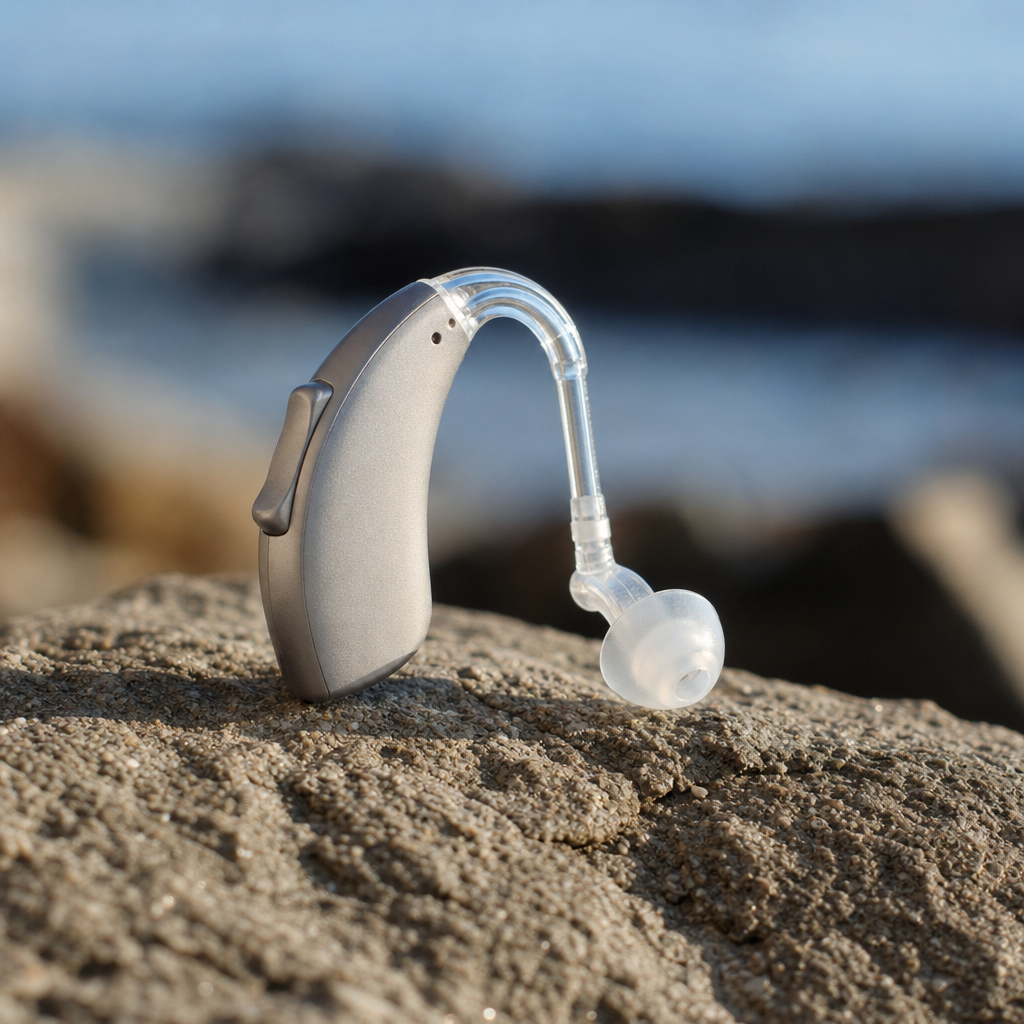
Atom hearing aid is a compact hearing support device category focused on small form factors, simple controls, and accessible pricing, but understanding whether it fits your hearing needs requires more than a quick glance at product listings. In practice, people use the phrase to refer either to a specific small hearing aid model line or to ultra-compact devices designed to be discreet and easy to wear. That distinction matters because hearing support products range from regulated prescription hearing aids to over-the-counter devices and basic sound amplifiers. I have helped patients compare all three, and the biggest mistake is assuming size alone tells you how well a device will perform. It does not.
A proper overview starts with key terms. A hearing aid is a medical device intended to compensate for hearing loss by processing sound through microphones, digital signal processing, an amplifier, and a receiver. An over-the-counter hearing aid is intended for adults with perceived mild to moderate hearing loss and can be purchased without a hearing exam in many markets, including the United States after the FDA rule changes took effect in 2022. A personal sound amplification product, or PSAP, simply amplifies environmental sound and is not marketed as a treatment for hearing loss. When people search for Atom hearing aid, they often need help separating these categories before spending money.
This matters because hearing loss affects communication, safety, and cognitive load. The World Health Organization has repeatedly estimated that more than 1.5 billion people live with some degree of hearing loss worldwide, and hundreds of millions have disabling loss. Untreated hearing loss is associated with social withdrawal, reduced work performance, listening fatigue, and a higher risk of misunderstanding speech in traffic, medical settings, and family conversations. A tiny hearing aid may look convenient, but convenience only helps if the device delivers audibility, comfort, and speech clarity where you actually struggle: restaurants, meetings, phone calls, television, and group conversations.
As a hub article, this guide covers the general questions most buyers ask first: what an Atom hearing aid usually is, who it may help, what features matter, how it compares with alternatives, what it costs, and how to evaluate claims. If you are starting your hearing aid research, this page gives the framework you need before you move on to deeper topics such as hearing aid types, hearing tests, battery options, Bluetooth streaming, and fitting adjustments.
What an Atom hearing aid usually means
In the market, Atom hearing aid generally points to a very small hearing device positioned around discretion and day-to-day usability. Most products in this category fall into one of two physical styles: completely-in-canal or in-the-ear custom-style devices, and mini behind-the-ear devices with thin tubing. The marketing focus is predictable: less visible wear, lightweight construction, and straightforward operation for people who do not want a bulky medical-looking device. Those selling points are real, but they only matter after matching the device to the user’s hearing profile.
When I assess small devices for clients, I look first at gain limits, noise management, feedback control, and venting options. Miniaturization creates tradeoffs. A smaller shell means less room for batteries, antennas, buttons, directional microphones, and larger receivers. That can reduce battery life, limit onboard controls, and make maintenance harder for users with dexterity issues. On the other hand, a compact design can improve cosmetic acceptance, and cosmetic acceptance strongly affects daily wearing time. A hearing aid in a drawer never improves hearing.
Another source of confusion is branding. Some consumers search for Atom hearing aid expecting a single universally recognized manufacturer or flagship model. In reality, device names are often reused by retailers, white-label distributors, or regional brands. That means buyers should verify the underlying product class, regulatory status, return policy, app support, and service network rather than relying on the name alone. Always ask whether the device is prescription, over the counter, or a sound amplifier.
Who should consider one and who should not
An Atom hearing aid may suit adults with perceived mild to moderate hearing loss who prioritize discreet wear and relatively simple daily operation. Typical signs include asking others to repeat themselves, increasing TV volume, struggling with speech in background noise, and hearing better in quiet than in restaurants. If hearing loss is gradual, present in both ears, and mostly affects clarity rather than overall loudness, a compact digital hearing aid can be a reasonable entry point, especially if it includes multiple listening programs and basic app adjustment.
It is not the right first choice for everyone. People with sudden hearing loss, one-sided hearing loss, active ear drainage, significant tinnitus changes, ear pain, dizziness, a history of ear surgery, or large differences between ears should get a medical evaluation and diagnostic hearing test before buying any device. Those red flags can indicate conditions that need treatment, not just amplification. The same applies to severe or profound hearing loss, where more powerful prescription devices, custom earmolds, and professional verification are usually necessary.
Dexterity and vision also matter more than most listings admit. The tiniest devices can be difficult to insert, remove, clean, and adjust. If replacing a battery door or changing wax guards sounds frustrating, a larger rechargeable behind-the-ear style may provide a better long-term experience even if it is slightly more visible. In fittings I have supervised, the best device is often the one a person can manage independently every day.
Core features that determine real-world performance
Small hearing aids are often marketed with long feature lists, but a handful of functions drive most real-world outcomes. The first is accurate frequency-specific amplification. Hearing loss rarely affects all pitches equally; many adults hear low frequencies better than high frequencies, which is why speech can sound muffled rather than simply quiet. A useful Atom hearing aid should shape amplification across frequencies, not just raise volume overall. This is what separates a hearing aid from a simple amplifier.
Directional microphones are the next major factor. In quiet rooms, almost any digital device can seem acceptable. In noise, microphone strategy matters. Directional systems help emphasize speech from in front of the listener while reducing competing sound from other directions. Premium prescription devices may use adaptive directional processing, motion sensors, and environmental classification to change behavior automatically. More basic compact devices may offer fixed modes such as quiet, restaurant, outdoor, or TV. Even those simple presets can help if they are implemented well.
Feedback suppression, noise reduction, and wind management also matter. Feedback is the whistling sound that occurs when amplified sound leaks and re-enters the microphone. Good feedback control allows more usable gain without annoying squeal. Noise reduction does not eliminate background sound, but it can reduce steady-state noise such as fans or road hum and make listening less tiring. Wind management is especially important for people who walk outdoors, cycle, or spend time at sports events.
| Feature | Why it matters | What to check |
|---|---|---|
| Frequency shaping | Matches sound output to your hearing loss pattern | Look for adjustable channels and individualized settings |
| Directional microphones | Improves speech understanding in noise | Ask if the device has fixed or adaptive directionality |
| Feedback control | Reduces whistling and allows stronger amplification | Check user reviews for squeal complaints |
| Rechargeable battery | Simplifies daily use and lowers battery handling issues | Confirm runtime and charge case details |
| Bluetooth or app control | Enables fine tuning, streaming, and self-adjustment | Verify phone compatibility before purchase |
| Telecoil or accessories | Supports public venues and TV connectivity | Useful for theaters, places of worship, and meetings |
Connectivity is increasingly important. Many users expect direct streaming from iPhone or Android, app-based volume control, geotagged settings, remote support, and firmware updates. Compact devices may omit some of these to save cost or space. That is not automatically bad, but it should be a deliberate compromise. If phone calls and media are a major part of your day, confirm compatibility with your exact handset and operating system. Bluetooth support is not universal, and support quality varies widely.
How fitting, testing, and adjustment affect results
The performance of an Atom hearing aid depends as much on fitting quality as on hardware. A hearing aid should be selected based on a hearing test that measures thresholds across frequencies, speech understanding, and in some cases uncomfortable loudness levels. Prescription fittings often use real-ear measurement, a best-practice method endorsed by audiology organizations because it verifies how much amplified sound actually reaches the eardrum. In plain terms, it checks whether the device is delivering the right amount of amplification in your ear canal, not just in theory.
Without verification, many users end up underfit or overfit. Underfitting leaves speech unclear and encourages abandonment. Overfitting can make soft sounds sharp, noisy settings exhausting, and own-voice perception unnatural. This is one reason online complaints about “weak” or “too loud” hearing aids are hard to interpret. The same device can feel excellent for one person and unusable for another if the settings are wrong.
Adjustment takes time. New users often need one to three follow-up sessions because the brain has to relearn sounds it has been missing. Dishes may seem louder, paper rustling sharper, and traffic more present at first. That is normal adaptation, not always a sign of poor fitting. Still, persistent problems such as harshness, blocked-ear sensation, feedback, poor speech clarity, or short battery life should be addressed promptly. Reputable providers build this into the purchase with trial periods and service plans.
Price, value, and common buying mistakes
Atom hearing aid pricing varies dramatically depending on product class and service model. Basic amplifiers can cost under $100. Over-the-counter hearing aids commonly range from a few hundred dollars to around $2,000 per pair. Prescription hearing aids from established manufacturers such as Phonak, Oticon, ReSound, Signia, Starkey, and Widex often cost more because they bundle clinician time, verification, follow-up care, warranty support, and advanced processing. Price alone does not tell you value; service and suitability are part of the product.
The most common buying mistake is choosing by invisibility first and hearing needs second. The second is ignoring the return window. The third is assuming all digital devices are equivalent because they share terms like noise reduction or feedback cancellation. Implementation matters. Another mistake is failing to budget for maintenance items such as domes, wax guards, chargers, drying kits, and possible out-of-warranty repairs. Moisture, cerumen, and accidental drops are routine causes of service visits.
Read policies carefully. A strong offer includes a clear trial period, transparent refund terms, a stated warranty length, and accessible support. If the seller cannot explain who programs the device, how support works after purchase, or what happens if your hearing changes, proceed cautiously. Good hearing care is ongoing, not a one-time transaction.
How to evaluate brands, reviews, and next steps
When comparing an Atom hearing aid with other hearing aids, use a structured checklist. Confirm regulatory category, hearing loss range, battery type, expected daily runtime, app quality, support availability, cleaning requirements, and return rights. Then compare the device against your real listening problems. If your main issue is restaurants, prioritize directionality and fine tuning. If phone calls matter most, prioritize connectivity. If handling tiny parts is difficult, prioritize rechargeability and easier insertion.
Be skeptical of dramatic review claims in either direction. Five-star praise often reflects fast shipping or attractive packaging, not long-term hearing benefit. One-star complaints may stem from poor fit, untreated earwax, or unrealistic expectations. More useful signals include comments about speech clarity in background noise, comfort after several hours, battery reliability, customer support responsiveness, and the ease of making adjustments. Independent hearing tests and clinician-reviewed comparisons are usually more informative than marketplace ratings alone.
The key takeaway is simple: Atom hearing aid can be a useful option when the device category, feature set, and service model match the user. Small size is an advantage, not a guarantee. Start with your hearing profile, not the marketing headline. If you suspect hearing loss, schedule a hearing test or use a reputable screening as a first step, then compare devices with clear criteria. That approach leads to better hearing, fewer returns, and a much higher chance that the device becomes part of daily life instead of another unused gadget in a drawer.
Frequently Asked Questions
What is an Atom hearing aid, and does the term refer to one specific product?
The term “Atom hearing aid” can mean different things depending on where you see it used. In some cases, it refers to a particular compact hearing aid model line or branded device. In other cases, people use it more loosely to describe very small hearing support devices designed to be discreet, lightweight, and easy to operate. That difference is important, because not every product marketed in this category works the same way or meets the same standards.
Some small hearing devices are regulated prescription hearing aids intended for people with diagnosed hearing loss and fitted according to an audiology evaluation. Others may be over-the-counter hearing aids for adults with perceived mild to moderate hearing loss. Still others may simply be sound amplifiers, sometimes called PSAPs, which are not the same as hearing aids and are not meant to treat hearing loss. Because of this overlap in language, shoppers can easily assume two products are comparable when they are actually designed for very different needs.
If you are researching an Atom hearing aid, the best approach is to look beyond the product name and verify exactly what category it falls into. Check whether it is prescription or over-the-counter, whether it is intended for mild, moderate, or more significant hearing loss, what features it offers for noise reduction and speech clarity, and whether it has been evaluated under the appropriate regulatory standards. Understanding that distinction upfront will help you compare devices more accurately and avoid buying something that looks appealing because of its size but does not truly match your hearing needs.
Who is a compact Atom hearing aid best suited for?
A compact Atom hearing aid is generally best suited for people who value a small, discreet design and want a device that is simple to wear and manage in everyday life. For many users, the main appeal is that these devices are less noticeable than larger behind-the-ear options and may feel more comfortable for casual, all-day use. They can be especially attractive to first-time users who feel hesitant about wearing hearing aids and want something less visually obvious.
That said, size alone should not determine whether a device is right for you. The best candidates are usually adults whose hearing needs align with the technology built into the product. If the device is an over-the-counter hearing aid, it is typically intended for adults with perceived mild to moderate hearing loss. If hearing loss is more severe, uneven between ears, sudden in onset, or accompanied by symptoms such as ringing, dizziness, ear pain, or one-sided hearing difficulty, a compact self-selected device may not be appropriate without professional evaluation.
Compact devices may also involve tradeoffs. Their small form factor can mean smaller batteries, fewer physical controls, or less room for advanced directional microphones and customization features compared with larger premium models. For some people, that is perfectly acceptable. For others, especially those who need stronger amplification, more sophisticated background-noise management, or easier manual adjustments, a larger hearing aid may actually perform better. In short, an Atom hearing aid can be an excellent fit for the right user, but the right user is defined by hearing profile, dexterity, lifestyle, and listening environments—not just by a preference for a tiny device.
How can I tell whether an Atom hearing aid will actually help my hearing loss?
The most reliable way to determine whether an Atom hearing aid will help is to start with a clear understanding of your hearing status. That can come from a professional hearing test with an audiologist or hearing care provider, or in some cases from a validated hearing screening followed by careful review of the device’s intended use. Without that baseline, it is very easy to buy a product that is either underpowered for your needs or simply not designed to address hearing loss in a clinically meaningful way.
Once you know the degree and pattern of your hearing loss, compare that information with the device’s stated fitting range, intended user profile, and core sound-processing features. Look for details on whether it supports mild to moderate loss, whether it offers multiple listening modes, feedback control, speech enhancement, and noise management, and whether it allows adjustments for different environments. A device may be small and affordable, but if it cannot deliver enough gain in the frequencies where you struggle most, it may not improve understanding very much.
It is also helpful to set realistic expectations. Even a good compact hearing aid may not make all sound environments easy, particularly crowded restaurants, meetings with overlapping voices, or rooms with heavy background noise. Improvement often comes from a combination of better audibility, consistent wear, and time spent adapting to amplified sound. If possible, choose a product with a trial period and a clear return policy. That gives you time to test comfort, clarity, phone use, wind noise, and speech understanding in real life rather than relying only on marketing claims. A hearing aid is truly helpful when it improves communication in the situations that matter most to you, not just when it sounds louder out of the box.
What features should I look for when comparing Atom hearing aid models or similar ultra-compact devices?
When comparing Atom hearing aid models or similar ultra-compact options, start with the features that affect daily hearing performance rather than focusing only on price or appearance. Sound quality should come first. Look for information about speech enhancement, background noise reduction, feedback suppression, and the number of adjustment channels or programs available. These features influence how well the device handles real conversations, not just whether it makes sound louder.
Fit and usability are equally important. A very small device should still be comfortable, stable in the ear, and easy enough for you to insert, remove, clean, and adjust. If you have arthritis, reduced fingertip sensitivity, or vision concerns, tiny controls may become frustrating quickly. In those cases, app-based controls or automatic adjustment features can be valuable. Battery style matters too. Rechargeable models are convenient for many people, while disposable batteries may appeal to users who want quick replacements without charging downtime.
You should also evaluate support and transparency. A trustworthy product listing should clearly explain whether the device is prescription, over-the-counter, or an amplifier; what hearing loss range it is meant to address; what accessories are included; how service and troubleshooting are handled; and what the warranty and return terms are. Some compact devices are attractively priced because they offer limited personalization or minimal after-sale support. That may still be acceptable for some buyers, but it is best to know that in advance. In general, the strongest choice is not simply the smallest Atom hearing aid available, but the one that balances discreet size with sufficient amplification, comfort, reliable sound processing, and practical long-term support.
Are affordable Atom hearing aids worth it, or is it better to spend more on a premium device?
Affordable Atom hearing aids can absolutely be worth it for the right person, especially if the device is appropriate for their level of hearing loss and comes from a credible manufacturer or provider. Lower cost does not automatically mean poor quality. In many cases, people with mild to moderate hearing loss can benefit meaningfully from well-designed compact devices that prioritize ease of use, accessible pricing, and straightforward everyday performance. For a first-time user, that can be a practical and confidence-building starting point.
However, value depends on more than the purchase price. A less expensive device may offer fewer advanced features for handling complex environments such as restaurants, meetings, or outdoor situations with wind and traffic noise. It may also provide less individualized tuning, fewer style options, or reduced follow-up support. If your hearing challenges are relatively simple and your listening environments are mostly quiet to moderately noisy, an affordable model may meet your needs very well. If you frequently struggle in demanding social settings or have a more complicated hearing profile, a premium device may justify the additional cost through better speech clarity, comfort, and personalization.
The smartest way to judge whether an affordable Atom hearing aid is worth it is to consider total practical value: how well it matches your hearing needs, how comfortable it is to wear, whether you can manage the controls and maintenance, and whether the seller offers a reasonable trial and return window. A premium device is not always necessary, but a very cheap device that does not improve communication is never a bargain. When evaluating cost, think in terms of hearing outcomes, support, and long-term usability rather than the sticker price alone.