
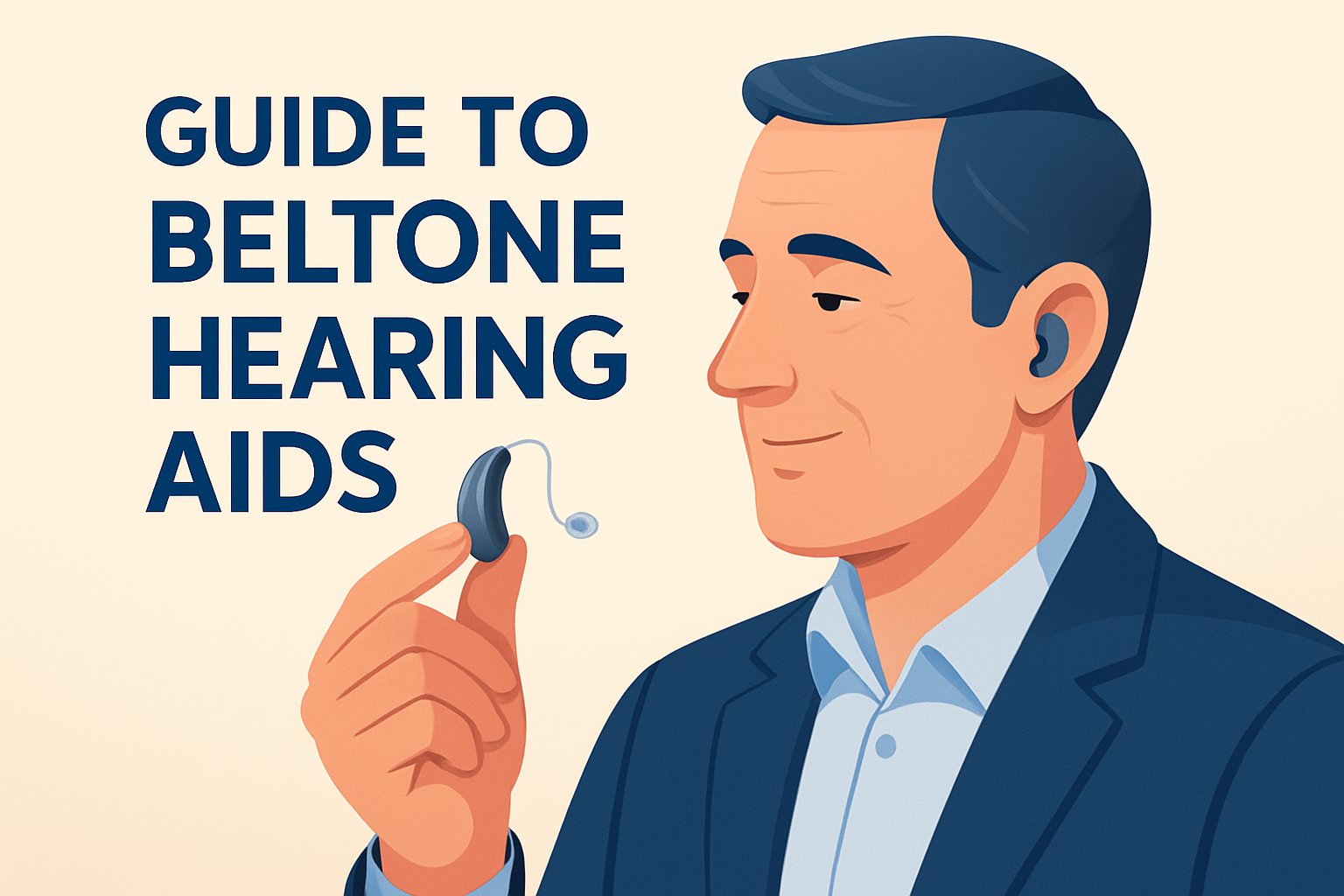
Beltone hearing aids help people with hearing loss follow conversations, hear environmental sounds more clearly, and stay connected in daily life. In practice, the phrase “hearing aid” refers to a small medical device that captures sound through microphones, processes it digitally, and delivers amplified sound into the ear based on an individual prescription. Beltone is a long-established hearing care brand in the United States and internationally, and it is part of the GN Group, the same parent company behind ReSound. That connection matters because many Beltone devices share core sound-processing technologies, wireless features, and app frameworks with other respected products in the hearing industry.
For most buyers, the real question is not simply whether Beltone makes good hearing aids. The better question is which Beltone style, technology level, and fitting approach match a specific hearing profile, budget, and lifestyle. Mild high-frequency loss in a quiet office creates very different needs than severe loss, tinnitus, or frequent listening in restaurants, cars, classrooms, and worship spaces. I have worked with patients comparing prescription devices across several major brands, and the people who end up happiest are usually the ones who understand three basics before they buy: how hearing aids are fitted, what features improve speech understanding, and what service model they are actually paying for.
This guide explains how Beltone hearing aids work, what models and features you can expect, how fittings and follow-up care typically happen, and what tradeoffs to weigh before choosing a device. It also answers the practical questions people ask most: Are Beltone hearing aids Bluetooth compatible? How much do they cost? Are they rechargeable? Can they help tinnitus? Are they worth buying through a local clinic instead of online? Those are not small details. In hearing care, outcomes depend as much on programming, verification, counseling, and aftercare as they do on the hardware itself.
Hearing loss also carries higher stakes than many first-time buyers realize. Untreated hearing loss is associated with communication strain, social withdrawal, fatigue, and poorer quality of life. Research published in leading journals and guidance from organizations such as the American Academy of Audiology and the National Institute on Deafness and Other Communication Disorders consistently emphasize early evaluation and appropriate treatment. A well-fitted hearing aid cannot restore normal hearing, but it can materially improve audibility, listening comfort, and participation. That is the standard against which Beltone hearing aids should be judged.
What Beltone hearing aids are and who they are designed for
Beltone offers prescription hearing aids for a broad range of hearing loss, from mild to profound depending on the model and receiver or earmold configuration. The brand’s lineup usually includes receiver-in-canal, behind-the-ear, custom in-the-ear, in-the-canal, and completely-in-canal options. Receiver-in-canal devices are the most common because they balance cosmetic appeal, acoustic flexibility, directional microphone performance, and rechargeable battery options. Behind-the-ear styles are often chosen for greater power, durability, and easier handling. Custom styles can appeal to users who want an in-ear fit, but they may have fewer wireless or battery options depending on the product generation.
In straightforward terms, Beltone hearing aids are designed for people who want prescription-level amplification with professional fitting and access to a branded provider network. That network is one of Beltone’s strongest differentiators. Rather than functioning primarily as a direct-to-consumer seller, Beltone commonly operates through local hearing care offices where hearing testing, device selection, fitting, programming, cleanings, repairs, and counseling are provided. For many older adults, that office relationship is a major benefit because hearing aid success depends on adjustments over time. New users almost never need just one appointment.
Beltone devices are also designed for modern connectivity. Current generations typically support iPhone streaming and, depending on the platform, varying levels of Android compatibility. Many models pair with a mobile app for volume changes, program switching, geotagged settings, remote fine-tuning, and accessory control. This is especially useful for people who divide time between multiple environments. A retiree may want one setting for television, another for restaurants, and another for outdoor walks where wind noise management matters. The app does not replace professional programming, but it can make daily listening more practical.
Key features that matter most in real-world listening
The most important Beltone hearing aid features are not the marketing terms on the box. They are the functions that improve speech audibility, reduce listening effort, and adapt to different sound environments. In my experience, buyers often focus first on rechargeability and Bluetooth because those features are easy to understand. They do matter, but speech processing features usually determine long-term satisfaction more than convenience features alone.
Directional microphones are central because they help emphasize speech coming from in front of the listener while reducing competing noise from other directions. This is especially useful in restaurants, family gatherings, waiting rooms, and places of worship. Noise reduction systems then analyze incoming sound and reduce steady-state noises like fans, road noise, or clattering dishes without simply muting all background sound. Better systems preserve speech cues while reducing annoyance. Feedback management is another essential feature. It limits the high-pitched whistling that can occur when amplified sound leaks and re-enters the microphones.
Beltone hearing aids also typically include frequency shaping, wide dynamic range compression, impulse noise reduction, wind noise control, and environmental classification. Frequency shaping means the device amplifies the pitches where a user has the greatest loss rather than boosting every sound equally. Compression keeps loud sounds comfortable while making softer sounds more audible. Environmental classification allows the aid to recognize whether the user is in quiet, in speech, in speech-in-noise, or listening to music, then shift processing behavior automatically.
Connectivity is now a core feature category. Beltone devices in recent generations often stream phone calls, music, podcasts, and navigation prompts directly from compatible smartphones. Some users rely heavily on remote microphones or TV streamers, especially when they struggle with distance hearing or need clearer television sound without raising the room volume. Tinnitus management is also commonly available through integrated sound therapy options. For patients with both hearing loss and tinnitus, combining amplification with sound enrichment can be meaningfully helpful, although it is not a cure.
| Feature | What it does | Why it matters in daily life |
|---|---|---|
| Directional microphones | Focus on speech from selected directions | Improves conversation clarity in noise |
| Noise reduction | Lowers steady background sounds | Reduces fatigue in restaurants, cars, and crowds |
| Bluetooth streaming | Sends audio from phone or TV accessories to aids | Makes calls and media clearer at lower effort |
| Rechargeable battery | Allows overnight charging instead of disposable cells | Simplifies daily use for people with dexterity issues |
| Tinnitus sound support | Provides masking or soothing sound options | Can reduce awareness of ringing for some users |
Beltone styles, technology levels, and common model differences
Like most major manufacturers, Beltone typically offers several technology tiers within each product family. The exact names change over time, but the pattern is consistent: higher tiers usually provide more advanced speech-in-noise processing, better environmental adaptation, more channels for fine-tuning, stronger directional strategies, and additional convenience features. Lower tiers can still work well for users who spend most of their time in quiet or moderately challenging environments, but they usually do not perform as strongly in complex noise.
Receiver-in-canal models are often the best starting point for discussion because they fit the widest range of users. They sit behind the ear with a small receiver in the ear canal connected by a thin wire. This design supports open fittings for mild high-frequency loss and more closed fittings for greater losses. It also enables telecoil, rechargeable options, and dependable Bluetooth features in many product generations. Behind-the-ear devices are more robust for users needing extra gain, pediatric fittings, or easier manipulation. Custom in-ear devices can be attractive for cosmetic reasons and for users who dislike anything behind the ear, though battery life, moisture exposure, and ear anatomy can affect suitability.
One practical issue many shoppers overlook is serviceability. Tiny custom aids may look appealing, but they can be harder to clean, easier to clog with wax, and less friendly for users with vision or dexterity limitations. Receiver-in-canal aids often strike the best balance between discreet size and maintainability. That is one reason many audiologists and hearing instrument specialists recommend them first. Another overlooked point is that dome, receiver strength, venting, and earmold design can change performance almost as much as the branded technology level. The fitting hardware matters.
If you are comparing Beltone with ReSound, Starkey, Phonak, Signia, or Oticon, you should expect more similarities than many advertisements suggest. Most leading premium devices provide good sound quality, directional microphones, app control, and wireless streaming. The bigger differences are usually fit philosophy, accessory ecosystem, local provider skill, and how a person’s ears and brain respond to a given sound-processing style. That is why trial periods and follow-up adjustments are so important.
How Beltone hearing aids are fitted and why verification matters
A proper Beltone hearing aid fitting should begin with a comprehensive hearing evaluation, case history, and discussion of listening goals. The provider should review whether the hearing loss is sensorineural, conductive, or mixed; whether there is asymmetry; whether tinnitus is present; and whether medical referral is needed. Device selection should then reflect hearing thresholds, speech testing results, ear anatomy, dexterity, cognition, lifestyle, and budget. This is standard best practice, not a premium extra.
After the devices are physically fit, they should be programmed to a validated prescriptive target such as NAL-NL2 or DSL, depending on the patient profile. The crucial step is real-ear measurement, also called probe microphone verification. This process places a tiny microphone in the ear canal to measure how much amplified sound actually reaches the eardrum. Without real-ear measurement, the provider is estimating. With it, the fitting can be checked against target across frequencies and input levels. The American Academy of Audiology has long supported verification as a standard of care because manufacturer first-fit settings are often not accurate enough on their own.
I have seen this make a major difference for first-time users who thought hearing aids sounded either too weak or painfully sharp. In many cases, the issue was not the brand at all. It was an under-verified fit, an overly closed dome, or insufficient counseling about adaptation. Beltone hearing aids can perform very well when they are set appropriately and adjusted over multiple visits. Initial programming is only the beginning. Fine-tuning often requires feedback from real listening situations: church choir versus conversation, grandchildren’s voices versus television, or office meetings versus driving.
Follow-up care should include cleaning instruction, insertion and removal training, wax management review, app setup, and expectations counseling. Hearing aids amplify sound, but they do not eliminate all background noise, restore dead cochlear hair cells, or give perfect hearing in every environment. The best fittings improve communication significantly while respecting these limitations. Providers who explain that clearly tend to produce better long-term satisfaction and fewer returns.
Costs, warranties, and whether Beltone hearing aids are worth the price
Beltone hearing aid prices vary widely based on technology level, style, bundled services, and local office policies. In the U.S., prescription hearing aids commonly range from roughly $2,000 to more than $7,000 per pair across the industry, and Beltone generally sits within that broad range. Premium devices with rechargeability, advanced speech-in-noise processing, and longer service packages cost more. Entry or mid-level devices cost less but may still be entirely adequate for users with simpler listening needs.
What you are buying is usually not just hardware. In many clinics, the package includes hearing testing, fitting visits, follow-up adjustments, cleaning appointments, warranty coverage, and sometimes loss-and-damage protection. This bundled model can make the sticker price seem high compared with over-the-counter amplifying products or internet offers, but the service component is substantial. For people who need repeated programming and counseling, that support has real value. For technically confident users with uncomplicated hearing loss, a less service-heavy path may feel more cost-effective.
When evaluating whether Beltone hearing aids are worth it, ask for specific details in writing. How long is the manufacturer warranty? Is there a trial period, and what are the return fees? Are batteries or chargers included? How many follow-up visits are covered? Is telehealth adjustment available? Will the office perform real-ear verification? Those questions reveal far more than a simple price quote. They also make provider comparisons fairer.
Insurance coverage is inconsistent. Traditional Medicare generally does not cover hearing aids, although some Medicare Advantage plans offer partial benefits. Private insurance, union plans, veterans’ benefits, and state vocational programs may provide some coverage depending on eligibility. Health savings accounts and flexible spending accounts can often be used. Because pricing structures differ, value depends on the whole package: technology, fitting quality, aftercare, and how much hearing improvement the user actually experiences in daily life.
Who should choose Beltone and how to make the right purchase decision
Beltone is a strong option for buyers who want in-person support, current wireless features, and a recognizable national brand with local provider access. It is especially suitable for first-time users who benefit from hands-on coaching and older adults who need regular cleaning, wax checks, and physical maintenance. It can also work well for experienced users upgrading from older devices who want better streaming, rechargeability, and more refined speech processing.
Beltone may be less ideal for shoppers focused solely on the lowest possible upfront price or those who prefer a self-directed online purchase with minimal clinic interaction. It may also be worth cross-shopping if a nearby independent audiology practice carries several manufacturers and can compare sound quality, accessories, and service models side by side. No hearing aid brand is best for every ear. The best choice is the one fitted well, verified properly, supported consistently, and worn enough to deliver benefit.
Before buying, schedule a full hearing evaluation, bring a list of your hardest listening situations, and ask to discuss at least two technology levels. If tinnitus is a concern, mention it explicitly. If smartphone streaming matters, confirm compatibility with your exact phone model. If hand strength or vision is limited, test battery doors, insertion, charger handling, and wax filter changes before committing. These details determine success more than brand reputation alone. A hearing aid that looks impressive on paper can fail if it is uncomfortable, hard to manage, or poorly programmed.
Beltone hearing aids can be an excellent solution when paired with evidence-based fitting and realistic expectations. Focus on verified performance, not slogans. Ask careful questions, compare service plans, and insist on follow-up care that matches the importance of your hearing. If you are ready to improve communication, the next step is simple: book a professional hearing evaluation and use the results to choose the Beltone option that fits your life.
Frequently Asked Questions
What are Beltone hearing aids and how do they work?
Beltone hearing aids are prescription medical devices designed to help people with hearing loss hear speech and everyday sounds more clearly. Like other modern hearing aids, they use tiny microphones to pick up sound from the environment, then process that sound digitally before delivering it into the ear at a level and pattern tailored to the wearer’s hearing needs. This is important because hearing loss is not simply a matter of everything being “too quiet.” Many people hear some pitches better than others, may struggle most in background noise, or have trouble understanding speech even when sound seems loud enough. Beltone devices are programmed to match an individual hearing profile, which helps make sounds more useful and easier to understand rather than just louder.
Beltone is a long-established hearing care brand and part of the GN Group, which is well known in the hearing technology industry. Depending on the model, Beltone hearing aids may include features such as directional microphones for better speech understanding in noise, noise reduction processing, feedback management to reduce whistling, rechargeable batteries, smartphone connectivity, and personalized listening programs. The overall goal is to help users follow conversations, notice environmental sounds, and stay engaged in work, family, and social settings. A hearing care professional typically evaluates hearing, recommends an appropriate style and technology level, and fine-tunes the device for comfort and performance.
What types and styles of Beltone hearing aids are available?
Beltone hearing aids are typically available in several common styles so users can choose an option that fits their hearing needs, cosmetic preferences, dexterity, and lifestyle. These styles often include behind-the-ear, receiver-in-ear, and custom in-the-ear designs. Behind-the-ear and receiver-in-ear options are popular because they can fit a wide range of hearing loss levels and often provide strong performance, comfort, and modern connectivity features. Custom in-the-ear devices may appeal to people who want a more discreet fit or prefer a device that sits entirely or mostly within the ear.
The best style depends on more than appearance. People with mild hearing loss may have many options, while those with more significant hearing loss may benefit from styles that offer greater power and battery capacity. Ear shape, earwax production, comfort preferences, and hand strength can also influence which model is most practical. For example, some users find rechargeable behind-the-ear or receiver-in-ear devices easier to manage than very small custom devices with tiny batteries. Beltone professionals usually guide patients through these tradeoffs and recommend a device based on hearing test results, communication goals, and day-to-day listening demands. That personalized fitting process is a major part of choosing the right hearing aid, not just the brand name or the shell style alone.
Are Beltone hearing aids good for understanding speech in noisy places?
Beltone hearing aids can be very helpful in noisy environments, but it is important to set realistic expectations. Even advanced hearing aids do not completely eliminate background noise or restore normal hearing in every setting. What they can do is improve access to speech by using digital processing features designed to emphasize voices, reduce certain steady noises, and focus microphones toward the person speaking. For someone who struggles in restaurants, family gatherings, meetings, or public spaces, these features can make conversations less tiring and more manageable.
Success in noise depends on several factors, including the severity and type of hearing loss, the technology level of the hearing aid, how well the devices are programmed, and whether the user has had time to adapt to amplified sound. Beltone models with directional microphones, speech optimization tools, and wireless connectivity may offer added support in difficult listening situations. In some cases, accessories such as remote microphones can improve speech clarity even more by sending a speaker’s voice directly to the hearing aids. The most effective approach is usually a combination of quality technology, professional fitting, follow-up adjustments, and communication strategies such as facing the speaker, reducing competing noise when possible, and choosing better seating in public places.
Do Beltone hearing aids connect to smartphones and other devices?
Many Beltone hearing aids offer wireless connectivity that can link the devices to compatible smartphones, tablets, and other audio sources. This can allow users to stream phone calls, music, podcasts, video audio, and sometimes navigation prompts directly to their hearing aids. For many people, that direct connection makes listening clearer and more convenient because sound is delivered straight to the ears without as much interference from the surrounding environment. Depending on the model and the phone being used, users may also be able to adjust volume, change listening programs, check battery status, or use app-based controls for a more customized experience.
Connectivity features can be especially valuable for people who spend a lot of time on calls, watch media on mobile devices, or want more control over hearing aid settings during the day. Some Beltone products may also work with TV streamers, remote microphones, or other assistive accessories that expand hearing support beyond the hearing aids alone. Because compatibility can vary by model and operating system, it is smart to confirm specific connectivity options before purchasing. A hearing care provider can explain which Beltone devices support the features you want and help with setup so the technology works smoothly in everyday use.
How much do Beltone hearing aids cost, and what should I expect from the fitting process?
The cost of Beltone hearing aids can vary widely depending on the style, technology level, included features, service package, and local provider pricing. In general, hearing aids are not priced solely as pieces of hardware. The total cost often reflects a broader bundle of professional services, which may include the hearing evaluation, device fitting, programming, follow-up visits, cleanings, adjustments, counseling, and warranty coverage. More advanced technology levels typically cost more because they may offer better performance in challenging listening environments, more automation, expanded connectivity, and additional listening programs.
The fitting process usually begins with a comprehensive hearing assessment and a discussion of your communication goals, lifestyle, and budget. A hearing care professional will recommend suitable Beltone models, explain the differences among options, and program the devices to your hearing prescription. After the initial fitting, there is typically an adjustment period during which your brain adapts to amplified sounds you may not have heard well for some time. Follow-up appointments are important because small programming changes can make a big difference in comfort and clarity. During these visits, the provider may fine-tune settings, address concerns about background noise or fit, and teach proper cleaning, charging, and maintenance. When evaluating cost, it is wise to consider not just the upfront price but also the level of ongoing support you will receive, since professional care plays a major role in long-term hearing aid success.