
The world of Deaf humor and comedy is a rich, vibrant landscape that offers insights into the Deaf experience, culture, and community. Within this unique space, humor transcends traditional boundaries and opens up new avenues of connection and understanding. Deaf comedians and humorists use their craft to reflect their lived experiences, bring to light common misconceptions, and build bridges between the Deaf and hearing communities. This exploration delves deep into how Deaf humor is articulated, the platforms it uses, and its impact on both Deaf and hearing audiences.
Introduction
Humor is a universal human experience; it’s how we connect, cope, and communicate. For the Deaf community, humor takes on a special role, offering a platform for expression and engagement that transcends auditory limitations. Understanding Deaf humor requires a look into the nuances of Deaf culture, which is rich with its own traditions, values, and forms of expression. The comedy that emerges from the Deaf experience is not merely an adaptation but a distinct genre that carries powerful messages and evokes genuine laughter.
Deaf humor often focuses on everyday experiences, misunderstandings, and the unique linguistic aspects of American Sign Language (ASL). It allows Deaf individuals to see their lives reflected and validated in ways that mainstream media and comedy seldom do. Additionally, it’s a means of critiquing societal norms and raising awareness through a lighthearted yet impactful approach. This article aims to uncover the multifaceted dimensions of Deaf humor and its significance in fostering inclusion and empathy.
The Foundations of Deaf Humor
To comprehend laughter in the Deaf community, it’s essential to understand the cultural backdrop that informs it. Deaf culture is distinct and should not be conflated with simply having a hearing impairment. Members of the Deaf community share a historical narrative, a sense of identity, and a language – all of which are the bedrock of Deaf humor.
Sign languages, like ASL, are visually based and convey emotions and stories in ways that spoken languages do not. They incorporate facial expressions, body language, and spatial awareness, making the humor rich and multi-dimensional. These elements are often lost in translation, which is why Deaf humor can be particularly challenging for hearing individuals to fully appreciate without an understanding of sign language.
Moreover, jokes and comedic stories in the Deaf community frequently revolve around shared experiences, such as the challenges of communication with hearing people, societal attitudes towards Deafness, and the absurdities of lip-reading mishaps. These narratives resonate deeply within the community, fostering a sense of belonging and mutual understanding.
Platforms for Deaf Comedy
The digital age has revolutionized the way comedy is consumed and shared, and this is no different for Deaf comedians. Platforms like YouTube, social media, and specialized Deaf content sites provide avenues for Deaf humorists to reach wider audiences.
Online platforms have become a haven for Deaf comedians. For instance, YouTube channels dedicated to Deaf humor feature sketches, stand-up routines, and parodies that capture the idiosyncrasies of Deaf life. These videos often include subtitles and ASL interpretation to cater to both Deaf and hearing audiences, thereby fostering a more inclusive environment.
Social media, too, plays a pivotal role. Deaf influencers and comedians use Instagram and TikTok to share short, humorous snippets of daily life, often engaging followers with relatable content. Hashtags like #DeafComedy and #DeafHumor help in aggregating these posts, making it easier for like-minded individuals to connect through laughter.
Furthermore, television and film have started to recognize the value of Deaf comedy, with shows and movies casting Deaf actors and integrating ASL humor into their scripts. This not only amplifies Deaf voices but also educates the hearing population about the richness of Deaf culture.
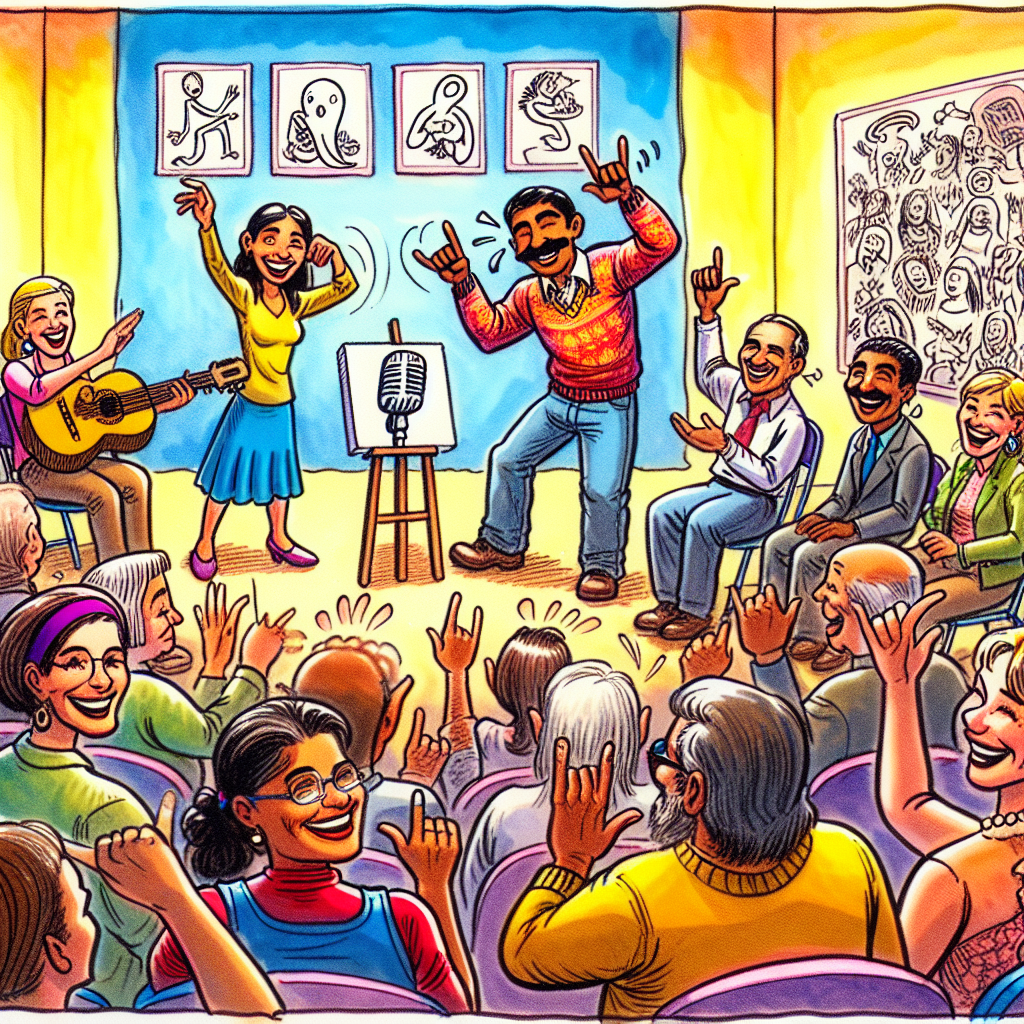
Key Figures in Deaf Comedy
No discussion on Deaf comedy would be complete without acknowledging the pioneers and current stars who have shaped this genre. Figures like Bernard Bragg, one of the earliest Deaf comedians, laid the groundwork for future generations. Bragg’s mime techniques and storytelling were revolutionary, offering a new dimension to the performing arts.
Contemporary icons include CJ Jones, a Deaf actor and comedian who has performed internationally and appeared in major films like “Baby Driver.” His humor, often drawn from his Deaf experience, serves as both entertainment and education.
Another notable figure is John Maucere, known for “SuperDeafy,” a character that humorously tackles everyday situations faced by Deaf individuals. His work extends beyond comedy into advocacy, blending humor with important social messages.
These comedians, among others, are not just entertainers but also cultural ambassadors who use their platforms to challenge stereotypes and foster a greater understanding of the Deaf world.
The Role of Deaf Humor in Education and Advocacy
Comedy has always been more than just entertainment; it also serves as a powerful tool for education and advocacy. Deaf humor is no exception, playing a crucial role in raising awareness about Deaf culture and the linguistic beauty of ASL.
Educational settings often incorporate humor as a teaching tool. Deaf schools and educational programs utilize comedic skits and stories to make learning engaging and relatable for Deaf students. This method not only makes the lessons more enjoyable but also reinforces cultural identity and pride among students.
Furthermore, advocacy organizations harness the power of humor to break down barriers and create dialogue. Events like Deaf Comedy Night Fundraisers bring together a diverse audience, using laughter to highlight key issues and garner support for Deaf causes. This approach helps humanize the advocacy efforts, making them more accessible and impactful.
Laughter, after all, is a universal language. By embedding humor into educational and advocacy efforts, the message becomes more memorable, facilitating a better understanding and acceptance of Deaf culture in mainstream society.
Challenges and Misconceptions
While Deaf humor is a bridge to understanding, it is not without its challenges. One of the primary obstacles is the perception that Deaf individuals are inherently different in ways that extend beyond hearing loss. This misconception can lead to paternalistic attitudes or, conversely, the erasure of the nuanced differences that make Deaf humor unique.
Another challenge lies in the translation of Deaf humor for hearing audiences. ASL is a complete, natural language with its own syntax and grammar, and much of its humor relies on these linguistic nuances. When translated into spoken or written English, many of these elements may be lost, diminishing the comedic effect. This linguistic barrier can make it difficult for hearing people to fully appreciate and understand Deaf humor.
Additionally, there can be resistance within the entertainment industry to fully embrace and integrate Deaf talent. While progress has been made, there remains a need for more representation and acceptance. Breaking through these barriers requires continued advocacy and demonstration of the value that Deaf comedians bring to the broader landscape of comedy.
These challenges highlight the need for increased awareness and education. By understanding and respecting the unique aspects of Deaf humor, a more inclusive environment can be fostered, benefiting both Deaf and hearing communities alike.
Conclusion
Deaf humor and comedy offer a rich, insightful perspective that goes beyond mere entertainment. It serves as a cultural glue that binds the Deaf community, providing a platform for expression, education, and advocacy. Through humor, Deaf individuals can share their experiences, challenge misconceptions, and foster a sense of identity and belonging.
The platforms available today, from online media to live performances, have made Deaf humor more accessible than ever before, allowing for a broader reach and greater impact. Pioneers and current icons continue to push the boundaries, using their craft to entertain while also educating and advocating for a more inclusive society.
Understanding and appreciating Deaf humor requires an openness to the cultural and linguistic nuances that define it. For hearing individuals, it offers a window into the Deaf experience, fostering empathy and reducing stereotypes. For the Deaf community, it reaffirms their shared experiences and provides a means of celebrating their unique perspective.
As we move forward, it is crucial to continue supporting and amplifying Deaf voices in comedy. By doing so, we not only enrich the comedic landscape but also contribute to a more inclusive and understanding world where diversity in all its forms is celebrated and valued.