

The landscape of deaf education has evolved significantly over the past few decades. Historically, educational approaches for deaf individuals primarily focused on the absence of hearing. Still, as our understanding of neurodiversity has expanded, so has our grasp of how intersecting conditions like ADHD (Attention Deficit Hyperactivity Disorder) and autism can influence the educational needs and experiences of deaf individuals. Understanding these overlapping areas is crucial for developing effective educational strategies and creating inclusive environments that foster the full potential of every individual, regardless of their neurological make-up.
Our journey begins by recognizing that both deafness and neurodiversity reside on spectrums, each with a broad array of manifestations and degrees. Deafness itself can range from partial to complete hearing impairment, and individuals may communicate via speech, sign language, or a combination of methods. Similarly, neurodiversity includes a variety of neurological conditions, such as ADHD and autism, each characterized by unique traits and needs. The intersection of these spectrums forms a complex matrix that demands a nuanced approach to education and awareness.
Central to this understanding is the recognition that both deafness and neurodiversity are forms of human diversity that contribute significantly to the richness of our communities. By fostering educational environments that accommodate these variations, we not only support the individual growth of students but also enhance the inclusivity and dynamism of our educational institutions. Let’s delve deeper into the intersection of deafness and neurodiversity, exploring the challenges and opportunities it presents.
The Unique Challenges at the Intersection
When considering the educational needs of individuals who are both deaf and neurodivergent, one must appreciate the unique set of challenges they may face. For example, a child with autism who is also deaf might struggle with traditional communication methods and require tailored approaches to learning and interaction. This dual diagnosis can complicate the diagnosis process itself, as behaviors and symptoms of ADHD or autism might be misattributed to deafness or vice versa.
Effective communication is vital in education, but it’s a multifaceted challenge for deaf and neurodivergent students. Children with ADHD, for instance, may struggle with attention and organization in a traditional classroom setup, necessitating additional strategies to help them engage. For those who are also deaf, traditional auditory instructional methods and classroom settings must be reimagined to include visual and kinesthetic elements that cater to their needs.
Additionally, social interaction can be especially challenging for deaf and neurodivergent individuals. The combined effects of communication barriers and social difficulties inherent in autism or ADHD mean that these students may face higher risks of isolation and bullying. These challenges underscore the importance of supportive, inclusive environments that foster effective peer interactions and a sense of belonging.
Building awareness among educators, students, and the community is also crucial. Teachers must be trained not only in deaf education but also in recognizing and addressing the needs of neurodivergent students. This dual understanding can help in creating lesson plans, classroom environments, and support networks that cater to the unique profiles of these students.
Innovative Approaches in Deaf and Neurodivergent Education
One of the essential steps towards creating inclusive educational environments is the implementation of innovative teaching methods that cater to both deaf and neurodivergent students. These methods often involve technology integration, customized learning plans, and a multi-sensory approach to teaching that considers the various ways students interact with and process information.
Assistive technologies have revolutionized the educational field, making it easier to address the unique needs of deaf and neurodivergent students. For instance, video relay services and captioning allow students to access spoken content visually. Similarly, speech-to-text applications and other translational tools can assist in bridging communication gaps. These technologies can be particularly effective when tailored to the individual’s specific needs, blending auditory, visual, and kinesthetic learning modes.
Customized learning plans are also instrumental. These plans are often developed through Individualized Education Plans (IEPs) that outline specific goals and accommodations for each student. An IEP for a deaf and ADHD student, for example, might include regular breaks to manage attention, direct instruction in sign language, and the use of visuals alongside textual materials to reinforce learning.
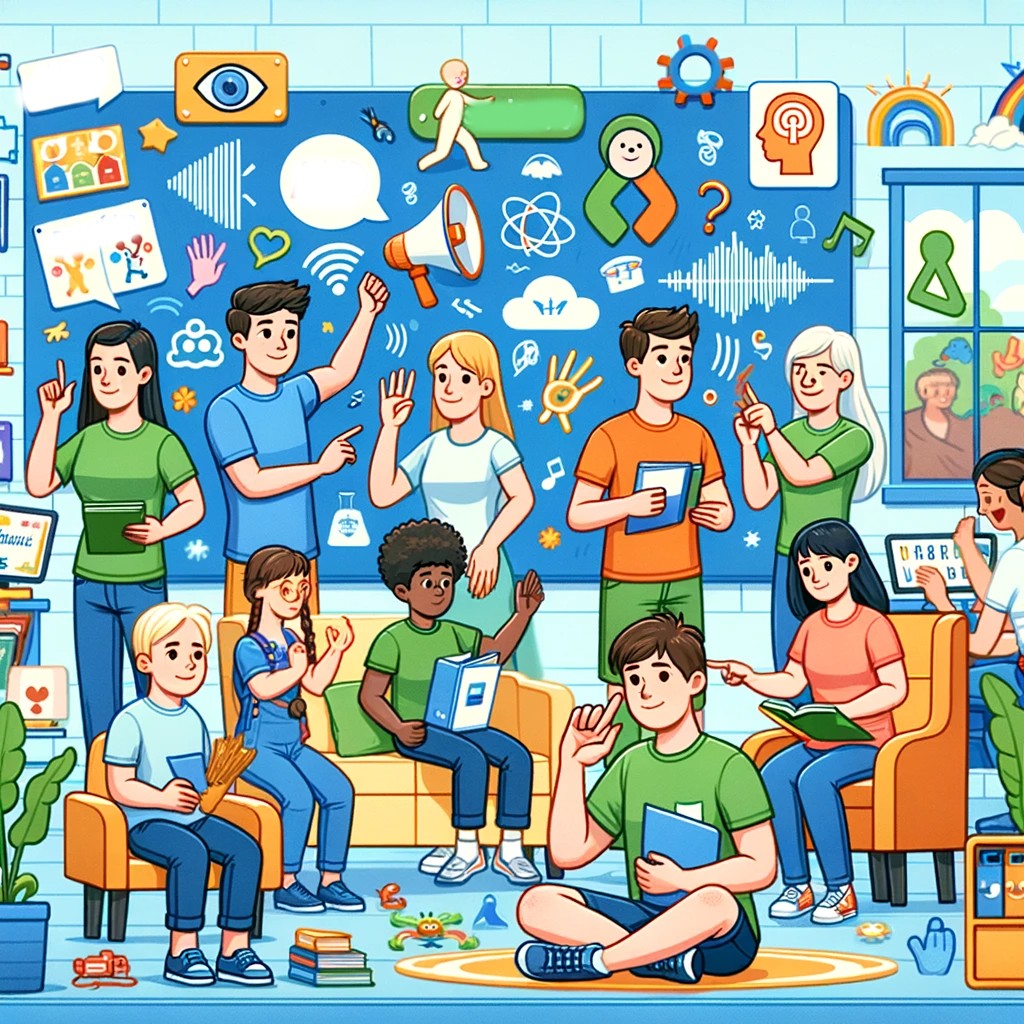
Furthermore, sensory-friendly classrooms can play a critical role in easing the learning process for these students. Such classrooms minimize sensory overload, which can be crucial for autistic students, by controlling lighting, reducing noise, and organizing spaces to be less chaotic. These adjustments not only make the environment more comfortable but also conducive to effective learning for all students.
Supporting Social Integration and Emotional Well-being
Social integration and emotional well-being are fundamental aspects of education, significantly influencing students’ ability to learn and thrive. For deaf and neurodivergent students, these aspects must be handled with particular care and consideration.
Creating an inclusive environment starts with fostering a culture of empathy and understanding among peers. Peer education programs can be highly beneficial in this regard. These programs teach other students about deafness and neurodiversity, promoting a culture of acceptance. By understanding the challenges their peers face, students can become more supportive and inclusive.
Inclusive activities and clubs can also play a huge role. For instance, sign language clubs or neurodiversity awareness clubs can provide platforms for students to bond over shared experiences and learn from each other. These spaces encourage social interactions in a supportive environment, helping students to build friendships and develop social skills.
Emotional well-being, often intertwined with social integration, must be prioritized through counseling and support services. School counselors trained in dealing with both deafness and neurodiversity can provide tailored emotional support. These professionals can help students navigate their unique experiences, manage stress, and advocate for their needs within the educational system.
Parent and Community Involvement
The role of parents and the broader community is indispensable in the education of deaf and neurodivergent students. Active involvement from these crucial stakeholders can significantly enhance the educational experience and outcomes for these learners.
Parents should be well-informed and engaged in their child’s educational journey. Regular communication with teachers and involvement in the development of IEPs ensure that parents’ insights and children’s needs are adequately considered. Workshops and training sessions for parents can empower them with the tools and knowledge to support their children at home effectively.
Community engagement also plays a significant role. Local organizations and support groups can provide resources and create networks where families can share experiences and advice. Engaging the community in awareness campaigns can foster broader acceptance and understanding, reducing stigma and promoting inclusivity.
Schools can facilitate this involvement through family-friendly events, open school policies, and active outreach programs. By fostering a collaborative approach between the school, parents, and the community, we can create a support system that surrounds and supports the student at all times.
Future Directions and Policy Changes
As we look towards the future, several policy changes and innovations can further enhance the educational experiences of deaf and neurodivergent students. Given the complex needs at this intersection, there’s a pressing need for policies that are flexible and adaptive.
Policies should mandate ongoing training for educators, ensuring that they stay current with the latest developments in both deaf education and neurodiversity. Continuous professional development programs can equip teachers with the skills to adapt to various learning styles and needs, making their classrooms more inclusive and effective.
Inclusion models in education policy should also be re-evaluated. Rather than segregating students based on their needs, inclusive education policies should promote collaboration and co-learning, encouraging environments where all students can thrive. This approach not only benefits deaf and neurodivergent students but enriches the entire student body, promoting empathy, understanding, and cooperation among peers.
Funding and resource allocation are critical as well. Adequate funding should be directed towards assistive technologies, support services, and infrastructure improvements. These resources are essential in creating environments conducive to learning and growth for deaf and neurodivergent students.
Finally, research and data collection should inform policy decisions. Ongoing research into the experiences and outcomes of deaf and neurodivergent students can provide valuable insights into the effectiveness of current practices and identify areas for improvement. Policymakers should rely on evidence-based practices to shape the educational landscape, ensuring that it evolves to meet the needs of all students.
Conclusion
The intersection of deafness and neurodiversity presents a unique and complex set of challenges and opportunities. By acknowledging and understanding these intersecting conditions, we can create educational environments that are truly inclusive and supportive. The journey towards this goal involves innovative teaching methods, supportive social and emotional frameworks, active parent and community involvement, and forward-thinking policy changes.
Deaf and neurodivergent students have the potential to achieve remarkable success when provided with the right tools, environments, and support. By fostering awareness and implementing inclusive practices, we not only enhance their educational experiences but also enrich our communities. It’s time to celebrate and support the diversity of learners, ensuring that every student, regardless of their challenges, has the opportunity to thrive.
As we move forward, let us commit to continuous learning and adaptation, embracing the rich diversity that deaf and neurodivergent individuals bring to our education systems. In doing so, we pave the way for a brighter, more inclusive future for all students.