
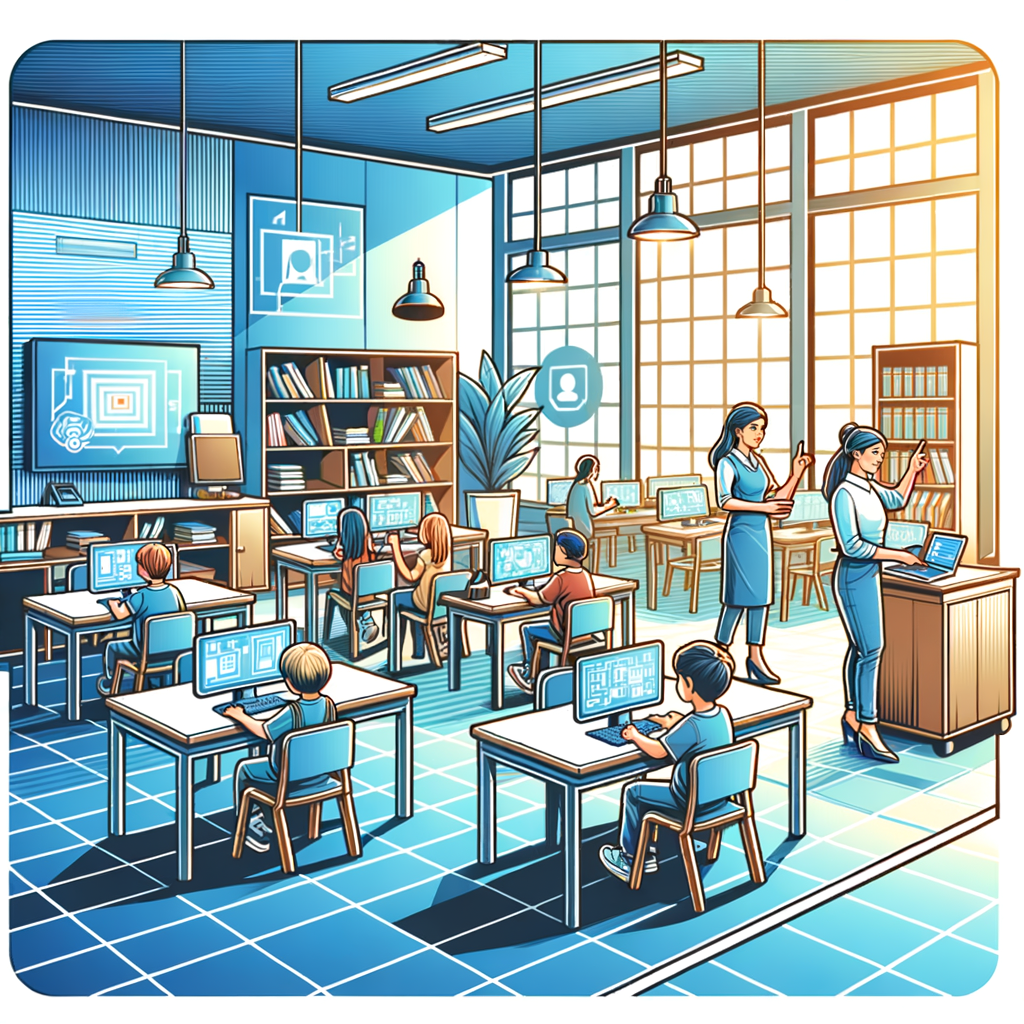
Creating visual learning spaces for young deaf learners is a crucial aspect of providing inclusive and effective education. Deaf learners rely heavily on visual cues and environments that support their unique communication needs. In a world where traditional auditory-based education is the norm, shifting the focus to a visually stimulating environment can significantly enhance the learning experience for these young students. There is a necessity to adapt both physical and virtual learning environments to cater to the visual-centric needs of deaf learners. This adaptation not only aids in improving comprehension but also ensures that these learners are not left behind due to their different mode of perceiving information. To do so, educators and institution administrators must understand the specifics of how to construct such spaces effectively.
In addition, technology plays a significant role in shaping modern visual learning environments. From interactive displays to assistive video technologies, there are a myriad of tools educators can employ to support deaf learners. Furthermore, it’s crucial to consider the emotional and social dimensions of learning, ensuring that young deaf learners feel included and empowered in their educational journey. Creating a comprehensive learning environment goes beyond academic needs; it includes addressing students’ cultural and social dynamics by valuing their deaf identity and integrating that into the educational framework. This article will delve into the various strategies educators can use to create effective visual learning spaces for young deaf learners, incorporating insights from technology, pedagogy, and inclusive education.
Designing Visual Learning Spaces
The physical environment plays a fundamental role in facilitating visual learning for deaf students. One of the foremost considerations when designing a classroom is ensuring that there are minimal visual obstructions. This involves arranging desks in a semi-circle or U-shape, allowing students to clearly see each other and their teacher, facilitating ease of communication. Seating arrangements that promote face-to-face interactions can significantly enhance understanding and participation. Moreover, classrooms should be equipped with ample lighting to ensure that sign language and facial expressions are clear and visible. Proper lighting is especially important as it helps in highlighting nuanced facial expressions and words, which are crucial for sign language comprehension.
A visually stimulating environment includes walls adorned with educational visuals such as charts, diagrams, and images that are relevant to the current curriculum. These visual aids serve as effective teaching tools that can provide context and clarification, especially in more complex subjects. Interactive learning boards and displays can offer dynamic content presentation, enabling teachers to incorporate videos and animations that can convey information more vividly than static texts. These visual elements should be strategically placed around the room so that students can easily refer to them during lessons. Different textures and vibrant colors can also enhance these learning aids, making them more engaging for young learners.
Technology Integration
Integrating technology in visual learning spaces can substantially enrich the educational experience for deaf students. Interactive whiteboards and tablets enable students to engage with content directly, providing them a platform to explore and understand topics thoroughly. Touch-based devices can encourage participation and active learning, enticing students to interact with lesson materials at their own pace. Educators can utilize software applications that offer visual learning resources tailored specifically for deaf students, incorporating features like closed captions, sign language tutorials, and visual summaries of complex topics. Applications that provide multimedia explanations can bridge gaps in understanding without relying on auditory cues.
Video technology also holds significant importance for deaf learners, from video lectures with sign language interpreters to educational materials that include subtitles. Platforms that allow for the playback and pausing of content enable learners to absorb information at their own speed, re-watching parts as necessary to ensure comprehension. Moreover, virtual reality (VR) can introduce immersive learning experiences, offering visual storytelling or simulations that engage students in a way traditional methods cannot. VR can transport learners to different historical eras, or allow them to explore the internal workings of a cell in biology, offering a three-dimensional perspective critical to understanding.
Pedagogical Strategies
Beyond the physical environment and technological tools, pedagogical strategies play a vital role in enhancing the learning experience for young deaf learners. Instructional methods should be adaptive, utilizing visual aids and resources wherever possible. Teachers can incorporate visual storyboards that summarize lessons, helping students to see the bigger picture rather than focusing on individual details. Using timelines and flowcharts helps in the breakdown of complex information into more digestible segments.
Collaborative learning is another effective strategy that can benefit deaf learners by providing a setting where they can practice sign language, develop social skills, and learn from one another. Group activities and projects encourage communication and idea exchange among peers, fostering a sense of community. Role-playing can be particularly beneficial, as it allows students to apply what they have learned in a social context, strengthening both academic and social skills. Educators should emphasize positive reinforcement and routinely check comprehension through visual means, ensuring that all students are on the same page.
Incorporating Deaf Culture and Community
Education is not merely about academic learning but also about cultural and social inclusion. Recognizing and celebrating deaf culture within the curriculum can enhance the learning environment for deaf students and contribute to a more inclusive community. Educators should strive to embed elements of deaf culture into lessons, familiarizing themselves and their students with important aspects of deaf history, literature, and achievements. Integrative activities such as storytelling through sign language or exploring deaf art can help promote an appreciation for the deaf community’s contributions to the broader society.
Moreover, involving families and the wider community in educational activities can create a support network that complements the students’ classroom learning. Organizing workshops for parents and seminars on deaf culture for school faculty and students can promote understanding and foster an inclusive environment. Schools can also benefit from partnerships with local deaf communities, inviting members to share their stories and experiences, thus providing relatable role models for young deaf learners.
Conclusion
Creating visual learning spaces for young deaf learners is an indispensable part of fostering an inclusive education system. It requires a multifaceted approach that integrates thoughtfully designed physical environments, effective pedagogical strategies, advanced technological tools, and a deep appreciation of deaf culture and community. By tailoring educational environments to meet the visual needs of deaf learners, educators can ensure that these students have access to the same opportunities for success as their hearing peers. Adapting to the unique ways that deaf learners process information is not only a step towards equality in education but also enriches the learning experiences for all students, encouraging innovative teaching practices that can benefit educational systems globally.
In conclusion, the effort to build conducive learning environments for young deaf learners should be seen as a commitment to inclusivity, adaptability, and respect for diversity. By investing in these changes, educators not only enhance educational outcomes for deaf students but also set a foundation for future innovations in learning environments. This holistic approach will help to craft the next generation of confident, empowered individuals who are comfortable in expressing their identities, contributing to a richer, more diverse world. The journey of creating such spaces may be ongoing, but the potential benefits make it a mission worth pursuing, ensuring education serves every child without barriers.