

In celebration of International Women’s Day, it’s important to honor the stories of deaf women who have made significant contributions to film, literature, and art. Their journeys, filled with challenges, triumphs, and groundbreaking achievements, offer a unique perspective on resilience, creativity, and empowerment.
Pioneers in Literature and Journalism
Deaf women have been influential figures in literature and journalism, often overcoming societal barriers to share their stories.
Charlotte Elizabeth Tonna, a popular British novelist and poet in the 1840s, became deaf at a young age but continued to write passionately about women’s rights and social issues, gaining renown as one of England’s most influential writers of her time. Similarly, Harriet Martineau, a deaf abolitionist and feminist, was an early sociologist and writer who contributed significantly to sociology and women’s rights. Her works covered various social reform topics, challenging the patriarchal norms of her time.
Breaking Barriers in Science
Deaf women have also made remarkable strides in scientific fields. Annie Jump Cannon, a deaf astronomer, created a star classification system that remains a cornerstone in astronomy today. Her innovative approach to combining photography with astronomical studies revolutionized how we understand the stars.
Regina Olson Hughes, another trailblazer, became a renowned scientific illustrator for her detailed botanical drawings. Her work for the Department of Agriculture involved creating thousands of intricate illustrations, earning her the distinction of being the first deaf artist to have a solo exhibition at the Smithsonian Museum.
Trailblazing in Sports and Activism
In the realm of sports and activism, deaf women have shown extraordinary courage and determination. Ashley Fiolek, a deaf motocross racer, became a champion and an influential figure in sports, embodying perseverance and passion. Her journey from a young racer to a prominent figure in motocross highlights the ability to overcome obstacles and achieve greatness.
Kitty O’Neil, another remarkable figure, excelled as a stuntwoman and athlete, setting numerous speed records and breaking gender barriers in a male-dominated field. Her success in Hollywood and sports is a testament to her relentless drive and talent.
Champions of Social Change
Deaf women have been at the forefront of social change and advocacy. Helen Kirkpatrick Watts, a deaf militant suffragette, was instrumental in the fight for women’s suffrage, demonstrating immense bravery and self-sacrifice. Her participation in hunger strikes and active role in visible protests marked her as a key figure in the suffrage movement.
Princess Alice of Battenberg, another inspiring figure, used her position to help others, despite being born deaf. During WWII, she bravely sheltered a Jewish family in Nazi-occupied Greece and engaged in extensive charity work, earning her recognition as a Hero of the Holocaust.
The Power of Representation in Children’s Literature
Representation in literature, especially for children, is crucial in shaping perceptions and fostering inclusivity. Samantha Baines, a deaf author and advocate, made significant contributions to this field with her children’s book ‘Harriet Versus the Galaxy.’ The book, which features a protagonist with hearing aids, plays an important role in normalizing hearing loss and promoting acceptance among young readers.
Influence in Film and Media
Deaf women’s stories have also been celebrated through film and media, offering powerful narratives that resonate with diverse audiences. Films such as ‘Hidden Figures,’ ‘Suffragette,’ and ‘The Eagle Huntress’ provide insight into the lives of women who defied expectations and societal norms to pursue their dreams and fight for justice.
These stories in film not only entertain but educate and inspire, highlighting the struggles and achievements of women from various backgrounds and abilities.
The Intersection of Art and Advocacy
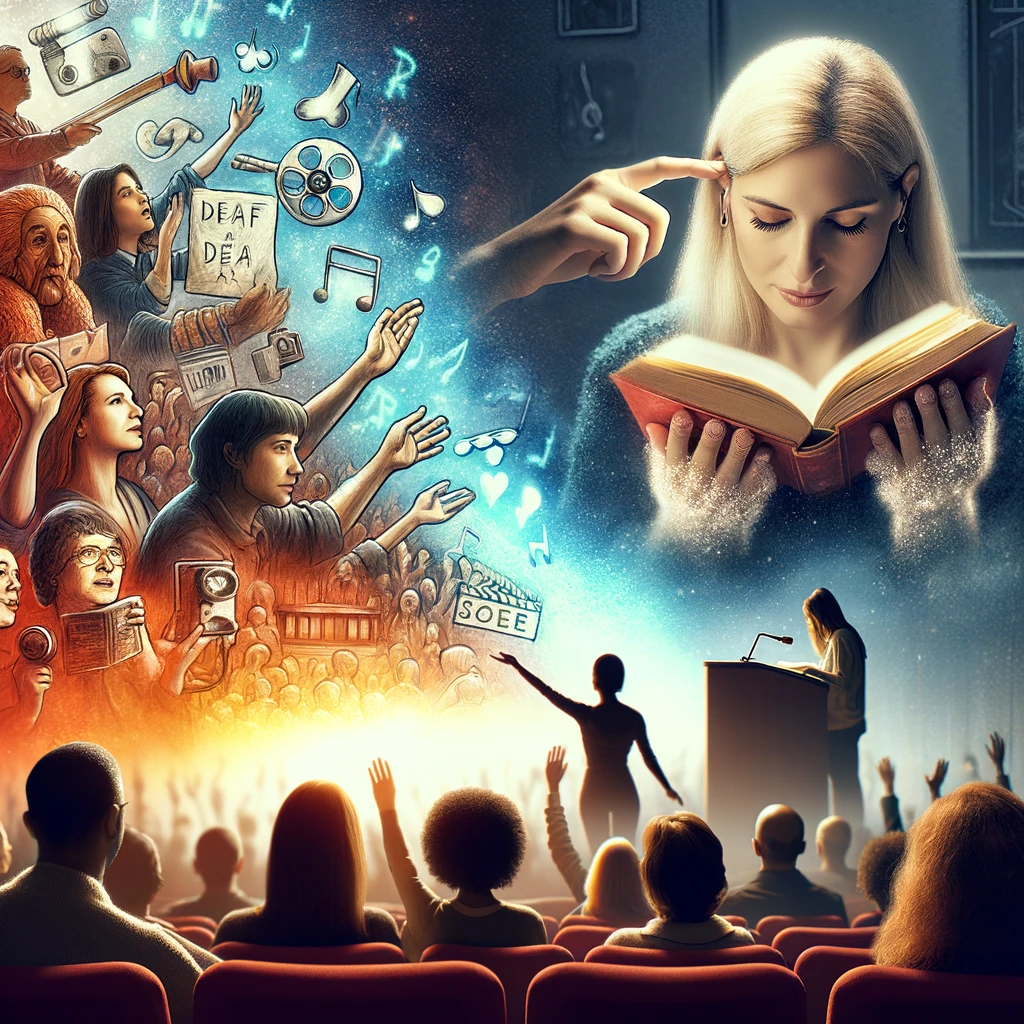
Art has always been a potent medium for expression and advocacy. Deaf women artists, through their creative endeavors, have conveyed powerful messages about their experiences and perspectives. Their art transcends language barriers, reaching a broad audience and creating a profound impact. The work of these artists not only celebrates their identity but also challenges the misconceptions about deafness and disability.
The Role of Education and Mentorship
Education plays a pivotal role in shaping the lives of deaf women. Trailblazers in education, like Helen Keller, have set a precedent for the importance of accessible education for deaf individuals. Their stories underscore the need for inclusive educational practices and the profound impact of mentorship and support in the lives of deaf students. By advocating for education, these women have opened doors for countless others, empowering them to pursue their dreams and aspirations.
The Digital Age: A Platform for Visibility
In the digital era, the stories of deaf women have found a wider platform. Social media, blogs, and online forums have allowed for greater visibility and networking among the deaf community. These platforms have become instrumental in sharing experiences, advocating for rights, and building a sense of community. The digital age has indeed democratized storytelling, giving a voice to those who were once marginalized.
The Future: Continuing the Legacy
As we celebrate International Women’s Day, it is crucial to not only reflect on the past achievements but also to look forward to the future. The legacy of these incredible women serves as a foundation upon which new generations of deaf women can build. The future holds the promise of greater representation, more inclusive policies, and continued advocacy for the rights and recognition of the deaf community.
Conclusion
The power of deaf women’s stories in film, books, and art is immeasurable. These narratives are not merely accounts of personal triumphs; they are catalysts for change, inspiring a new generation of women to break barriers and create a more inclusive world. As we celebrate these stories, we acknowledge the diverse experiences of deaf women and recognize their significant contributions to our society. Their journeys, filled with courage, determination, and creativity, continue to light the way for future generations, embodying the true spirit of International Women’s Day.
The stories of deaf women, told through various mediums, are vibrant tapestries of human experience, reflecting struggles, achievements, and the enduring spirit of resilience and hope. As we commemorate International Women’s Day, we celebrate these extraordinary women who, through their unique narratives, have enriched our understanding of the world and have boldly paved the way for a more inclusive and equitable society. Their legacy is a testament to the power of voice, in all its forms, to effect meaningful change and inspire future generations.