
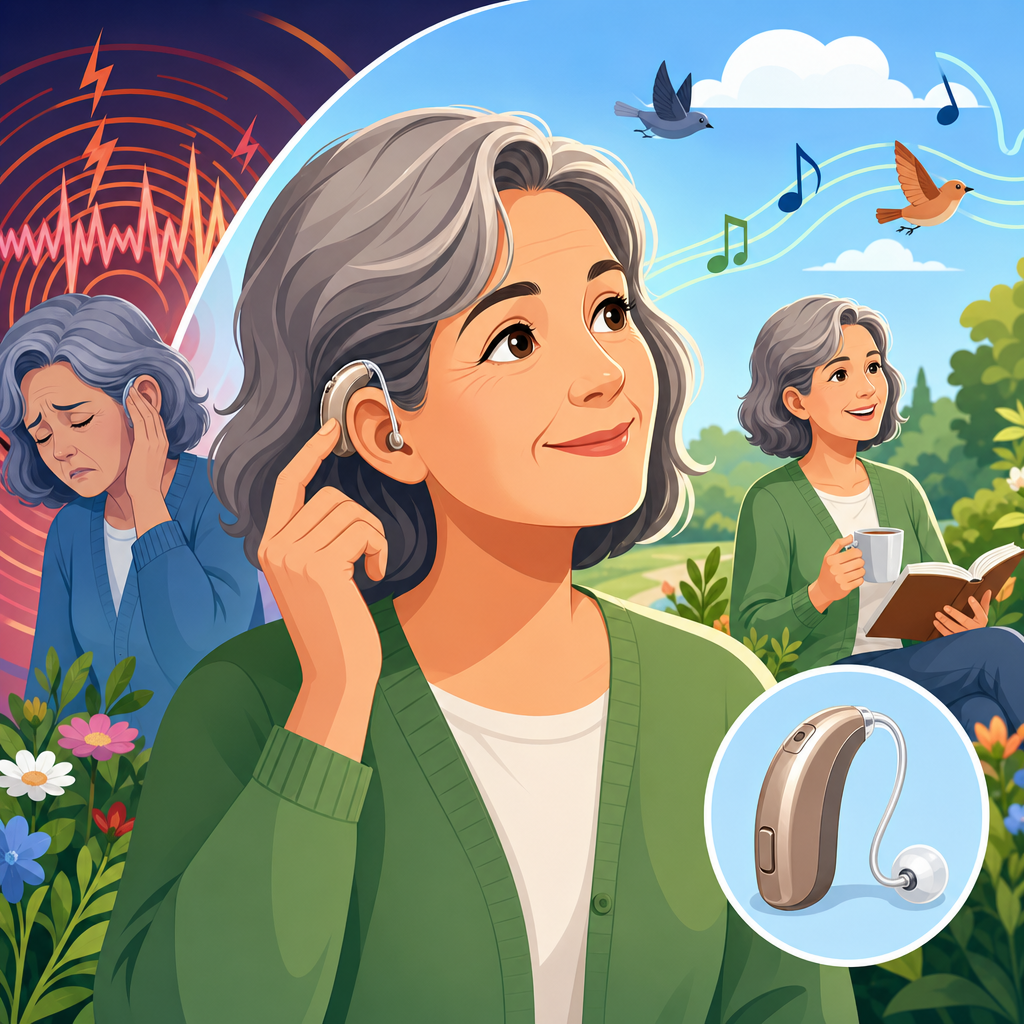
Tinnitus and hearing loss often travel together, which is why many people ask whether hearing aids can reduce ringing, buzzing, hissing, or roaring in the ears. The short answer is yes: hearing aids can help with tinnitus for many adults, especially when tinnitus occurs alongside measurable hearing loss. They do not cure tinnitus, and they do not work the same way for every person, but in clinical practice they are one of the most practical, evidence-based tools for reducing awareness and distress.
To understand why, it helps to define the terms clearly. Tinnitus is the perception of sound without an external source. People describe it as ringing, static, pulsation, clicking, crickets, or electrical humming. Hearing aids are wearable medical devices that amplify sound to improve audibility and communication. When tinnitus and hearing loss overlap, the brain may receive less external sound input than it expects. That reduced input can make internal noise feel louder and more intrusive. By restoring access to everyday sound, hearing aids often make tinnitus less noticeable.
This matters because tinnitus is common and disruptive. Research published by the National Institute on Deafness and other communication disorders estimates that roughly 10 to 25 percent of adults experience tinnitus, while a smaller group develops chronic symptoms that affect sleep, concentration, mood, and quality of life. In audiology clinics, I have repeatedly seen the same pattern: patients arrive focused on the ringing, but detailed testing shows untreated hearing loss that has been quietly increasing communication strain for years. Once hearing is addressed, tinnitus often becomes easier to manage.
This article serves as a complete hub for the general question, “Can hearing aids help with tinnitus?” It covers how they work, who benefits most, what features matter, what limitations to expect, and how hearing aids fit into a wider tinnitus management plan. If you are comparing hearing aid styles, prescription features, and treatment expectations, this page gives you the foundation needed before exploring more specific topics within hearing aids.
How hearing aids help with tinnitus
Hearing aids help tinnitus through several mechanisms, and the most important is sound enrichment. Tinnitus tends to stand out in quiet settings because there is little external sound competing with it. Amplification increases access to speech, environmental noise, and subtle everyday sounds such as airflow, footsteps, paper movement, distant traffic, and room ambience. That richer sound environment reduces the contrast between tinnitus and silence, making the internal sound less dominant.
A second mechanism is auditory stimulation. Many people with tinnitus have high-frequency sensorineural hearing loss, even if they have never noticed a major hearing problem. When the auditory system receives less input in certain pitch ranges, the brain may compensate by increasing neural gain, a process sometimes compared to turning up an internal volume control. Hearing aids cannot directly reverse every brain-level change associated with tinnitus, but they can improve sensory input and may reduce the need for that compensatory gain. In plain terms, the brain has more useful sound to process and less reason to fixate on tinnitus.
A third benefit is reduced listening effort. Untreated hearing loss forces the brain to work harder to understand speech, especially in noise. That constant effort can increase stress and fatigue, both of which commonly worsen tinnitus perception. By improving audibility, modern hearing aids reduce communication strain. Patients often report that they still hear tinnitus, but they feel less irritated by it because they are no longer exhausted from trying to keep up in conversation.
Many devices also include dedicated tinnitus features. These may generate broadband noise, ocean-like signals, fractal tones, or customized masking sounds. The goal is not always full masking. In fact, complete masking is not necessary for relief. Often the better strategy is partial masking or blending, where the sound generator softens the prominence of tinnitus without overwhelming normal listening. This approach supports habituation, the process by which the brain learns to treat tinnitus as less important.
Who is most likely to benefit
The best candidates are adults with tinnitus plus confirmed hearing loss on a diagnostic hearing test. That combination is extremely common. Studies frequently report that a large majority of people with chronic tinnitus show some degree of hearing loss, even when they initially believe their hearing is normal. Benefit is especially likely when tinnitus pitch overlaps the frequencies where hearing is reduced, because amplification restores sound in the same region where the brain is missing input.
People with mild to moderate high-frequency hearing loss often do particularly well. A common example is someone in their fifties or sixties who hears speech adequately in quiet but struggles in restaurants, meetings, or the car. They also notice ringing most at night or during reading. Once fit with properly programmed hearing aids, they often describe two changes: conversation becomes clearer, and the tinnitus recedes into the background during the day.
Not everyone is an ideal candidate. If hearing is normal across standard and extended frequencies, hearing aids may offer limited value unless a clinician identifies hidden hearing difficulties or recommends low-gain sound support. People with pulsatile tinnitus, unilateral tinnitus, sudden onset tinnitus, asymmetric hearing loss, dizziness, ear pain, or neurological symptoms need medical evaluation first. Those patterns can signal vascular conditions, Ménière’s disease, acoustic neuroma, earwax impaction, middle ear disorders, or medication effects. Hearing aids are a management tool, not a substitute for diagnosis.
Emotional response also matters. Patients with significant anxiety, insomnia, hyperacusis, or severe tinnitus distress often need a broader plan that includes counseling, sleep support, or cognitive behavioral therapy. Hearing aids can still help, but results are strongest when the clinical goal is realistic: reduce intrusiveness, improve hearing, and support habituation rather than promise silence.
What the research shows and what it does not
The evidence base is encouraging but nuanced. Clinical studies and systematic reviews generally find that hearing aids can reduce tinnitus handicap, annoyance, and daily awareness in many people with hearing loss. Benefits are often measured using validated tools such as the Tinnitus Handicap Inventory, Tinnitus Functional Index, visual analog scales, and patient-reported outcome measures. Across practice settings, the most consistent finding is not that tinnitus disappears, but that distress decreases and coping improves.
In real-world fittings, success depends heavily on proper programming, consistent wear time, and counseling. I have seen poor outcomes when devices were fit with low gain, limited high-frequency access, or unrealistic expectations. The same patient may improve significantly after verification with real-ear measures, better dome selection, and clearer education on adaptation. This is why expert fitting matters. A hearing aid is not a generic sound amplifier; it is a calibrated medical device that should match the patient’s hearing thresholds, loudness tolerance, and listening goals.
What research does not support is the claim that every tinnitus patient needs masking at all times or that one branded feature works universally. Some patients prefer no sound generator at all and improve through amplification alone. Others benefit from integrated relief sounds during quiet work or bedtime routines. There is also no single “best hearing aid for tinnitus” independent of the wearer’s hearing profile, dexterity, ear anatomy, lifestyle, and budget. Effective care is individualized.
Features to look for in hearing aids for tinnitus
When hearing aids are being considered for tinnitus, focus on fitting quality first and features second. The fundamentals matter most: accurate hearing assessment, appropriate style, comfortable physical fit, and verification with real-ear measurement. After that, certain features can improve tinnitus management.
| Feature | Why it matters for tinnitus | Practical example |
|---|---|---|
| Wide frequency bandwidth | Provides more access to high-frequency environmental sound where tinnitus often sits | A patient with steep high-frequency loss notices less ringing in daytime office settings |
| Real-ear verification compatibility | Confirms prescribed amplification is actually reaching the eardrum | High-frequency gain is adjusted after measurement instead of guessed in software |
| Tinnitus sound generator | Adds optional relief sounds for quiet environments or stress spikes | Broadband noise is blended with tinnitus during evening reading |
| App-based controls | Lets users adjust volume or relief sound safely within clinician-set limits | A wearer lowers masking slightly at work and raises it before sleep |
| Directional microphones and noise reduction | Improve speech understanding, reducing fatigue that can aggravate tinnitus | Conversation at a restaurant becomes easier, leaving less focus on ringing |
| Open-fit comfort | Reduces occlusion and keeps natural sound quality for mild to moderate high-frequency loss | The wearer avoids the plugged-ear sensation that can make internal noise seem louder |
Rechargeable batteries, Bluetooth streaming, and telehealth support can also matter indirectly. Streaming nature sounds, relaxation audio, or guided exercises from a phone can complement tinnitus care. Remote fine-tuning is useful when small changes in gain or masker level improve comfort.
What to expect during evaluation and fitting
A proper tinnitus-focused hearing aid process starts with case history. An audiologist should ask when tinnitus began, whether it is constant or intermittent, what it sounds like, what makes it worse, and how much it affects sleep, concentration, and emotional wellbeing. Standard hearing testing usually includes pure-tone thresholds, speech testing, tympanometry, and otoscopy. In many clinics, tinnitus questionnaires are used to establish baseline impact and track progress over time.
If hearing aids are recommended, device selection should be tied to hearing loss pattern and daily listening needs, not just tinnitus marketing claims. Programming should follow a recognized prescriptive method such as NAL-NL2 or DSL, then be verified with probe microphone measures. This step is essential. Without real-ear verification, clinicians cannot confirm that soft, average, and loud sounds are amplified appropriately in the patient’s actual ear canal acoustics.
Adaptation takes time. Most people need several weeks of regular use before the brain settles into the new sound environment. During that period, environmental sounds may seem unusually sharp because the brain is relearning signals it has been missing. Counseling helps users understand that this early awareness is normal and temporary. Follow-up appointments are where outcomes are won or lost. Small adjustments to gain, compression, dome venting, or tinnitus sound settings can make a major difference.
Limits, alternatives, and when to seek more help
Hearing aids are helpful, but they are not the only tinnitus treatment and they are not always enough on their own. If tinnitus remains highly distressing, the strongest non-device option is cognitive behavioral therapy, which has substantial evidence for reducing tinnitus-related suffering. Sound therapy, tinnitus retraining approaches, mindfulness-based interventions, sleep treatment, stress management, and medication review may also be appropriate depending on the case. Earwax removal, treating middle ear disease, and protecting hearing from further noise exposure are basic but important steps.
There are tradeoffs. Hearing aids require daily wear, maintenance, and adaptation. Some users need custom earmolds, moisture protection, or frequent follow-up if they have dexterity challenges, fluctuating hearing, or sound sensitivity. Cost can also be a barrier, especially because insurance coverage varies. Over-the-counter hearing aids may help some adults with perceived mild to moderate hearing loss, but tinnitus cases still benefit from diagnostic testing and professional guidance because red flags can be missed and fitting precision matters.
Seek prompt medical attention if tinnitus is one-sided, pulsatile, suddenly worse, associated with sudden hearing loss, or paired with vertigo, facial weakness, or neurological changes. Those situations warrant evaluation by an ENT physician, audiologist, or both. For everyone else, the practical next step is straightforward: get a comprehensive hearing assessment and discuss whether hearing aids, with or without tinnitus features, match your hearing profile and symptoms.
Hearing aids can absolutely help with tinnitus when hearing loss is part of the picture. They work by restoring access to sound, lowering listening effort, and reducing the contrast that makes internal noise feel overwhelming. The best outcomes come from individualized fitting, verified programming, realistic expectations, and follow-up care rather than a one-size-fits-all device choice. If you are hearing ringing and missing parts of conversation, addressing both issues together is usually more effective than chasing tinnitus alone. Start with a full evaluation, ask about real-ear verification and tinnitus management options, and use this hub as your foundation for exploring the wider world of hearing aids.
Frequently Asked Questions
Can hearing aids really help with tinnitus?
Yes, hearing aids can help many people manage tinnitus, particularly when tinnitus appears alongside hearing loss. In fact, this is one of the most common and practical reasons audiologists recommend hearing aids for adults who notice both reduced hearing and persistent ringing, buzzing, hissing, or roaring sounds. The reason they can help is fairly straightforward: when hearing loss reduces access to everyday environmental sounds, the brain may pay more attention to internal noise signals, making tinnitus seem louder or more intrusive. By amplifying outside sounds such as speech, background ambience, and other everyday noises, hearing aids can reduce the contrast between tinnitus and the surrounding sound environment.
That said, it is important to set realistic expectations. Hearing aids do not cure tinnitus, and they do not eliminate it for everyone. Some people experience a clear reduction in how loud or bothersome tinnitus feels, while others notice more modest improvement. Often, the biggest benefit is not that the sound disappears completely, but that it becomes easier to ignore, less stressful, and less disruptive to concentration, sleep, and daily life. For many adults with hearing loss-related tinnitus, that kind of relief can be significant.
How do hearing aids reduce the perception of ringing or buzzing in the ears?
Hearing aids help with tinnitus in several ways. First, they restore access to sounds that may have been missing because of hearing loss. When the brain receives more complete sound input from the outside world, tinnitus may become less prominent. Many people describe this as the ringing being “covered up” or “blended into” normal daily sound, although the effect is often more subtle than simple masking. It is not just about making things louder; it is about improving the balance of sound the brain receives.
Second, better hearing can reduce listening strain and mental fatigue. When someone is working hard all day to follow conversations, hear the television, or understand speech in noisy places, stress levels may increase, and stress is a well-known factor that can worsen tinnitus awareness. By improving communication and reducing effort, hearing aids may indirectly lower the emotional burden associated with tinnitus. Some devices also include built-in tinnitus sound support features, such as soft white noise, nature sounds, or customized sound therapy programs, which can further help certain users manage symptoms throughout the day.
Do hearing aids work for everyone with tinnitus?
No, hearing aids do not work the same way for every person with tinnitus. They tend to be most helpful when tinnitus occurs with measurable hearing loss, because in those cases the devices address an underlying hearing problem that may be contributing to tinnitus awareness. If a person has tinnitus but normal hearing test results, traditional hearing aids may be less beneficial, though other sound therapy or tinnitus management strategies may still help. The type of tinnitus, how long it has been present, emotional stress, sleep quality, noise exposure history, and overall hearing profile can all influence results.
This is why a proper evaluation matters. An audiologist can assess hearing levels, discuss tinnitus patterns, and determine whether hearing aids are likely to provide meaningful relief. Even among good candidates, outcomes vary. Some people notice improvement almost immediately when they begin wearing hearing aids consistently, while others need several weeks of regular use before the brain adjusts and the tinnitus becomes less noticeable. The goal is not to promise a one-size-fits-all solution, but to identify whether hearing aids are a strong part of a broader tinnitus management plan.
What features should I look for in hearing aids if I have tinnitus?
If you have tinnitus, the most useful hearing aid is not necessarily the most expensive one, but the one that is properly fitted to your hearing loss and lifestyle. Accurate programming is critical, because a hearing aid that under-amplifies or over-amplifies can be less effective and more frustrating to wear. Beyond the basics, many people benefit from devices that offer tinnitus-specific features such as built-in sound generators, adjustable masking sounds, smartphone app control, and fine-tuning options that allow the audiologist to personalize settings over time. Comfort and consistent wear are also essential, because hearing aids can only help if you use them regularly.
Other practical features may also matter depending on your day-to-day needs. Directional microphones and noise management can improve speech understanding in busy environments, which may reduce listening stress. Bluetooth connectivity can make phone calls and media listening easier, while rechargeable batteries can simplify daily use. If tinnitus is especially bothersome in quiet environments, ask whether the device includes sound support programs designed for relaxation or background sound enrichment. A hearing aid should be selected not just for the tinnitus itself, but for the full hearing and communication picture.
Are hearing aids enough on their own, or should tinnitus be treated in other ways too?
For some people, hearing aids provide enough improvement that tinnitus becomes much less disruptive. For others, the best results come from combining hearing aids with additional management strategies. Tinnitus is not just an ear issue; it often involves attention, stress, sleep, and emotional response. Because of that, a more complete treatment approach may include counseling, sound therapy, stress reduction, sleep support, and in some cases cognitive behavioral therapy or tinnitus retraining approaches. These methods do not mean the tinnitus is “all in your head.” They are evidence-based tools that help reduce the distress associated with the sound and retrain how the brain responds to it.
If tinnitus is persistent, worsening, only in one ear, pulsing in rhythm with your heartbeat, or accompanied by sudden hearing changes, dizziness, or ear pain, it is important to seek medical evaluation rather than relying on hearing aids alone. In many routine cases, though, hearing aids are one of the strongest first-line options because they address hearing loss and can make tinnitus easier to live with. The most effective plan is usually personalized: identify the hearing status, fit the right device if appropriate, monitor progress, and add other supports if needed. That balanced approach gives people the best chance of meaningful, long-term relief.