
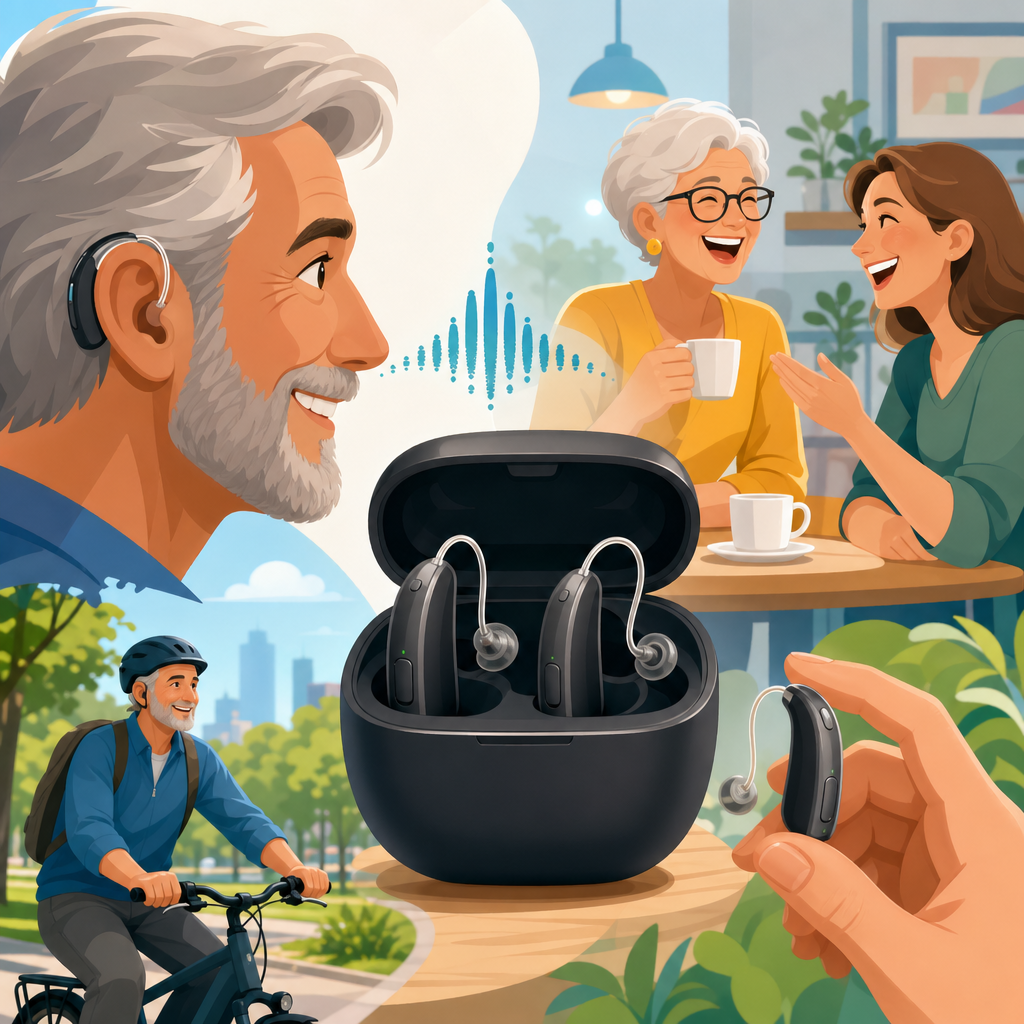
Bose hearing aid is a phrase many shoppers use when they want premium sound quality in a device that also helps them hear speech more clearly, but the topic needs careful explanation because Bose has not released a traditional prescription hearing aid under its own name. What Bose did bring to market was the Bose SoundControl Hearing Aids, a self-fitting over-the-counter style product introduced before the current OTC category was fully established, and that product changed how many people think about accessible hearing support. In practice, understanding Bose hearing aid options means understanding the difference between hearing aids, hearables, personal sound amplification products, and prescription devices, as well as where Bose fits into that landscape today.
I have worked with patients and consumers comparing direct-to-consumer hearing technology, and Bose comes up often because people trust the brand’s audio reputation. That trust is understandable. Bose built its name on acoustic engineering, signal processing, and user-friendly consumer electronics. Those strengths matter in hearing care, where comfort, sound tuning, feedback control, and speech audibility can determine whether a device gets worn daily or left in a drawer. At the same time, hearing treatment is not the same as buying headphones. A hearing aid must match a person’s hearing loss pattern, listening environments, dexterity, budget, and expectations. That is why this subject matters: buyers searching for a Bose hearing aid are usually trying to solve a real communication problem, and the right answer depends on more than brand recognition.
This guide explains what Bose offered, how the SoundControl product worked, who it was for, how it compares with current over-the-counter and prescription hearing aids, and what to consider before buying any device in this category. If you want a clear, practical overview of Bose hearing aid options and their place in the wider hearing aids market, this article is the hub page to start with.
What Is a Bose Hearing Aid and Does Bose Still Make One?
A Bose hearing aid usually refers to the Bose SoundControl Hearing Aids, a pair of self-fitting devices designed for adults with perceived mild to moderate hearing loss. They were notable because they allowed users to adjust settings themselves through a smartphone app instead of visiting a clinic for a traditional fitting. Bose received FDA de novo authorization for the self-fitting technology, which was a significant regulatory milestone. That authorization helped validate the idea that some adults could set up hearing assistance safely and effectively on their own when the intended use was limited to mild to moderate hearing difficulty.
Today, however, Bose is not a mainstream hearing aid manufacturer in the way that Phonak, Oticon, Signia, ReSound, Starkey, or Widex are. The SoundControl product has been discontinued, and Bose’s hearing-health technology has since been discussed more in licensing and platform terms than as an active standalone hearing aid line sold directly to the public. That means someone searching for a Bose hearing aid is often really asking one of three questions: Did Bose make hearing aids? Can I still buy them? What current alternatives offer a similar self-fitting experience? The direct answers are yes, generally no as a current active product, and yes, several current OTC devices now serve the same general buyer need.
This distinction matters because outdated product pages, marketplace listings, and review roundups can create confusion. When evaluating any listing claiming to sell a Bose hearing aid, check whether it is new old stock, refurbished inventory, unsupported resale, or a different class of amplification product entirely. For hearing devices, software support, battery condition, app compatibility, and return rights matter just as much as the hardware itself.
How Bose SoundControl Worked in Real Use
Bose SoundControl was designed around simplicity. Instead of requiring a custom audiogram entered by a clinician, the system guided users through in-app adjustments that changed loudness and focus. In plain terms, users could tune how much amplification they wanted and how strongly the devices emphasized speech versus broader environmental sound. That self-fitting model appealed to adults who noticed increasing difficulty in restaurants, family gatherings, television listening, or one-on-one conversations but were not ready to schedule a full hearing clinic appointment.
In my experience evaluating self-fitting products, the main challenge is not turning up volume; it is shaping sound so speech becomes clearer without making background noise unbearable. Bose approached that challenge with directional control and user-guided tuning rather than a clinic-heavy programming workflow. The appeal was straightforward: familiar consumer app design, rechargeable convenience, and more autonomy for the user. For many first-time buyers, that lowers the psychological barrier to getting help.
There were limitations. Self-fitting works best for straightforward mild to moderate hearing loss, especially when the user can judge sound quality reliably and follow app instructions. It is less suitable for severe hearing loss, asymmetrical hearing loss, sudden changes in hearing, chronic ear disease, persistent tinnitus requiring medical evaluation, or situations where speech understanding is poor even when sounds are loud enough. A person can perceive that “everything sounds muffled” for reasons that require diagnostic testing, not just amplification.
The SoundControl concept remains important because it influenced the market. It demonstrated that hearing assistance could be packaged more like mainstream consumer technology while still relying on legitimate hearing science and FDA oversight. That helped open the door for the current wave of OTC hearing aids that combine app-based hearing checks, self-fitting routines, rechargeable cases, and remote support.
Who a Bose Hearing Aid Was Best For
The ideal Bose SoundControl user was an adult over 18 with perceived mild to moderate hearing loss who wanted an accessible starting point. Typical candidates included someone who heard reasonably well in quiet but struggled with speech in background noise, often asked people to repeat themselves, or raised the television volume more than family members preferred. These are classic early signs of hearing difficulty. Because the product was self-fitting, success also depended on smartphone comfort, willingness to experiment with settings, and realistic expectations about what amplification can and cannot do.
It was not a universal solution. People with steeply sloping high-frequency hearing loss, significant word recognition problems, or complex medical histories usually benefit more from a full hearing evaluation and professionally fitted devices. I have seen many consumers assume all hearing problems are basically volume problems. They are not. Hearing loss often affects clarity, especially consonants such as s, f, th, and sh. The best device is the one that restores audibility while controlling feedback, reducing circuit noise, and managing difficult listening environments.
| Buyer situation | Was Bose-style self-fitting a good match? | Why |
|---|---|---|
| Mild trouble hearing conversation in noise | Usually yes | App-based tuning can improve speech audibility without a clinic visit |
| Moderate hearing loss with basic smartphone skills | Often yes | Self-fitting and rechargeability suit first-time users seeking simplicity |
| Severe hearing loss | No | Needs greater output, precise programming, and clinical verification |
| One ear much worse than the other | No | Asymmetry can indicate a medical issue and needs diagnostic testing |
| Sudden hearing changes or ear pain | No | Medical assessment should come before any hearing aid purchase |
That framework still applies when shoppers compare current OTC devices. If your hearing issue is common, gradual, and mild to moderate, self-fitting may be a practical starting point. If the situation is complex, a hearing clinic is the safer route.
Bose Hearing Aid vs OTC Hearing Aids vs Prescription Hearing Aids
The easiest way to compare categories is to focus on regulation, fitting method, support level, and clinical complexity. Bose SoundControl sat in the self-fitting direct-to-consumer space. Today’s OTC hearing aids occupy similar territory for adults with perceived mild to moderate hearing loss. Prescription hearing aids, by contrast, are dispensed through hearing care professionals and can address a wider range of losses with more precise programming.
OTC hearing aids generally offer lower entry prices, app-based setup, and convenient online ordering. Good examples in the current market include models from Jabra Enhance, Sony, Lexie, Sennheiser’s hearing category partners, and Eargo in selected use cases. Features may include directional microphones, Bluetooth streaming, rechargeable batteries, telecoil in some models, noise reduction, feedback management, and remote support. The quality gap between strong OTC devices and entry prescription devices is narrower than many shoppers expect, especially for uncomplicated mild to moderate losses.
Prescription hearing aids still lead where customization matters. Audiologists and hearing instrument specialists can run real-ear measurements, which are the gold standard for verifying that amplified sound reaching the eardrum matches target levels such as NAL-NL2. They can also manage venting, dome selection, receiver strength, compression settings, tinnitus programs, and adaptation over time. For difficult listening demands, these details are not optional extras; they directly affect outcomes.
Bose’s significance lies in helping normalize a middle path. It showed that some people do not need or want the full clinical pathway at the start, but they still deserve a real hearing device rather than a crude amplifier. That remains one of the most important shifts in the hearing aids category.
Features People Expected From Bose and What to Look for Now
People drawn to Bose usually expected strong sound engineering, easy controls, and a polished app experience. Those remain smart buying criteria. When you evaluate current alternatives, look first at fit style. Most self-fitting products are receiver-in-canal or open-fit behind-the-ear designs because they work well for the common pattern of high-frequency hearing loss while keeping the ear less occluded. If your own voice sounds boomy in closed domes, open-fit designs often feel more natural.
Next, examine the adjustment system. The best OTC hearing aids let users fine-tune more than overall volume. Useful controls include speech focus, listening programs, environmental adaptation, left-right balance, and sometimes a self-administered in-app hearing test. Rechargeable lithium-ion power is now standard in many better devices, but battery life can vary significantly depending on streaming use. If you frequently use Bluetooth for calls or media, advertised runtimes may overstate real daily endurance.
Connectivity also matters. Some buyers assume every hearing aid streams audio the same way. In reality, compatibility differs across iPhone and Android ecosystems, Bluetooth protocols, and app reliability. Check supported phone models before buying. Strong support policies are another nonnegotiable feature. A hearing aid is a body-worn medical device, not just a gadget. Look for at least a 45-day trial, transparent warranty terms, clear loss-and-damage rules, and accessible customer support that can walk you through fit and programming issues.
Finally, prioritize speech understanding over brand aura. Premium audio branding does not automatically translate into better hearing outcomes. The right device is the one you wear consistently because it is comfortable, intelligible, stable, and easy to manage.
Buying Considerations, Red Flags, and Best Next Steps
If you are shopping for a Bose hearing aid today, start by reframing the search. Instead of looking for discontinued inventory, define the problem you need solved. Are conversations hard to follow in noise? Do you miss high-pitched voices? Are meetings, worship services, or television your biggest pain points? Your answers should guide whether you choose an OTC device, a remote-care model, or an in-person prescription fitting.
Watch for red flags. Avoid listings that blur the line between hearing aids and simple sound amplifiers. A personal sound amplification product can make everything louder but may lack the processing sophistication needed for comfort and clarity. Be cautious with marketplace sellers offering old Bose units without verified battery health, charger condition, app support, or return protection. App abandonment is a real issue; if the companion software no longer updates reliably, even excellent hardware becomes frustrating fast.
Before buying, take a hearing screening or, better yet, get a diagnostic hearing test if you have not had one in the last few years. Hearing loss can be linked with wax blockage, middle ear problems, noise exposure, aging, or less common medical conditions. Public health research has also associated untreated hearing loss with social isolation, increased listening fatigue, and cognitive strain. That does not mean every person needs expensive treatment immediately, but it does mean delaying assessment indefinitely is rarely the best strategy.
If you want the closest modern equivalent to the Bose SoundControl experience, focus on reputable OTC brands with self-fitting apps, strong return windows, and optional professional support. If your hearing loss is more than mild to moderate, if one ear differs sharply from the other, or if speech remains unclear even at higher volume, book an appointment with an audiologist. The fastest way to save money is often to choose the right pathway first.
The core fact about Bose hearing aid searches is simple: Bose played an important role in making self-fitting hearing technology credible, but it is not currently the go-to active brand for buying a new hearing aid. The Bose SoundControl Hearing Aids showed that adults with perceived mild to moderate hearing loss could benefit from app-guided setup, direct purchase, and straightforward controls. That contribution still matters because it helped shape today’s OTC hearing aids market.
For buyers, the bigger lesson is not about chasing one brand. It is about matching the device category to the hearing problem. If your needs are mild to moderate and uncomplicated, a current OTC hearing aid from a reputable company may deliver exactly what you hoped a Bose hearing aid would offer: better speech access, easier daily communication, and a lower-friction starting point. If your hearing profile is complex, prescription hearing aids and professional verification remain the better option.
Use this hub article as your starting point for the wider Hearing Aids topic. Compare device types, check support policies, and get your hearing tested if you have any uncertainty. The right hearing aid is the one that fits your hearing, your lifestyle, and your willingness to use it every day. Start there, and the rest of the buying decision becomes much clearer.
Frequently Asked Questions
Did Bose ever make a real hearing aid?
Yes, but with an important distinction. Bose did not release a traditional prescription hearing aid under its own name in the way many shoppers imagine when they search for a “Bose hearing aid.” Instead, Bose introduced the Bose SoundControl Hearing Aids, a self-fitting device designed for adults with perceived mild to moderate hearing loss. That made it different from prescription hearing aids that are selected, programmed, and monitored through a hearing care professional. The SoundControl product was notable because it gave users more direct control over their listening settings and helped push the market toward more consumer-friendly hearing solutions. In other words, Bose did make a hearing-related product that functioned as a hearing aid, but it was not a conventional prescription model sold through the traditional clinic-based process.
What were Bose SoundControl Hearing Aids, and why were they so important?
Bose SoundControl Hearing Aids were self-fitting hearing devices that let users personalize amplification without needing an in-office fitting first. Their significance goes beyond the product itself. At the time, many people felt hearing aids were expensive, complicated, and difficult to access. Bose helped challenge that perception by offering a more approachable option focused on user control, direct adjustment, and a simplified buying experience. The product arrived before the modern over-the-counter hearing aid category was fully established, so it played a major role in changing expectations around accessibility and convenience. For many consumers, the idea that a recognizable audio brand could create a hearing device made the category feel less intimidating. That influence is part of the reason the phrase “Bose hearing aid” still shows up so often in searches today.
Are Bose hearing aids still available to buy today?
In most cases, shoppers looking specifically for a Bose-branded hearing aid will find that availability is limited or no longer current in the way they expect. Bose SoundControl Hearing Aids were a real product, but Bose is not generally positioned today as a mainstream hearing aid manufacturer offering a full lineup of current prescription or OTC devices under its own consumer brand. This is where confusion often happens. People may search for Bose because they trust the company’s reputation for audio quality, but that does not necessarily mean Bose currently sells a broad hearing aid catalog like established hearing aid brands do. If you are shopping now, it is smart to verify current product status through official sources and compare it with modern OTC hearing aids and prescription options from companies that actively support hearing devices on an ongoing basis.
Is a Bose hearing aid the same thing as an OTC hearing aid?
Not exactly, although the ideas are closely related. The Bose SoundControl Hearing Aids were widely seen as part of the movement toward easier-to-buy, self-directed hearing help. However, they were introduced before the current OTC hearing aid framework was fully in place. Today, OTC hearing aids are a defined category intended for adults with perceived mild to moderate hearing loss, and they are designed to be purchased without a prescription, hearing exam, or professional fitting requirement. Bose’s product helped pave the way for that shift in consumer access, but it is best understood as an early self-fitting hearing aid that influenced the market rather than as a simple one-to-one example of every OTC hearing aid available now. Modern OTC products may differ in app features, sound processing, return policies, rechargeability, comfort, and long-term support.
What should you look for if you want the “Bose hearing aid” experience today?
If what you really mean by “Bose hearing aid” is premium sound, strong speech clarity, easy setup, and user-friendly controls, focus on features rather than the name alone. Look for a hearing device with high-quality sound processing, clear speech enhancement, adjustable listening programs, and an app that lets you fine-tune settings without frustration. Rechargeable batteries, comfortable fit, background noise management, and good customer support are also important. Just as important, be realistic about your hearing needs. If you have mild to moderate hearing difficulty and want a more direct, self-guided experience, a modern OTC hearing aid may be worth considering. If your hearing loss is more significant, uneven between ears, sudden, or accompanied by ringing, dizziness, or ear pain, a prescription hearing aid evaluation is the safer path. The best takeaway is that the “Bose hearing aid” search often reflects a desire for better sound and easier access, and today there are multiple ways to pursue that goal depending on your hearing profile.