

In today’s digitally driven world, assistive technology apps have become a game-changer for individuals who are Deaf or hard of hearing. These innovative tools offer a newfound level of accessibility, allowing for smoother communication, better information access, and enhanced overall quality of life. Whether you’re navigating a bustling day or winding down at home, there are a variety of apps designed to meet your unique needs. By integrating these resources into your daily routine, you can break down barriers and foster greater independence.
Understanding the broad spectrum of tools available is crucial. This article aims to shed light on the best apps that can support you in various aspects of life, from communication to education and beyond. We will explore several top-rated applications, their features, and how they can be effectively utilized. Our goal is to equip you with knowledge that empowers and enables you to make the most out of your daily experiences. Additionally, this article addresses the importance of continued awareness about Deaf resources and the role technology plays in bridging gaps.
Communication: Bridging Conversations
Effective communication is foundational to our daily lives. For Deaf individuals, this often means utilizing tools that can translate spoken language into text or sign language. One notable app is AVA. AVA provides real-time captions, allowing users to participate actively in conversations whether they are in a meeting, social gathering, or educational setting. The app’s accuracy and promptness in providing captions help eliminate misunderstandings and ensure that Deaf individuals are included in dialogues.
Another essential app is Glide. Glide offers video messaging tailored for sign language users. Unlike traditional text messaging, Glide enables users to send video messages, making it a perfect means of communication for those who use sign language as their primary mode of communication. Additionally, Glide stores these videos in the cloud, allowing easy access anywhere, anytime.
Convo provides Video Relay Service (VRS) and Video Remote Interpreting (VRI). While VRS allows users to make video calls with sign language interpreters to voice call recipients, VRI offers on-demand interpreting services for situations where an in-person interpreter is not available.
Education: Enhancing Learning Experiences
Education is a realm where assistive technology apps make a significant impact. Apps like Lagakos are revolutionizing how Deaf students interact with educational content. Lagakos offers a comprehensive library of video lessons in American Sign Language (ASL), spanning various subjects. This ensures that Deaf students have equal access to high-quality educational resources, supporting their academic growth.
Another valuable resource is VoxBooks, an app that provides interactive and accessible e-books. Each book in the app’s library is paired with video interpretations in ASL, allowing Deaf students to enjoy literature and improve their reading skills. VoxBooks also include activities and quizzes to reinforce comprehension and engagement.
For higher education, Gopal presents lecture translation services. This app can transcribe spoken lectures into text, which Deaf students can follow along in real-time. By offering accurate transcriptions, Gopal ensures that Deaf individuals do not miss out on important information delivered during lectures and presentations. Combining these apps can create an inclusive and supportive learning environment.
Social Integration: Staying Connected
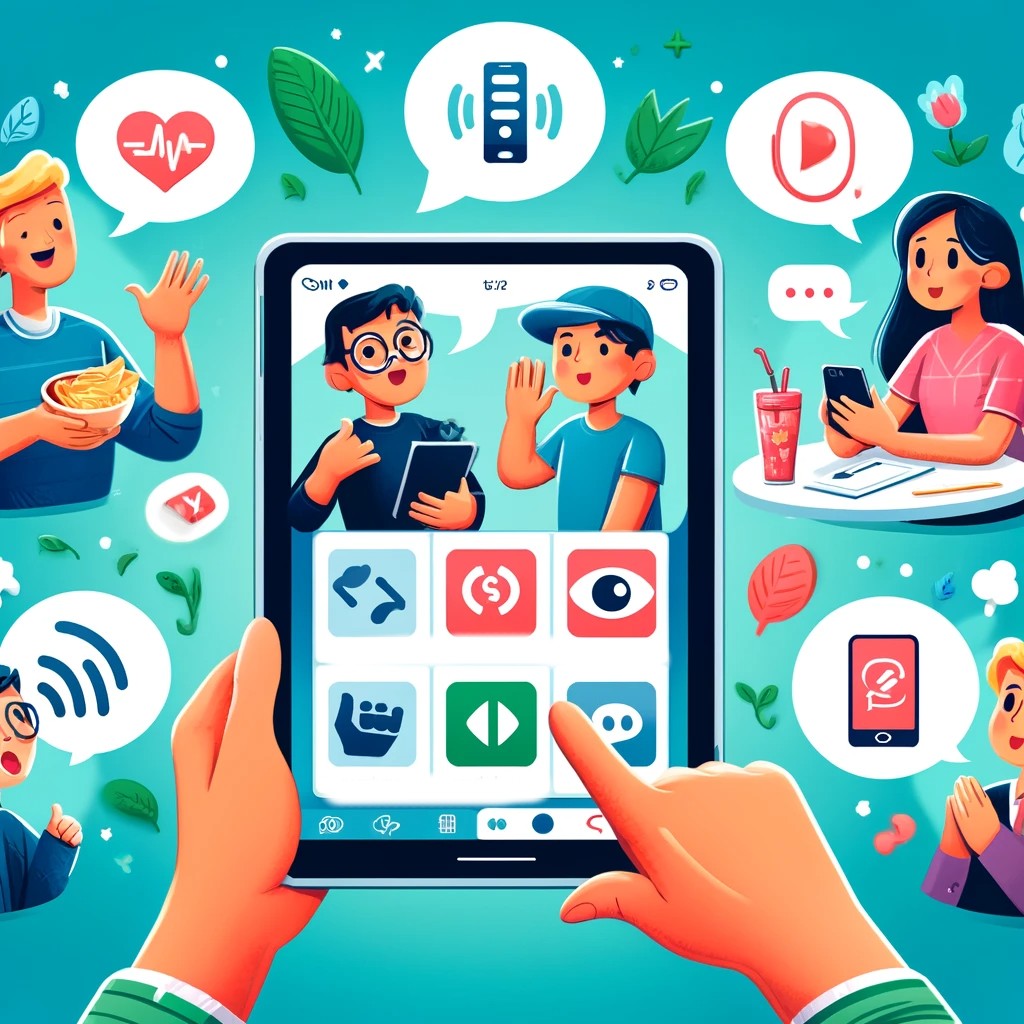
Staying connected with friends and family is vital for social well-being. Social integration apps tailor-made for Deaf individuals empower them to maintain robust social networks. Facebook and Instagram both offer accessibility features, including auto-captioning for videos and the ability to add captions manually. These features help Deaf users engage with content shared by their social circles.
Marco Polo is another fantastic app that functions like a video walkie-talkie. It enables sending video messages and ensures the visual communication required by those using sign language can be maintained without time constraints. Additionally, apps like Silent Events create social experiences tailored for the Deaf community, such as silent discos where participants wear headphones and dance to music they can personally adjust and choose.
Moreover, Whatsapp remains a popular choice for its comprehensive features, including video calls, and text messaging, and the ability to share multimedia. Whatsapp’s web and mobile platforms ensure seamless communication across devices, supporting both casual and vital communications.
Emergency Services: Ensuring Safety
In emergencies, immediate access to reliable communication is critical. Assistive technology apps play a vital role in ensuring the safety of Deaf individuals. Text-to-911 is a crucial service that allows Deaf users to reach emergency services through text messages. Available in many regions, Text-to-911 provides a direct link to emergency responders, ensuring timely assistance.
TapSOS offers a visual-based emergency communication system, enabling users to report emergencies through icon-based messaging. This intuitive design ensures swift communication without the need for verbal interaction, crucial in high-stress situations.
Be My Eyes is another innovative tool. Initially designed to assist the visually impaired, the app connects users to volunteers through video calls. These volunteers can help describe situations and provide guidance, proving valuable for Deaf individuals during emergencies or everyday tasks requiring additional assistance.
With these apps, Deaf individuals can confidently navigate emergency scenarios, knowing they have access to the support needed to ensure their safety and well-being.
Information Access: Staying Informed
Staying informed about current events and absorbing new information is essential for everyone. Assistive technology apps ensure that Deaf individuals have equal access to information. CaptionFish is an app that highlights movie showtimes offering open captions. Users can easily find accessible movie options in their locality, ensuring an inclusive entertainment experience.
For news consumption, The Guardian and BBC News apps offer robust accessibility features, including captions and transcripts for video content. These features guarantee that Deaf users can stay updated with the latest news and events without missing crucial details.
Additionally, platforms like TED provide videos with subtitles and transcripts in multiple languages, including ASL. This access allows Deaf individuals to enjoy the wealth of knowledge shared through TED talks, gaining inspiration and insights from experts across various fields.
By leveraging these tools, Deaf individuals can remain well-informed, engaged, and inspired, accessing a world of information tailored to their needs.
Conclusion
Assistive technology apps have transformed everyday life for Deaf individuals, breaking down barriers and fostering greater independence. These tools span various aspects of life, including communication, education, social integration, safety, and information access. By integrating these applications into daily routines, Deaf individuals can enjoy an inclusive, supportive, and connected lifestyle.
Continuous awareness and improvement of these technologies are crucial. As advancements in assistive technology continue to emerge, it’s essential to stay informed and adopt new solutions that further enhance accessibility. By doing so, we pave the way for a more inclusive society where every individual, regardless of their hearing ability, can thrive.
We encourage readers to explore these apps and embrace the potential they offer. Whether you’re Deaf, hard of hearing, or an ally, these technological advancements signify progress toward a more accessible and equitable world. Let’s commit to continued advocacy for Deaf resources and the integration of assistive technologies that empower communities worldwide.