
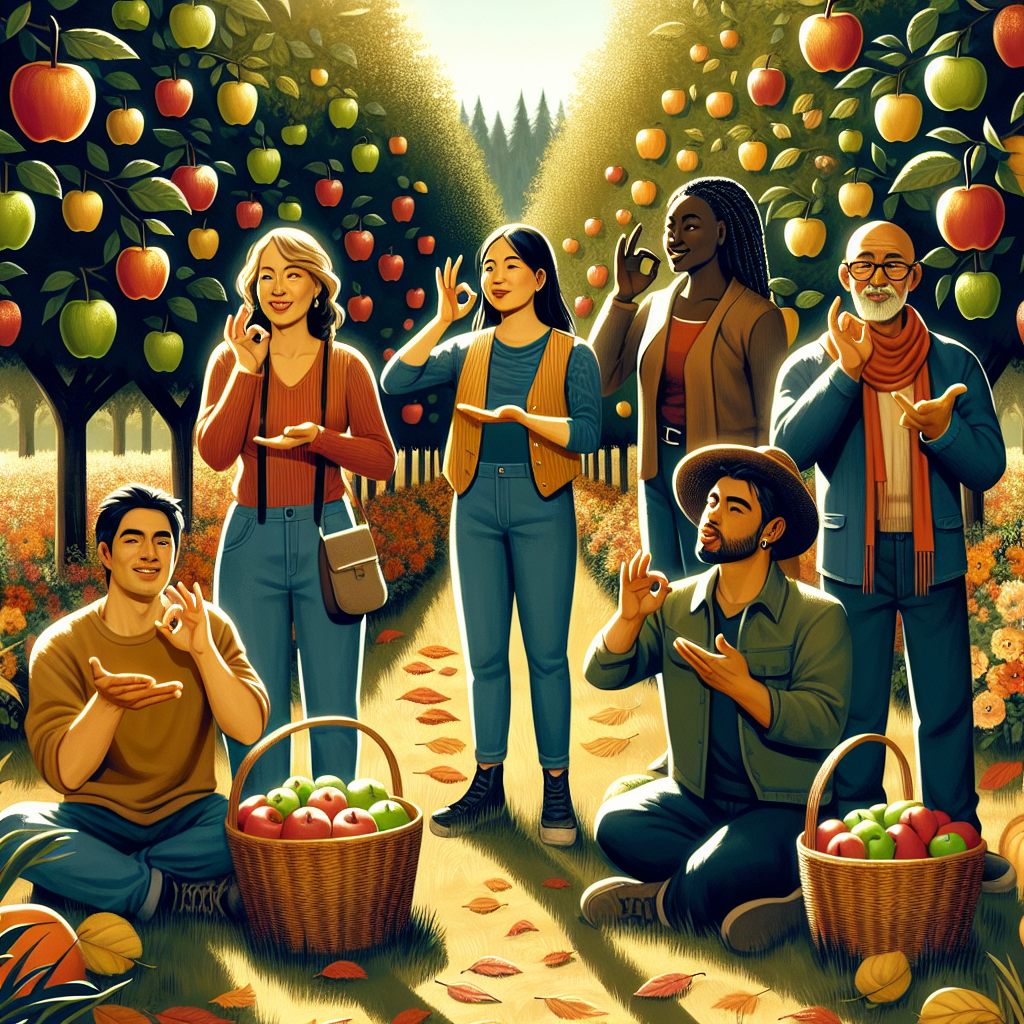
Autumn conjures up images of crimson and gold leaves, crisp air, and an array of festive activities. Among these, apple picking stands out as a beloved tradition. It brings families together, offers a sensory experience of flavors, and connects us to the earth. But have you ever considered how we can make this tradition more inclusive, particularly for the Deaf and Hard of Hearing community?
This guide will dive into the world of apple picking, exploring not just the types of apples you might find in the orchard, but also introducing an educational twist: American Sign Language (ASL) signs for various apple varieties and other fall activities. By incorporating ASL into your orchard visit, you’ll not only enhance communication for those who rely on sign language but also offer a unique educational experience for everyone involved.
Whether you or someone you know is Deaf or Hard of Hearing or you are simply looking to enrich your trip with a new skill, this apple picking adventure will be both enjoyable and enlightening. Let’s dive into the beautiful symbiosis of fall activities and ASL learning.
Planning Your Apple Picking Adventure
First things first, planning your apple picking adventure. Choosing an orchard to visit is crucial. Many orchards offer accessible paths, guided tours, and specialized events that cater to various needs, ensuring a comfortable experience for all visitors. It’s worth checking if the orchard offers any resources for Deaf and Hard of Hearing visitors.
Once you’ve chosen your destination, consider the timing of your visit. Late September to early November is typically the best time for apple picking, as this is when many apple varieties are at their peak. Additionally, weekdays tend to be less crowded than weekends, which can make for a more relaxed experience.
Before heading to the orchard, familiarize yourself with basic ASL signs related to apple picking and fall activities. Simple signs like “apple,” “red apple,” “green apple,” and “pumpkin” can be a good starting point. There are plenty of resources online, including instructional videos and printable guides, to help you get started.
At the Orchard: Learning ASL Signs for Apple Varieties
One of the most enjoyable parts of an apple-picking trip is discovering the different varieties of apples. Orchestrate a mini treasure hunt by learning and using ASL signs for these varieties. Here are some examples:
- Red Delicious: Use the sign for “red” followed by the sign for “apple.”
- Granny Smith: Use the sign for “green” followed by the sign for “apple.”
- Honeycrisp: Use the signs for “honey” and “crisp” together.
- Gala: The sign for “gala” is usually fingerspelled as “G-A-L-A.”
By incorporating these signs, you not only make the experience more inclusive but also provide an interactive learning opportunity. Encourage everyone in your group to use these signs while picking apples, thus enriching the experience.
Additionally, many orchards have educational signs that offer information about the apple varieties. Take a moment to read these and practice the corresponding ASL signs. It will enhance your understanding and appreciation of the different apples you are picking.
Engaging in Fall Activities: Sign Language for More Fun!
Your apple-picking adventure doesn’t have to end at the orchard. Many orchards host a variety of fall activities that can be enjoyed by all visitors. Here are some common activities and their corresponding ASL signs:
- Hayride: Signs for “hay” and “ride” used together.
- Corn Maze: Sign for “corn” followed by the sign for “maze.”
- Pumpkin Patch: Use the sign for “pumpkin” and the sign for “patch” together.
- Apple Cider: Signs for “apple” and “cider” used together.
Participating in these activities with ASL adds depth and inclusivity. Encouraging the use of sign language during these events can elevate your group’s enjoyment and provide a meaningful learning experience.
Incorporating ASL during these activities not only helps in learning the language but also raises awareness about the importance of communication inclusivity. It’s a wonderful way to bond and connect with the Deaf and Hard of Hearing community.
Cooking and ASL: Bringing the Apples Home
After a day of picking apples, the next step is to bring them home and turn them into delicious treats. This is a perfect opportunity to continue using and learning ASL. Here are some common kitchen-related signs:
- Bake: The sign for “bake” involves placing one hand on top of the other, as if putting something into an oven.
- Pie: Make the shape of a pie circle with your hands.
- Apple Sauce: Combine the signs for “apple” and “sauce.”
- Cinnamon: Tap your middle finger against the side of your nose.
Imagine the fun and educational experience of baking an apple pie or making apple sauce while using ASL signs for the ingredients and steps. This not only makes the cooking process more interactive but also helps solidify the signs in your memory through repetitive use.
Using ASL in the kitchen can be particularly beneficial for children. Visual and kinesthetic learners often find that signing helps them remember steps and ingredients more effectively. Plus, it’s a fantastic way to engage the whole family in the process.
Inclusive Education and Personal Growth
Emphasizing inclusivity in seasonal activities has profound educational benefits. By integrating ASL into your apple-picking adventure and related activities, you are fostering an inclusive environment where everyone, regardless of their hearing ability, can participate and enjoy.
Knowledge of ASL enhances communication skills, cultural awareness, and empathy. It also opens up opportunities for new friendships and strengthens community bonds. For hearing individuals, learning ASL can improve focus and memory retention, as it engages multiple senses simultaneously.
More importantly, such inclusive practices demonstrate to Deaf and Hard of Hearing children and adults that they are valued and that efforts are being made to accommodate their communication needs. This can have lasting positive impacts on their confidence and social engagement.
Educational institutions and community centers should be encouraged to promote such inclusive activities. Incorporating sign language into school outings, community events, and family activities can lead to a more inclusive society where Deaf and Hard of Hearing individuals feel seen and heard.
Conclusion: Embracing an Inclusive Approach
In this dynamic blend of seasonal enjoyment and inclusive education, the takeaway is clear: apple picking, when intertwined with ASL learning, becomes more than just a recreational activity. It transforms into a vehicle for inclusive education, shared joy, and mutual respect.
As you embark on your apple-picking adventure, remember the dual purpose of your trip. Savor the moment, relish the tastes, and breathe in the crisp autumn air, but also take this opportunity to practice inclusivity. Engage with ASL signs, make learning fun, and ensure that everyone in your group feels involved and valued.
By adopting this inclusive approach, you are contributing to a more understanding and connected community. You’re not just picking apples; you’re picking lessons in empathy, communication, and togetherness. Here’s to creating unforgettable memories and making every fall outing a celebration of inclusivity!