
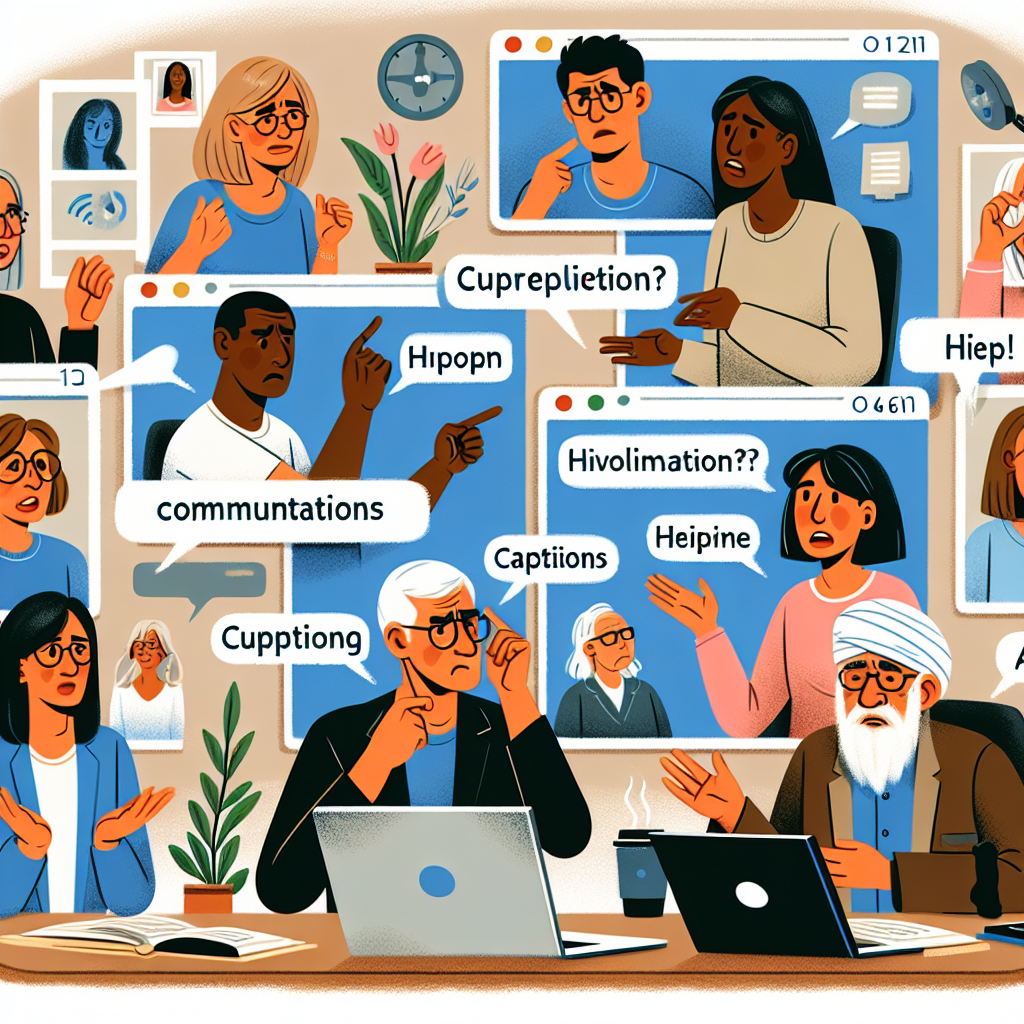
The digital age has opened up a world of opportunities, enabling people from all walks of life to connect, collaborate, and communicate across vast distances. For the Deaf and hard-of-hearing community, these advancements pose unique challenges, particularly in making digital spaces accessible and inclusive. Video conferencing platforms like Zoom have become integral tools in our daily lives, yet their accessibility features often fall short of meeting everyone’s needs. In this article, we delve into the importance of advocating for better captioning services on Zoom and similar platforms, emphasizing the role of these features in fostering equitable and inclusive digital environments.
Introduction
With the rise of remote work, online education, and digital social gatherings, video conferencing platforms have quickly become essential. They offer convenience and adaptability, yet they often lack robust accessibility features for Deaf and hard-of-hearing users. This gap in accessibility is most evident in the realm of closed captioning. Effective captioning can be transformative, opening doors for inclusivity, enhancing educational experiences, and breaking down communication barriers. However, not all platforms have prioritized this crucial aspect of accessibility.
Platforms like Zoom, while offering closed captioning options, often rely on third-party services or manual captioning, placing an extra burden on users or meeting hosts. Simultaneously, automatic captioning services, which could potentially serve as a practical solution, occasionally lack the accuracy necessary for truly effective communication. This issue underscores the broader need for advocacy in tech development, ensuring that accessibility is not a mere afterthought but a foundational aspect of design.
This article will explore the significance of advocating for better captioning services, highlight current challenges faced by users, and propose actionable strategies to enhance accessibility in digital communication platforms.
The Importance of Quality Captioning
Understanding the role of captioning goes beyond mere transcription of spoken words into text. Captioning acts as a vital tool for Deaf and hard-of-hearing individuals, providing real-time access to audio content. This feature is a necessary component in ensuring equal participation in meetings, classes, and social interactions, leveling the playing field and facilitating comprehensive communication.
Quality captioning benefits everyone, not just those with hearing impairments. For instance, captions can aid non-native speakers, enhance understanding in noisy environments where audio might be compromised, and improve comprehension for individuals with learning disabilities. Thus, integrating high-quality captioning isn’t just a matter of accommodation; it’s an investment into universal design principles that benefit all users.
Despite these benefits, the current state of captioning services on many platforms remains underdeveloped. Issues like poor transcription accuracy, delays, and language limitations hinder effective communication. Therefore, it is crucial that users and advocates voice their need for improved captioning solutions, encouraging developers to invest in systems that prioritize both accuracy and reliability.
Challenges with Current Captioning Solutions
The current landscape of captioning services faces several challenges, affecting their efficiency and reliability. One primary issue is the accuracy of automatic speech recognition (ASR) technologies, which many platforms utilize for generating captions. These systems often struggle with diverse accents, industry-specific jargon, or instances where multiple speakers overlap, leading to misunderstandings or incomplete information.
Another significant challenge lies in the integration of captioning services. Some platforms require users to enable captioning manually or through third-party applications, complicating the setup and potentially excluding those not tech-savvy. Additionally, not all platforms offer language versatility, limiting the accessibility for non-English speakers or those using regional dialects.
These challenges highlight a pressing need for comprehensive and streamlined accessibility features. Without such enhancements, video conferencing platforms risk alienating a substantial portion of their user base, limiting their potential for inclusive growth. Addressing these challenges requires a commitment from tech developers towards inclusivity, backed by the demands and support of an informed user advocacy base.
Initiating Change: Advocacy Strategies
Change often begins with informed and organized advocacy. For improving captioning on video conferencing platforms, several strategies can lead to meaningful progress:
- User Feedback: Users must actively provide feedback to platforms, highlighting existing issues with captioning services and suggesting improvements. Constructive, specific feedback can facilitate better understanding of user needs and drive targeted enhancements.
- Collaborative Advocacy: Joining forces with advocacy groups, such as Deaf advocacy organizations or accessibility forums, can amplify voices and generate more significant pressure on companies to adopt better practices.
- Public Awareness: Raising public awareness about the importance of captioning can garner broader community support. Sharing stories, conducting webinars, or publishing articles on platforms dedicated to tech and accessibility are effective means to spread the word.
- Engaging Stakeholders: Engaging with stakeholders, including developers, investors, and educators, ensures that accessibility considerations are embedded in early development stages.
Through these methods, users and advocates can foster environments where accessibility is prioritized, driving tech innovation that is inclusive and equitable for all.
Technological Solutions and Innovations
To meet the demands for improved captioning, technological innovations must focus on accuracy, accessibility, and ease of use. Advances in Artificial Intelligence present viable pathways for enhancing automatic speech recognition capabilities, improving the accuracy of live captions.
Moreover, implementing neural network models trained on diverse datasets, encompassing various accents and languages, can bridge existing gaps in current captioning solutions. Technology companies might also explore partnerships with AI specialists to develop linguistically nuanced captioning systems. Additionally, real-time editing features can enable hosts or designated participants to correct captions manually, ensuring high accuracy in dynamic conversations.
Beyond technological innovations, fostering an ecosystem where regular updates and accessibility audits become standard practice can greatly enhance platform usability. By adopting agile development practices that incorporate user feedback, platforms can adapt rapidly to the ever-changing needs of a diverse user base.
Case Studies: Effective Captioning in Action
Taking lessons from successful integrations can guide emerging platforms towards improved captioning solutions. Let’s consider examples where effective captioning has played pivotal roles in accessibility:
A leading tech conference embraced live translation and captioning technology, enabling attendees from non-English speaking backgrounds to participate fully. Their solution involved a hybrid model, combining automatic captioning with professional editors to ensure real-time accuracy. This model can serve as a benchmark for platforms aiming to elevate their captioning capabilities.
In educational settings, universities employing advanced captioning software reported significant improvements in student engagement and learning outcomes. By integrating AI-driven captioning systems with flexible language options, these institutions created inclusive learning environments, setting standards for digital education accessibility.
These case studies demonstrate that investing in comprehensive captioning solutions yields benefits far beyond mere compliance, promoting inclusivity and enhancing user experiences in a variety of contexts.
Conclusion
The journey towards fully accessible digital communication is ongoing, requiring persistent advocacy and technological innovation. In advocating for better captioning on platforms like Zoom, we champion a cause vital to inclusivity, ensuring that all users can engage, collaborate, and learn equitably.
Effective captioning serves as a cornerstone of accessibility, providing indispensable support to the Deaf and hard-of-hearing community while elevating experiences for all users. Addressing current challenges demands a concerted effort from users, advocates, and tech developers, working collectively to drive meaningful change.
As we push for enhanced captioning services, we reinforce the principle that accessibility should be foundational, not supplementary. In doing so, we pave the way for inclusive digital landscapes, where barriers to communication are dismantled, and the promise of technology is fully realized for everyone.