
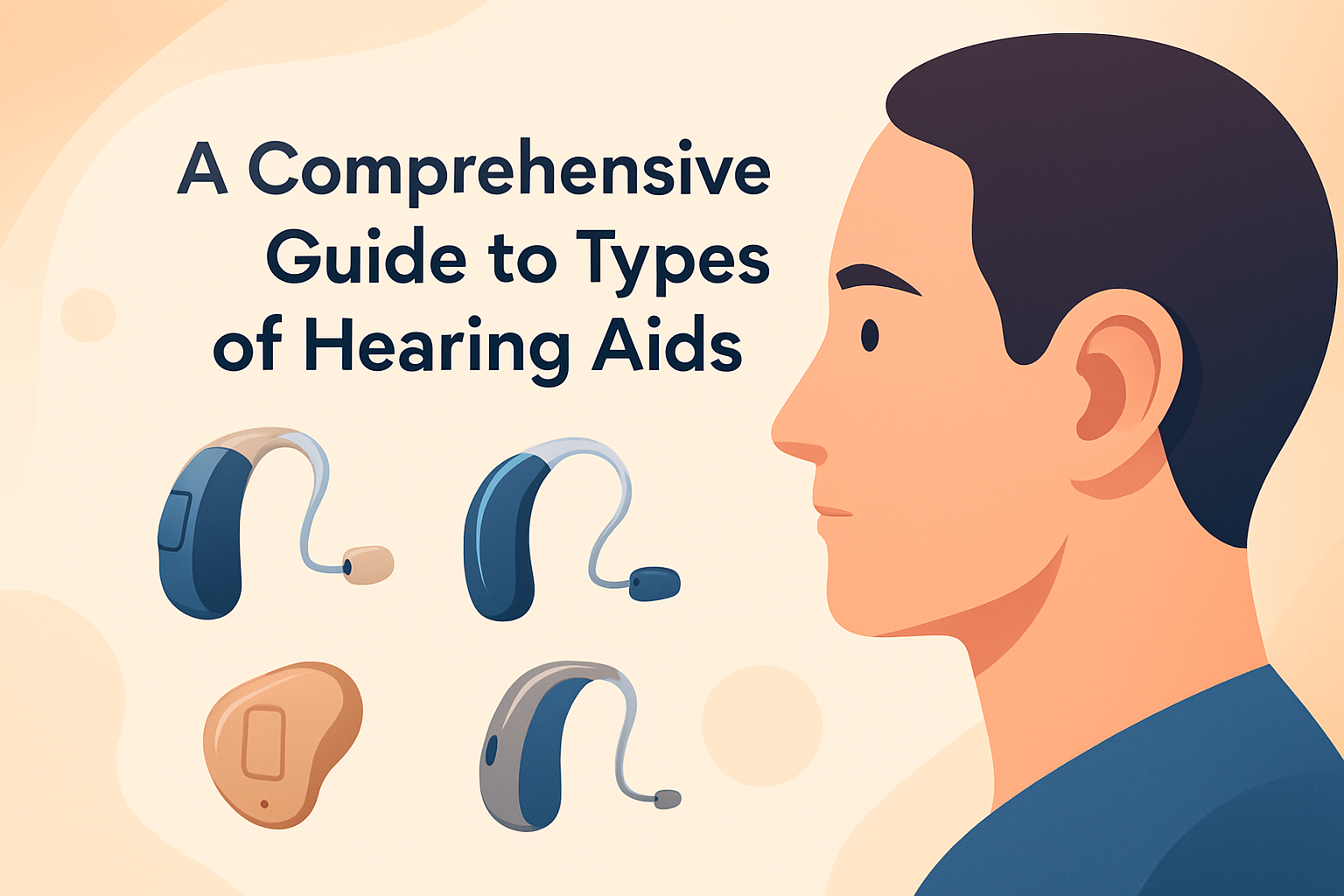
The Evolving Landscape of Modern Hearing Aids
The journey to better hearing has transformed dramatically over the last several decades. No longer are hearing aids simple devices that merely make the world louder; they have evolved into sophisticated, personalized digital instruments that are fundamental to health and well-being. The historical perception of hearing aids as visible, one-dimensional tools for the elderly is rapidly being replaced by a modern paradigm of advanced wearable technology. Devices today are capable of complex sound processing, seamless wireless connectivity, and even integrated health monitoring.
This guide serves as a comprehensive resource designed to provide a foundational understanding of this remarkable technology. It is intended to demystify the options available, from the various physical styles and their unique benefits to the advanced technologies that power them. The discussion extends beyond the hardware to cover the crucial patient journey, from the initial consultation and fitting process to the practical considerations of cost and follow-up care. Finally, this guide will provide a glimpse into the future of hearing science, where groundbreaking research may one day offer solutions that extend far beyond traditional amplification.
The Core Anatomy of a Hearing Aid
To understand the diversity of hearing aid styles and features, it is essential to first grasp the fundamental components that form the basis of nearly every modern device. At its core, an electronic hearing aid is a small device designed to improve hearing for those with hearing loss. It consists of four primary parts: a microphone, a signal processor, a receiver (also known as a speaker), and a battery. The microphone captures sound waves from the environment and converts them into an electrical signal. This signal is then sent to a powerful microchip at the heart of the device, which performs the intricate work of signal processing. The processed signal is then passed to the receiver, which converts the electrical signal back into sound waves and delivers them to the ear. All these functions are powered by a tiny, long-lasting battery.
The true power of a modern hearing aid lies in its digital signal processing (DSP) engine. Unlike older analog hearing aids that simply amplified all sound equally, digital aids convert the incoming sound into a digital format. This conversion from an analog to a digital signal allows for highly precise and complex manipulation of the sound. The digital signal is processed using advanced algorithms that can perform a variety of adjustments, including targeted amplification, noise reduction, and feedback cancellation. This technological leap means that a hearing aid can be meticulously programmed to a person’s specific hearing loss profile, amplifying only the frequencies that require a boost while leaving others untouched. For example, a person with high-frequency hearing loss may have difficulty hearing sounds like consonants in speech or birds chirping. A digital hearing aid can be programmed to provide more amplification in these higher frequency channels to compensate for that specific deficit. The digital signal can also react automatically and choose the best settings for any environment. The core digital technology is what enables the sophisticated features—such as directional microphones and AI—that distinguish today’s hearing aids as more than mere amplifiers. This innovation is the causal factor enabling a personalized, adaptive, and comfortable listening experience.
A Comprehensive Guide to Hearing Aid Styles
The physical design of a hearing aid is a primary consideration for many individuals. Each style offers a distinct balance of functionality, discretion, and comfort. The selection of an appropriate style is a personal choice influenced by the degree of hearing loss, aesthetic preference, physical dexterity, and lifestyle. There is a clear and direct relationship between a hearing aid’s size and its functional capabilities, and this section will explore the nuanced trade-offs.
Behind-the-Ear (BTE)
As the name suggests, Behind-the-Ear (BTE) hearing aids are placed behind the outer ear, connected by a small tube to a custom earpiece that sits inside the ear canal. This is one of the most versatile and robust styles available. BTE aids are comfortable to wear and are often easier to maintain and handle than smaller devices, making them a popular choice for individuals with dexterity issues. The separation of the internal components in BTE devices also helps to minimize feedback, the whistling sound that can occur when sound leaks from the ear. They are generally the most affordable option and come in a wide variety of styles, technology levels, and colors.
One of the most significant advantages of BTE hearing aids is their power and versatility. They are capable of treating a wide range of hearing loss, from mild to profound. In fact, they are often the only option for individuals with severe to profound hearing loss because their larger size can accommodate more powerful receivers. However, this versatility comes with certain trade-offs. BTE aids are less discreet than in-the-ear models and can be more susceptible to wind noise due to the placement of their microphones outside the ear. While one may conclude that BTE aids are not suitable for high levels of hearing loss based on one source , a more accurate understanding is that while they are the most viable solution for profound loss, their amplification capabilities may not be perceived as optimal compared to other devices. BTE aids are the workhorses of the industry, offering a reliable, powerful, and durable solution across nearly all levels of hearing impairment.
Receiver-in-Canal (RIC) and Receiver-in-Ear (RITE)
Receiver-in-Canal (RIC) and Receiver-in-Ear (RITE) hearing aids are a modern variation of the BTE style. In these models, the main body of the hearing aid sits behind the ear, but the speaker (or receiver) is placed directly in the ear canal at the end of a thin wire. This placement offers a more natural sound experience, as it allows sound to be delivered directly to the ear without the “plugged” feeling that can occur with traditional molds. Due to the separation of the receiver and the body of the aid, RIC and RITE models are often smaller and more discreet than BTEs. They are also a good option for people with mild to severe hearing loss. However, because the receiver is in the ear canal, it can become blocked by excessive earwax and requires regular cleaning.
In-the-Ear (ITE)
In-the-Ear (ITE) hearing aids are custom-made to fit a person’s unique ear shape and sit comfortably in the outer ear bowl. There are two variations: full-shell, which fills the entire outer ear, and half-shell, which fills only a portion. ITE devices are often a good choice for those with mild to severe hearing loss. They are also easy to handle, with features like volume control that do not fit on smaller hearing aids. Their larger size accommodates larger batteries, which provides a longer battery life. However, their position inside the ear makes them more susceptible to earwax buildup and they can be more visible than smaller, in-the-canal models.
In-the-Canal (ITC)
In-the-Canal (ITC) hearing aids are smaller than ITE models and fit just into the entrance of the ear canal. They offer a more discreet appearance than BTE or ITE aids, making them an appealing option for individuals concerned about the visibility of their device. Because they sit inside the ear, they are less susceptible to wind noise. However, there is a distinct trade-off between discreetness and functionality. Their small size limits the power they can deliver, making them unsuitable for individuals with significant or severe hearing loss. The smaller size also means they have limited technological features, such as directional microphones, and use smaller batteries that require more frequent changes. Furthermore, their diminutive size makes them more challenging to handle, insert, and remove for individuals with dexterity issues.
Completely-in-Canal (CIC) and Invisible-in-Canal (IIC)
Completely-in-Canal (CIC) and Invisible-in-Canal (IIC) hearing aids represent the pinnacle of discreetness. CIC models fit neatly inside the ear canal, while IICs sit even deeper, past the second bend of the ear canal, making them virtually invisible. Due to their deep placement, they offer improved sound quality and can reduce the sensation of hearing one’s own voice too loudly. They are a popular choice for those with mild to moderate hearing loss who prioritize cosmetic appeal.
The pursuit of invisibility, however, comes at a significant cost to performance. The small size of CIC and IIC aids means they cannot house large batteries or powerful processors. This results in a very short battery life, often requiring frequent, difficult-to-change battery replacements. They also have very limited features, with advanced technologies like directional microphones only available in some premium, and very expensive, models. Their position deep in the ear canal makes them highly vulnerable to earwax and moisture buildup, necessitating more frequent cleaning and potential repairs. The choice between a discreet device and one with robust functionality is a key consideration for many people, with the small size causally linked to a device’s limited power, features, and battery life.
Table: At-a-Glance Comparison of Hearing Aid Styles
| Style | Visibility | Dexterity Required | Battery Type | Hearing Loss Range | Common Pros | Common Cons |
| BTE | High | Low | Rechargeable/Disposable | Mild to Profound | Versatile, powerful, durable, easy to handle, lower cost, minimal feedback | Less discreet, can be susceptible to wind noise |
| RIC/RITE | Low-to-Moderate | Medium | Rechargeable/Disposable | Mild to Severe | Discreet, natural sound, comfortable | Vulnerable to earwax blockage, requires manual dexterity |
| ITE | Moderate | Low | Rechargeable/Disposable | Moderate to Severe | Easy to handle, longer battery life, custom-fit | More visible, earwax buildup |
| ITC | Low | High | Disposable | Mild to Moderate | Discreet, less wind noise | Limited power and features, short battery life, dexterity challenges |
| CIC | Very Low | High | Disposable | Mild to Moderate | Virtually undetectable, reduced wind noise | Limited power and features, short battery life, dexterity challenges, susceptible to earwax |
| IIC | Invisible | Very High | Disposable | Mild to Moderate | Invisible, natural sound experience | Very limited features, very short battery life, highly susceptible to earwax |
Decoding Advanced Hearing Aid Technologies
Beyond their physical form, the true power of a modern hearing aid lies in the innovative technologies packed within. These features are designed to address the most common challenges faced by individuals with hearing loss, such as understanding speech in noisy environments and staying connected to the digital world.
Sound Enhancement and Noise Management
One of the greatest struggles for people with hearing loss is distinguishing speech from background noise in complex environments like restaurants or social gatherings. Hearing aid manufacturers have developed two key technologies to address this issue:
- Directional Microphones: This is the gold standard for improving speech intelligibility in noisy environments. These systems use two or more microphones to focus on sound coming from a specific direction, such as in front of the user, while simultaneously attenuating sounds from the sides or behind. This process can significantly improve the signal-to-noise ratio (SNR), making it easier for the wearer to hear the person they are talking to.
- Digital Noise Reduction (DNR): This technology works by using advanced algorithms to identify and suppress unwanted background noise. While directional microphones physically filter sound based on direction, DNR software works to reduce the overall volume of ambient noise, improving listening comfort and reducing listening effort. This is distinct from active noise canceling (ANC), which is more common in headphones and works by generating an inverted soundwave to cancel out noise. DSP-based noise reduction is the more common and reliable method used in hearing aids.
Wireless Connectivity and Streaming
Today’s hearing aids are designed to integrate seamlessly into a person’s digital life through various wireless technologies.
- Bluetooth: Most modern hearing aids are equipped with Bluetooth technology, allowing them to stream audio directly from smartphones, tablets, computers, and TVs. This feature allows for hands-free phone calls, direct streaming of music or podcasts, and an enhanced experience for watching TV. Older Bluetooth technologies required a significant amount of power, which was a major drawback for small hearing aid batteries. To overcome this, hearing aid manufacturers leveraged specific low-power protocols, such as Apple’s “Made for iPhone” and the Android “Audio Streaming for Hearing Aids (ASHA)”. However, a newer standard, Bluetooth LE Audio, has been developed to address this challenge. It is a low-energy technology that enables a “one-to-many” streaming capability known as Auracast, allowing multiple devices to connect to a single audio source in public spaces like airports or movie theaters, mirroring the function of hearing loops.
- Telecoils and Hearing Loops: A telecoil (or T-coil) is a small copper coil that functions as a wireless receiver. When activated, it receives magnetic signals from a “hearing loop” system, which is a wire installed in a public venue like a theater, church, or auditorium. This technology allows the hearing aid to bypass its microphone and receive the sound source directly, eliminating background noise and reverberation. Telecoils remain a critical accessibility tool, particularly while Bluetooth LE Audio is still being adopted by venues. While Bluetooth is ideal for personal, one-to-one streaming, telecoils are an established, standardized technology for public access. The development of Auracast is a direct attempt to replicate the benefits of the hearing loop, signaling a future convergence where a single technology can serve both purposes. However, for now, both technologies serve different functions and are often recommended together for a comprehensive solution.
Table: Bluetooth Classic vs. LE Audio
| Technology | Power Consumption | Primary Use Case | Key Advantage |
| Bluetooth Classic | High | Personal streaming (phone calls, music) to one device | Wide device compatibility via protocols like “Made for iPhone” and “ASHA” |
| Bluetooth LE Audio | Low | Personal streaming and public broadcasting (Auracast) | Low energy consumption, enables “one-to-many” public streaming, better audio latency |
Artificial Intelligence (AI) and Machine Learning
The integration of artificial intelligence (AI) is transforming hearing aids from simple tools into intelligent, adaptive devices. AI hearing aids use advanced algorithms and deep neural networks (DNNs) to continuously analyze the surrounding environment and make real-time adjustments to optimize sound quality. This technology goes beyond traditional noise reduction by identifying and prioritizing specific voices, replicating the way a person instinctively focuses on a familiar voice in a noisy room.
AI-powered hearing aids also offer unique features that extend their functionality beyond hearing. Some models, notably from brands like Starkey, incorporate health monitoring capabilities such as fall detection, activity tracking, and heart rate monitoring. This integration of health data into a hearing device represents a significant shift in its purpose. A hearing aid is no longer just an amplification tool; it is a wearable health hub. This may help to reduce the social stigma associated with wearing a hearing aid by framing it as a proactive, lifestyle-oriented device rather than a mere prosthetic. Other AI features include real-time language translation and virtual assistants, which can be controlled by voice commands.
Specialized Hearing Solutions
While most hearing loss can be managed with traditional air conduction hearing aids, certain conditions require specialized solutions that bypass the typical sound processing pathway.
Bone-Anchored Hearing Systems (BAHS)
A Bone-Anchored Hearing System (BAHS), also known as a Bone-Anchored Hearing Aid (BAHA), is a surgically implanted device that works by transmitting sound directly through the bones of the skull to the inner ear. This process, known as direct bone conduction, bypasses any problems in the outer or middle ear and is ideal for specific hearing loss profiles. Candidacy for a BAHS includes individuals with conductive or mixed hearing loss, where sound cannot travel through the ear as it should, and those with single-sided deafness.
The surgical process for a BAHS is minimally invasive and typically performed on an outpatient basis. A small titanium implant is placed in the bone behind the ear. The body then undergoes a process called osseointegration, where the bone fuses with the implant to provide a stable foundation. This process can take anywhere from 4 to 12 weeks. After the healing period, the external sound processor can be attached to the abutment, and the patient can begin to hear.
CROS and BiCROS Systems
CROS (Contralateral Routing of Signal) and BiCROS (Bilateral Contralateral Routing of Signal) systems are specialized solutions for individuals with single-sided hearing loss. A CROS system is for a person with a non-hearing ear and a normal-hearing ear. It consists of a microphone (transmitter) worn on the non-hearing side that wirelessly sends sounds to a hearing aid (receiver) on the better-hearing side. This allows the wearer to hear sounds from the non-hearing side without having to turn their head, improving their situational awareness and safety.
A BiCROS system is for a person with a non-hearing ear and an ear with some degree of hearing loss. It combines the function of a CROS system with amplification for the better-hearing ear, essentially routing sound from the deaf side while also providing amplification for the other ear.
Hearing Aids vs. Cochlear Implants
It is important to understand the fundamental distinction between a hearing aid and a cochlear implant. A hearing aid is an external device that amplifies sounds so that they can be detected by a damaged auditory system. A cochlear implant, on the other hand, is a complex electronic device with both an external and a surgically implanted internal portion that bypasses the damaged parts of the ear to directly stimulate the auditory nerve. This is a surgical option reserved for individuals with severe to profound hearing loss who cannot benefit from traditional hearing aids.
Table: Specialized Hearing Solutions
| Solution | Primary User | Mechanism | Function |
| BAHS | Conductive/mixed hearing loss, single-sided deafness | Direct bone conduction | Bypasses outer/middle ear to send sound directly to inner ear |
| CROS/BiCROS | Single-sided deafness | Wireless signal routing | Routes sound from a non-hearing ear to a better-hearing ear |
| Cochlear Implant | Severe to profound hearing loss | Electrical stimulation | Bypasses damaged ear parts to directly stimulate the auditory nerve |
The Patient Journey: From Evaluation to Follow-Up
The process of obtaining and adapting to a hearing aid is a multi-step journey that requires a partnership between the individual and their hearing healthcare provider. The success of a hearing aid is not solely dependent on the technology itself, but on the quality of professional care and support received throughout this process.
Choosing the Right Professional
The first step in the journey is to seek a diagnosis from the right professional. An audiologist is a hearing healthcare professional who specializes in the diagnosis, treatment, and identification of hearing loss. An Ear, Nose, and Throat (ENT) doctor, or otolaryngologist, is a medical doctor who specializes in a broader range of head and neck conditions, and can perform surgery or prescribe medications. An audiologist is the ideal first point of contact for hearing loss. If the audiologist suspects an underlying medical condition, they will then refer the patient to an ENT for a medical evaluation.
The Hearing Evaluation and Audiogram
A comprehensive hearing evaluation will be conducted by an audiologist to determine the type and severity of hearing loss. The results are plotted on an audiogram, a graph that shows the softest sounds a person can hear at different frequencies and intensities. The horizontal axis measures frequency in Hertz (Hz), from low pitch to high pitch, while the vertical axis measures intensity in decibels (dB), from softest to loudest. The audiogram is a critical diagnostic tool that provides a precise “map” of a person’s hearing, allowing the audiologist to recommend a hearing aid that can be specifically programmed to their unique profile.
The Hearing Aid Fitting Process
The fitting process is not a simple transaction; it is a precise, technical procedure. It typically begins with a hearing aid evaluation to determine the amount of amplification needed. The audiologist will then help the person choose a device that fits their lifestyle and budget. For custom aids or BTE models, ear impressions may be taken to ensure a perfect physical fit. Once the hearing aids arrive, they are programmed to the patient’s audiogram using a computer.
It is crucial for a person to understand that the first fitting is a starting point, not the final step. It may take a few appointments to fine-tune the settings to ensure the sound feels natural and comfortable in all listening situations.
Trial Periods and Warranties
Most hearing aid providers offer a trial period, typically ranging from 30 to 45 days, during which the hearing aid can be returned for a refund. It is important to ask about any non-refundable “restocking fees” that may apply. Most manufacturers also include a standard 1-year warranty for repairs and a one-time replacement for loss or damage, though this may come with a processing fee. Warranties can often be extended for an additional cost.
The Importance of Follow-Up Care
Follow-up care is a critical, and often overlooked, component of hearing aid success. Hearing aids are complex pieces of technology that require fine-tuning to fit a person’s specific needs. Without proper follow-up, users may experience feedback, discomfort, or unclear sound quality, which can lead them to abandon their devices.
Follow-up appointments allow an audiologist to monitor a person’s progress, troubleshoot issues, make adjustments to settings, and provide ongoing education on the use and care of the device. It is recommended to schedule a few appointments in the first few months after the initial fitting to ensure the device is working optimally. The effectiveness of a hearing aid is directly linked to the quality and consistency of professional care and fine-tuning. A simple retail transaction, without the bundled support, may result in a poor experience and a negative impact on a person’s quality of life.
Navigating Costs and Over-the-Counter (OTC) Options
The cost of hearing aids can be a significant barrier for many. Prices can vary widely, ranging from around $1,000 to over $8,000 for a pair, with premium models costing even more. The price often includes the cost of professional services, such as the initial fitting and follow-up care, which is known as a “bundled” pricing model. In contrast, an “unbundled” model separates the cost of the device from the services. It is essential to inquire about the pricing model to understand what services are included in the purchase price.
The Rise of Over-the-Counter (OTC) Hearing Aids
In 2022, the FDA established a new category of over-the-counter (OTC) hearing aids, making devices for perceived mild-to-moderate hearing loss available for purchase without a prescription. This was intended to make hearing aids more accessible and affordable. While some were concerned that this would negatively impact the traditional, prescription-based market, evidence suggests a different reality.
The OTC market and the prescription market appear to be serving two distinct audiences. OTC devices are primarily targeting younger, tech-savvy adults with mild-to-moderate hearing loss who may have never considered visiting an audiologist. These consumers are looking for a convenient and less expensive way to address minor hearing issues. Data from early 2023 indicates that prescription hearing aid sales have remained steady or even increased, suggesting that OTC devices are not cannibalizing the market but rather serving as a new entry point for individuals who might eventually require more advanced, professional solutions as their hearing loss progresses. This market segmentation may ultimately help to destigmatize hearing aids and increase their overall adoption rate.
The Future of Hearing Science: Beyond the Device
For decades, the standard of care for hearing loss has centered on prosthetic solutions—devices that compensate for hearing impairment but cannot restore the underlying biological function. However, the future of hearing science is moving toward a transformative, regenerative model that may one day offer a cure for certain types of hearing loss.
Gene Therapy
Gene therapy represents one of the most promising frontiers in this field. The goal is to address the root genetic cause of hearing loss by correcting or replacing non-working genes. For example, a rare form of deafness is caused by a non-working otoferlin (OTOF) gene. Researchers are using modified viruses (viral vectors) to deliver a working copy of this gene to the inner ear, allowing the hair cells to function properly. Clinical trials are showing promising results, with some children experiencing significant, and in some cases, near-normal hearing recovery. Unlike a hearing aid, which requires continuous use, gene therapy aims to be a one-time treatment with lasting effects.
Drug-Based Therapies and Stem Cell Research
Research is also exploring drug-based therapies that could stimulate the regeneration of damaged hair cells in the cochlea. Unlike birds or fish, mammals’ auditory hair cells do not regenerate once lost, which is a major cause of irreversible hearing loss. However, researchers have successfully used a drug to stimulate supporting cells to become new hair cells, leading to a partial recovery of hearing in mouse models. The research also explores using nanoparticles to deliver growth factors to the inner ear, laying the groundwork for future clinical trials.
Similarly, stem cell research aims to regenerate lost auditory cells. Scientists have learned to coax stem cells into becoming new hair cells or auditory neurons in the lab. The long-term goal is to develop a safe, surgical approach for implanting these cells into the human ear, potentially restoring damaged connections and improving hearing.
The current standard of care is a prosthetic one, addressing the symptom of hearing loss with a device. These emerging therapies, however, aim to address the biological cause itself. This represents a monumental paradigm shift, suggesting a future where some forms of hearing loss are no longer a chronic condition but a treatable one with a one-time intervention.
Conclusion: Your Partnership in Hearing Health
Selecting a hearing aid is a deeply personal decision, and there is no single solution that is right for everyone. The best hearing aid is one that is tailored to a person’s specific hearing loss profile, lifestyle, aesthetic preferences, and budget. The choice involves a careful balance of style, technology, and functionality.
While the market is more diverse and accessible than ever, the most critical factor in a successful outcome remains the partnership with a qualified hearing healthcare professional. The audiologist’s role in the initial evaluation, precise programming of the device, and ongoing follow-up care is essential for ensuring that the hearing aid functions optimally and provides the maximum benefit.
The journey to better hearing is a partnership, and it is one that can lead to a richer, more connected, and more confident life.
Frequently Asked Questions
1. What are the main types of hearing aids available today?
Hearing aids have come a long way in terms of variety and technology, tailored to meet the diverse needs and preferences of users. The main types of hearing aids include:
Behind-the-Ear (BTE): These are traditional hearing aids where the bulk of the device sits behind the ear, but they have become much sleeker and more powerful in recent years. BTEs are often suitable for severe hearing loss and can accommodate larger batteries and additional features.
Receiver-in-Canal (RIC): These are similar to BTEs but are designed to be even less conspicuous. They have a tiny speaker located in the ear canal, which makes them great for comfort and hearing quality.
In-the-Ear (ITE): These fill the outer part of your ear canal and are custom-made according to the user’s ear shape. While they are less visible than BTEs, they might not be suitable for all types of hearing losses, mainly serving those with mild to severe hearing loss.
In-the-Canal (ITC) and Completely-in-Canal (CIC): These are smaller versions of the ITE devices and fit further into the ear canal, making them less visible. They are usually recommended for mild to moderate hearing loss due to their compact size.
Invisible-in-Canal (IIC): As the name suggests, these are almost invisible when worn and sit deep in the ear canal. They are discreet and personally molded, offering a minimalist approach to hearing aids.
2. How have hearing aids evolved with technology over the years?
The evolution of hearing aids has been monumental, turning them into vital pieces of health technology:
In the past, hearing aids were fairly bulky and often needed manual adjustment. The earliest models were simple amplifiers that fit behind or inside the ear and made everything louder indiscriminately. Over time, innovation has paved the way for digital hearing aids, which are not only smaller but also smarter.
Today’s digital hearing aids can distinguish between speech and background noise, automatically adjusting to different sound environments. They can be connected to smartphones, allowing users to customize settings through apps, stream music, and even receive phone calls directly through their hearing devices. Many also come with features that include feedback management, adaptive directionality to focus on specific sounds, and tinnitus relief settings that introduce sound therapy to alleviate ringing in the ears.
Furthermore, the advent of Artificial Intelligence (AI) in hearing aids has been a true game-changer. These AI-powered devices learn from the user’s listening environments and usage patterns to offer personalized experiences. With ongoing advancements, hearing aids are also starting to incorporate health-tracking capabilities, becoming parts of a comprehensive wellness ecosystem.
3. Are all types of hearing aids suitable for every kind of hearing loss?
Not necessarily. The suitability of a particular type of hearing aid depends significantly on the degree and nature of hearing loss an individual is experiencing:
For mild to moderate hearing loss, small and discreet options like Completely-in-Canal (CIC) or Invisible-in-Canal (IIC) hearing aids can be highly effective. They offer enough amplification while remaining unobtrusive in daily use.
People with moderate to severe hearing loss often require more powerful solutions like Behind-the-Ear (BTE) or Receiver-in-Canal (RIC) hearing aids. These types have greater amplification capacity and might include additional features like directional microphones and connectivity options.
If someone has specific hearing difficulties such as single-sided deafness, special devices like bone-anchored hearing aids (BAHAs) or CROS hearing aids are anticipated to provide a tailored solution
It is crucial to undergo a detailed hearing assessment with an audiologist who can help identify the type and degree of hearing loss, allowing them to recommend the most suitable type of hearing aid. Additionally, technology like real-ear measurements and speech mapping can fine-tune aid effectiveness for individual needs.
4. How does one maintain and care for hearing aids to ensure their longevity?
Proper maintenance is key to extending the life and effectiveness of your hearing aids. Here are some essential care tips:
Regular Cleaning: Hearing aids should be cleaned regularly to remove earwax and debris. Many models come with cleaning tools like small brushes and picks; however, it’s important to be gentle to avoid damage.
Dry Storage: Hearing aids should be stored in a dry place or a hearing aid dehumidifier overnight, especially in humid environments to prevent moisture build-up which can damage the electronics inside.
Battery Management: If your hearing aids use disposable batteries, remember to turn them off when not in use and remove the batteries if planning not to use them for some time. For rechargeable hearing aids, follow the manufacturer’s guidelines for charging—typically ensuring they are fully charged before use.
Avoid Exposure to Water and Chemicals: While some hearing aids have water-resistant ratings, it’s advisable to keep them away from direct contact with water, including showering and swimming. Additionally, avoid using hairspray or other beauty products when wearing hearing aids to prevent clogging and special protects.
Routine Check-ups: Regular follow-ups with your audiologist will ensure that your hearing aids continue to be well-fitted and functioning optimally. These check-ups can also help address any concerns such as electronic malfunctions or refitting needs quickly and effectively.
5. What are the latest trends in hearing aid technology and features?
The hearing aid industry is buzzing with innovative trends aiming to improve user experience and redefine what hearing aids can do:
Artificial Intelligence (AI): AI is being integrated into hearing aids to help them adapt to users’ environments and listening habits by learning from acoustic data continuously. It aims to deliver personalized and enhanced hearing experiences that are smarter and more intuitive.
Connectivity: Another growing trend is increased connectivity, allowing hearing aids to seamlessly integrate with other devices. Wireless options enable connectivity via Bluetooth to smartphones, tablets, and even TVs, offering high-quality direct streaming and control via apps.
Health Monitoring and Wellness: The future of hearing aids includes features like heart rate monitoring, fall detection, and even tracking physical activities, making them multifunctional health gadgets.
Directional Microphones and Noise Management: These features continue to be fine-tuned for an even better separation of speech from background noise, providing enhanced clarity, especially in noisy environments.
Rechargeability and Eco-friendliness: Many new models now offer rechargeable options, eliminating the need for disposable batteries. This not only offers environmental benefits but also the convenience of daytime charging and long battery life spans.
The ongoing development within the sphere of hearing aids ensures a promising future where hearing solutions become even more tailored, sophisticated, and aligned with overall health and lifestyle needs.