
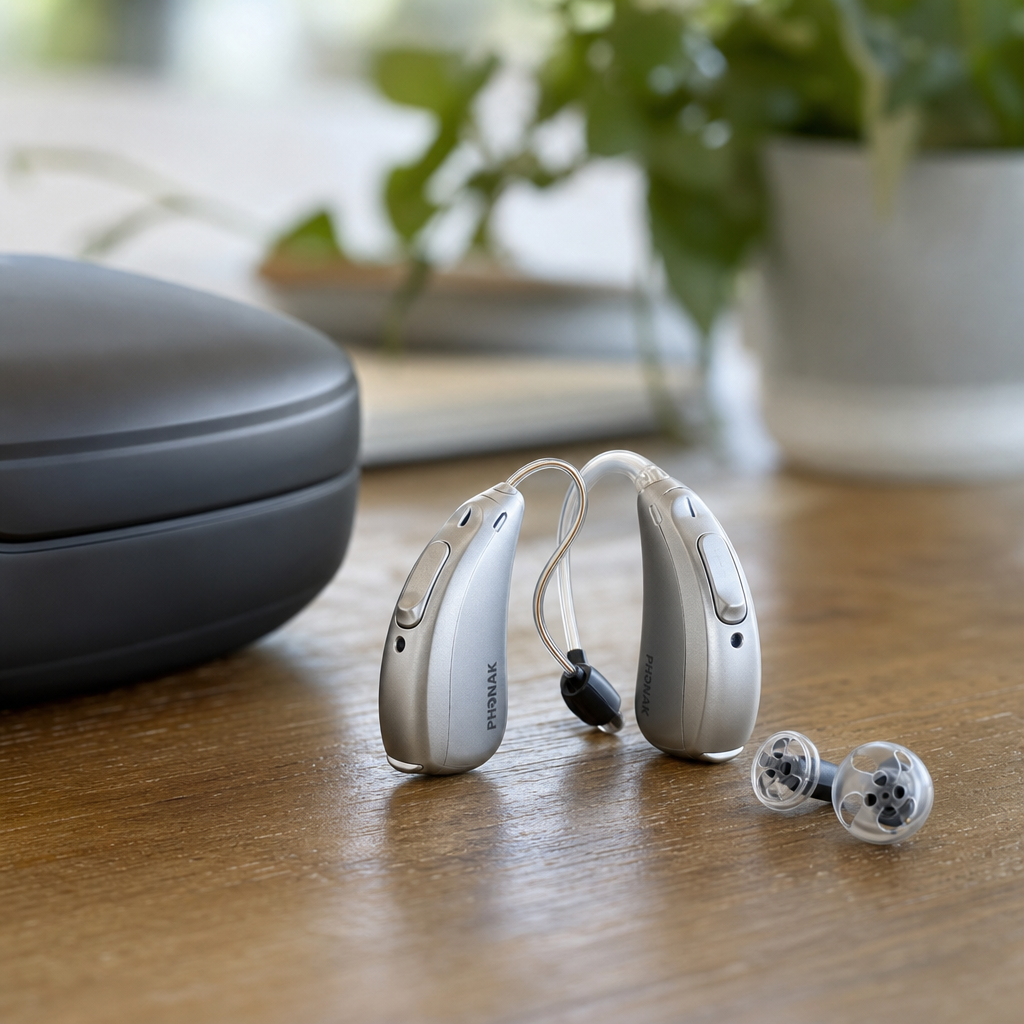
Choosing how to rate Phonak hearing aids starts with understanding what “rate” means in real buying and wearing situations. Some people mean expert scoring: sound quality, speech clarity, Bluetooth reliability, battery life, app control, comfort, and value. Others mean consumer ratings from owners who compare daily performance in restaurants, cars, meetings, and windy outdoor spaces. In practice, a useful guide to rate Phonak hearing aids combines both. It weighs technical performance against lived experience, because an impressive specification sheet means little if voices still sound thin, feedback is frequent, or the device is hard to manage for older hands.
Phonak is one of the most recognized hearing aid brands in the world and part of Sonova, a major hearing care group based in Switzerland. The company is known for broad product lines, strong Bluetooth connectivity, rechargeable options, pediatric solutions, and features designed to improve hearing in noise. Models such as Audéo, Naída, Slim, CROS, and Lyric serve different hearing needs, from mild high-frequency loss to severe or single-sided hearing loss. That range is exactly why a generic star rating is not enough. A person with active social needs may rate Phonak very highly for speech-in-noise performance, while another may score the same brand lower because they want a nearly invisible custom fit or lower long-term ownership costs.
I have seen this repeatedly in hearing care work: the best ratings come from structured comparison, not brand reputation alone. If you want to rate Phonak hearing aids fairly, define the criteria first, compare models within the same class, and separate clinical fit from product design. A hearing aid can be excellent yet still be the wrong choice for a specific ear canal, degree of loss, phone ecosystem, or budget. This guide explains the standards that matter, the product families people most often compare, and the practical questions to ask before assigning a score. Used well, it helps readers judge whether Phonak is a strong match and which subtopics deserve deeper research.
How to Rate Phonak Hearing Aids Accurately
The most reliable way to rate Phonak hearing aids is to score them across seven core categories: sound processing, speech understanding in noise, comfort and fit, connectivity, battery and charging, ease of use, and value. Start with sound processing because that is the primary job. Phonak has long emphasized speech access and automatic environmental adaptation through its operating platforms. In plain terms, that means the hearing aids attempt to identify whether you are in quiet, in a noisy group, in music, or in a car, then shift microphone directionality and noise reduction accordingly. Rate this category based on whether speech sounds natural, whether your own voice feels acceptable, and whether background noise becomes manageable rather than simply louder.
Speech in noise deserves its own rating because it remains the biggest complaint among hearing aid users. A good score here should reflect real tasks: following conversation at a restaurant, hearing a grandchild in a busy kitchen, or catching comments during a meeting when speakers are not facing you. Comfort is separate from acoustic quality. Receiver-in-canal designs like Audéo often score well for all-day wear, but fit depends on dome size, custom earmold shape, venting, and how much retention the ear needs. Connectivity matters because Phonak has historically supported broad Bluetooth compatibility, including direct connection with many iPhone and Android devices. For many wearers, that practical convenience raises the overall rating significantly.
Do not skip verification when you rate performance. The industry standard method is real-ear measurement, which checks whether amplified sound at the eardrum matches prescriptive targets such as NAL-NL2 or DSL. A premium hearing aid programmed poorly can underperform a mid-level device fitted correctly. That is why any guide to rate Phonak hearing aids should separate the hardware from the fitting process. If ratings are based only on online reviews, they blur together product quality, clinic service, and user expectations. A more dependable assessment asks: Was the device verified? Was acclimatization allowed? Were remote microphone options tested? Those details often explain why one user reports “life changing” results while another gives the same model two stars.
Phonak Product Families and Who They Suit
Phonak is not one hearing aid. It is a portfolio. Audéo is the mainstream receiver-in-canal family and usually the reference point for adults with mild to severe hearing loss who want rechargeability, streaming, and a compact form factor. Naída is built for more significant losses and greater power requirements. Slim focuses on modern styling with a distinctive shape. CROS systems address single-sided deafness by sending sound from the poorer side to the better ear. Lyric is the extended-wear option placed deep in the ear canal by a professional and worn continuously for months. Rating the brand without identifying the family produces misleading conclusions, because these products solve different problems.
Within each family, Phonak also offers different technology tiers. Higher tiers generally include more advanced automatic programs, more sophisticated noise handling, and better support for complex listening environments. Lower tiers can still work very well for quieter lifestyles or budget-sensitive buyers, but they may not separate speech from noise as effectively in crowded places. When consumers compare “Phonak versus another brand,” they often unknowingly compare different tiers. That is not apples to apples. A fair rating matches style, power level, and technology level first, then compares outcomes such as clarity, listening effort, and reliability over time.
| Phonak family | Best for | Main strengths | Possible limitations |
|---|---|---|---|
| Audéo | Most adults with mild to severe loss | Versatile fit, rechargeability, strong Bluetooth | May not suit users wanting custom in-ear invisibility |
| Naída | Severe to profound hearing loss | High power output, robust connectivity options | Larger size than slim receiver models |
| Slim | Style-conscious users | Distinct design, modern charging ecosystem | Fit preference is personal; not everyone likes the shape |
| CROS | Single-sided deafness | Improves awareness from the poorer side | Does not restore true binaural hearing |
| Lyric | Users wanting 24/7 extended wear | Invisible placement, natural pinna use for sound cues | Requires candidacy screening and ongoing subscription costs |
Sound Quality, Speech in Noise, and Everyday Performance
When people ask how to rate Phonak hearing aids, they usually care most about one thing: will conversation become easier? In my experience, Phonak often scores strongly for everyday speech audibility, especially for users who prioritize direct streaming and clear access to voices. The brand has invested heavily in automatic scene analysis and directional microphone behavior. In practical use, that can mean less fiddling with manual programs and better transitions from a quiet living room to a noisy café. Still, no hearing aid eliminates noise. A realistic rating should recognize improvement in signal-to-noise ratio and reduced listening effort, not miraculous restoration of normal hearing.
Music is another category worth scoring separately. Some users love Phonak for broad connectivity and stable amplification, while musicians or devoted concertgoers may be more sensitive to compression behavior, occlusion, or the way automatic features respond to dynamic sound. Here, proper programming matters enormously. A dedicated music program with lower noise reduction and adjusted microphone strategy can raise ratings sharply. Wind management, impulse noise handling, and own-voice comfort also influence day-to-day satisfaction. These are not niche concerns. A golfer, cyclist, teacher, or salesperson may rate the same hearing aid very differently depending on how it behaves in wind, in traffic, or during long speaking days.
Ratings should also account for adaptation time. First-week impressions can be unreliable because the brain needs time to relearn soft consonants, room cues, and distant sounds. A balanced review period is usually several weeks with at least one fine-tuning visit. If the initial fit follows prescriptive targets and follow-up adjustments address sharpness, loudness tolerance, or streaming balance, Phonak devices often settle into higher long-term scores than quick trial comments suggest. That is one reason clinic-supported outcomes tend to be more positive than anonymous marketplace reviews.
Connectivity, Rechargeability, and Ease of Use
Phonak has built much of its reputation on connectivity, and that should heavily influence any modern rating. Many models support direct Bluetooth streaming for calls, media, and accessories across a wide range of phones. For users who switch between iPhone, Android, tablets, laptops, or work systems, this flexibility is a meaningful advantage. The myPhonak app adds volume control, program changes, remote support, and in some cases health or usage tracking features. A strong score here should consider pairing stability, latency during video, microphone performance on calls, and whether controls are intuitive for users with reduced dexterity or low vision.
Rechargeability is similarly important. Today’s buyers often prefer sealed rechargeable systems over disposable zinc-air batteries, especially if they have arthritis, travel frequently, or dislike battery management. Phonak rechargeable models generally offer practical all-day use, but exact runtime depends on streaming volume, hearing loss severity, and feature use. Rate the charging system, not just battery chemistry. Does the charger hold the devices securely? Is there a portable charging case? Are indicator lights easy to understand? Small usability details drive satisfaction. I have seen excellent devices rated poorly simply because a user struggled to seat them in the charger correctly every night.
Ease of cleaning and maintenance also affects long-term ratings. Receiver-in-canal aids need regular wax guard changes, dome replacement, microphone cleaning, and moisture awareness. Phonak’s receiver systems are broadly familiar to clinics, which can make service straightforward, but users still need instruction. A hearing aid that sounds good on day one will score badly after three months if blocked wax traps cause weak output and nobody explained maintenance. Practical education is part of an honest rating framework.
Value, Limitations, and How to Compare Phonak Fairly
Value is not the same as low price. To rate Phonak hearing aids for value, consider purchase cost, included professional care, warranty length, loss and damage terms, charger replacement cost, accessory needs, and likely lifespan. Premium technology from any major brand can be expensive, often several thousand dollars per pair when bundled with audiology services. That price may be justified for a complex listener who needs strong performance in noise, remote adjustments, tinnitus features, and dependable phone integration. For someone who spends most days in quiet settings, a mid-tier option may deliver a better value score because the extra features will rarely be used.
It is equally important to understand limitations. Phonak does not fit every preference. Some users prioritize custom in-the-ear styles from other manufacturers. Others may prefer a different app interface, different rechargeable case design, or a distinct sound character. Single-sided deafness users considering CROS should know that routing sound from one side improves awareness but does not restore true localization in the way natural binaural hearing works. Severe loss users may still need careful expectations around noisy group settings, where even powerful devices and directional microphones have limits. Honest ratings improve when tradeoffs are made explicit.
Fair comparison requires controlling for fitter skill, earmold acoustics, verification, and trial structure. If you are building a shortlist, compare Phonak with similarly positioned devices from major manufacturers using the same test plan: speech-in-noise assessment, streaming trial, outdoor listening, maintenance review, and written notes after each setting. This hub can guide that process and point you toward deeper articles on Phonak models, hearing aid styles, batteries, accessories, hearing aid apps, and fitting methods. A careful rating protects your budget and raises the odds of choosing hearing aids you will actually wear every day.
The best guide to rate Phonak hearing aids is one that treats hearing care as both a technology decision and a human one. Brand reputation matters less than matching the right product family, technology tier, and fit to the user’s hearing loss, dexterity, phone habits, lifestyle, and noise exposure. Rate sound quality first, then speech in noise, comfort, connectivity, battery performance, maintenance, and value. Always separate the hardware from the programming, because verified fitting and follow-up care often determine whether a device succeeds.
Phonak remains a leading choice because it covers a wide clinical range and performs strongly in areas many users care about most, especially connectivity, rechargeability, and practical speech access. At the same time, it is not automatically the best option for every ear, budget, or preference. The strongest ratings acknowledge those limits while focusing on measurable benefits: clearer conversation, lower listening effort, easier calls, and more consistent daily use. That balanced approach leads to better buying decisions than star scores without context.
If you are researching hearing aids, use this page as your starting point for the broader Hearing Aids hub. Build a comparison checklist, ask for real-ear measurement, trial devices in your actual environments, and review model-specific guides before you decide. A structured rating process will help you judge Phonak clearly and choose hearing support that fits real life.
Frequently Asked Questions
What does it really mean to rate Phonak hearing aids?
Rating Phonak hearing aids can mean two slightly different things, and the most useful reviews combine both. First, there is expert-style scoring, which looks at measurable performance areas such as sound quality, speech understanding, noise reduction, Bluetooth stability, battery life, app features, comfort, and overall value for money. Second, there are owner ratings, which focus on how the devices actually perform in daily life: hearing clearly in restaurants, following conversations in the car, managing meetings, handling wind outdoors, and staying comfortable for long periods.
A strong rating system does not rely on only one of these perspectives. Technical performance matters because advanced features are only helpful if they work consistently. Real-world user experience matters because hearing aids are worn in changing, imperfect environments, not in a lab. When you rate Phonak hearing aids well, you are really asking a broader question: how well do they balance hearing performance, ease of use, reliability, comfort, and long-term satisfaction for the specific person wearing them.
Which features should matter most when comparing and rating Phonak hearing aids?
The most important features depend on the listener’s lifestyle, but several categories almost always deserve close attention. Sound quality is usually the starting point. That includes clarity of speech, naturalness of voices, and how well the hearing aids reduce background noise without making everything sound artificial. For many buyers, performance in challenging places such as restaurants, group conversations, and outdoor settings is more important than quiet-room listening, because those are the situations where hearing aids prove their value.
Bluetooth and connectivity are also major rating factors, especially for people who stream phone calls, music, television, or video meetings. A hearing aid may score well on paper, but if pairing is inconsistent or streaming drops out regularly, daily satisfaction can fall quickly. Battery performance matters in the same practical way. Rechargeable models are popular for convenience, but users should still consider how long a charge lasts, how easy charging is, and whether performance remains dependable through a full day.
Comfort, fit, and control options should not be underrated. Even excellent sound quality can be overshadowed if the hearing aid feels awkward, whistles, slips, or is difficult to adjust. Many users also rate the mobile app experience, since easy volume control, program changes, and device monitoring can make ownership much smoother. Finally, value should be part of the score. The best-rated option is not always the most advanced one; it is the model that delivers the right mix of benefit, usability, and cost for the wearer’s hearing needs and routine.
How can I rate Phonak hearing aids based on real-world performance instead of marketing claims?
The best way to rate real-world performance is to judge the devices in the environments where you actually live and communicate. That means paying attention to more than first impressions in a quiet clinic. Test how well the hearing aids help you understand one-on-one conversation at home, speech in restaurants or cafes, voices in meetings, directions from the passenger seat in a car, and sounds outdoors in wind or traffic. These situations reveal whether the hearing aids adapt effectively or simply sound impressive during a short demonstration.
It helps to use a simple scoring method over several days or weeks. You might rate speech clarity, listening effort, comfort, streaming quality, and convenience on a scale from 1 to 10 after different daily activities. Notice not only whether you can hear sounds, but whether you can follow speech without strain. Strong hearing aids reduce fatigue, improve confidence, and make social interaction feel easier rather than harder. Those outcomes are often more meaningful than feature lists.
It is also wise to compare your experience with owner reviews and professional input. Consumer feedback can reveal patterns in reliability, charging, connectivity, and long-term comfort that do not always appear in product brochures. At the same time, expert guidance can help you separate fitting issues from device limitations. A model may seem disappointing simply because it is not adjusted well for your hearing profile. Real-world rating is strongest when it reflects both actual use and proper professional support.
Are consumer reviews reliable when trying to rate Phonak hearing aids?
Consumer reviews are useful, but they should be read carefully. They are often the best source for understanding what daily ownership feels like over time. Reviews can highlight practical issues such as how dependable Bluetooth is, whether charging becomes inconvenient, how comfortable the aids remain after hours of wear, and whether speech clarity holds up in noisy places. They can also reveal broader satisfaction trends that technical specifications alone cannot show.
However, hearing aid reviews are highly personal. One person’s low rating may reflect an incorrect fit, unrealistic expectations, limited follow-up care, or a hearing profile very different from yours. Another person’s enthusiastic review may come from someone using the devices in easier listening environments. Because of this, individual comments should not be treated as universal truth. Instead, look for repeated themes across many reviews. If a large number of users praise sound clarity or complain about connection stability, that pattern is more informative than one isolated opinion.
The most reliable approach is to combine consumer feedback with professional evaluation and, if possible, a trial period. Reviews can point you toward strengths and weaknesses, but your own hearing, lifestyle, and fitting quality will shape the final result more than average star ratings alone. In other words, consumer reviews are valuable evidence, but they work best as one part of a broader rating process rather than the only deciding factor.
What is the best way to create a fair overall rating for Phonak hearing aids before buying?
A fair overall rating starts with deciding what matters most to you personally, then weighting those categories accordingly. For example, someone who spends all day in conversations may give the highest weight to speech clarity in noise, while someone who relies on phone calls and streaming may prioritize Bluetooth reliability and app control. A balanced scoring system often includes sound quality, performance in background noise, comfort, battery life, connectivity, ease of use, appearance, and value. Giving each category a clear score helps turn a vague impression into a practical comparison.
It is also important to consider the support behind the hearing aids, not just the hardware itself. Even excellent Phonak devices can underperform if the fitting is rushed or follow-up care is limited. Fine-tuning, earmold or dome selection, and user education can dramatically influence satisfaction. For that reason, a fair rating should include the quality of the fitting process and how easy it is to get adjustments when your needs change.
Before buying, the strongest method is to combine product research, user reviews, expert advice, and hands-on trial experience. If you can test the hearing aids in your own routine, track how they perform in the situations that matter most. A fair overall rating is not about choosing the model with the most features or the highest advertised technology level. It is about identifying the Phonak hearing aid that consistently delivers clear hearing, dependable function, and comfortable daily use for your specific hearing goals.