
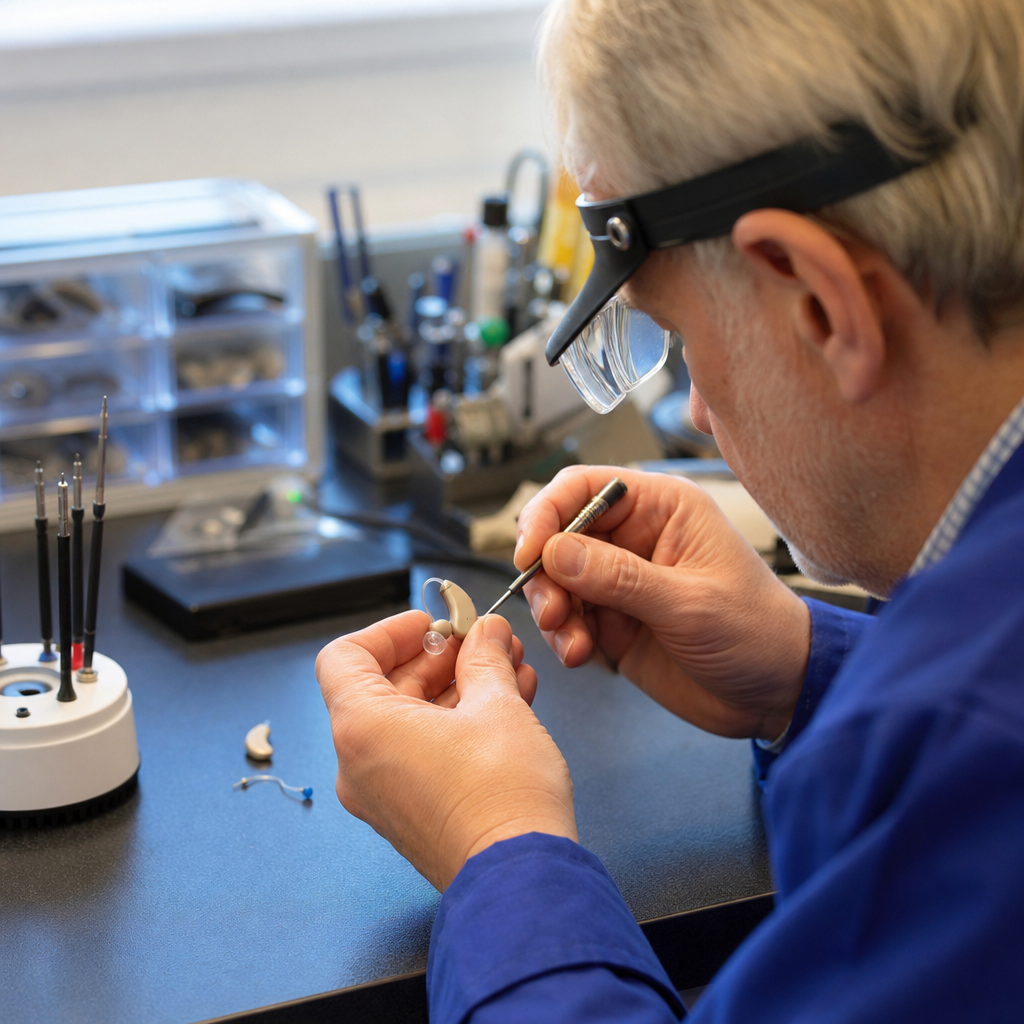
When people search for hearing aids repair near me, they usually need help fast: a device has gone quiet, a tube has split, sound is distorted, or moisture has stopped one side working. Hearing aids are small, complex medical devices, and even minor faults can disrupt conversations, work, safety, and confidence. A strong local repair option matters because hearing support is not a luxury purchase; for many users, it is essential daily equipment. Understanding what repair services do, when a problem can be fixed, and when replacement is the smarter choice helps you act quickly and avoid unnecessary cost.
Hearing aid repair means diagnosing and correcting faults in the device, earmold, tubing, charger, receiver, microphone, battery door, software settings, or casing. The term can cover simple in-clinic maintenance, such as wax removal and retubing, as well as manufacturer-level service for amplifier failure, cracked shells, dead receivers, or charging defects. “Near me” matters for practical reasons. Local providers can inspect the aid while you wait, verify fit and programming, test output in a hearing aid analyzer, and sometimes provide a loaner device if a longer repair is needed. In my experience working around hearing care workflows, the fastest successful repairs happen when users bring the aid, charger, domes, and a clear description of the fault.
This topic also matters because modern hearing aids combine hardware and software. Behind-the-ear, receiver-in-canal, in-the-ear, custom in-canal, and rechargeable models all fail differently. A clogged wax guard may mimic complete failure. A weak lithium-ion battery may seem like microphone damage. A distorted receiver may actually be moisture in the tubing. Because the symptoms overlap, a structured repair process saves time. This hub article explains the common problems, what a local clinic can usually fix on site, what must go back to the manufacturer, how much repairs tend to cost, and how to choose a provider you can trust.
What “hearing aids repair near me” should include
A good local hearing aid repair service should offer more than a quick wipe and battery swap. At minimum, it should include visual inspection, listening check, cleaning, wax management, microphone port check, receiver or tubing assessment, battery or charging review, and verification that the programmed settings remain intact. Better clinics also run electroacoustic testing using equipment such as a Frye or Audioscan analyzer to confirm that the aid is meeting expected output. If a problem is intermittent, they may pair the device with the manufacturer’s software to check for firmware errors, usage logs, receiver impedance issues, or battery health data.
For the user, the practical question is simple: can this be fixed today, or does it need factory service? Many local faults are same-day issues. Blocked domes, clogged wax guards, torn tubing, corrosion in battery contacts, loose ear hooks, dead disposable batteries, and basic charger contact contamination are often repaired in minutes. If the shell is cracked, the receiver has failed, the directional microphones are damaged, or the rechargeable cell has degraded beyond specification, the aid may need to be sent to the manufacturer. Reputable providers explain that difference clearly and document whether the repair is covered by warranty.
Location convenience also affects follow-up care. Hearing aids often need reprogramming after parts replacement. A nearby clinic can retest comfort, speech clarity, and feedback management after repair, especially if a receiver, mold, or shell change affects acoustics. That extra step is important because a technically repaired aid is not always an optimized aid.
Common hearing aid problems and what usually causes them
The most common complaint is “my hearing aid is not working.” In practice, that phrase covers several distinct failures. No sound may be caused by depleted batteries, blocked wax guards, a muted app control, charger faults, or dead receivers. Weak sound often points to partial wax blockage, microphone debris, moisture damage, battery decline, or incorrect programming. Intermittent sound frequently results from battery door wear, cracked solder joints, corroded contacts, or movement in the receiver wire on receiver-in-canal devices. Whistling or feedback is usually linked to poor fit, earwax in the ear canal, torn domes, or changed hearing thresholds rather than amplifier failure.
Moisture is one of the most underestimated causes of hearing aid repair. Sweat, humidity, rain exposure, and storage in bathrooms can all affect microphones, receivers, and charging contacts. I have seen devices described as “completely dead” revive after professional drying and cleaning, but repeated moisture exposure often causes permanent corrosion over time. Wax is the other major culprit. Cerumen can block sound outlets, filters, vents, and microphone inlets. That is why routine maintenance prevents a large share of avoidable repair visits.
Rechargeable models add another layer. If the aid powers on inconsistently, flashes unusual LEDs, or drains before the day ends, the problem may be charger alignment, contact contamination, failed charging ports, or end-of-life battery cells. Most lithium-ion hearing aids are designed for years of use, but daily charge cycles eventually reduce runtime. When an aid that once lasted sixteen hours now lasts six, battery replacement or factory service becomes likely.
| Problem | Likely cause | Typical local fix | May require manufacturer service |
|---|---|---|---|
| No sound | Wax guard blockage, dead battery, muted program | Clean, replace filter, battery check, software review | Yes, if receiver or amplifier failed |
| Weak sound | Debris, moisture, declining battery, tubing leak | Cleaning, drying, retubing, charger check | Yes, if microphone or internal components damaged |
| Intermittent sound | Loose contact, wire fatigue, corrosion | Contact cleaning, component inspection | Often, especially for internal electrical faults |
| Feedback whistling | Poor fit, wax in ear, torn dome | Refit dome, ear check, feedback recalibration | Sometimes, if casing or receiver is damaged |
| Short battery life | Old battery, charger issue, cell degradation | Battery and charger assessment | Common for rechargeable battery replacement |
What can be repaired in clinic versus sent away
Many people assume all hearing aid repairs require shipping, but that is not true. In-clinic repairs usually include cleaning, wax guard changes, dome replacement, ear hook replacement, tubing replacement for behind-the-ear aids, battery door replacement on some models, retention lock replacement, charger cleaning, software reset, firmware update, and feedback recalibration. Custom earmolds can often be polished or have tubing replaced locally if the shell itself is intact. These are high-value services because they restore performance without extended downtime.
Sent-out repairs are more likely when the problem involves internal electronics or structural damage. Examples include failed receivers welded into custom shells, broken microphones, amplifier faults, shell cracks affecting sealing, damaged push buttons, rechargeable battery replacement in sealed devices, and water damage that has reached the circuit board. Manufacturer repair is also common when specialized pressure testing or full shell remaking is needed. For premium brands such as Phonak, Oticon, ReSound, Signia, Widex, and Starkey, factory repair can preserve original specifications better than third-party intervention when the issue is complex.
Ask the clinic three direct questions before approving service: What failed, what can you do here today, and what happens if the issue returns? Good providers answer in plain language, not jargon. They also tell you whether repair will keep your current settings, whether a loaner is available, and whether the estimate changes if hidden damage appears at the service center.
How to choose the best local hearing aid repair provider
The best repair option is usually a licensed audiology clinic or hearing instrument specialist with access to manufacturer software, genuine parts, and verification equipment. Search results may show big-box retailers, independent audiology practices, ENT-linked clinics, mobile hearing services, and mail-in labs with local drop-off points. The right choice depends on your device brand, warranty status, and the complexity of the fault. If the aid was professionally fitted, start with the original provider because they often have your audiogram, fitting targets, and programming history.
Look for specific signs of competence. The clinic should mention repair diagnostics, hearing aid cleaning, earmold service, programming, and follow-up adjustments. It should stock consumables such as domes, wax guards, tubing, and batteries. Reviews should reference solved problems, not just friendly staff. Same-day service is valuable, but expertise matters more than speed if the issue involves custom devices or rechargeable systems. If a provider cannot verify output after repair, that is a limitation, because restored sound quality should be measured, not guessed.
Convenience still matters. Nearby access reduces time without hearing support, especially for older adults, working professionals, and users with only one functioning device. Clinics with walk-in repair hours, curbside drop-off, or appointment triage tend to handle urgent breakdowns better. If transportation is difficult, ask whether remote troubleshooting is available before you travel.
Repair costs, warranties, and insurance realities
Hearing aid repair costs vary widely by brand, age, technology level, and whether the problem is external or internal. Basic in-office maintenance may be free for established patients or cost a modest service fee. Tubing replacement, domes, wax guards, and routine cleaning are usually low-cost items. Manufacturer repair is more expensive and often priced as a flat repair fee plus shipping. Rechargeable battery replacement can sit at the higher end because sealed designs require specialized service. If both devices are old and repeatedly failing, replacement may become more economical than serial repairs.
Warranties are critical. Most new hearing aids include a manufacturer warranty that may cover repairs for one to three years, sometimes longer with service plans. Loss and damage coverage is different from repair coverage, so read the terms carefully. If the warranty has expired, ask whether the manufacturer offers an out-of-warranty flat-rate repair with a short renewed warranty on the repaired device. Many do, and that can improve value.
Insurance coverage is inconsistent. Traditional medical insurance often does not cover routine hearing aid repair, though some Medicare Advantage plans, private plans, veterans’ benefits, or employer hearing programs may help. Flexible spending accounts and health savings accounts commonly allow eligible hearing-related expenses. Always request a written estimate before authorizing nonwarranty work, especially for older devices where replacement is on the horizon.
When repair is the wrong answer
Not every device should be repaired. If a hearing aid is six or more years old, unsupported by the manufacturer, repeatedly malfunctioning, or no longer meeting your hearing needs, replacement may be the better investment. Technology has improved meaningfully in speech-in-noise processing, Bluetooth connectivity, rechargeable reliability, and moisture resistance. A successful repair on an aging aid can still leave you with outdated microphones, limited app support, and no future parts access.
Another reason to avoid repair is unresolved hearing change. If speech still sounds unclear after the device is restored, your prescription may need updating. In those cases, users often mistake poor hearing performance for hardware failure. A hearing test, real-ear verification, and fit review may reveal that the aid is functioning but no longer matched to your current hearing profile. The right clinic will tell you that honestly rather than selling a repair that cannot solve the real problem.
There are also hygiene and structural limits. Severe corrosion, repeated moisture intrusion, and cracked custom shells can make repairs temporary at best. When reliability matters for work, driving, and safety, a predictable new device can be a better clinical decision than trying to extend a failing one.
How to prevent future hearing aid repairs
The most effective way to reduce repair visits is disciplined daily care. Wipe the aids every night, open the battery door on disposable-battery models, store them in a dry case, and keep them away from bathroom steam and direct heat. Replace wax guards and domes on schedule, not only when sound disappears. For behind-the-ear devices, check tubing for hardening, yellowing, or condensation. For rechargeable aids, clean charging contacts gently and place the devices correctly in the charger each night. A hearing aid dehumidifier or drying cup is a practical tool for users in humid climates or anyone who sweats heavily.
Schedule routine professional maintenance even if the aids seem fine. Clinics can deep-clean microphones, replace worn consumables, update firmware, and catch early signs of battery decline or receiver damage before a total failure occurs. This is especially important for users with heavy cerumen, active lifestyles, or dexterity issues that make home care inconsistent. Small preventive steps lower emergency repairs and extend device life.
Hearing aids repair near me is ultimately a search for reliable hearing, not just a quick fix. The best local providers diagnose the true cause, solve simple issues on the spot, coordinate manufacturer service when necessary, and tell you when replacement is the better path. If your device is weak, dead, whistling, or draining too fast, act promptly. Book a professional evaluation, bring all related parts, and get a clear repair-versus-replace recommendation that protects both your hearing and your budget.
Frequently Asked Questions
What types of hearing aid problems can usually be repaired locally?
Many of the most common hearing aid faults can be diagnosed and repaired by a local hearing care provider, audiologist, or specialist repair centre. Typical issues include weak or distorted sound, complete loss of sound, blocked microphones or receivers, broken tubing, cracked ear moulds, battery contact problems, intermittent performance, feedback whistling, moisture damage, and damaged wax guards or domes. In many cases, the problem is not a major internal failure but a build-up of earwax, a clogged filter, a split tube, corrosion in the battery compartment, or a worn component that can be replaced without sending the device away for an extended period.
For behind-the-ear models, local repairs often involve changing tubing, cleaning the earmould, checking the hook, testing the receiver output, and replacing basic external parts. For receiver-in-canal and in-the-ear devices, providers may inspect microphone ports, replace wax traps, assess charging contacts, and run electronic tests to determine whether the problem is physical, electrical, or moisture-related. Some clinics can also perform manufacturer-approved minor repairs onsite, while more advanced internal faults may need to be returned to a dedicated lab.
The key point is that “repair” does not always mean a major rebuild. A local appointment can often restore function quickly, especially when the issue is caused by maintenance-related wear and tear rather than severe internal damage. If your hearing aid suddenly goes quiet, sounds weak, or cuts in and out, a professional assessment is the fastest way to separate a simple fix from a more complex repair.
How do I know if my hearing aid needs a repair or just a professional clean and service?
This is one of the most important questions because many hearing aids that seem broken are actually affected by routine blockages or maintenance issues. If your device has become quieter over time, sounds muffled, whistles unexpectedly, drains batteries faster than normal, or stops working after exposure to sweat or humidity, it may need cleaning, servicing, or a component replacement rather than a full repair. Wax and moisture are two of the most common reasons hearing aids stop performing properly, and both can mimic more serious faults.
A professional clean and service usually includes inspection of the microphones, receiver, battery compartment or charging points, tubing, filters, domes, and earmoulds. The provider may replace consumable parts, remove wax debris, dry the device, and carry out performance testing. If the hearing aid then returns to normal function, a full repair may not be necessary. On the other hand, if testing shows failed internal electronics, damaged microphones, a faulty receiver, or casing damage that affects performance, the device may need formal repair work.
As a general rule, seek help promptly if basic troubleshooting has not solved the issue. That means checking the battery or charge level, replacing the wax guard, confirming the device is switched on, and visually inspecting for obvious debris or tubing damage. If the problem continues, do not keep struggling with poor hearing. A quick local visit can prevent a small issue from becoming a larger one and can also reduce time without essential hearing support.
How quickly can a local hearing aid repair service fix my device?
Repair times vary depending on the fault, the hearing aid style, the brand, and whether the clinic has the necessary parts available. Simple issues such as blocked wax guards, split tubes, weak battery contacts, dome replacement, earmould cleaning, or moisture treatment can often be handled the same day, sometimes during a walk-in or scheduled appointment. For people searching “hearing aids repair near me,” this is often the biggest benefit of choosing a local provider: you may be able to get help fast and avoid days or weeks without reliable hearing.
More advanced repairs can take longer. If the hearing aid requires replacement of internal microphones, receivers, faceplates, charging components, or manufacturer-specific parts, the device may need to be sent to a specialist workshop or the original manufacturer. In those situations, turnaround might range from a few days to a couple of weeks, depending on the brand, warranty status, and parts supply. Some providers can offer a temporary loan device or alternative hearing support while your own aid is away, which can make a major difference if you rely on it for work, communication, or personal safety.
If speed matters, ask direct questions before booking: Do you offer same-day assessments? Can you complete minor repairs onsite? Do you work with my hearing aid brand? Do you carry common replacement parts? Is a loan aid available if the repair must be sent off? A good local clinic will explain the process clearly and give you a realistic timeline based on the actual condition of your device.
Should I try to fix my hearing aid myself before booking a repair?
You can safely try a few basic troubleshooting steps at home, but hearing aids are delicate medical devices and should not be opened, glued, forced, or cleaned with improvised tools. Reasonable first checks include changing the battery if your model uses one, fully charging rechargeable devices, replacing the wax guard, checking whether the tubing is split or blocked, cleaning the exterior with approved tools, and making sure the volume or program settings have not changed accidentally. These simple steps can sometimes solve the problem immediately.
However, anything beyond routine maintenance should be left to a professional. Attempting a home repair can damage microphones, receivers, casing seals, battery doors, and charging contacts. It can also worsen moisture problems or push wax deeper into sensitive areas. Adhesives, pins, household cleaning fluids, and compressed air are particularly risky because they can cause permanent damage and may invalidate a warranty. Even a small crack or loose component needs proper assessment, since hearing aids are designed to extremely tight tolerances.
If your hearing aid has gone silent, sounds distorted, keeps cutting out, or has visible physical damage, it is best to arrange a local repair assessment rather than experiment. A professional can identify whether the problem is maintenance-related, electrical, acoustic, or mechanical, and can fix it in a way that protects both performance and long-term reliability. In short, basic care at home is fine; actual repair work is usually not a do-it-yourself job.
What should I look for when choosing a hearing aid repair service near me?
Start with expertise and compatibility. Not every clinic repairs every hearing aid brand or model, so it is important to check whether the provider works with your specific device. Ask whether they handle behind-the-ear, receiver-in-canal, and in-the-ear aids, and whether they can carry out both maintenance services and formal repairs. A strong repair provider should also be able to perform diagnostic testing rather than simply guessing based on symptoms. That matters because two hearing aids with the same complaint, such as “no sound,” can have completely different underlying causes.
Speed, transparency, and support are also essential. Look for a service that offers prompt appointments, clear pricing, and an honest explanation of whether the issue can be repaired locally or must be sent to the manufacturer. It helps if they can provide replacement parts, moisture treatment, tubing changes, ear mould servicing, and advice on preventing repeat problems. If your hearing aid is under warranty, ask whether the clinic can process warranty repairs and what paperwork may be needed. If it is out of warranty, ask for an estimate before authorising major work.
Finally, choose a provider who understands how disruptive hearing aid downtime can be. Good repair care is not just technical; it is practical and patient-focused. You want someone who appreciates that a hearing aid supports communication, safety, work, and confidence every day. Reviews, recommendations, professional qualifications, and a willingness to answer questions all help identify a trustworthy local option. The best nearby repair service is one that combines technical skill with fast, clear, and dependable support when you need it most.