
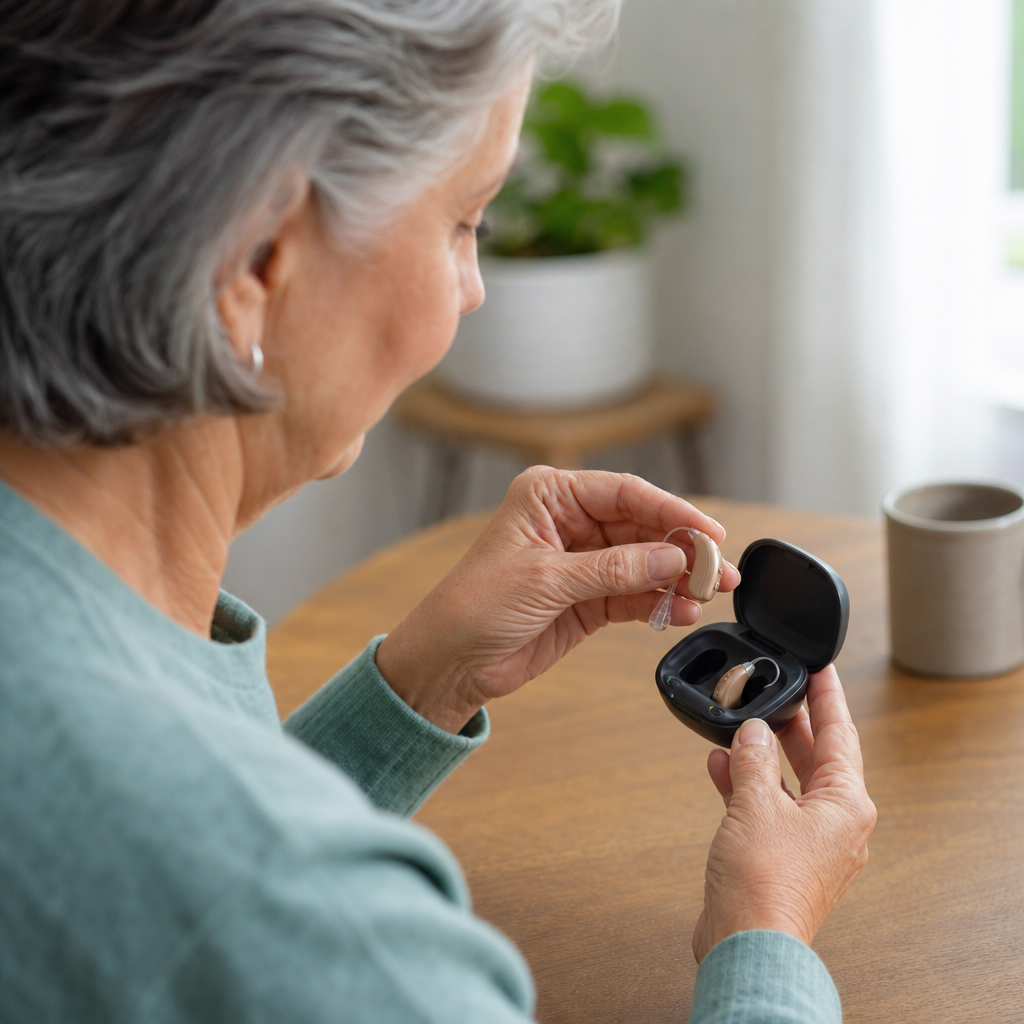
Over-the-counter hearing aids have changed how adults with mild to moderate hearing loss can get help, compare options, and start hearing better without the traditional clinic-first path. In simple terms, an over-the-counter hearing aid is a medical device regulated for adults age eighteen and older with perceived mild to moderate hearing loss, sold directly to consumers without a prescription, fitting appointment, or medical exam. That definition matters because these devices are not just inexpensive sound amplifiers. They are hearing aids, subject to product rules, output limits, labeling requirements, and performance expectations designed to improve safety and access.
I have worked with people who delayed treatment for years because the older process felt expensive, confusing, and intimidating. Many could follow conversation in a quiet room but missed speech in restaurants, meetings, worship services, or family gatherings. They often turned up television volume, relied on captions, or smiled through parts of conversations they did not fully hear. For this group, the arrival of over-the-counter hearing aids is significant. It lowers barriers, shortens the time between noticing a problem and trying a solution, and gives buyers more control over price, features, and where they shop.
This matters because untreated hearing loss is rarely just an inconvenience. It affects communication, social participation, work performance, listening effort, and fatigue. The National Institute on Deafness and Other Communication Disorders has long noted that hearing loss becomes more common with age, and the World Health Organization has linked unaddressed hearing loss to reduced quality of life and broader health impacts. Better access does not solve every problem, but it gives many adults a practical first step. The key is understanding what over-the-counter hearing aids can do, who they are for, how to evaluate them, and when professional care remains essential.
What over-the-counter hearing aids are and who should use them
Over-the-counter hearing aids are intended for adults who believe they have mild to moderate hearing loss. In practical terms, that often means you hear some speech but struggle with clarity, especially when there is background noise, distance, reverberation, or multiple speakers. You may say, “I can hear people talking, but I cannot make out the words.” That pattern is different from severe hearing loss, sudden hearing changes, or one-sided loss, which require clinical evaluation rather than self-selection.
The strongest candidates are adults who can manage smartphone setup, charging, and basic troubleshooting, or who have support from a family member who can help. Many current devices rely on app-based hearing checks, in-app personalization, and software controls for volume, directional microphones, and listening modes. If a buyer wants a simpler path, some models offer onboard controls and preset programs, but ease of use still varies widely. During fittings I have seen success depend less on age than on expectations, manual dexterity, comfort with technology, and willingness to wear the devices consistently during the adjustment period.
These products are not appropriate for children. They are also not the right choice for “red flag” symptoms such as sudden hearing loss, ear pain, drainage, dizziness, significant asymmetry between ears, tinnitus in one ear, or a visible ear deformity. Earwax blockage can also mimic hearing loss, and that is a common reason a do-it-yourself purchase goes wrong. If you have those issues, start with a physician or audiologist. An over-the-counter hearing aid is best viewed as an access pathway for a defined group, not a replacement for all hearing care.
How they differ from prescription hearing aids and amplifiers
The biggest difference between over-the-counter and prescription hearing aids is the delivery model, not whether they are legitimate devices. Prescription hearing aids are typically selected and programmed by an audiologist or hearing instrument specialist after testing. They can address a wider range of hearing loss and often include more advanced fitting flexibility, custom earmolds, real-ear measurement, and long-term clinical support. Over-the-counter hearing aids are self-fit or user-adjusted products designed around common patterns of mild to moderate loss, with instructions and consumer-facing setup in place of a formal fitting process.
Buyers also need to separate hearing aids from personal sound amplification products, often called PSAPs. A PSAP is meant to amplify environmental sounds for people without hearing loss, such as birdwatching or hunting. It is not regulated as a hearing aid for treating hearing loss. In the market, marketing language can blur that line, so read labels carefully. If the device is sold for hearing loss and marketed for adults with mild to moderate hearing loss, it should meet hearing aid requirements. If it only promises louder sound, it may not offer the speech-focused processing, frequency shaping, feedback management, and safety controls you actually need.
Cost is another major difference. Prescription devices commonly include bundled professional services, which can raise the total price but also improve outcomes for complex cases. Over-the-counter options generally cost less upfront, with many sold in the hundreds rather than thousands of dollars per pair. Lower price does not automatically mean lower value. In straightforward cases, a well-designed self-fitting device can deliver meaningful benefit. The tradeoff is that the buyer assumes more responsibility for selection, setup, troubleshooting, and deciding when the result is good enough or when professional help is needed.
Key features that determine real-world performance
When comparing over-the-counter hearing aids, focus on the features that change daily listening, not just marketing terms. Sound processing quality matters most. Better devices use multichannel amplification to shape different frequency regions, compress loud sounds so they stay comfortable, and reduce feedback whistling. Directional microphones help emphasize speech coming from in front of you, while noise reduction lowers steady background sounds such as fans or road noise. Bluetooth streaming can improve phone calls and media listening, but it does not compensate for weak amplification or poor fit.
Fit style affects both comfort and acoustics. Receiver-in-canal and small behind-the-ear models are common because they fit many ears, reduce the plugged sensation, and leave room for microphones and batteries. Completely-in-canal styles can be discreet but are often harder to handle and may have fewer features. Rechargeable lithium-ion batteries are now common and usually easier than disposable cells, especially for users with dexterity issues. Battery life depends on streaming use, processing load, and form factor, so manufacturer claims should be treated as estimates rather than guarantees.
Self-fitting technology deserves special attention. The best systems guide users through a hearing check in a quiet room, then create a personalized starting profile. Some allow manual fine-tuning for bass, treble, and speech clarity. In my experience, the most successful designs make small adjustments easy and reversible. Buyers should also check the return window, warranty length, water-resistance rating, replacement dome availability, and access to remote support. A great device on paper can still fail if replacement parts are hard to get or customer service cannot resolve pairing, charging, or comfort problems quickly.
| Feature | Why it matters | What to look for |
|---|---|---|
| Self-fitting setup | Improves match between device output and hearing needs | In-app hearing test, guided calibration, saved profiles |
| Directional microphones | Helps speech stand out in front-facing conversations | Adaptive directional modes for noise |
| Feedback control | Reduces whistling that causes users to stop wearing aids | Automatic feedback cancellation |
| Rechargeability | Simplifies daily use and avoids tiny batteries | Full-day battery life and reliable charger |
| Return policy | Lets you test comfort and benefit in real situations | At least 30 to 45 days |
How to choose the right device and avoid common buying mistakes
Start by identifying your main listening problems. If your biggest issue is conversation in restaurants, look for strong directional processing and a clear speech-in-noise mode. If you struggle more with television and phone calls, Bluetooth streaming may matter more. If you have arthritis, tremor, or vision limits, prioritize larger controls, easy insertion, and simple charging docks over tiny devices. The best choice is the one you will use every day, not the one with the longest feature list.
Read the fine print before buying. Look for age restrictions, intended hearing-loss range, whether the product is truly over the counter, and what support is included. I advise buyers to treat hearing-test claims carefully. An app-based check can be useful, but it is not the same as a diagnostic audiogram performed in a calibrated environment. You should also compare trial periods, return shipping costs, restocking fees, and whether ear tips, wax guards, and charging accessories are included. Those details often determine satisfaction more than promotional discounts.
Avoid three common mistakes. First, do not buy based only on price. The cheapest option may have weak amplification, poor noise handling, or support that disappears after checkout. Second, do not judge the device after one afternoon. New users need time for physical comfort, sound quality adjustment, and realistic expectations. Third, do not ignore poor results. If speech is still unclear after careful setup and a reasonable trial, the issue may be earwax, a steeper hearing loss than expected, or a medical problem. At that point, moving to professional evaluation is the smart decision, not a failure.
Setup, adjustment, and what daily use is really like
Initial setup usually takes longer than buyers expect, especially the first time. Plan for a quiet room, a full battery charge, stable internet access, and twenty to forty minutes without interruptions. Follow the insertion guide carefully because placement changes both volume and clarity. A hearing aid sitting too shallow in the ear can whistle, sound thin, or deliver less benefit than the same device inserted correctly. Most apps then walk through hearing screening, environmental preference questions, and a short listening demonstration.
The adjustment period is real. Many first-time users say everyday sounds seem sharper than expected: dishes clinking, footsteps, refrigerator hum, turn signals, paper rustling. That does not mean the fitting is wrong. The brain is re-learning to notice sounds it has been missing. I usually tell users to wear the aids for several hours a day at first, then increase gradually while practicing in predictable settings such as one-on-one conversations, television, and short errands. Consistent wear is more effective than occasional use because auditory adaptation depends on repeated exposure.
Maintenance is straightforward but nonnegotiable. Wipe the devices daily, check domes and wax guards, store them dry, and charge them on a regular schedule. Moisture, cerumen, and skin oils are among the most common causes of muffled sound and intermittent performance. Keep software updated because manufacturers often improve stability and tuning options through firmware and app updates. If one side suddenly sounds weaker, swap domes or guards before assuming the device is defective. Small maintenance habits prevent many support calls and extend the life of the hearing aids.
Limits, safety concerns, and when to seek professional hearing care
Over-the-counter hearing aids improve access, but they have clear limits. They are not designed for severe or profound hearing loss, complex conductive problems, or situations requiring custom acoustic coupling and precise real-ear verification. Real-ear measurement, which uses a probe microphone in the ear canal to verify amplified sound against prescriptive targets such as NAL-NL2, remains the gold standard in clinical fittings. Many consumers do well without it, but buyers should understand what they are giving up when they choose the self-fit route.
Medical safety matters too. Seek prompt care if hearing loss is sudden, rapidly worsening, painful, accompanied by drainage, or markedly worse in one ear. Vertigo, facial weakness, and pulsatile tinnitus also require evaluation. These symptoms can signal conditions that no retail device should mask. Another limitation is cognitive and physical load. If setup screens, tiny parts, and app menus create stress, the lower sticker price may not equal lower total burden. Professional support can be worth the added cost when it prevents abandonment and improves long-term use.
The best approach is practical, not ideological. Use over-the-counter hearing aids when your situation fits the category and you want an accessible, lower-cost entry point. Move to professional hearing care when results are incomplete, symptoms are concerning, or your hearing profile is more complex than the packaging assumes. For many adults, this hub topic is not about choosing one path forever. It is about understanding the full hearing-aid landscape, starting with the option that matches your needs today, and taking the next step with confidence. If you suspect hearing loss, compare reputable devices, review the return policy, and begin with a solution you will actually wear.
Frequently Asked Questions
What is an over-the-counter hearing aid, and who is it meant for?
An over-the-counter hearing aid is an FDA-regulated medical device designed for adults age 18 and older who believe they have mild to moderate hearing loss. Unlike traditional prescription hearing aids, OTC models are sold directly to consumers without requiring a hearing exam, a fitting appointment, or a prescription from an audiologist or physician. That direct-access model has made hearing support more approachable for many people who want to act sooner, compare options on their own, and avoid the time and cost of the traditional clinic-first process.
These devices are specifically intended for adults with perceived mild to moderate difficulty hearing, such as struggling to follow conversations in restaurants, needing higher TV volume, or missing parts of speech in meetings or family settings. They are not appropriate for children, and they are not the right choice for everyone with hearing loss. People with severe hearing loss, sudden hearing changes, one-sided hearing issues, ear pain, drainage, persistent ringing in one ear, or significant dizziness should seek a medical evaluation instead of relying on OTC hearing aids alone. In short, OTC hearing aids expand access, but they are still medical devices with a specific intended use and clear limits.
How are over-the-counter hearing aids different from prescription hearing aids and sound amplifiers?
The biggest difference is how the products are regulated, sold, and intended to be used. Over-the-counter hearing aids are medical devices regulated for adults with perceived mild to moderate hearing loss and can be purchased without a prescription or in-person fitting. Prescription hearing aids are also medical devices, but they are selected, programmed, and supported through a licensed hearing care professional. That professional involvement can be especially valuable for people with more complex hearing needs, unusual hearing patterns, significant difficulty understanding speech, or physical ear issues that make self-fitting difficult.
Sound amplifiers, often called personal sound amplification products or PSAPs, are different from both OTC and prescription hearing aids. They are not hearing aids and are not intended to treat hearing loss. Their purpose is to make environmental sounds louder for people without diagnosed hearing problems, such as amplifying bird sounds for recreation. A true OTC hearing aid is designed to help compensate for hearing loss and typically includes hearing-specific features such as self-fitting tools, volume control, customizable sound settings, feedback management, and output limits intended to improve safety and usability.
For consumers, this distinction matters because a lower price tag alone does not make a device a hearing aid. If someone is shopping for help with hearing loss, they should look for clear labeling that the product is an OTC hearing aid, review the intended user profile, and check whether the device offers support for adjustment, return policies, and hearing-related features rather than simple amplification.
Are over-the-counter hearing aids actually effective for mild to moderate hearing loss?
Yes, for many adults with mild to moderate hearing loss, OTC hearing aids can be effective when the device is appropriate for the user and set up correctly. Research and real-world use show that improving access to amplification can help people hear conversations more clearly, reduce listening strain, and stay more engaged socially. For someone who has delayed getting help because of cost, inconvenience, or stigma, an OTC device can be an important and practical first step.
That said, effectiveness depends on expectations, fit, and follow-through. Hearing aids do not restore normal hearing in the way eyeglasses can correct vision. Instead, they improve access to sound, especially speech, so the brain can process more of what is being said. Users often do best when they wear the device consistently, make gradual adjustments, and give themselves time to adapt. Background noise, room acoustics, and the specific pattern of hearing loss still affect how well any hearing aid performs.
Product quality also matters. Some OTC hearing aids offer app-based hearing checks, self-fitting guidance, multiple listening modes, directional microphones, and rechargeable designs that improve daily use. Others are more basic. The most successful buyers usually choose a device that matches their lifestyle, comfort preferences, and level of tech confidence. In many cases, OTC hearing aids work well, but they are not one-size-fits-all. If a user tries one and still struggles significantly, professional testing and guidance may be the better next step.
What should I look for when comparing over-the-counter hearing aids?
Start with fit and comfort, because even a feature-rich hearing aid will not help much if it is uncomfortable or difficult to wear. OTC hearing aids come in different styles, including in-ear and behind-the-ear designs. Some are very discreet, while others are easier to handle and better for people with dexterity or vision concerns. Think about whether you want rechargeable batteries or replaceable ones, how many hours of daily use you need, and whether you are comfortable using a smartphone app for setup and adjustment.
Next, look at sound customization and support. Strong OTC options often include self-fitting tools, volume adjustment, preset listening programs, noise reduction, feedback suppression, and clear instructions for tuning the devices to your hearing preferences. If you spend time in restaurants, meetings, religious services, or group conversations, features that help with speech clarity in noise can be especially useful. Bluetooth streaming, telecoil compatibility, and remote support may also matter depending on how you use phones, media, and assistive listening systems.
It is also wise to review practical consumer protections. Check the return window, warranty length, trial period, replacement policy, and access to customer support. Because hearing aid success often requires a little experimentation, a generous return policy can reduce risk. Finally, be realistic about your hearing needs. The best OTC hearing aid is not necessarily the cheapest or the most advanced. It is the one that fits your hearing level, daily environments, comfort preferences, and ability to manage setup and adjustments confidently.
When should someone skip an over-the-counter hearing aid and see a hearing professional instead?
OTC hearing aids are a helpful option, but there are times when professional care is the safer and smarter choice. Anyone with sudden hearing loss, hearing loss in only one ear, rapidly changing hearing, ear pain, drainage, visible ear deformity, longstanding earwax problems, severe tinnitus in one ear, or dizziness should be evaluated by a medical professional. These symptoms can point to conditions that need diagnosis and treatment rather than simple amplification. Likewise, adults who suspect they have more than mild to moderate hearing loss may benefit more from a full hearing exam and prescription-level support.
Professional care is also worth considering when speech remains unclear even if sounds seem loud enough, when multiple OTC devices have not helped, or when a person has trouble handling self-fitting technology. An audiologist or hearing instrument specialist can test hearing across frequencies, identify asymmetries, check speech understanding, inspect the ears, and recommend a treatment plan tailored to the individual. That may include prescription hearing aids, assistive listening devices, earwax removal, medical referral, or counseling on communication strategies.
In practical terms, OTC hearing aids are best viewed as an access-friendly option, not a replacement for all hearing care. They can be an excellent solution for many adults with straightforward mild to moderate hearing loss, but they are not the right answer for every hearing problem. If symptoms are unusual, severe, sudden, or simply not improving, professional evaluation is the right move.