
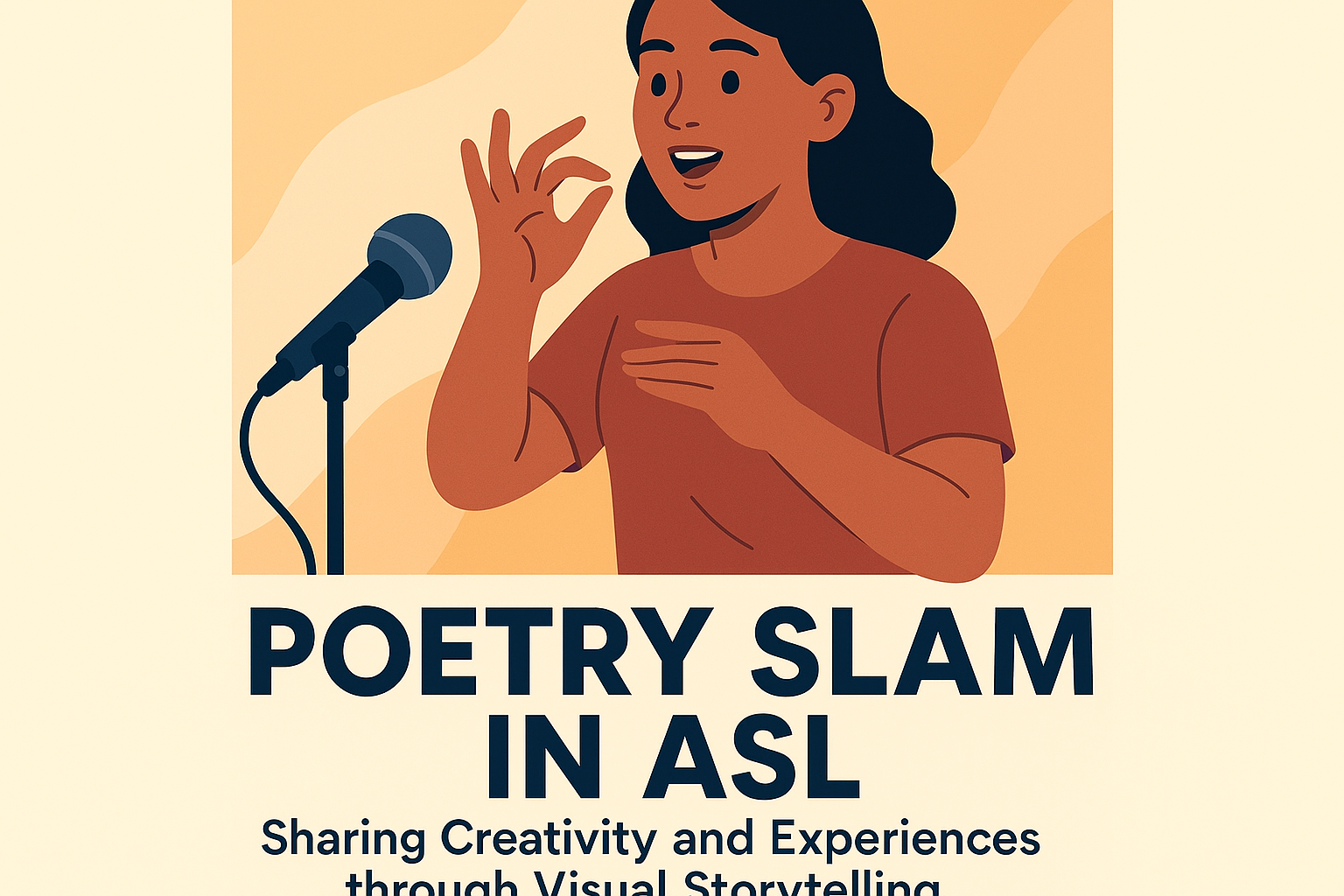
Poetry Slam in American Sign Language (ASL) is a vibrant form of creative expression that combines the rhythm and emotion of traditional poetry with the visual richness of sign language. Held within the Deaf community, these events allow participants to share personal experiences, cultural insights, and imaginative stories through ASL’s unique gesture-based mode of communication. The essence of a Poetry Slam lies in its competitive nature, where poets perform their pieces in front of an audience, and judges score them based on content, creativity, and performance. The power of Poetry Slam in ASL extends beyond mere performance—it serves as a medium for artists to communicate social issues, foster community, and heighten cultural awareness. It matters because it allows for the bridging of cultural and communication gaps, offering hearing audiences an immersive glimpse into the vibrant world of Deaf culture and linguistics.
Understanding ASL as a complete language system is crucial. ASL is not merely a signed version of English, but a fully developed language with its own grammar, syntax, and nuances. Additionally, understanding the depth of cultural experiences within the Deaf community enriches one’s engagement with ASL Poetry Slams. For instance, topics frequently addressed in these performances include identity, struggles with audism—the discrimination against Deaf individuals—and the celebration of Deaf culture. Hence, ASL Poetry Slams represent more than an entertainment event; they are a cultural phenomenon that empowers and transforms both performers and audiences.
The Evolution of ASL Poetry Slam
The roots of Poetry Slam can be traced back to the 1980s in Chicago, where it emerged as a platform for poets to reach a wider audience. Similarly, ASL Poetry Slam gained momentum within the Deaf community in the late 20th century as a parallel movement, offering Deaf poets a stage to express their creativity using their native language. A prime example of this evolution can be seen with the Deaf Poetry Jam, an offshoot of the popular HBO series “Def Poetry Jam,” which highlighted Deaf poets from various backgrounds performing in ASL.
These events quickly became a cultural staple within the Deaf community, serving as a vital forum where participants could explore themes of identity and communication through poetry. Over time, ASL Poetry Slams have expanded from intimate gatherings to large-scale events, often hosted at colleges, community centers, and theaters, attracting performers and audiences from across the globe. This ongoing evolution reflects a growing recognition of the art form’s significance in promoting Deaf culture and sign language as meaningful and beautiful modes of expression.
The Elements of ASL Poetry Performance
In a typical ASL Poetry Slam performance, various elements work in harmony to create a powerful storytelling experience. These include facial expressions, body movements, and the use of established ASL grammar and structure. Unlike spoken word poetry, which relies heavily on vocal intonation and sound patterns, ASL poetry captivates through visual and spatial techniques.
A performer might, for example, use exaggerated facial expressions to convey emotion and highlight nuances in their narrative. Body movements play a crucial role in illustrating the physical environment of the poem or action within the story. A recent winner of the National ASL Slam, for instance, employed these techniques masterfully to narrate a story about the complexities of Deaf identity, allowing the audience to ‘see’ and ‘feel’ the world through the poet’s eyes. This ability to transform words into images inherent in ASL engages audiences in a deeply impactful way, bridging verbal and non-verbal communication.
Cultural Significance and Educational Impact
ASL Poetry Slams serve a dual role as both a cultural celebration and an educational tool. They provide the hearing and non-signing public with an opportunity to gain insights into the Deaf experience and challenges, thus fostering empathy and understanding. Furthermore, they act as platforms for addressing broader societal issues such as discrimination, access to education, and mental health awareness within the Deaf community.
An illustrative list of cultural themes frequently explored in ASL Poetry Slams includes:
- Deaf culture and identity.
- Historical and contemporary challenges facing the Deaf community.
- Social justice and activism within the Deaf world.
- Communication barriers and breaking stereotypes.
The educational aspect of ASL Poetry Slams is profound. Students and educators in Deaf Studies, Linguistics, and Literature programs often incorporate these events into their curricula to provide a more comprehensive understanding of ASL and Deaf culture. By analyzing the performances, learners can appreciate the linguistic richness of ASL and understand how it reflects the cultural identity of its users. As such, ASL Poetry Slams play a vital role in preserving and promoting the language and stories of the Deaf community across generations.
Inclusivity and Community Building Through Poetry
ASL Poetry Slams are intrinsically inclusive events that encourage participation from a diverse range of poets. They provide a welcoming environment for both seasoned performers and newcomers, with many platforms actively encouraging novices to share their work. This accessibility is crucial in fostering a sense of community and shared purpose among participants.
An example of inclusivity in practice is found in community-based ASL Slams, where events are often organized with a focus on accessibility. This can involve ensuring that venues have appropriate accommodations, providing interpreters for hearing attendees, and using technology to facilitate broad participation. For instance, the “Visual Voices” poetry slam series has been lauded for its inclusive approach, providing live-streamed events that allow asynchronous participation from communities worldwide, thereby breaking geographical and physical barriers.
Building community through ASL Poetry Slams empowers individuals and strengthens cultural ties. It ensures that everyone has a voice and validates personal narratives, which might otherwise go unheard. This sharing of experiences through visual storytelling enriches the cultural tapestry of both the Deaf and hearing communities, promoting understanding and mutual respect.
Technological Advances and the Future of ASL Poetry Slam
The advent of new technologies has significantly impacted the landscape of ASL Poetry Slams, making them more accessible and dynamic. Advances in video-sharing platforms allow performances to reach global audiences, amplifying the impact of ASL poetry. Social media platforms, notably YouTube and TikTok, have become invaluable tools for artists seeking to share their work beyond local performances, giving rise to a new generation of digital ASL poets.
Consider the case of a prominent ASL poet whose viral video performance tackled issues of accessibility in technology. Posted on social media, the piece gained widespread recognition, drawing attention to the poet’s message and highlighting the capabilities of ASL as a digital art form. This demonstrates the potential of ASL Poetry Slams to reach diverse audiences and influence public perceptions of Deaf culture and language.
Looking to the future, virtual reality (VR) and augmented reality (AR) present exciting possibilities for the evolution of ASL poetry performances. These technologies have the power to create immersive storytelling experiences, allowing audiences to engage with ASL poetry in unprecedented ways. As these technologies continue to develop, they might provide opportunities for even more integrated and interactive poetry slams, further enhancing the reach and impact of ASL poetry.
A Celebration of Diversity and Expression
ASL Poetry Slams are not just events; they are celebrations of linguistic diversity and creative expression. They offer performers and audiences a shared space to explore and honor the richness of ASL, providing a platform for marginalized voices and fostering a deeper appreciation of varied cultural experiences. Through these slams, Deaf poets can express their identity and creativity freely, transcending the limitations imposed by a predominantly auditory world.
The lasting impact of ASL Poetry Slams is twofold: it strengthens the bond within the Deaf community and elevates Deaf culture in the broader society by showcasing the strength and resilience of its members. By attending these events, individuals contribute to a collective dialogue about diversity, accessibility, and the arts as a catalyst for social change. Engaging with ASL Poetry Slams offers a unique opportunity to connect with a rich cultural narrative that is far too often overlooked.
Conclusion
ASL Poetry Slams stand as powerful testaments to the creativity and resilience of the Deaf community. By fusing the visual elements of sign language with the emotive power of poetry, these slams break down barriers of communication and understanding, creating a shared space for expression and cultural exchange. The key takeaway from ASL Poetry Slams is their ability to foster inclusivity, educate audiences, and celebrate linguistic diversity.
For readers intrigued by the possibilities of Deaf culture and visual storytelling, attending an ASL Poetry Slam is a promising next step. Engage with the poets’ performances, explore the themes of identity and resilience, and witness the transformative power of sharing stories through the rich, visual language of ASL. These slams are vibrant spaces where the beauty of ASL and the strength of the community merge to offer an unforgettable experience that transcends spoken words. By attending, you not only support a significant cultural movement but also gain insight into a world where language and art are deeply intertwined.
Frequently Asked Questions
What is a Poetry Slam in ASL?
A Poetry Slam in American Sign Language (ASL) is a dynamic and lively event where passionate individuals come together to showcase their talents through poetic performance. While traditional poetry often relies heavily on spoken word, an ASL poetry slam uses the rich, visual medium of sign language to convey stories, emotions, and cultural narratives. These slams take place within the Deaf community and offer a platform for Deaf poets and performers to express themselves creatively. One of the fascinating aspects of ASL slams is their visual storytelling component, where performers use expressive gestures, facial expressions, and body language to create a multi-dimensional artistic experience. The competitive element adds to the excitement, as participants typically vie for the audience’s appreciation and judge’s scores, delivering riveting and compelling performances that are as much about the visual impact as they are about content.
How is ASL Poetry Different from Traditional Spoken Poetry?
ASL poetry distinguishes itself significantly from traditional spoken poetry, primarily in its mode of expression. While spoken poetry relies on verbal language, tone, and audible rhythm to convey its messages, ASL poetry leverages the visual medium. Performers use hand signs, body movements, and facial expressions to create poetry that can be seen rather than heard. The rhythm in ASL poetry is perceived through timing, movement, and spatial use, creating a visual dance. This unique approach adds depth and layers to the storytelling, as emotion and nuance can be expressed simultaneously in multiple modalities. Additionally, ASL poetry often highlights themes and narratives that resonate deeply within the Deaf community, offering insights into Deaf culture and experiences that might otherwise go unexpressed in spoken language.
What is the Role of the Audience in a Poetry Slam in ASL?
Just like any performance-based event, the audience in a Poetry Slam in ASL plays a crucial role, acting both as the receiver of the art and an active participant in the event. The audience’s engagement is vital because ASL poetry is inherently interactive. Viewers are encouraged to respond, react, and show appreciation using deaf applause, such as waving their hands instead of clapping, which creates a vibrant and inclusive atmosphere. Audience reaction can heavily influence the momentum and energy of the performance, providing encouragement and enthusiasm to the poets. In competitive slams, members of the audience might even serve as judges, providing scores based on creativity, presentation, and emotional impact, thus directly influencing the outcome of the competition.
What Types of Themes are Commonly Explored in ASL Poetry Slams?
ASL Poetry Slams often delve into a wide range of themes, each reflecting diverse aspects of the human experience, yet there is a noticeable emphasis on topics pertinent to Deaf culture and the Deaf experience. Common themes include identity, oppression, liberation, communication barriers, and community solidarity. Poets might explore deeply personal narratives such as the struggle and pride of being Deaf, conflicts and harmony within Deaf and hearing worlds, or broader social justice issues impacting the Deaf community. Additionally, ASL poetry opens the door to more abstract themes like love, nature, and imagination, allowing performers to express universal human sentiments through a visual and personal lens. The beauty of ASL poetry is that it is boundless, encouraging poets to articulate any and every experience they wish to share through this expressive art form.
How Can Someone Get Involved in ASL Poetry Slams?
Getting involved in ASL Poetry Slams, whether as a performer, organizer, or audience member, is an enriching experience for anyone interested in visual storytelling and expression. To start, aspiring poets can seek out local Deaf community organizations or social media groups where slam events might be advertised. Many educational institutions with Deaf education programs or ASL courses host events where students and community members can participate. Aspiring performers can practice writing and performing their pieces and attend workshops or open mic nights to hone their skills. For those interested in the organizational side, volunteering with community groups that host slams can provide behind-the-scenes experience. As an audience member, attending these slams is an incredible way to support the performers, learn more about ASL, and immerse oneself in the vibrant culture of Deaf performance art. Engaging with ASL poetry slams is about embracing creativity and building connections within and beyond the Deaf community.