
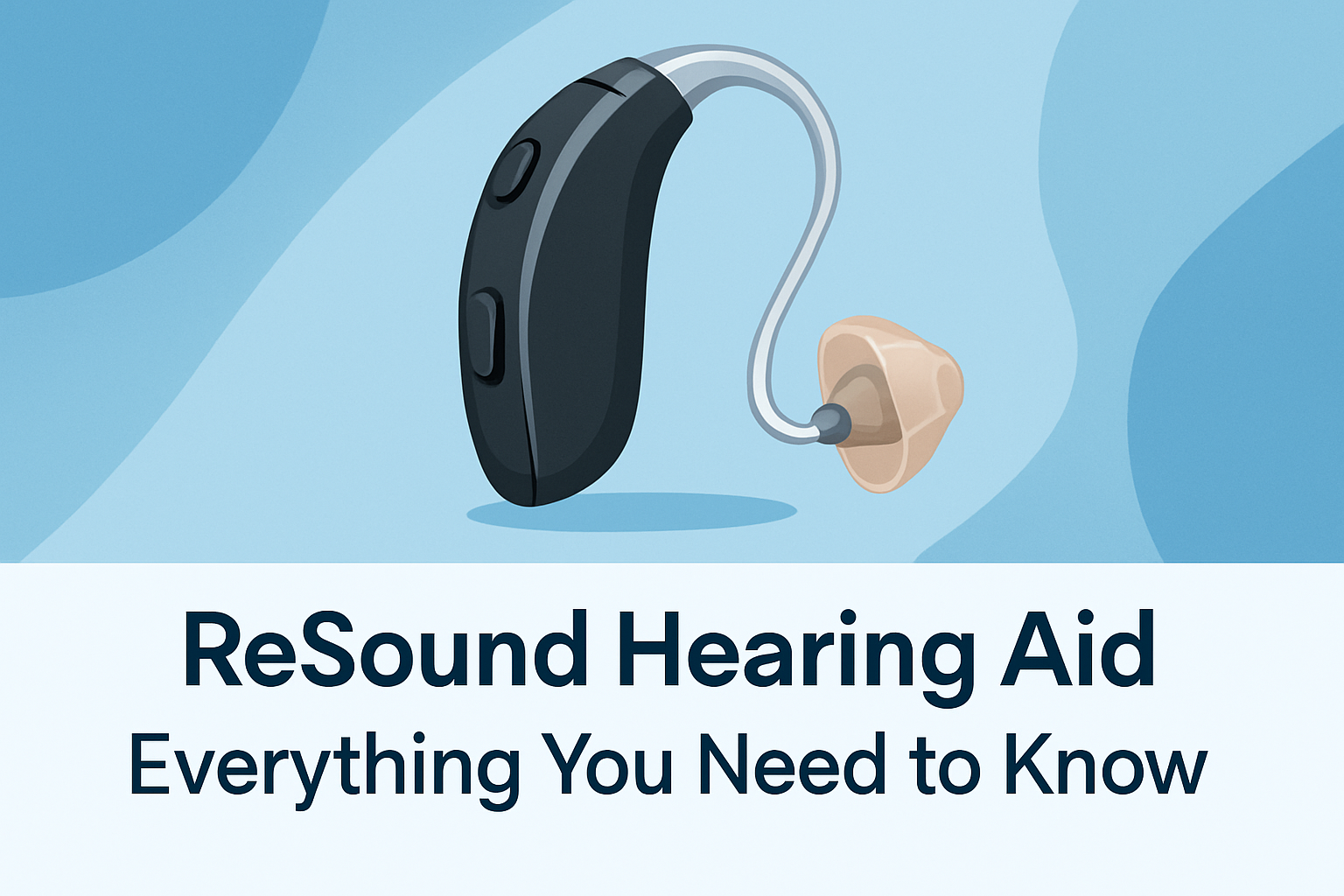
Resound hearing aid options are designed to make speech clearer, streaming simpler, and daily listening less tiring for people with mild to profound hearing loss. If you are researching hearing technology and want one page that explains the brand, the product types, the fitting process, and the real tradeoffs, this guide covers the essentials. ReSound is a long-established hearing aid manufacturer under the GN Group, a Danish company with deep roots in audio engineering and wireless communication. In practical terms, that means its devices are known for strong Bluetooth connectivity, app-based controls, and a broad lineup that serves first-time wearers and experienced users alike.
When people search for a ReSound hearing aid, they are usually asking several questions at once. What is ReSound? How much do ReSound hearing aids cost? Are they compatible with iPhone and Android? Which models work best for severe hearing loss? Are rechargeable batteries worth it? I answer those questions regularly when helping patients compare brands because the right device is not just about sound quality on paper. It depends on hearing test results, ear anatomy, dexterity, lifestyle, tinnitus symptoms, phone habits, and budget. A retiree who struggles in restaurants needs something different from a teacher taking video calls all day or an active traveler who wants hands-free streaming and remote support.
The term hearing aid itself can be misleading if you have never worn one. Modern devices are tiny computers that analyze incoming sound thousands of times each second, amplify what the user needs, reduce unwanted noise, and increasingly connect to phones, televisions, and assistive microphones. ReSound hearing aids fit squarely in that modern category. Across the lineup, you will see features such as directional microphones, noise reduction, feedback suppression, environmental classification, telecoil in some models, tinnitus sound therapy, rechargeable lithium-ion batteries, and companion app controls. You will also see references to receiver-in-canal, behind-the-ear, custom in-the-ear, and CROS or BiCROS systems for single-sided deafness. Understanding those terms matters because style and technology level affect comfort, performance, maintenance, and long-term satisfaction more than most buyers expect.
Why does this matter enough for a full hub article? Because untreated hearing loss is associated with communication strain, social withdrawal, listening fatigue, and reduced quality of life. Better hearing can improve conversations, workplace confidence, safety awareness, and adherence to medical advice. At the same time, buying a hearing aid is a meaningful financial decision, and many people do not realize that follow-up care is as important as the device. I have seen excellent hardware fail because settings were never fine-tuned, domes fit poorly, or expectations were unrealistic. I have also seen average first impressions turn into excellent outcomes after precise real-ear verification, counseling, and consistent wear. ReSound is a strong brand, but the best results come from matching the right model and programming approach to the person wearing it.
What ReSound hearing aids are and how the lineup is organized
ReSound manufactures several hearing aid families that vary by generation, style, and feature tier. Product names change over time, but the structure stays familiar. The brand typically offers premium, mid-level, and essential technology tiers, each available in select form factors. The most common ReSound hearing aid style today is receiver-in-ear or receiver-in-canal, often abbreviated RIE or RIC. In this design, the main case sits behind the ear while a thin wire connects to a small receiver in the ear canal. This style is popular because it balances cosmetic appeal, comfort, power, and connectivity. It is also easier to adjust acoustically through changes in receiver strength, dome style, and custom earmolds.
Traditional behind-the-ear models remain important, especially for children, people needing more amplification, or users who prefer a sturdier device with an earmold. ReSound also offers custom styles that fit partly or fully in the ear, though exact availability depends on the current generation. Custom products can appeal to people who want discretion or wear glasses, but they may offer less room for large batteries and some wireless features. For single-sided hearing loss, ReSound has CROS and BiCROS solutions that route sound from the poorer ear to the better ear. This does not restore true binaural hearing, but it can improve awareness of sounds arriving from the side with little or no usable hearing.
The technology inside a ReSound hearing aid generally centers on speech understanding, environmental adaptation, and wireless communication. Directional microphones help prioritize speech from in front of the listener. Digital noise reduction decreases steady background sounds such as fans or road noise, though no hearing aid can erase all restaurant noise. Feedback management reduces whistling, especially when hugging, chewing, or using the phone. Wind noise management matters for outdoor users. Many ReSound platforms also include tinnitus relief options through built-in sound generators, which can be programmed with broadband noise or other relief sounds as part of tinnitus management.
One reason ReSound stands out in the market is connectivity. The company was an early leader in direct streaming from mobile devices, especially Apple products using Made for iPhone compatibility. Newer products also support broader Android compatibility and, in current generations, Bluetooth Low Energy audio features that improve efficiency and future device support. In plain language, that means many users can stream phone calls, music, navigation prompts, and video audio directly to their hearing aids without a neck-worn intermediary. For patients who spend hours on calls or rely on captions and audio together, this can be a decisive advantage.
Key features, user benefits, and real-world tradeoffs
People shopping ReSound hearing aids usually compare features, but the practical benefit matters more than the marketing label. Better speech in noise is the top goal for most adults. ReSound addresses this through a mix of microphone directionality, environmental analysis, gain processing, and user controls in the app. In quiet, the hearing aid can provide a more open, natural sound. In background noise, it can become more directional and reduce low-value environmental sound. The benefit is not perfect silence around a speaker. The real benefit is improved access to speech cues, less listening effort, and better endurance in complex spaces.
Rechargeability is another major selling point. ReSound rechargeable hearing aids typically use sealed lithium-ion batteries designed for all-day wear, including streaming for many users. For people with arthritis, low vision, or limited finger dexterity, avoiding disposable battery doors can remove a daily frustration. However, rechargeables are not ideal for everyone. If you camp off-grid for days, travel in places without dependable power, or want the security of swapping in a fresh battery instantly, disposable battery models may still make sense when available. Battery lifespan also declines over years, so long-term service planning matters.
App control is a strength of the brand when set up correctly. The ReSound Smart 3D app and related software ecosystem allow users to adjust volume, switch programs, locate lost hearing aids, and in some cases request remote fine-tuning from their hearing care professional. I have seen remote support save weeks of frustration for patients who needed a small tweak in treble sharpness or wind management but could not easily return to the clinic. That said, app performance still depends on phone operating systems, permissions, and update timing. When people ask whether a ReSound hearing aid app is reliable, my honest answer is that it is excellent when compatibility is confirmed in advance and the user is comfortable with smartphones.
| Feature | Why it matters | Best fit | Main limitation |
|---|---|---|---|
| Direct Bluetooth streaming | Sends calls, media, and prompts to both ears | Frequent phone users and streamers | Compatibility varies by phone and generation |
| Rechargeable battery | Easy daily charging, no disposable cells | Users with dexterity concerns | Requires reliable charging access |
| Directional microphones | Improves access to speech in front | Restaurants, meetings, groups | Cannot remove all background noise |
| Tinnitus relief sound | Supports sound therapy plans | Users with bothersome tinnitus | Needs professional setup and counseling |
Sound quality is the most subjective area, and buyers should be cautious about universal claims. Some users describe ReSound as clear, spacious, and natural, especially outdoors and during streaming. Others may prefer the noise handling or tonal balance of another manufacturer in crowded indoor spaces. The right comparison is not which brand is best in the abstract. It is which hearing aid gives you the best speech access, comfort, and usability after verification and follow-up. Features matter, but fitting quality, physical comfort, and consistent wear matter more.
How fitting, programming, and follow-up determine success
The best ReSound hearing aid will disappoint if it is fit poorly. A proper process starts with a comprehensive hearing evaluation, including air and bone conduction thresholds, speech testing, otoscopy, and case history. From there, the clinician selects a style and power level that can meet the hearing loss safely. Programming should use an evidence-based prescriptive target such as NAL-NL2 or DSL where appropriate, not just a manufacturer first fit. Real-ear measurement is the clinical gold standard for confirming that amplified sound at the eardrum matches target levels. In practice, this often explains why two people with the same model report very different results.
Physical fit is equally important. Open domes can feel comfortable and reduce occlusion for mild to moderate high-frequency losses, but they leak low-frequency sound and can limit performance in noise. More closed domes or custom earmolds improve retention, reduce feedback, and deliver stronger amplification, though they can make the wearer more aware of their own voice. Receiver strength also matters. If the receiver is underpowered, the hearing aid may hit its limits. If it is oversized without a reason, comfort and battery use can suffer. ReSound’s flexible RIE architecture makes these adjustments relatively straightforward when done by an experienced clinician.
Adaptation takes time. New wearers often expect instant normal hearing, but amplification reintroduces sounds the brain has not processed clearly in months or years. Keyboard clicks, footsteps, refrigerator hum, and road noise can seem exaggerated at first. Good counseling prepares users for this and structures gradual adaptation without underfitting. Follow-up visits should address specific listening goals, not generic complaints. For example, if the problem is clattering dishes in a café, the solution may involve directional settings, maximum power output comfort, frequency shaping, and communication strategy coaching rather than simply lowering volume across the board.
Accessories can extend performance beyond what hearing aids alone can do. ReSound offers compatible TV streamers, remote microphones, and other wireless accessories in many generations. A remote microphone clipped to a conversation partner can dramatically improve signal-to-noise ratio in noisy places, often more than changing hearing aid brands. This matters because even premium devices have acoustic limits. In auditoriums, cars, classrooms, houses of worship, and busy restaurants, distance and reverberation remain major barriers. The best clinical advice is often a combination of hearing aid optimization and accessory use.
Cost, insurance, maintenance, and who should choose ReSound
ReSound hearing aid prices vary widely based on technology tier, style, service package, and region. In many private clinics, a pair may range from roughly the mid-thousands to well over six thousand dollars when bundled with professional care. Lower prices may appear through large retailers, third-party sellers, or unbundled service models, but buyers must confirm what is included. The true cost is not only the device. It includes hearing tests, fitting, real-ear verification, follow-ups, warranty coverage, loss and damage terms, charger replacement, earmolds, and future adjustments. Patients who focus only on sticker price often underestimate the value of ongoing care.
Insurance coverage is inconsistent. Some private plans offer hearing aid benefits with fixed allowances, while many adults still pay mostly out of pocket. Medicare generally does not cover routine hearing aids, though Medicare Advantage plans may include limited benefits. Veterans may access hearing devices through the VA if eligible. Health savings accounts and flexible spending accounts can often be used. Because coverage rules change, it is worth asking both the clinic and the insurer for a written breakdown. If you are considering ReSound, ask specifically about warranty length, trial period, service visits, and whether remote adjustments are included.
Maintenance is manageable but nonnegotiable. ReSound hearing aids need routine cleaning of domes, wax guards, microphones, and charging contacts. Moisture protection has improved, yet sweat, humidity, cerumen, hairspray, and skin oils still shorten device life when ignored. I advise users to build a simple nightly routine: wipe the aids, inspect openings, charge or open the battery door if applicable, and store them safely away from pets and bathroom steam. Most wax-related failures are preventable. Regular professional checks also catch receiver weakness, microphone blockage, and fit issues before they become major complaints.
Who is a good candidate for ReSound? The brand is especially attractive for users who value smartphone integration, direct streaming, remote support options, and a broad range of styles from mild to severe loss needs. It is also a strong contender for tinnitus patients who benefit from integrated sound therapy tools. ReSound may be less ideal for someone who rarely uses technology and wants the simplest possible interface, although app features can be ignored if unnecessary. The deciding factor should be the match between your hearing profile, your daily environments, and the provider’s ability to fit and support the product well.
ReSound hearing aids remain one of the strongest choices in modern amplification because they combine mature wireless features, flexible form factors, and clinically useful customization. The brand’s real advantages are clear phone connectivity, practical app controls, rechargeable options, and solid support for everyday speech understanding. Its limitations are the same ones that apply to every hearing aid brand: no device eliminates all background noise, and no feature can compensate for a rushed fitting or lack of follow-up care. The right outcome depends on careful evaluation, precise programming, realistic expectations, and consistent use.
If you are comparing hearing aids under the broader hearing aid category, treat this page as your starting point for the ReSound branch of that research. Use it to narrow the questions you ask next: which style fits your hearing loss, which technology tier matches your lifestyle, and what service package gives you the best long-term value. Then schedule a hearing evaluation with a qualified audiologist or hearing instrument specialist, ask for real-ear verification, and test ReSound in the environments that matter most to you. Better hearing is not about buying the most expensive device. It is about choosing the right solution and getting it fit correctly.
Frequently Asked Questions
What is a ReSound hearing aid, and what makes the brand different from other hearing aid manufacturers?
ReSound is a hearing aid brand owned by GN Group, a Danish company with a long history in sound technology, telecommunications, and wireless innovation. In practical terms, that background matters because modern hearing aids are no longer simple amplifiers. They are small, highly advanced medical devices designed to help people hear speech more clearly, reduce listening strain, and connect seamlessly with phones, TVs, and other everyday technology. ReSound has built its reputation around combining hearing performance with strong connectivity features, especially for users who want reliable Bluetooth streaming and app-based control.
What often sets ReSound apart is its focus on making sound feel more natural rather than overly processed. Many of its devices are designed to preserve environmental awareness while improving speech understanding, which can be especially helpful in complex listening situations like restaurants, meetings, family gatherings, or outdoor settings. The brand also offers solutions across a wide range of hearing loss levels, from mild to profound, so it is not limited to one type of user. Depending on the model and fitting style, ReSound hearing aids may include directional microphones, background noise management, rechargeable battery options, tinnitus support features, and direct audio streaming from compatible devices.
Another point in ReSound’s favor is the breadth of its ecosystem. For many buyers, hearing aids are not just about better hearing in the clinic; they are about how easily the devices fit into everyday life. ReSound products are typically supported by mobile apps, wireless accessories, and remote fine-tuning options that can make ongoing care more convenient. That said, no single brand is universally “best.” The real value of ReSound depends on your hearing profile, ear anatomy, lifestyle, listening priorities, dexterity, and budget. A great hearing aid on paper still needs to be professionally fit and adjusted correctly to perform well in the real world.
What types of ReSound hearing aids are available, and how do I know which style may be right for me?
ReSound typically offers several major hearing aid styles to suit different hearing needs and personal preferences. These commonly include receiver-in-canal, behind-the-ear, and custom in-the-ear designs. Receiver-in-canal models are among the most popular because they are usually small, comfortable, and versatile. They can often fit a broad range of hearing loss levels while giving users a balance of cosmetic appeal, sound quality, and advanced features. Behind-the-ear models are slightly larger but are often a strong choice for people who need more power, easier handling, or longer battery life. Custom in-the-ear models can appeal to users who prefer a device that sits more discreetly inside the ear and want an all-in-one design without an external wire or receiver.
Choosing the right ReSound style depends on more than appearance. Your degree of hearing loss is a major factor, since some designs are better suited for mild hearing loss while others are built to provide stronger amplification for severe or profound loss. Ear shape, earwax production, skin sensitivity, and hand dexterity also matter. For example, someone with arthritis may find a tiny custom device difficult to insert or adjust, while another person may prioritize nearly invisible wear. Rechargeability can also influence the decision. Many users prefer rechargeable devices because they eliminate the need for handling small disposable batteries, but battery routines and charging habits should still fit your daily life.
Your listening environment is equally important. If you spend a lot of time in noisy settings, stream calls frequently, or move between quiet and complex environments throughout the day, certain premium ReSound models may offer more sophisticated speech and noise processing. If your listening demands are simpler, a more basic technology level may still provide meaningful improvement. The best path is to think of style and technology as separate but related decisions: first, choose a physical design that fits comfortably and practically; second, select a performance level that matches your communication needs. A hearing care professional can help narrow those choices using your hearing test results and a detailed discussion of your lifestyle.
How does the ReSound hearing aid fitting process work, and what should I expect after getting fitted?
The fitting process for a ReSound hearing aid usually starts with a comprehensive hearing evaluation performed by an audiologist or hearing instrument specialist. This includes measuring the type and degree of hearing loss in each ear and discussing your hearing challenges, such as trouble following conversations in noise, difficulty hearing the television, or fatigue after social events. The provider will then recommend a hearing aid style and technology level based on your hearing results, lifestyle, cosmetic preferences, and budget. If a custom device or custom earmold is needed, impressions or digital scans of the ear may be taken.
Once the devices are ready, the fitting appointment is where the hearing aids are physically placed and programmed to your hearing prescription. This is a critical step. ReSound hearing aids are not meant to be one-size-fits-all. The provider adjusts the amplification and processing settings so soft sounds are more audible, speech is clearer, and loud sounds remain comfortable. In many cases, best practice includes real-ear measurements, a verification method that checks how the hearing aid is actually performing in your ear canal rather than relying only on software estimates. This helps improve accuracy and can make a major difference in satisfaction.
After the initial fitting, there is always an adjustment period. Even when hearing aids are programmed correctly, your brain needs time to reacclimate to sounds you may not have heard clearly for months or years. Everyday noises like footsteps, paper rustling, refrigerator hum, and traffic may seem unusually noticeable at first. That does not necessarily mean the hearing aids are set too loud; it often reflects the process of auditory re-learning. Follow-up visits are important because they allow your provider to fine-tune the sound based on real-world experience. You may need adjustments for comfort, speech clarity, streaming balance, or background noise performance. In short, a successful fitting is not a single event but a process that combines professional programming, patient feedback, and consistent wear over time.
Can ReSound hearing aids connect to smartphones, TVs, and other devices for streaming?
Yes, one of ReSound’s strongest selling points is connectivity. Many ReSound hearing aids are designed to connect with compatible smartphones and other audio sources so users can stream phone calls, music, podcasts, video audio, and sometimes television sound directly to their hearing aids. This can make listening more convenient and often clearer than relying on a phone speaker or trying to hear a distant television. For people who talk on the phone often or use video calls regularly, direct streaming can be a major quality-of-life benefit.
ReSound devices are also commonly supported by a companion mobile app. Through the app, users may be able to adjust volume, change listening programs, manage streaming preferences, locate misplaced devices, and sometimes access remote support from their hearing care provider. This added control can be especially useful when moving between environments such as home, work, the car, and noisy public places. Instead of returning to the clinic for every small preference change, some settings can be managed more easily in daily life.
That said, connectivity is one of the areas where buyers should pay close attention to compatibility details. Not every ReSound model supports the same wireless features, and not every phone or operating system version works identically. Streaming performance may vary depending on the specific device generation, software updates, and whether accessories are required for television or certain older electronics. If streaming is important to you, ask your provider to confirm exactly what your chosen ReSound model can connect to, whether direct streaming is available with your phone, and whether additional accessories are recommended. This is the kind of practical detail that can shape long-term satisfaction just as much as sound quality.
What are the main pros and cons of choosing a ReSound hearing aid?
The biggest advantages of ReSound hearing aids usually include strong sound processing, broad style options, useful smartphone integration, and a generally well-developed wireless ecosystem. Many users are drawn to the brand because it offers modern features that go beyond simple amplification, including rechargeable options, speech enhancement tools, tinnitus support in certain models, and direct streaming capabilities. ReSound also has solutions across different technology tiers, which gives buyers flexibility if they want either premium features or a more budget-conscious entry point. For users who value convenience and digital control, the app experience and accessory support can be a real plus.
Another important advantage is that ReSound products can be tailored to very different hearing situations. Someone with a mild loss who mainly wants easier conversations in small groups may need a very different fitting than someone with severe hearing loss who relies on amplification all day in demanding environments. ReSound’s lineup is broad enough to cover many of those needs, and the company’s long-standing place in the hearing industry gives many patients confidence in its product development and support network. When fit well, the devices can make daily communication easier and less mentally exhausting, which is one of the most meaningful outcomes of good hearing care.
The tradeoffs are equally important to understand. ReSound hearing aids can be expensive, especially at higher technology levels with more advanced noise management and connectivity features. Performance also depends heavily on professional fitting, follow-up care, and realistic expectations. Even excellent hearing aids do not restore natural hearing perfectly, and very challenging listening environments may still be difficult. Some users may also find that another brand’s sound character, app interface, recharge system, or physical design suits them better. In addition, wireless features can be a major strength,