
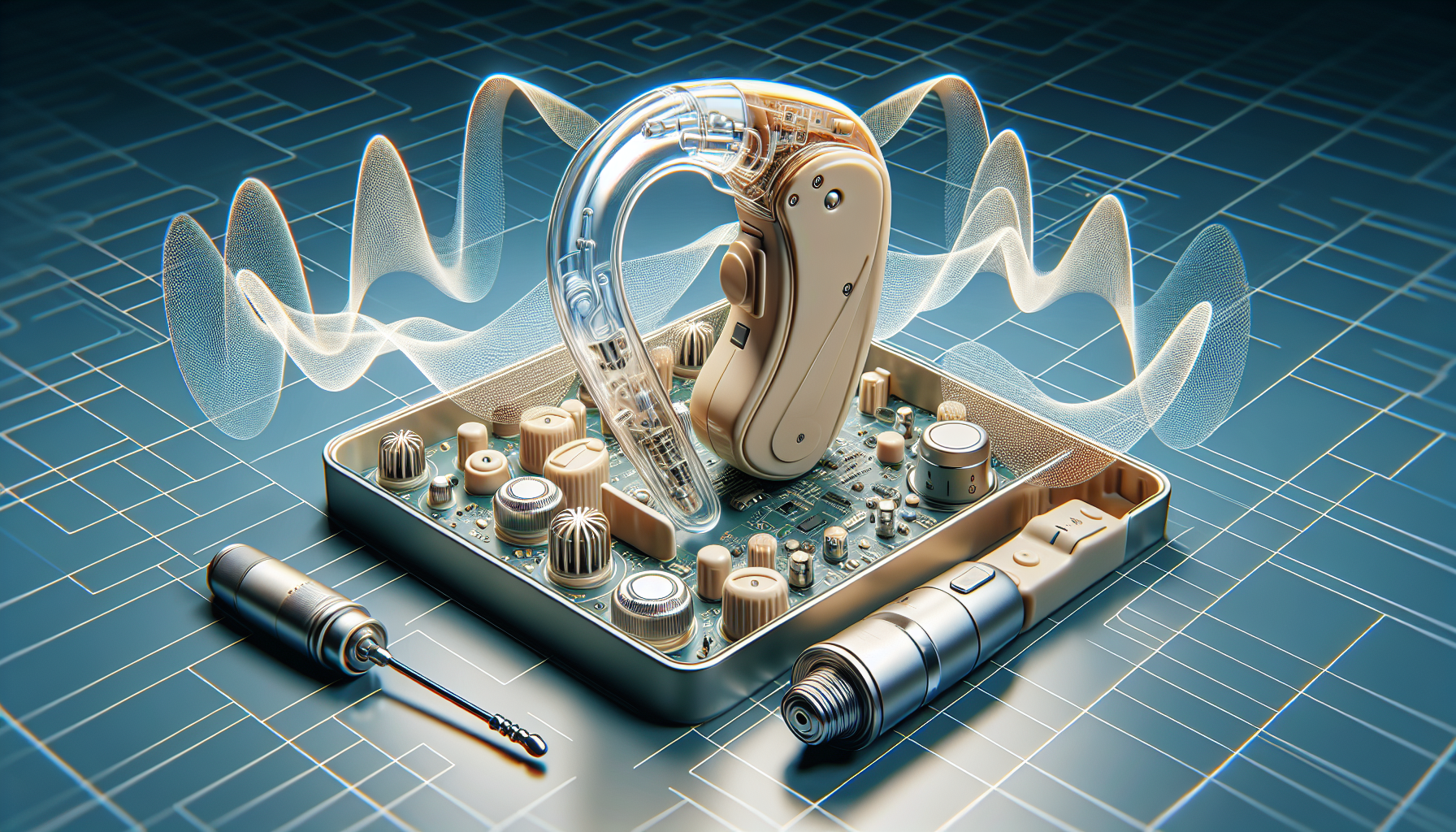
Hearing aids work by capturing sound, converting it into a digital signal, processing that signal to match a person’s hearing loss, and delivering amplified sound into the ear quickly enough that speech remains natural. That basic answer is true, but it hides the engineering and clinical decision-making that make modern hearing aids effective. As someone who has helped patients compare devices, review hearing test results, and fine-tune fittings, I can say the biggest misconception is that hearing aids simply make everything louder. Good hearing aids do far more: they prioritize speech, reduce background noise, control feedback, manage sudden loud sounds, and adapt to different listening environments.
A hearing aid is a small medical device worn behind or inside the ear to improve audibility and clarity for people with hearing loss. Most modern devices are digital, meaning they use computer chips to analyze incoming sound thousands of times per second. Key parts include microphones, a processor, an amplifier, a receiver or speaker, and a battery. Hearing loss itself varies widely. Some people mainly struggle with soft consonants such as S, F, and TH. Others hear speech in quiet settings but cannot follow conversation in restaurants, meetings, or cars. Because hearing loss is not one-size-fits-all, hearing aid settings are programmed to an audiogram, which maps hearing thresholds across frequencies.
This matters because untreated hearing loss affects far more than volume. It can reduce speech understanding, increase listening effort, contribute to fatigue, and make social connection harder. Research published in journals such as The Lancet and recommendations from organizations including the World Health Organization and the American Academy of Audiology have kept attention on hearing loss as a public health issue, especially in older adults. Better hearing can improve communication, confidence, and participation in daily life. A hub article on how hearing aids work should therefore explain not only the technology, but also the fitting process, the different styles, the tradeoffs, and what realistic users can expect from daily wear.
At a practical level, people searching this topic usually want answers to direct questions. What does a hearing aid actually do? Why do some models sound clearer than others? Can hearing aids restore normal hearing? How do they reduce noise? What is the difference between over-the-counter and prescription devices? The short answer is that hearing aids help the brain access sound that hearing loss has made harder to hear, but they do not cure the underlying damage in the ear. Outcomes depend on the degree and pattern of hearing loss, the quality of the fitting, the listening environment, and how consistently the person wears the devices.
The core signal path: from sound to amplified hearing
Every hearing aid follows the same core signal path. First, one or more microphones pick up acoustic sound waves from the environment. The microphones convert those waves into electrical signals. In digital hearing aids, an analog-to-digital converter turns that electrical input into data the processor can analyze. The processor then applies programmed settings based on the user’s hearing test and listening needs. Finally, the device sends the adjusted signal to a miniature receiver, which converts it back into sound and delivers it into the ear canal.
In older analog devices, amplification was simpler and less precise. Modern digital hearing aids split sound into channels or bands, often a dozen or more, so the device can amplify high-frequency speech sounds differently from low-frequency environmental sounds. That matters because many common hearing losses slope downward in the high frequencies. A patient may hear vowels fairly well but miss consonants that carry speech detail. By shaping gain by frequency, the hearing aid can improve audibility where it is needed most without making all sounds uniformly booming or uncomfortable.
Latency is another important concept. If processing takes too long, a user may notice echo, hollowness, or distortion, especially in open-fit hearing aids where some natural sound still enters the ear directly. Manufacturers work to keep processing delay very low, often only a few milliseconds. The goal is seamless sound that feels synchronized with the world. This is one reason premium hearing aids often perform better in complex listening settings: they are not only using smarter algorithms, but also balancing speed, comfort, and sound quality more effectively.
How hearing aids are programmed to a person’s hearing loss
Hearing aids are not bought like generic speakers. They are fitted to measured hearing loss. The process usually starts with a comprehensive hearing evaluation that includes pure-tone thresholds, speech testing, otoscopy, and sometimes tympanometry. An audiogram shows the quietest sounds a person can hear at different frequencies, usually from 250 Hz to 8000 Hz. Audiologists then use prescriptive formulas such as NAL-NL2 or DSL to estimate how much amplification is appropriate across frequencies and input levels.
That phrase “input levels” is important. People need to hear soft speech, average speech, and louder sounds differently. A hearing aid therefore uses compression, which gives more gain to softer inputs and less gain to louder inputs. Without compression, soft sounds might remain inaudible and loud sounds might become uncomfortable. Wide dynamic range compression is standard in modern devices because hearing loss often reduces the ear’s usable loudness range. In plain terms, users need quiet sounds lifted up without turning normal sounds into a shout.
Best practice does not stop at entering an audiogram into software. Real-ear measurement is the clinical gold standard for verifying fitting accuracy. A tiny probe microphone placed in the ear canal measures how much amplified sound actually reaches the eardrum. I have seen fittings that looked fine on screen but missed target output significantly in the ear. Real-ear verification catches that. It is one of the strongest predictors that a patient is hearing what the prescription intended, particularly for high-frequency speech cues.
What features inside modern hearing aids actually do
Modern hearing aids include a long list of features, but several have the greatest impact on daily performance. Directional microphones help focus on sounds in front of the listener while reducing sounds from other directions. This can improve speech understanding in noise, especially face-to-face conversation. Noise reduction algorithms identify steady background sounds such as fans, road noise, or HVAC hum and reduce their prominence. Feedback management detects the whistling caused when amplified sound leaks and is re-amplified, then suppresses it before it becomes audible.
Many devices also include impulse noise reduction for dishes clattering or doors slamming, environmental classifiers that switch programs automatically, wind-noise control, tinnitus masking options, telecoils, Bluetooth streaming, and rechargeable lithium-ion batteries. None of these features is magic on its own. Their value depends on how well they are implemented and tuned. For example, aggressive noise reduction can make listening more comfortable, but too much can reduce speech cues. A skilled fitting balances comfort with clarity rather than maximizing every processing feature.
| Feature | What it does | Real-world benefit | Common limitation |
|---|---|---|---|
| Directional microphones | Prioritize sound from a target direction | Better conversation in restaurants or meetings | Less helpful when speakers are spread around the room |
| Compression | Adjust gain by input loudness | Makes soft speech audible without overamplifying loud sounds | Poor settings can make sound feel flat or unnatural |
| Noise reduction | Reduce steady background noise | Improves comfort in cars, offices, and public spaces | Does not eliminate all background speech |
| Feedback suppression | Control whistling from sound leakage | Allows more usable gain and open fittings | Severe leakage can still limit amplification |
| Bluetooth streaming | Receive audio from phones and other devices | Clearer calls, media, and remote support | Battery use and device compatibility vary |
How different hearing aid styles work and who they suit
Hearing aids come in several physical styles, and the style changes both performance and comfort. Behind-the-ear and receiver-in-canal models place most electronics behind the ear, with sound delivered through tubing or a thin wire to the ear canal. These are the most common modern fittings because they are versatile, fit a wide range of hearing losses, and can house stronger receivers, larger batteries, and more features. Open-fit versions leave the ear less occluded, which often improves comfort for people with mild to moderate high-frequency loss.
In-the-ear, in-the-canal, and completely-in-canal styles place more or all of the device in the ear itself. These can be cosmetically appealing and may use the outer ear’s natural shape to support directional hearing in some cases. However, they are smaller, which can limit battery size, microphone spacing, and handling ease. Earwax and moisture exposure are also greater. For patients with dexterity or vision challenges, tiny devices may look attractive but become frustrating in daily use.
The right style depends on hearing loss severity, ear anatomy, dexterity, cosmetic preferences, and listening priorities. A person with significant hearing loss who frequently attends group meetings may do better with a receiver-in-canal or behind-the-ear model that supports stronger output and advanced microphone arrays. Someone with mild loss and strong cosmetic concerns may prefer a custom in-the-ear option. There is no universally best style; there is only the best match for the user’s audiogram, anatomy, and routine.
What hearing aids can and cannot fix
Hearing aids help most when the issue is reduced audibility from sensorineural hearing loss, often caused by damage to hair cells in the cochlea from aging, noise exposure, genetics, illness, or ototoxic medications. They can also help some conductive hearing losses, depending on the medical situation, though those cases may require medical treatment first. What hearing aids do not do is restore biological hearing to normal. They cannot regrow hair cells, reverse nerve damage, or make a severely degraded auditory signal identical to natural hearing.
That limitation explains why users may still struggle in the hardest environments. Restaurants with multiple talkers, reverberant rooms, airport announcements, and speakers who mumble or talk from another room remain difficult even with excellent devices. The ear and brain are working with less complete input than before, and hearing aids cannot fully separate all competing sounds. Assistive listening technology, communication strategies, and good room acoustics still matter. In some cases of severe to profound loss, cochlear implants may be more appropriate than conventional hearing aids.
Still, the improvement can be substantial. Many first-time users notice that they hear birds, turn signals, footsteps, paper rustling, and speech endings again. Just as important, they often report reduced listening strain. When the brain does not have to guess at every sentence, conversation becomes less tiring. That quality-of-life benefit is often underestimated before fitting and deeply appreciated afterward.
Why adaptation, follow-up care, and daily habits matter
Successful hearing aid use is not a one-day event; it is a process. The brain needs time to re-acclimate to sounds that have been missing or softened, especially high-frequency environmental noise and speech details. New users often describe sounds as sharp, tinny, or overly busy during the first days or weeks. This does not necessarily mean the fitting is wrong. It usually means the auditory system is re-learning what normal amplified input sounds like. Consistent wear is critical for adaptation.
Follow-up appointments are where many good fittings become great ones. After real-world use, patients can describe specific problems: difficulty in cars, harsh dishes noise, weak television sound, or poor telephone performance. Those details allow targeted adjustments to gain, compression ratios, maximum power output, noise reduction strength, dome style, or custom earmold fit. Data logging within the hearing aid can also show daily wear time, program use, and environmental exposure, giving clinicians objective information for refinement.
Maintenance matters as much as programming. Wax guards, microphone ports, domes, earmolds, and charging contacts need regular cleaning. Moisture is a major cause of malfunction, especially in humid climates or for active users. I routinely advise patients that a hearing aid is less like jewelry and more like precision electronics worn on the body every day. Care habits directly affect reliability and sound quality. People who learn simple maintenance early usually have fewer interruptions and lower long-term service costs.
Prescription versus over-the-counter hearing aids
Over-the-counter hearing aids are designed for adults with perceived mild to moderate hearing loss and can be purchased without a medical exam or fitting. Prescription hearing aids are dispensed through hearing care professionals and are appropriate across a broader range of hearing losses and medical needs. The difference is not only the sales channel. Prescription care typically includes diagnostic testing, counseling, earmold options, verification with real-ear measures, and structured follow-up, all of which improve the odds of a successful outcome.
OTC devices can be a useful entry point for some adults, especially cost-conscious users who are comfortable with smartphone-based setup and have straightforward hearing needs. However, they are not the right choice when hearing loss is asymmetric, sudden, severe, accompanied by tinnitus in one ear, dizziness, ear pain, drainage, or significant speech distortion. Those signs require medical or audiologic evaluation. Even when OTC is appropriate, consumers should look for products with published electroacoustic specifications, return periods, and clear support channels rather than treating all devices as interchangeable.
The practical rule is simple: the more complex the hearing profile and listening demands, the more professional assessment and verification matter. Device quality matters, but fitting quality often matters more.
How to choose the right hearing aid and what to do next
The best hearing aid is the one that matches the hearing loss, fits the ear well, supports the user’s daily environments, and is worn consistently. Start with a proper hearing evaluation rather than guessing based on age or online screening alone. Ask whether the fitting will include speech testing, a clear explanation of the audiogram, and real-ear verification. Consider lifestyle questions honestly: Do you spend time in quiet at home, or in meetings, restaurants, worship services, classrooms, and outdoor settings? Do you need strong Bluetooth calling or hands-free streaming? Do you have dexterity issues that make tiny batteries or small controls difficult?
Also evaluate the service model. Warranty length, trial period, loss-and-damage terms, cleaning support, and access to follow-up adjustments can matter as much as the device brand. Well-known manufacturers such as Phonak, Oticon, ReSound, Signia, Starkey, and Widex all produce capable technology, but no brand is best for everyone. The final result depends on audiology, acoustics, programming, and patient habits working together.
In the end, hearing aids work by combining precise sound processing with individualized clinical fitting to make speech and everyday sound more accessible. They do not create perfect hearing, but they can make communication easier, reduce effort, and reconnect people with daily life. If you suspect hearing loss, schedule a hearing test and compare options based on both technology and support. The sooner you understand how hearing aids work, the sooner you can choose a solution that truly helps.
Frequently Asked Questions
How do hearing aids actually work step by step?
At the most basic level, a hearing aid takes in sound, processes it, and sends a customized version of that sound into the ear. A tiny microphone picks up speech and environmental sounds first. Those sounds are then converted into a digital signal, which allows the hearing aid’s processor to analyze what is coming in across different pitches and loudness levels. Based on the wearer’s hearing test and programmed settings, the device increases the sounds that are harder for that person to hear while trying to keep comfortable sounds natural and manageable.
Modern hearing aids do much more than simply make everything louder. They separate sound into channels or frequency bands so they can target specific parts of the hearing range. For example, if someone hears low-pitched sounds fairly well but struggles with high-pitched consonants like “s,” “f,” and “th,” the device can provide more help in those high-frequency areas without overamplifying the low frequencies. After processing, the hearing aid’s receiver, which is essentially a miniature speaker, delivers the adjusted sound into the ear canal. All of this happens extremely quickly, usually fast enough that speech still sounds synchronized and natural.
That rapid, precise processing is why modern devices are so effective compared with older analog models. They are designed not only to amplify but also to shape sound according to the individual’s hearing loss, listening environment, and comfort needs. In practice, that means the hearing aid is constantly balancing clarity, audibility, and listening comfort rather than acting like a simple volume booster.
Do hearing aids just make everything louder?
No, and that is one of the biggest misconceptions people have. If hearing aids only made everything louder, many users would find them uncomfortable, overwhelming, and not especially helpful for understanding speech. The real goal is not raw loudness. The goal is improved access to meaningful sound, especially speech, while keeping everyday listening as natural as possible.
To do that, hearing aids are programmed using hearing test results that show which pitches are affected and by how much. Most people with hearing loss do not lose hearing evenly across all frequencies, so the device has to provide more gain in some areas than others. It also has to handle soft, moderate, and loud sounds differently. Soft sounds may need to be made more audible, moderate sounds need to stay clear, and loud sounds should not become painfully intense. This is where features like compression come in. Compression allows the hearing aid to amplify quieter sounds more and louder sounds less, helping fit the wide range of everyday sound into the narrower listening range a person may have.
In addition, many devices include directional microphones, noise reduction systems, and feedback management. These tools help prioritize speech, reduce the annoyance of background noise, and prevent whistling. So while amplification is part of the job, a well-fitted hearing aid is really a personalized sound-processing system built to improve communication, not just increase volume.
How do hearing aids help people understand speech better in noisy places?
Hearing aids can improve speech understanding in noise, but they do so within limits. In restaurants, family gatherings, cars, and other busy environments, the real challenge is not just hearing that sound exists. It is separating the voice you want from the competing sounds around it. Modern hearing aids use several strategies to make that easier.
One important feature is directional microphones. Instead of treating all sounds equally, directional systems are designed to emphasize speech coming from a certain direction, often in front of the listener, while reducing sounds from behind or the sides. Many devices also use digital noise reduction to identify steady background sounds, such as fans, road noise, or room hum, and make them less intrusive. Some premium models can even analyze the listening environment and automatically shift settings when they detect speech in noise.
That said, no hearing aid can fully restore normal hearing or completely erase background noise. In a crowded room, even people with normal hearing have to work to follow conversation. Hearing aids help by improving access to speech cues and reducing listening effort, but they are not magic. Success often depends on realistic expectations, proper fitting, and good communication strategies, such as facing the speaker, choosing quieter seating, and using assistive features like Bluetooth microphones when needed. When patients understand that hearing aids are designed to improve communication rather than create perfect hearing in every situation, they tend to do much better with them.
Why does a hearing aid need to be professionally programmed and adjusted?
Professional programming matters because hearing loss is highly individual, and the same device can perform very differently depending on how it is fitted. Two people may have hearing loss that looks similar on paper but have very different needs based on ear anatomy, speech understanding, sound tolerance, lifestyle, and personal preferences. A hearing aid has to be programmed to account for all of those factors, not just the audiogram.
During a fitting, the provider typically enters the hearing test results into specialized software, which creates a starting prescription for amplification. From there, the settings are refined. That may include adjusting gain in different frequency regions, setting maximum output so loud sounds remain comfortable, choosing noise-management features, and fine-tuning how aggressively the device responds in quiet versus noisy settings. In many cases, real-ear measurements are used to verify that the sound reaching the eardrum matches prescriptive targets. This step is especially important because the same hearing aid setting can produce different results in different ears.
Follow-up care is just as important as the initial fitting. New users often need time to adapt and may notice specific concerns, such as their own voice sounding strange, dishes clattering too sharply, or speech still feeling unclear in certain environments. Those reactions do not necessarily mean the device is wrong for them. They often mean the fitting needs refinement. Proper adjustment can make the difference between a hearing aid that sits in a drawer and one that becomes an effective, everyday communication tool.
Can hearing aids restore hearing back to normal?
Hearing aids can make a major difference, but they do not restore hearing to normal in the way glasses can often correct vision. Most hearing loss involves changes in how the inner ear processes sound, especially damage to delicate hair cells in the cochlea. Once that system is damaged, simply making sound louder does not fully recreate the clarity and detail that a healthy ear can provide. Hearing aids work by improving access to sound and speech cues, but they cannot replace the exact function of the natural hearing system.
What they can do is help people hear more of what they have been missing, reduce listening strain, and improve communication in daily life. Many users notice they can follow conversations better, participate more easily in family and work settings, and feel less fatigued at the end of the day because they are not working as hard to fill in the gaps. For some people, hearing aids also help with awareness of environmental sounds, such as turn signals, alarms, birds, footsteps, and subtle cues in conversation that had gradually faded away.
The best results come when hearing aids are fitted appropriately, worn consistently, and paired with realistic expectations. They are not a cure, but they are a highly effective treatment tool for many types of hearing loss. When patients understand that the goal is better hearing and easier communication rather than perfect hearing, they are usually much more satisfied with the outcome.