

Spring brings a plethora of festivals and events, offering an opportunity for community engagement and cultural celebration. However, for the deaf and hard of hearing, these events can present unique challenges. This article provides practical tips to ensure these community celebrations are inclusive and accessible to all.
Understanding the Diversity within the Deaf Community
The deaf community is incredibly diverse, encompassing individuals who are hard of hearing, late-deafened, deafblind, and deafdisabled. Each person’s experience with deafness is unique, and their communication preferences may vary greatly. This diversity means that there is no one-size-fits-all solution for accessibility; instead, organizers should be aware of the varying needs within the community.
In-Person American Sign Language (ASL) Interpreters
In-person ASL interpretation is essential for live events. It’s advised that if an event is longer than two hours, planning for at least two interpreters is necessary to allow them breaks. Corporations and foundations are increasingly willing to sponsor accommodations like ASL interpreters at events, and some agencies may offer discounted prices for nonprofits.
Effective Communication and Training Staff
Effective communication with hearing-impaired individuals can be a challenge. Staff training is crucial in this regard. Simple measures, such as speaking clearly for those who can lip-read and using common vocabulary for ease of ASL translation, are important. Moreover, technological tools like instant transcription apps can facilitate communication between staff and deaf customers.
Technological Aids and Digital Accessibility
Technology plays a crucial role in making events accessible. Apps like Ava can transcribe conversations in real-time, enhancing communication. When it comes to digital platforms, like websites and online content, ensuring accessibility is vital. This can be achieved through accurate and synchronized captions, transcripts for audio and video content, and clear audio with minimal background noise. Providing multiple methods of contact, such as email and live chat, is also recommended.
Navigational Assistance
Navigational aids are particularly helpful in large venues like shopping malls or festivals. Apps designed for indoor navigation can guide hearing-impaired visitors using text instructions and icons, ensuring they can navigate the space autonomously and comfortably.
Inclusive Design in Public Spaces
Accessible design in public spaces is also key. This involves creating environments that are easy to navigate and understand, incorporating clear signage systems and pictograms, and considering the use of multisensory elements to cater to diverse needs.
Case Studies: Learning from Others
Events like the Glastonbury Festival in Somerset, England, have set a precedent in accessibility. They provide BSL interpreters for various performances and have hearing loops installed in numerous tents. Such initiatives demonstrate the potential for large-scale events to be inclusive of the deaf community.
Empowering the Deaf Community through Inclusivity
It’s not just about providing resources; it’s about ensuring that the deaf community is actively involved in the planning and execution of events. This involvement can lead to better understanding and implementation of necessary accommodations, making events more inclusive and enjoyable for everyone.
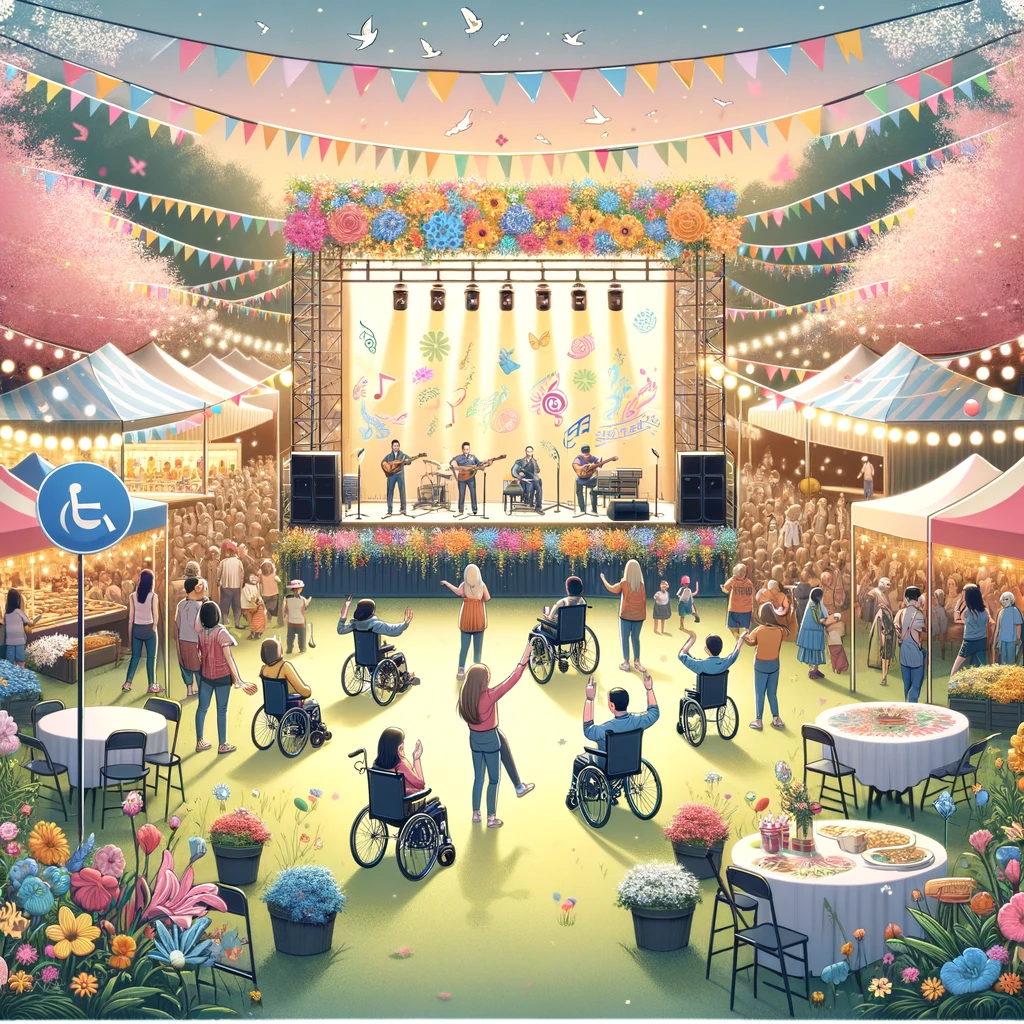
Accessibility in Action: Real-Life Examples and Best Practices
Drawing from successful examples can provide valuable insights into how to make spring festivals accessible. The Glastonbury Festival, with its comprehensive approach to accessibility, serves as an inspiring model. They offer BSL interpretation for a wide range of performances, and their attention to detail extends to even the smallest stages. This level of commitment showcases how festivals can be made welcoming for the deaf community. Similarly, other music festivals have incorporated features like hearing loops and specially designated campsites for deaf and disabled ticket holders, enhancing the overall experience for attendees with hearing impairments.
Captioning and Real-Time Translation
Captioning is an indispensable tool for making events accessible. For virtual events or videos, live captioning or Communication Access Realtime Translation (CART) services ensure that spoken words are instantly translated into text. For in-person events, pre-prepared materials with captions for any multimedia used can be helpful. Captioning not only aids those with hearing difficulties but can also be beneficial for attendees who may have difficulty with auditory processing or are not native speakers of the language used.
Financial Considerations for Accessibility
Funding accessibility initiatives can be a concern for event organizers. However, there are ways to address this. Seeking sponsorships from corporations that are committed to equity and inclusion can be a viable option. Additionally, applying for grants from foundations or state arts commissions that support accessibility in the arts and community events can provide the necessary financial assistance. Some ASL interpreting agencies might also offer discounted rates for non-profit organizations, making it more feasible to include professional interpretation services.
Engagement and Feedback
Involving members of the deaf community in the planning process of events can lead to better outcomes in terms of accessibility. Seeking their feedback on what works and what doesn’t, both during the planning phase and after the event, can provide valuable insights. This engagement not only ensures that their needs are adequately met but also fosters a sense of community and inclusion.
Deaf Awareness and Training
Event staff should be given basic training in deaf awareness. Simple gestures, like ensuring they are facing the person they are speaking to, speaking clearly for lip-reading, or using gestures, can significantly improve the experience for deaf attendees. Awareness of how to get a deaf person’s attention appropriately, and understanding that not all deaf people communicate in the same way, are vital skills for staff.
Accessible Marketing and Communication
All promotional materials and communication about the event should be accessible. This means providing information in multiple formats, including text, audio, and video with captions and/or BSL interpretation. Ensuring that the event’s website and social media channels are accessible, with options for people to request accommodations, is crucial.
Conclusion
Creating accessible spring festivals for the deaf and hard of hearing community requires thoughtful planning and a commitment to inclusivity. By understanding the diverse needs within the deaf community, employing effective communication strategies, using technological aids, and involving the deaf community in the planning process, event organizers can ensure that their events are welcoming to all. Celebrating the arrival of spring can and should be an inclusive experience, one where everyone can participate and enjoy the festivities together.